What’s on the menu for wild ducks? The answer actually depends on factors like species and the time of year. We receive many questions about what wild ducks eat, and if it’s okay to feed them. One of our resident Duck Doctors — Ducks Unlimited Canada (DUC) research scientist Lauren Bortolotti —dishes out the answers!
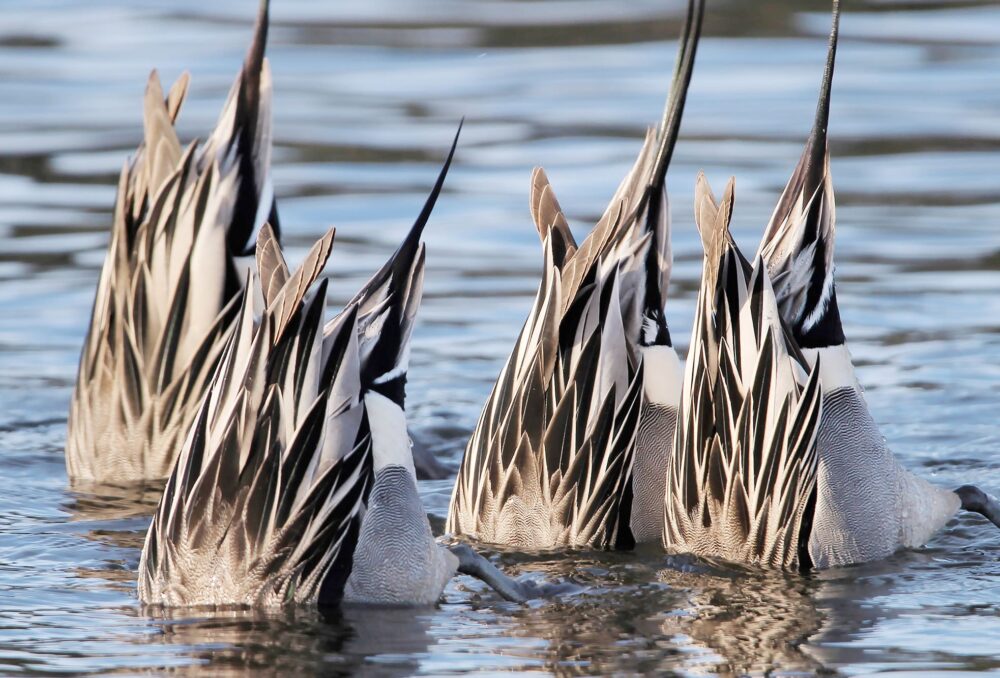
Ducks eat a wide variety of foods including aquatic plants and invertebrates, which are the small creatures like snails and insects that we find in bodies of water,” says Bortolotti. “But ducks also eat grains and fish and so much more.”
Bortolotti explains that different species have different diets and many have special adaptations to help them eat their preferred foods. For example, mergansers eat fish and have narrow, serrated or saw-like bills, whereas northern shovelers have flat spoon-like bills with little combs that help them filter out the small seeds and invertebrates they like to eat.
Many dabbling ducks, like mallards and teal, eat a wide variety of food items from wetlands, but their favourite food changes depending on the time of year. “Female ducks like a high-protein diet before they lay eggs, but are often more into carb loading before migration, to help them fuel their long-distance flights,” says Bortolotti.
Although it might be tempting, Bortolotti does not advise us to feed wild ducks. “The foods that we select for them are not as nutritious as the ones that they would choose, and may actually make them sick,” she cautions.
“We also don’t want to make wild ducks dependent on people for food, and feeding waterfowl increases the chance of negative human/wildlife interactions.”
What’s on the fall migration menu?
Migratory waterfowl have a long journey from their Canadian breeding areas to their southern wintering grounds, so you might be wondering: how do they “fuel up” along the way? Here is a menu of some of their favourite foods and the places they find them on their travels.
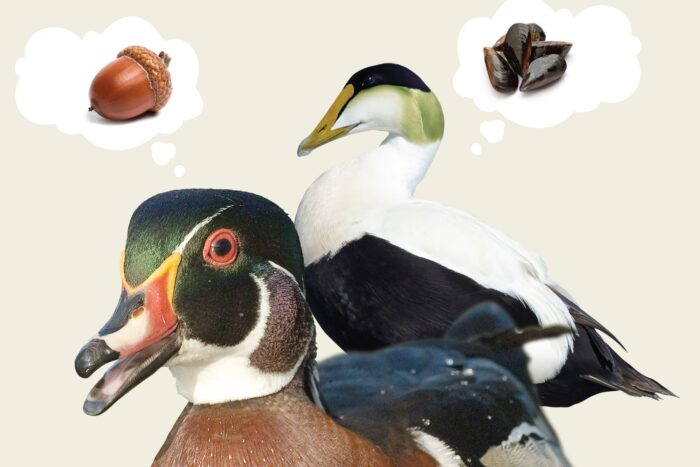
Acorns: A bite-sized energy booster for ducks like wood ducks and mallards that winter in forested areas like those found in the Mississippi Alluvial Valley.
Sea lettuce: Some dabbling and diving ducks wintering in coastal areas, like black ducks, prefer these bright green algae with ruffled leaves that look like … lettuce.
Rice: Whether wild or produced for agriculture, rice is a popular food source for waterfowl.
Seagrass: Seagrasses—including shoal grass, widgeon grass and turtle grass—are preferred by ducks and geese that stop at wetlands off the Pacific and Atlantic coasts.
Blue mussels: Diving duck species like the common eider favour the blue mussels growing along the Atlantic Coast.
Wild celery: Wild celery grows beneath the water’s surface and is favoured by many diving ducks, especially canvasbacks. Ducks love noshing on the tubers (bulbs) of wild celery, and on seed produced by the plant in the fall.
Subscribe to our YouTube channel
Duck Doctors is a video series featuring Ducks Unlimited Canada scientists who answer your questions about wetlands, waterfowl or wildlife. Never miss an opportunity to learn fascinating facts from the wild—from the people who study them!
Subscribe now