Oh, the forecast for the Canadian Prairies was spot on. We went from -1 to 13 degrees C right now. The sky is blue with only a whisp of a cloud but, there is some wind. It was a lovely, lovely day. It should be this way tomorrow and for the weekend and maybe even into early next week. I went out to a small market in the country hoping to see some of the Snowy Owls that are returning but, alas, none. The most activity is in my garden where the Crows are alerting the rest of their family that the buffet is open – peanuts, cheesy dogs, cheese, and eggs. Here they come!
In the Mailbox:
‘H’ sent a question to the mailbox and I bet a lot of other people are wondering about the use of the term ‘predation’. ‘H’s question was: If a Crow steals an Osprey egg, is that the same as saying that the egg was predated by the Crow?
The answer is a simple yes. The egg was not allowed to develop into the Osprey, ended any hope of life. I found an article on Crow’s predating Cormorant eggs using the term ‘predation’. It is helpful to see how others apply the term.
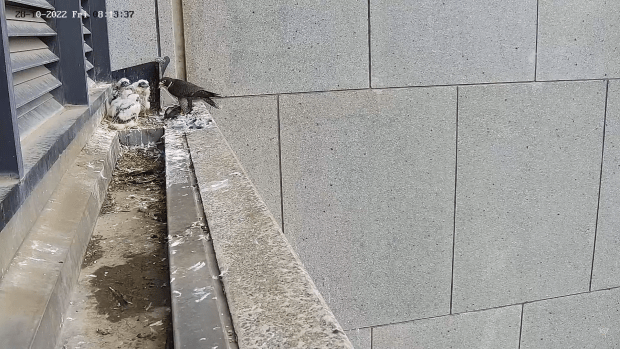
The oddest thing happened at the Orange scrape this morning. Xavier landed on the ledge of the scrape with a freshly caught Starling. Diamond and Xavier appeared to have a chat. Indigo ran over and wanted to take the breakfast prey item and then quickly ran to the Cilla Stones but returned. Both eyases indicated that they were hungry but, nothing happened. Xavier flew off with the Starling and has yet to return!
I suspect Diamond asked Xavier to take the Starling and prepare it. Oh, if we could only speak falcon. How frustrating that we can’t!
Diamond left and returned. It is 0728 and the Starling has not been returned to the scrape yet.
Ah, Xavier returns with ‘a’ Starling, unplucked at 0830. Rubus and Indigo also get a plucking demonstration but they are starving and Rubus, especially, is jumping and biting at Dad’s beak.
Xavier was doing a pretty good job considering he is being run over by his very large ‘babies’. Can we really call them babies now. Just look at how big Rubus is getting…my goodness. Indigo really has to work for her prey bites now.
Then Diamond shows up. Mum stands at the ledge and watches what is going on before her eyes. Xavier continues to feed Indigo and Rubus. He is doing a pretty good job.
Then Diamond decides it is time to take over and feed the kids.
She gets the prey and little Rubus, for some reason, runs over to the other side of the scrape.
Oh, but don’t worry. Rubus can’t be somewhere if food is elsewhere. He quickly gets back over and starts leaping for bites!
Both Indigo and Rubus have finished their meal. Indigo has stretched and now, for some reason, each has decided to go into a different corner. This won’t last long. They love to have a cuddle puddle.
Just look at Indigo’s wing feathers as she stretches.
I wonder how long they will stay like this?
Not long is the answer! Indigo goes over to join little Rubus. Well, OK. ‘Little’ Rubus is not going to apply for long. Aren’t they just sweeties?
At the scrape on 367 Collins Street in Melbourne, Mum slept on her perch above the four eyases. She flew off early.
An adult returned with a freshly caught pigeon (I could recognize it this time easily, thank goodness) and began plucking and plucking and plucking. The Melbourne Four will be very capable of plucking their own prey with all of these lessons. This was followed by a pretty good feeding. It looked like all that was left of the carcass was the backbone holding the wings when the parent flew off. One eyas appeared not to want to eat. I wonder if it is getting ready to cast a pellet? Eyases are often not hungry when this process is happening and many are very frightened when their body begins to regurgitate a hard clump of bones and hair!
Middle doesn’t look the worse for wear after the dust up with Big last evening. I wonder if Middle learned anything from pecking Big when everything was otherwise going quite well?
The breakfast fish that arrived was small, a bit of a teaser but, if both of the osplets behave each will get some fish. Dad landed with it at 070928.
Big got the lion’s share of the fish. Middle waited and was a wee bit nervous. Middle did wind up getting the fish tail which he turned away (Big was eyeing it) and horked.
Middle did wind up with a nice little crop. And the meal was civil. Hopefully Middle will just eat and leave Big alone today.
Everyone has eaten. That is a great start to the day in Australia. No one is traumatized. Everyone will sleep or pick at the leftovers on the nest until the next meal arrives.
Thank you so much for being with me for this early report on the breakfast offerings in the Australian nests. Take care everyone. See you soon!
Thank you to the following for their streaming cams: Port Lincoln Ospreys, 367 Collins Street by Mirvac, and Charles Sturt Falcon Cam and Cilla Kinross.Thanks ‘L’ for the report on electrocutions and how to cease those unnecessary deaths and ‘H’ for the great question on predation.
I hope this finds everyone well with a smile on their face!
Going for a walk, no matter how short or how long, can be invigorating for one’s mind and for our bodies. I remember when my mother broke her hip. Her surgeon, at that time, was the surgeon for the OU Football Team. I have forgotten his name but, I will never forget the day he looked into my mother’s eyes and told her if she didn’t get up out of that hospital bed, she was going to lose her ability to walk. It had been 2 days since the surgery and I laughed when he told me he was ‘nothing but a glorified carpenter’. What a character and an amazing surgeon. My Mum took it to heart and got herself up and within the month was walking 2 miles. Oh, she did well. The weather was lousy and her and her best friend, Dorothy, would go to the mall and window shop as they got their exercise. It was a good lesson for me, too!
It was a frigid early afternoon yesterday. It was 1 degree and the wind was blowing over the pond and bringing a chill even through the wool coat. I reminded myself that it will soon be parka weather. The state of the Wood Ducks needed checking. There was only one lonely male that I could find. He came swimming towards me thinking I had food. What a tragedy. Several of the ducks at that particular park pond had ‘Angel Wing’ this year. It is doubtful that they will survive. I left before he wasted his energy coming all the way to the shore. What a beautiful sight he was!
Did I tell you that I have the greatest fondness for ducks?
It is rather miraculous. When I look at a male Wood Duck, the patterns in the plumage remind me of weavers in India. Those women have the patterns emblazoned in their minds but, for these precious ducks, the pattern is laid out as the feather emerges from the follicle and grows. Feathers grow out of a quill or shaft. In young birds, we call these ‘blood feathers’ because they actually contain blood until the feather is completely finished growing.
A single follicle can produce, like a weaving, multiple colours and patterns. If I think about it for a long time my mind just becomes boggled. Just look at the multiple colours that go into this handsome duck. Did you know that the male Wood Duck plays no part in raising the young? Absolutely none just like poor Daisy, the Pacific Black Duck that laid her eggs on the Sea Eagle’s nest in the Sydney Olympic Forest. Daisy had absolutely no help – not even security. So if the male doesn’t bring food for the female or provide security or help with the little ones, what does he do? Well, guess what? He just has to look extremely handsome! The female picks him for his beautiful plumage – they want a male that stands out from all the others.
On the other hand, the female needs not to stand out in a crowd but, blend in with her environment. She needs to have good camouflage in order to not call attention to predators.
I really adore female Wood Ducks. It is because they are quiet and shy, often hovering in the background wanting seed tossed on the ground and concrete by visitors but not daring to do so. They are often chased by the geese and by the Mallards.
The females have a tiny crest compared to the males and instead of a red eye ring and eye they have a yellow eye ring in a gorgeous white teardrop shaped eye patch. No flamboyant colours for them. Grey leading into a dabbled brown breast with some lovely blue on the wing to match their bill.
Oh, to me she is the most beautiful delicate little thing. I missed seeing the females. This image was taken on 10 October. I will check again in the next couple of days as the weather warms to see if any were just lurking on the island where I could not see them.
In the mailbox:
‘L’ sent me a great article from BirdLife on a recent study on how to make overhead power lines safe so that birds do not collide with them. It is a good read.
Besides the sight of a few ducks putting a big grin on my face, it was absolutely the state of the Port Lincoln Osprey nest that has had me grinning from ear to ear. I continue to say that it is horrific to lose a chick, heart breaking every time and they are not forgotten. Never.
Middle is doing so well. He is really showing his stuff – sitting right by Big, doing the snatch and grab, not being fearful to eat the last bite offered. Confidence. Middle was doing really well for the past several days and most of Thursday in Australia and then…he wasn’t. Middle now has a bald spot on his head!
Another fish arrived on the nest and while it wasn’t as big as some of the early morning ones, it was large and everyone got a good feed. I almost think Mum caught it as she appeared slightly damp when she returned to the nest. I cannot be 100% sure, however.
Middle is on the left side of Mum and Big is on the right when she begins feeding. We can just see cute Middle peaking out from under Mum’s wing.
Middle standing getting ready to stretch his wings. You can see the dark thermal down that will be under their juvenile feathers on Big who is leaning over.
In the image below you can really see Big’s tail feathers coming in and her thick
In between rain and wind, Middle and Big continued to eat and eat and eat. It is difficult to even imagine where they put all that fish. In both of the subsequent feedings that I watched – and that was even before mid-afternoon, Middle got the lion’s share of the fish. There were no quarrels, no disputes, just Middle full of confidence eating away. It just put a smile on my face from one side to the other. Here are a selection of images from those later feedings.
Middle got the lion’s share of this feeding as well. By 1321 he is full and has moved away looking back at Mum with such a precious delicate face. Big is now having a turn.
The rain and the wind begin and Middle gets under Mum as best he can.
The storm passed and Mum flew off the nest. Look what is over on the rim of the nest? The rest of the fish that Mum was feeding Middle and Big when the rain and the wind started. Middle sees it. This time next week Middle would go over and grab that fish and start eating it but, he isn’t going to do that today.
Mum returns to feed her babies. Middle has found some room for some more fish. I honestly do not know where these two are putting the fish – they have almost been eating non-stop all morning.
At the end of that feeding, Middle, standing in profile, his showing off his enormous crop!!!!!!!!!!!!!!!!!! It has been a really good day so far for Middle and it isn’t even the middle of the afternoon.
Was Middle just feeling his oats when he decided to peck Big at 18:10? (I want to send a thanks to ‘H’ here. I was up with my coffee and had not rewound the end of the days footage. So thankful for her warning). As ‘H’ said, ‘It is a reminder not to mess with Big.’ It was a frenzied attack. Both had eaten well. Middle more than Big. I hope Middle has learned to leave his Big sister alone. Enjoy the peace and quiet and don’t push it or she will attack if provoked and Middle could be the big loser. As it stands, if you see feathers missing, Big did it but Middle provoked the attack. Gracious.
Big, satisfied that Middle, was submissive and would never do that again stopped the ferocious attack at 18:13:52 – a little over two and a half minutes from when it started.
The Melbourne Four are the most energetic and expressive eyases. They run up and down the gutter until their batteries are all worn down and their tummies are full and then they stop. All in a big puddle, altogether keeping one another warm on a drizzly day.
One of the highlights of the feedings today was when Dad brought in a freshly killed pigeon and began plucking it right in front of the four ravenous eyases. Now I say pigeon because once upon a time someone told me that the only reasons there are pigeons is for the falcons and hawks to have something to eat! The feathers were white and some of you might have a more clear idea if it was a pigeon or a gull or something more exotic. Then when the prey was plucked and all the kids were ready for some real bites instead of feathers — Dad flew off with the pigeon. What?! He did bring it back and was ready to fill those crops and then Mum showed up. She pulled a Diamond taking the prey away from Dad who had almost lost it to the oldest eyases. Mum then proceeded to fill their tanks.
Then Dad leaves taking the pigeon with him and leaving only feathers.
A few minutes later he returns with the prey.
Then Mum arrives to take over! Diamond-style.
Dad is off!
Everyone is hungry!!!!!!!!!!!!!!!!!!
‘H’ clocked 7 feedings of various links at the 367 scrape on Thursday.
At Orange, Rubus and Indigo have been eating and eating, too. I love when Little Rubus gets full and turns his back to the adult who is feeding. When did he start this behaviour?
I could watch the expressions on Rubus’s face all day. He is quite the character.
Once Indigo finishes eating she goes over to cuddle with her little brother in the corner. A little cotton candy pile.
Beautiful Diamond looks over lovingly at her two eyases. What a real treat it has been seeing Diamond and Xavier with two – the very quiet grown up Indigo and the feisty little Rubus. Such treasures.
How many times a day do we need to thank these bird families for bringing such joy to us?
Migration News:
Bonus crossed the Dardanelle Strait and flew to the Greek island of Lesvos.
Bonus is feeding near this creek. It looks like a lovely place to be.
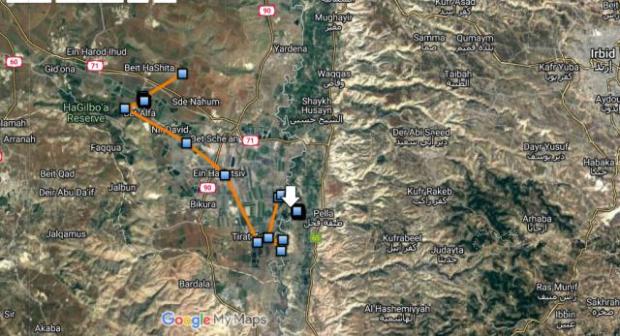
Little Waba was in Israel. He flew into Jordan and decided to return to Israel.
This is where Waba is feeding. There were reports of 85 Black Storks at this site. Hopefully Little Waba is there among others, safe and getting full and strong. There is still more flying to do!
There has been no transmissions from either Karl II who was last heard from in Egypt and Kaia whose last transmission was from Chad. Please send them your most positive best wishes, please.
Please send all kinds of positive wishes to Middle so that he will just leave Big alone from now on. No need to bother Big. Everything was going just fine. Middle has to remember that Big is the boss even if he gets to eat first. That is only because she is letting him.
Thank you so much for being with me today. Take care all. See you soon!
Thank you to the following for their streaming cams where I took my screen captures: Port Lincoln Ospreys, 367 Collins Street by Mirvac, and Charles Sturt Falcon Cam and Cilla Kinross and to Looduskalender for their maps and news of Karl II and his family.
Oh, gosh, golly. Tomorrow I will be telling you what a wonderful day it is but today, it is another grey, cloudy, and miserable day. The joy is seeing all of the birds in the garden this morning. There is a row of lilac bushes about 13 metres long. Every branch is moving a little. If you look long enough, you can see the birds. (There are still leaves on those bushes). So happy that you could be with me and the birds.
Little Red and I hope that you have a fantastic day today!
Making News:
Lori Covert posted an image of the new Osprey platform for Lena and Andy. Oh, my goodness. Isn’t this wonderful! Thank you Lori and Connor at Windows to Wildlife.
There she goes!
It is always nice to have a really good news story and this is one of those. Thinking back on the eaglets from last spring, you might well remember the eaglet from the US Steel Nest, that ‘fludged’. Rosie was taken into care and on the 21st of October, after being in care for 5 months, this beautiful eaglet was released into the wild. Read the full story here:
The Audubon Centre’s beautiful Bald Eagle ambassador, Liberty, has died. She is going to be sadly missed by all the visitors and the staff she has delighted for decades.
One of the things that I am looking forward to, when I next visit the UK, is a murmuration. There are many places to travel to see these amazing images of Starlings (and others) – hundreds if not thousands – flying and changing direction is a distinct coordination. A murmuration will take your breath away the first time you see one. Check to see if there are any local happenings near you!
Checking on the Australian nests later in the day, another nice fish landed on the Port Lincoln barge at 12:04:11. Oh, I thought Big was going to be a bit grumpy but, she wasn’t. She always demands to be fed first and Middle began his snatch and grab and eating – he is behind Mum – about half way through the fish. Oh, Middle is getting so smart! He is now eating very well in part because Big has calmed, there are big fish arriving on the nest, the pair eat more at a sitting but require less feedings…and also Middle being clever. He can really read the environment and he watches and listens and knows when to stay out of Big’s way!
Middle is behind Mum enjoying the last half of that fish. Big will, like usual, want some late fish but there is lots.
Big decides she wants another bite!
Mum gives Middle some fish scrapes but she also gets to eat a few bites herself.
There is absolutely no discord. All is going well. Dad brought in a bedtime snack late in the day. It was 1953.
The cam operator took some lovely close ups of Big and Middle earlier.
If you have been avoiding Port Lincoln for fear of further beaking, now is the time to return. The nest is very harmonious. These two are getting their beautiful juvenile plumage and they are beginning to be much steadier on their walking. They will be measured, weighed, banded, given names and their genders will be revealed at a time to be determined from the 12-14th of November. Here is the link to their streaming cam:
At Orange, Diamond picked around through the scrape finding tidbits of scraps to feed to Indigo and Rubus around 1050. At 10:54:36, Xavier arrives with what looks like a well prepped parrot. Indigo got the first of many good bites but, then, all of a sudden, Rubus, who had been standing on the Cilla stones, decided he was famished. My goodness is Rubus aggressive when there is food around!!!!!!!!!!!
Here is a cute video of the 1530 feeding at Orange yesterday. There are some great images of Rubus! It is nice to hear the sounds and see the eyases moving and wanting food!
This video was shot from the side cam but ‘A’ is telling me to make sure we look at the ledge cam often as it covers the corner that Indigo and Rubus are liking for sleeping.
Melbourne’s pigeon population is dwindling — OK. I doubt if the number of pigeons will even be noticed but, normally, on an Osprey nest with three chicks, anywhere from 450-500 food items are eaten. I wonder how many on a Falcon nest? Five feedings a day?? Yesterday was an interesting one. At 0834, there was a tug of war and a small prey item was taken and the eyases were self feeding. After breakfast, there was another pigeon delivery at 1013:07 and then another one at 13:51. The 1013 feeding lasted 10 minutes with Mum and Dad feeding the eyases. The 1351 lasted 18 minutes.
Food is such a great motivator. The eyases will, eventually, get themselves up out of the gutter where they have been running and sleeping for that lovely pigeon.
The Melbourne Four will have another two meals before the day is over. At 1437 there is a terrifically short feeding of two minutes with the longer evening meal lasting seventeen minutes at 1849. Thank you to ‘H’ for providing those feeding lengths and confirming my times.
Just look at those wings!!!!!!!!!!!!!!!!! This image is from that self-feeding frenzied moment earlier in the day.
Thank you so very much for being with me this morning. Take care everyone. See you soon!
Thank you to the following for their streaming cams, posts, and videos that make up my screen captures: Liz M and Charles Sturt Falcon Cam, Charles Sturt Falcon Cam and Cilla Kinross, Lori Covert Instagram Post, Observer Today News, Tribilive, Port Lincoln Ospreys and 367 Collins Street by Mirvac.
I am still nervous about Port Lincoln despite the fact that everything has been going well. Today. as I was going through old screen shots, there were so many of Little. It is always a reminder that the challenges our feathered friends face – whether they are song birds, sea birds, or big Apex Raptors – are serious. All it takes is a late fish arrival to set off a series of events that often leads in the death of the smallest and most vulnerable.
So, it is reassuring to see that everyone on the Port Lincoln nest had a good feed. Dad came in with a large whole very much alive fish at 08:46:17. At one point, Big ‘sort of’ raised her neck high. It was enough to leave Middle at the far side waiting…waiting for the time when Big was full enough to go up for fish but, not so long that nothing was left. Middle watched, listened, and moved over. Middle and Mum are really going to enjoy the last half of that fish! Thanks, Dad.
Just look at that nice fish! Mum had full control of it. She wrestled it around with her strong talons and jaw so that there was no chance it would get away.
Big is ducking over. That fish gave it a bit of a flap when Mum was hauling it in. (Facing the screen – Big is on the right of Mum and Middle is on the left).
Middle is just waiting while Big eats.
Mum has been feeding the two osplets for nearly an hour taking some nice bites for herself. Big now has her second wind and has decided she is up for seconds. Not surprising. Big does love her fish.
That nice fish will keep Mum and the two osplets for quite some time. They should not be thinking about another fish until tea time!
I knew that you would be as anxious to hear how the feeding went at Port Lincoln as I am. It is all good. We can each rest a little easier today knowing that Middle has had a good feed and that there was no beaking.
Big horked the tail down at 09:43:30.
The feeding took 57 minutes – what a fish! Everyone is full.
Thank you so much for joining me. Take care all. See you soon.
Thank you to Port Lincoln Ospreys for their streaming cam where I took my screen captures.
I hope that you have had a great day! I am here just checking in on the breakfast arrivals down at the nests in Australia. I wonder what is on those silver platters today?
The morning walk has reminded me of something very important. In some countries, Halloween is quickly approaching. It appears that my neighbourhood has decided to go quite fancy with the decorations but, are they aware that some of those are absolutely deadly to the birds with their tiny little legs?
This inexpensive Halloween decor can be deadly. Please pass the word. It is no different than the birds getting their legs caught in those mesh bags that companies insist using for oranges, lemons, avocadoes and other fruit.
One of the adults is awake at 367 Collins Street! The eyases, those cute little cotton ball running machines, are still sleeping, all in a puddle. Adorable.
Oh, it looks like the adult (I cannot tell which from this angle) has only a small leftover piece of pigeon. Not sure that will satisfy those ravenous eyases. Just look at them. They are so big! This new couple has done well despite our initial worries.
It is…you guessed it – a European Starling for Indigo and Rubus. I had no idea that they had such gorgeous orange beaks in Australia. They really are quite beautiful birds with their iridescent feathers. Xavier arrives with breakfast and begins giving the two chicks a plucking demonstration. It is not long until Diamond arrives. Rubus is never interested in this part. It looks like he is thinking about going over to the Cilla stones but changes his mind.
What little darlings. Indigo is getting much steadier on her legs and little Rubus wants to walk just like his big sister. He is still using his ankles but trying to walk straight up. Adorable. Look at that sweet face.
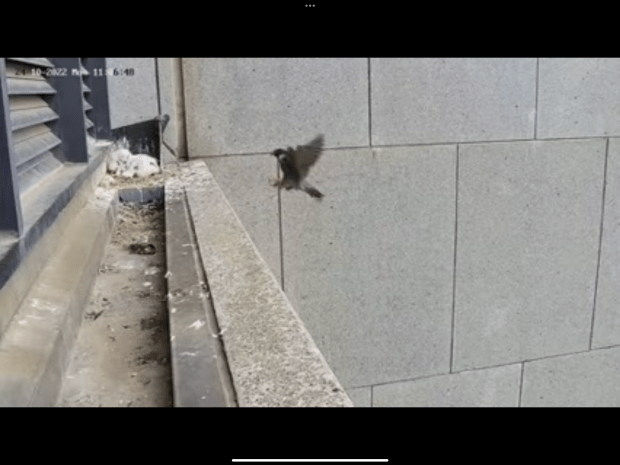
At 0648 Xavier lands on the ledge again. This time with a prepared prey that looks like a parrot of some kind. It is so hard to tell when the feathers are mostly gone. At first Indigo and Rubus just watch. Xavier would have been so happy to feed them. Diamond arrives. Indigo goes over to the other side to do a ps and returns for some of this delicious breakfast dessert.
Diamond continues to offer Indigo and Rubus occasionally taking a piece. Notice that her chest is sunken. Diamond needs a good breakfast – she needs to fill up her crop, too!
Someone has post a sweet video already! Enjoy.
Big and Middle are still waiting for their breakfast fish to arrive. It looks like there is some rain or drizzle. Their backs appear to be a little wet.
Big and Middle are still waiting but they are not showing signs of being impatient. Thankfully.
Oh, those two are so beautiful. You can see the wind is blowing. Mum’s crest is sticking right up. Stay nice you two!
As I sign off it is 0837 in Port Lincoln and no breakfast yet. They had a big late dinner last night so hopefully neither are ‘starving’.
I belong to the American Society of Ornithologists and the US Government has just issues their ‘State of the Birds’ Report for 2022. It is 17 pages long with some good graphics. It shows some encouraging news for waterfowl where wetlands are being developed but an overall trend downward in bird populations.
Here is that report if you would like to have a read. It will really help you understand the urgency in taking care of our environment for our feathered friends.
For those of you getting super excited about the beginning of Royal Albatross season, here is the latest news from Sharyn Broni. Thanks Holly Parsons for the post! Holly is the Admin for the Albatross Lovers FB Page.
Thank you so much for being with me this afternoon. Take care everyone. See you soon! Wish for fish for Big and Middle.
Thank you to Holly Parsons and the Albatross Lovers FB, Port Lincoln Ospreys, 367 Collins Street by Mirvac, and Charles Sturt Falcon Cam and Cilla Kinross for their posts, videos, and streaming cams where I took my screen captures.
I hope that your day is starting off wonderfully well.
For those living in Melbourne, oh, enjoy those 24 degrees C temperatures for me, too. My forecast is for it to snow in the next hour! And for it to be -1 C tomorrow. Now…I don’t know about your meteorologists but, ours are sometimes not correct and I am really hoping that they will be wrong. Not for me but for all the birds that remain in our City. There are even reports of the first Snowy Owls arriving in the southern part of our province. Cold weather is really and truly on its way. I have never seen all the Snowys on the fields in our province. Looking forward to finally seeing one this year.
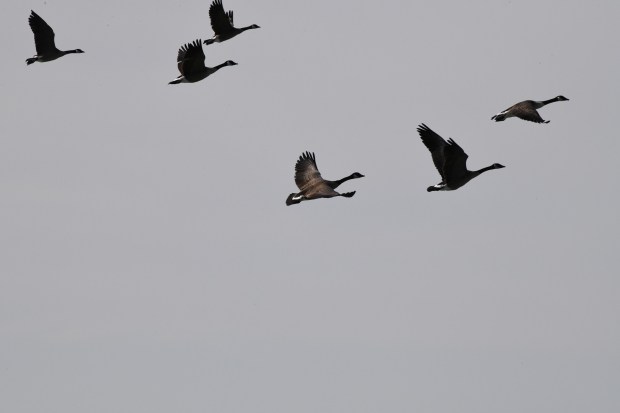
There was no snow when I woke up but it is 1 degree and grey. The Blue Jays are gathering peanuts in the shell and the Lilacs are full of little sparrows singing away eating their Black Oil Seed and millet. Just a few seconds ago six Canada Geese flew over.
Thankfully I had the camera ready because I was wanting to try and catch Little Red. He was too quick!
My attempts to lure the European Starlings down from roosting in the far trees did not work. There were, however, some wrens and sparrows that promptly went over to eat the Meal Worms and the Bark Butter. The squirrels were also busy today and Little Red continues to go in and out of the big box that holds the wood. That is where I put his new house – if he would move into it. I am afraid to go and check but it is possible that he is entering from the back hole to the house. Fingers crossed. It would be a great place for him.
There are a few Dark-Eyed Juncos still around looking for Millet.
Dad brought in one of the nicest fish I have seen to the Port Lincoln nest. Mum had been doing her talon dance and Middle had joined in prey calling. When Dad arrived, the fish, like all fish being slimy, slipped…oh, it looked like Mum was going to lose it down the side of the nest. But…she didn’t. She managed to get that very much alive fighting fish up on that nest and then she decided to fly off with it. I do not know what Mum did to that fish in the few seconds she was off the nest but it sure wasn’t wiggling and jerking when she got back. How many times have we witnessed these big fish, alive and fighting, being brought to nests only to hold our breath as they flipped and flopped over the ospreys??? Manton Bay comes to mind for this past season in the UK. My goodness I thought those two babies were going to die. How the one survived I will never know but, she did.
It is not the first time I have seen this happen and I am certain that you have, at one time or another, if you have watched Osprey nests, seen a fish go overboard. It is heart breaking. I cannot say for certain but many say that it takes about 15 dives to get a catch. That is a lot of energy expended to go over the side. And, as we all know too well, a fish can sometimes mean life or death to one of the chicks.
Mum fought that fish pulling and pulling so it would not go overboard.
The other thing that I find interesting in these situations is that the male does not help. It is as if once the fish is delivered he is done..gone. At any rate, three cheers for Mum. She did an amazing job wrestling that fish.
Middle is very clever. Mum is getting the fish situated and Big is already to eat. Middle does not waste any seconds getting to the table but he doesn’t just rush in either. He can see how long that fish is and slowly moves into place.
Middle is going to get a truly good feed.
It is hard to tell but, Middle has a very large piece of fish he is getting ready to hook.
Just have a look at our dear Middle. That crop could pop!
Notice also how heavy the wings are now. The ospreys will let them droop. I also like to point out the dark down on the chest. The ospreys will have a thermal down underneath their feathers that will help them regulate their temperature.
All is quiet. Two very full ospreys. As I write this, the time is just past 1500 in Port Lincoln. I have not seen another fish come to the nest yet but there will be at least 1 more if not 2 today.
It is so nice to have these three nests progressing along nicely without too much worry of anything untoward happening. Oh, yes, I always say that the fortunes of a nest can turn in an instant – and they can. Thankfully we have no worries about predators, like Eagles, owls, or goshawks, diving down to snatch the chicks out of the nest! Those are constant worries at some nests such as those in Finland and now, of course, at some in the US like Cowlitz PUD where all three ospreys were taken by a Bald Eagle.
Oh, how precious. Indigo walked over to give her little brother a cuddle.
Xavier arrived with the afternoon tea. For a moment I thought that he might get to feed Indigo and Rubus but, no…Diamond arrived. It looked like a Starling but then as Diamond plucked it looked less so. The fact that it took longer to remove the feathers with Rubus getting anxious and walking away to Cilla’s stones indicated that it must have been something larger. Oh, my goodness. When Diamond started feeding the two were jumping and stretching for joy! It was a great feeding.
Notice that Little Rubus is at the kind of cotton ball stage too…the fluffy white down just hanging on as the juvenile feathers grow underneath. Indigo is doing a lot of preening and if you catch a glimpse of her tail, it is really growing nicely. They are changing almost right before our eyes. It is now Wednesday in Orange and by the weekend we should see some dramatic differences in the plumage of both.
It sure looks like a Starling!
Diamond arrives and takes the prey. Xavier has a last look. Oh, he loves being a Dad and what a wonderful one he is!
Some of you more familiar with the prey available around Orange can probably identify this tea time treat. It looks like a Starling to me but please correct me if it is something larger.
Poor Indigo. Both ‘J’ and I noticed that she let Little Rubus be right up in front. I do wonder about the fright she had with that one Starling head having a lasting impression or lasting fright.
Rubus gets impatient waiting for the plucking to end and walks over and gets on Cilla’s stones. Do you know why the stones are placed where they are? It is so Diamond will have to lay her eggs so the camera can see them, not hidden in the corner.
Rubus has a ferocious appetite! Not to worry. Indigo did get some food!
Notice how Indigo is changing. You can see those beautiful tail feathers and we are now getting a reveal of her back as the soft down comes away from her eyes. She is going to be just a stunner.
Oh, and thankfully, someone caught the morning feed at 367 Collins Street on video! (I am not able to use my video app on this machine…I hope to be able to make video clips for you soon but, for now, we will rely on others!)
Around 1345 at the scrape of the Melbourne Four in the CBD of Melbourne, the parents are on alert. One is calling from the ledge and they seem to be spending time on the ledge protecting the eyases.
Even if there was an intruder about, the Melbourne Four managed another four feedings lasting over ten minutes. They were at 0641 for 17 minutes, 1126 for 11 minutes, 1629 for 12 minutes, and a really big feed at 1855 lasting for 18 minutes. Thank you ‘H’ for all those times.
Other News in Bird World:
One of our favourite Ospreys, Richmond from the San Francisco Whirley Crane nest in the Richmond Shipping Yards, has had to protect his territory from Ravens today.
This is the latest news on SE30 who was found in a residential neighbourhood. I sound like a broken record. It is incredibly sad that the eaglets are rushed out of the forest so they cannot get their flying strong and be taught how to hunt for prey by their parents. This scenario is repeated annually. Thankfully, all those wonderful people around the Discovery Centre who love these eagles from here and beyond keep an eye on them. It is also reassuring that the right protocols are in place to rescue the eaglets and get them into care. Let us hope that SE29 and SE30 are both kept in care until they are flying strong and know how to hunt! Thank you Judy Harrington!
There is also some progress being made at the North Dame Bald Eagle nest in St Patrick’s Park, South Bend, Indiana. This is the natal nest of Little Bit ND17. Good luck Mum and Dad. They have a huge job ahead of them!
How much is a Bald Eagle’s life worth? Sadly, not much. A Devon, Ohio man shot and killed a Bald Eagle. WKBN27 First News is reporting that a federal judge gave the man a one year’s probation, a fine of $4000 and another $1200 to USFWS.
Thank you so very, very much for joining me today. Take care everyone! See you soon.
Thank you to the following for their posts, videos, and streaming cams that make up my screen captures: Port Lincoln Ospreys, 367 Collins Street by Mirvac, Charles Stuart Falcon Cam and Cilla Kinross, Norte Dame Eagles FB, Eagle Cam, SF Ospreys and Golden Gate Audubon.
It is another dreary day on the Canadian Prairies. Geese have been flying low overhead and there are now more than 20 European Starlings roosting in my back tree. They are not coming to the feeders despite the fact that I filled a larger cylinder with Meal Worms and Butter Bark. Are the Blue Jays keeping them away? In the spring when the Starlings stopped on their way north, they filled up the lilacs. Then there was only Junior. He did not bother them. The only thing that has changed are the number of Blue Jays and Crows and the Crows are not about today. It is causing me to be very curious. What is so very nice is that the Black Capped Chickadee is flitting around getting seeds and flying right by me. They are so adorable.
The first nest in Australia to have breakfast was 367 Collins Street. This couple is a riot. Mum is obviously ‘very’ independent. So this morning after Dad surviving a false alarm and getting mobbed by the Melbourne Four, he flew off. Then Mum arrived with a nice fat pigeon and within seconds Dad arrived with another one. He decided to fly off with it! These two really do need to coordinate their efforts!!!!!! Of course, two pigeons first think in the morning might be fantastic as these four grow. But it reminds me of having two cooks in the kitchen, one making coffee with a French Press and the other with a Drip Machine.
Here comes Dad! This new couple is so cute. Dad definitely doesn’t want to see the eyases go hungry!!!!!!!
The Port Lincoln Osprey barge was the next to have breakfast. It was 07:16:51. I could not tell you how large the fish was for this morning’s delivery nor can I tell you precisely who ate the most bites. Mum had all of this obscured with her back to the camera! However, Big had a ‘wee’ crop and Middle’s crop was larger.
Middle has walked away from the table and Middle continues to get fed.
Middle has a great big wing flap and stretch with its numb up in the air. Very nice pantaloons.
Now to wait for the next arrival. That fish was all finished in less than 20 minutes. I do wonder how big it was and if Mum got any.
It was a very foggy morning in Orange. Xavier arrived with breakfast at 0830. Oh, the eyases were so hungry. They were quiet when he arrived on the ledge with prey but when they realized what was happening they immediately began squeeing and jumping up and down. Feed me, feed me!
Everyone has had their breakfast in Australia. That is a huge relief and a great way for them to start the day and…for me to end mine.
In the US, the Bald Eagles continue to be the story with streaming cams coming on line and the huge Apex raptors working diligently to get ready for breeding season. I wonder if they will chose to use a papadam chair like Ron McGill did at the Miami Zoo for Ron and Rita to replace and help Connie and Clive with their destroyed nest at Captiva???
Harriet and M15 are working super fast to get their nest built.
If you live in the UK, check out the schedule for BBC4 and the Ospreys! Only 5 more months until they return from their winter vacations…..oh. I cannot wait. Wonder who will be first? My money is on Blue 33 and Maya at the Manton Bay Osprey Platform at Rutland.
Thank you so much for joining me. Take care everyone. See you soon!
Thank you to the following for their streaming cams where I took my screen captures: Port Lincoln Ospreys, 367 Collins Street by Mirvac, Charles Stuart Falcon Cam and Cilla Kinross, BBC4, and SWFL Bald Eagles and D Pritchett.
It is just past 2300 on the Canadian Prairies on Sunday evening the 23rd of October. Within the hour we are supposed to have the beginning of thunderstorms that are forecast to last through all of Monday. We could use the moisture. It is always good when the trees and shrubs get a really good soaking before the ground freezes.
And we did. The thunder boomed throughout the nite and everything is soaked this morning. The wind is gusting and there are few birds at the feeders. The only ones that appear to be nonplussed by it are the Blue Jays. What a change from yesterday when the sparrows and finches were splashing about in the bird bath. Today they are hiding at their roost.
It is always great to get a picture of Ernie, everyone’s favourite Port Lincoln Osprey. This image was taken by Pam Hewstone and posted on Fiends of Osprey FB page. His tracking indicates that Ernie continues to hang around the Main Wharf and the ‘silos’. This image was taken at Delamare Beach where Ernie and Dad like to fish together. Oh, he looks so good. Can’t see how that talon is growing back in but, it looks like Ernie is having no problem catching good sized fish. He already has a nice-sized crop.
Friends of Ospreys have been erecting Osprey platforms. You might recall they put in place one on Turnby Island for the bonded couple whose eggs were always predated when they laid them on the ground. Sadly, the two eggs the couple laid this year are now 45 and 46 days old and deemed unviable.
Monday was a really good day at Port Lincoln. What a joy to watch Middle be able to enjoy a meal without once being beaked by Big. Ironically, if you just started to watch this Osprey nest and knew nothing of the background and what happened a little over a week ago, you will talk about how calming it is to watch the ospreys fed by Mum. Big is 36 days old and Middle is now 35 days old.
So far there have been three feedings on Monday at Port Lincoln. There will be more at all of the nests as Canada slips into evening and darkness.
They came at 06:57:57. That was a flat striped fish. The second fish was at 0908. Middle Bob got the lion’s share of that fish and waddled away with a big crop. The third fish landed on the nest at 13:07:52. It was a huge fish. Mum and the two ospreys are going to eat well. So far Middle is doing well and the last I checked he was already getting a nice crop. Just brilliant.
Middle is the chick closest to the viewer. Notice that nice crop. Just look at how much of that fish is left. Everyone is going to have a good feed — including Mum! Thank goodness.
Seriously. Did you think you would ever see Middle with a crop like the one he has on display?? And just look at Mum. The two ospreys full and she is finally getting to enjoy a fish lunch, too.
For two days now this nest has been calm. It took Big 33 days, not 28-30 to settle but, in the end, she did. Grateful.
Middle and Big are at the age that Mum can now roost over on the ropes if she wishes.
Middle and Big do a lot of preening all day long keeping those feathers that are coming in good shape. Oh, didn’t you love it when they left that Reptilian stage and got this gorgeous plumage that is coming in. ‘R’ and I decided awhile ago that the juvenile Osprey plumage is much prettier than the adults.
Rubus and Indigo have had their second feeding. Xavier flew in with what looked like a Rainbow Lorikeet to me – and I will happily change that. It is the closest I could come to identifying that multi-coloured prey item that Xavier brought to the scrape at 092921. Oh, Rubus was ravenous. I have no idea where this eyas puts all of this prey but this wee one sure has an appetite! Xavier does a great job feeding his babies. Diamond doesn’t arrive for 12 minutes- the feeding is almost over. Xavier fed both Rubus and Indigo nice big bites.
A nice big pigeon arrived at 11:40 – all part of a crash landing by Dad (?) into the scrape box. Everyone had their fill and immediately starting working on those leg and wing muscles. ‘H’ notes that Dad fed them for 12 minutes while eating himself for about 25% of the time.
There was once again 5 feedings at the 367 Collins Street scrape yesterday. They came at 0634. That feeding lasted 18 minutes. A second feeding was at 1120 for 16 minutes then the 3rd hot on the heels of the second at 1140. Then there was a break with the 4th feeding at 1707. The Melbourne Four ate well. Then Mum came in with a pigeon at 1859 and looked around and only fed for about 1.5 minutes. ‘H’ thank you for the times and the notes. Mum and Dad need to coordinate their delivery times!!!!!!!!
It is now past midnight. The day is halfway over at our Australian nests. Everyone is doing fantastic. The Melbourne Four are growing faster than any good weed in your garden! Rubus continues to bug Indigo by following her everywhere. Such a sweet character. Most of all Middle is a confident Osprey. That nest is just so satisfying to watch now. I do hope that it continues. The banding of Big and Middle will take place in about 3 weeks.
In migration news, there are no new transmissions from Karl II and Kaia. Last time we heard from them Karl II was near Aswan in Egypt and Kaia was in Chad. I can also not find any new information on Bonus who has spent much time in Romania. The real news has come from little Waba who was in Turkey, flew near to Beirut and is now in Israel and has been feeding at some fishponds there.
While it is expected that there will be little transmissions coming from certain areas in Africa, I really do hope that we hear from Bonus soon.
The Bald Eagles are continuing to do their nest building. For those who watched Little Bit ND17 at the Bald Eagle nest in St Joseph’s Park in South Bend, Indiana, both Mum and Dad have been working on that nest. They are making slow progress. Harriet and M15 are doing a terrific job. Both couples lost their nests – Harriet and M15 in Hurricane Ian and the nest at Norte-Dame just fell apart. It is amazing what eagles can do in a short period of time. An adult has been on the perch at the Achieva Osprey nest in St Petersburg. I could not see its head to determine any markings. That nest is going to need a lot of work. In Redding, California, Liberty and Guardian are also working on their nest. Liberty has been using this nest for 18 breeding seasons. She has fledged 26 eaglets and has had 3 mates. Liberty is 24 years old and Guardian is 9 years old. Bald Eagle season is not far away!
Thank you so much for joining me. Take care. See you soon!
Thank you to the following for their streaming cams where I took my screen captures: Friends of Osprey and Pam Hewstone, Port Lincoln Osprey, 367 Collins Street by Mirvac, Looduskalender, and Charles Stuart Falcon Cam and Cilla Kinross.
I hope that each of you has had a fabulous weekend!
In my earlier blog today, I did not catch the ‘auto correct’ of Samson when I posted that him and Gabby were working on their nest. It is, of course, Samson not Damon!!!! Goodness.
The Sparrows thought it was warm enough for a bath today. And it is. It is a beautiful 14 degrees C – for me the absolute perfect temperature. It could stay like this forever and I would never get tired of it. They had such a good time! For well over an hour, one group after another spent time in the bird bath. They were so excited! I really do love sparrows…and I hope that those that think they will go extinct are wrong! And those that refuse to feed them because they are ‘not special’ will think again. They are so varied that I have a 8 cm thick book on them and still have trouble sometimes with Clay Sparrows and Vesper Sparrows — and I shouldn’t!
During the last month I have seen hundreds of Crows fly over my house around 1700. I did not know what they were doing until ‘N’ posted a YouTube video on Crows flying to join one another at a communal roost. It happens an hour before sunset. Thanks, ‘N’.
But, why did Crows get the moniker ‘Murder of Crows’? Apparently the use of the name goes back to 15th century English literature but, the Crow expert at Cornell University said the term is incorrect. ‘Scientists would call it a flock’. Indeed, Crows are often connected with death because they are black and because they eat carrion (dead animals) like Vultures, Condors, and Eagles. So remember, the next time you see a large group of Crows it is a flock!
As you will know, from reading my blog, I love ‘my’ Crows. Mr Crow has been around the garden for a number of years but, this year, he was joined by three fledglings that grew and grew and grew. (I always say Mr Crow…it could well be Mrs Crow!). This summer they started alerting me to when the wandering well-fed domestic cats were in the garden. They were so loud that their caws could not be ignored. For several days it seemed that they were wanting more food. They must have think I am truly daft. It wasn’t food – it was the cats. I am so grateful to them for protecting the other garden animals. In fact, most of the garden animals live in harmony. There is enough space and lots of food. It is the cats that cause the unhappiness.
But back to the Crows. ‘H’ wrote to me that Crows are signs of bad luck or death in Australia. In North American Indigenous traditions, the Crow and the Raven are good signs. They are signs of protection and often are viewed as messengers of wealth. In Manitoba, the Crow is part of the Creation Story of many of the local tribes just as it is with those in northwestern California. There are ceremonies that use the symbol, the power, and the prayers of the Crow to invoke protections – and these are very sacred, only used and known by those who deal with the Spirits. For the Inuit who live in the far north of Canada, the crow and the raven are often considered the same. You will find the creation stories of the Inuit and the Haida from British Columbia, using the Raven or the Crow, to tell their myths. The myth ‘The Crow Brings Daylight’ describes the moment when the people who lived in total darkness first saw the light that was brought by the Crow.
I hope that the Crow will bring you much luck and will guard and protect you.
All of the nests have had breakfast in Australia early. No one has had to wait for food to arrive despite the ominous clouds that you can see out the window of Xavier and Diamond’s scrape or the rain drops collecting on the camera at Port Lincoln.
Xavier brought in a Starling for Diamond to feed Indigo and Rubus. That was at 063320. Indigo and Rubus watch everything their parents do intently – each is a learning opportunity. The chicks will learn how to pluck and feed through observation. They will watch their parents fly from the scrape and, after they fledge, Xavier will teach them how to hunt. (With hawks and raptors it is often the role of the Dad to teach the fledglings to hunt.) Still, I have seen many, if not most, of the females do this as well. The exception would be the female Ospreys that leave the nests in the UK prior to the chicks fledging.
Notice that Little Rubus is in the corner with Indigo. Everything Indigo does, Rubus copies.
Indigo was so frightened by the Starling head last week. And here is another Starling head dangling! Do falcons have nightmares?
Just about the same time in Melbourne, at 0634, a plump freshly caught pigeon landed on the ledge at 367 Collins Street.
This morning you could really hear the stomping on that metal gutter! The eyases ate and began running up and down getting their legs strong. They are also flapping those little wings. Soon the white dandelions will be covering everything as the down flies off revealing the gorgeous juvenile falcon plumage.
It did not take long for the Melbourne Four to ‘decorate’ the far end of the gutter. Did you know that when falcons are looking for a good territory/scrape box/cliff, they will check to see how much guano is spread all over. The more ‘ps’ the better – it means that the area is rich in prey. An ideal location to have a nest!
Flapping and flapping. The others are almost all the way down to the other end of the gutter. The little one, however, chose to stay in the scrape. Cute wings!
Thankfully, Dad was out fishing early at Port Lincoln (as I am told he always is) and he hauled in a flat Zebra fish at 065757. The feeding was absolutely civil. In fact, it looks like Middle got the largest portion of that early fish.
It is difficult to describe how thrilled I am that Big has settled down and that life on the Port Lincoln Osprey platform is civil. It helps everyone. Middle can now eat without too much fear of reprisal. Still, he should be a wee cautious just in case Big wakes up on the wrong side of the fish one morning.
The nests have had their first meal for Monday in Australia. All is well.
There is no further news on Sea Eaglets 29 or 30 – both are in care. Dad and Lady have been working on their nest. They must wonder where their fledglings have gone. I wonder if they will leave for Lady’s favourite spa location, Goat Island, soon?
Thank you so very much for joining me. Take care of yourself. See you soon!
Thank you to the following for their posts and streaming cams where I took my screen captures: Pinterest, Charles Stuart Falcon Cam and Cilla Kinross,. 367 Collins Street by Mirvac, Sea Eagles@Birdlife Australia Discovery Centre, Sydney Olympic Forest, and Port Lincoln Ospreys.
As is my usual routine, I am starting my blog for Sunday morning late on Saturday evening. That flu shot has had me a bit under the weather and I have not ventured out to check on the local duck populations. I hope to do that tomorrow with some new images for you. The number of birds in the garden is certainly dwindling. Instead of 40 or more Dark-eyed Juncos there are only a handful and the number of sparrows is about half. The squirrels continue to hoarde the peanuts at the dismay of both the Blue Jays and a single crow. All four of them are in the neighbourhood but, one family has taken to feeding them bread. Crows love bread – it is sweet and salty. It is junk food. And the ones that come to my garden would much rather have bread than healthy nuts, fruit, and protein. Drives me crazy! Angel Wing is why – when we went for a walk around the local duck pond on Thanksgiving, we found two Mallards with Angel Wing. They have since been taken to the wildlife rehab clinic. It is unclear if they will survive. People believe they are helping because the ducks come running for the bread. Sadly, not.
Have you ever heard of Angel Wing? It is a condition in waterfowl caused by a nutritional deficiency. The wings droop or are crooked. The birds cannot fly. It is normally caused by humans feeding bread to the ducks and geese! It can kill them. Feed only high nutrition feed such as wild bird seed OR do not feed them at all.
Making News:
The United Kingdom has been hit particularly hard by Avian Flu. Indeed, scientists now believe that this deadly disease for wild birds and commercial poultry farms will remain in the country year round. The plan is to require anyone who has poultry to move them inside — no more free range eggs or chickens. That is very sad and, well, it is known by Virologists such as Thijs Kuiken -who examines the spread of Avian Flu – that factor farms are the likely cause. I wonder if what is being done in the UK will spread to other European countries?
The finalists in the funniest wildlife shots of the year:
Do you like Chimney Swifts? Have you ever gone birding in Central Park? Are you wondering what the 33 year old Pale Male, the resident Red-tail Hawk of 927 Fifth Avenue is doing? (Yes, he really is 33. He hatched in 1990 and has his own Wikipedia page!). I urge you to check out the blog of Bruce Yolton. Yolton is an excellent wildlife photographer and knows Central Park and its surrounding area as if it were his own hand. He has recently changed his blog template and it is easy to search using the box on the right. There are recent YouTube videos of the swifts as well as one of Pale Male from the 1st of September. Yes, he is still alive. Just do a search using Pale Male on Yolton’s site to see the latest video.
Urbanhawks.com
‘H’ wrote and said she had just watched the film about Pale Male. With all that has gone on at PLO, it is sometimes easy to forget what brings one happiness. So, if you haven’t seen it or if you are like me and you need to watch something that clearly demonstrates just how people can influence a hawk’s life, check it out. It’s free and it is very heart warming and uplifting.
thelegendofpalemale.net
LGK (Lime-Green-Black) is one of the favourite male Albatrosses and is the father of Taiki, last year’s Royal Cam chick. LGK has returned to Taiaroa Head! Here is the announcement by Sharon Dunne:
Damon and Gabby continue to work on restorations on their nest. Just look at the huge stick Samson brought in!
Harriet and M15 continue to work on their nest and rebounding.
Nest News:
The eyases at 367 Collins Street are simply having a fabulous time wandering up and down the gutter. It seems to cause some confusion in the adults still but everyone is coping well. Mum loves her perch and as ‘A’ notes, the pair of them don’t seem to fully understand their duties so both are hunting and bringing prey. I love it – cooperative parenting. In fact, Osprey Mums often start hunting when the ospreys turn 30 days. It really helps during then and fledge when more prey is required.
The Melbourne Four were fed 5 times yesterday. In fact, five seems to be the average feeding per day. I have not sat down to compare delivery times. Once I tracked a hawk family that delivered prey 7 times a day at almost the exact same times. It was like they had a food supply delivery! The four ate at 0628 for 20 minutes, then again at 1108 for 7 minutes (a snack), at 1209 for 22 minutes, at 1540 for 17 minutes and their last meal at 1915 for 16 minutes. Mum continues to perch above the scrape box.
This adorable video of Diamond feeding little Rubus and Indigo popped up on my screen. It is now 6 days old but, it just shows hot cute these two eyases are and how much they have changed. Indigo was a cotton ball then. Poor Little Rubus. I wondered if he would ever get any feathers. Rubus is quite the character, full of vinegar and mischief with as loud a voice as his brother, Izzy. ‘A’ says he is as loud as Yurruga, too!!! It is hard to imagine how much they have grown in 5 days. Just look. They are all white down with no pin feathers.
Meals are coming in on a regular basis for Indigo and Rubus. The pair of them are a delight. Like any younger sibling, Rubus wants to do everything that Indigo does. He has now migrated over to Cilla’s stones to stay with Indigo! And he is enjoying the camera.
The weather appears to not be so good at Port Lincoln. It is now 1439 and I have not seen a fish arrive on the nest since the large breakfast fish. It is entirely possible that Dad has not been able to catch anything. There is an image of Mum eating a fish by herself at 2016 (the clock on the camera is incorrect). She is the one that I worry about. She needs to eat – a bite for Big, one for Middle, and then one for Mum. That would be good! She does not require as much prey as Dad as he is actively fishing but, she has been out fishing and will probably continue to do so to supplement the takings.
If you have been watching the Port Lincoln nest and noted more deliveries to the ospreys on Sunday in Australia (when they wake up it will be Monday), please do let me know.
The cam operator did some really good close ups of the ospreys yesterday. You can see how their feathers are developing and once again, we get a look at those gorgeous amber eyes.
Migration:
We have been following the Black Stork family of Karl II from Estonia to their winter homes in the central part of Africa. There has been no recent transmission from the female, Kaia. Her last transmission was from Chad on the 16th of October. There has been no news from Karl II. His last transmission was from Egypt on the 18th of October. It is likely that both of the adults form the Karla National Forest nest are out of range for transmissions. The two fledglings with satellite transmitters are Bonus and Waba. Waba flew 161 km and is now in Turkey near Antalya along the coast.
Bonus flew 106 km and is near the village of Gravita in Romania.
Thank you so much for being with me this morning. Wish for fish at Port Lincoln. All is well at the other nests. The Bald Eagles are busy building and there is word that an artificial nest might go up for Connie and Clive at Captiva as the trees are mostly destroyed – the ones good for Eagles. Take care everyone – see you soon! Please note that my check on breakfast feedings in Australia will be coming out late. Just wanted to let you know.
Thank you to the following for their posts, videos, and streaming cams where I took my screen captures: Sharon Dunne aka Lady Hawk videos, SWFlorida and D Pritchett, AEF-NEFL, Looduskalender, Port Lincoln Ospreys, 367 Collins Street by Mirvac, BBC, Royal Albatross FB Group, and Charles Stuart Falcon Cam.