It is a gorgeous Sunday afternoon on the Canadian prairies. The sky is a clear blue and there is a breeze making the 25 C temperatures seem slightly cooler. It was a lovely day for walks with Toby and, because Don slept last night, I woke up feeling like a new person. It is amazing how a good night’s sleep makes all the difference to our lives!!!!!!! Don has been waking up every hour and a half. Normally he is ‘very quiet ‘, but for the past week, he has come to my room and turned on the light, waking up Hugo Yugo, Toby, and me. Of course, he was simply confused about where his room is, but he had also been making a bit of a mess in the kitchen. Last night, I decided to try and tire him out, so he was given the job of sweeping the deck and helping me break up the old cedar feeders. We put them in the thick forest area of the back garden where they will decompose and provide places for insects that the birds enjoy so much. I love that area of the garden. It is completely ‘wild’ – not touched by a human hand except for us placing this wood there. It is full of birds and squirrels enjoying life in the middle of a big Canadian city. It just makes me so happy to provide them with a safe place to rest and eat. In addition to helping with the deck, we gave Toby an ‘extra’ walk and I made certain that Don did not fall asleep until 2100. he woke up once at 2300 and then slept until 0715. (I have cameras watching his every move). He got dressed, got a drink and quietly dosed on and off on the sofa until Toby and I got up at 0900. Magnificent.
As a result, we have rearranged the living room and cleaned it a bit, cleaned out the fridge, and had a couple of walks with Toby, but the real treat was having fresh blueberries in pancakes for breakfast with our local maple syrup. It was delicious and something I rarely get to, since I am usually too tired to be bothered. Don loves pancakes, and he ate them, smiling with every bite. I was so happy.
It is fairly quiet with all of the birds. Fish are (or not) being delivered in preparation for migration which has started. Many of the UK females left at the beginning of August. Blue 35 from Foulshaw Moss left on the 9th of August followed by Blue 717 from another Foulshaw Moss nest on the 14th. Aurora departed and has been photographed fishing at Lytchett Bay, Poole Harbour. Geemeff sent me a great photograph of her. – and credits are given in Geemeff’s summary below but this is about Darvic rings.
How would we know that this is Aurora? Well, only by her underwing pattern or the pattern on top of her head. Of course, the Darvic ring on her left leg tells us its distinct number. I am a strong proponent for ringing the osplets in the nest. I am so very grateful that this is common practice in the UK. Some states research osprey, but every day I hope someone has ringed Wensi or the Ps to learn about their dispersal. Of course, I really want every surviving osprey and eaglet to be ringed around age 35 days (or at the appropriate time per species).
We held our breath as it was reported that a fishing line was attached to the back of little SE37 at the Sydney Olympic Park WBSE nest. It was horrible to see – just like the little fluffy ball had been caught by someone fishing, but through the back. Thankfully, a miracle happened, and the hook fell off into the nesting material. Of course, it is still an issue because it’s still there, but let us hope the adults’ experience means they will make sure it is worked into the nest or removed.
All I could think when I heard about the hook was my goodness what else can happen this year?
Locals have an eye on Beau at the NE Florida nest where he has been seen perched a short distance from the nest. Gabby will be arriving soon!
Everyone is still home at Hellgate Canyon. Wensi on the nest fish calling. Clarke arrives with a huge headless fish and then, to our surprise, Iris photobombs!
Sleepy Wensi on the nest hoping for a breakfast fish.
Clarke does a quick drop trying to protect his talons and flies off.
Here comes Mum Iris to check on things.
Iris reminded me of the pilots learning to take off and land – she literally touched the nest and took off again. I hope she found a big fish. Like you, I worry about Iris – she is so loved, and I want to see her often before she departs. We do not know what the next migration will bring, but I hope the winds of late March and April return our beloved Iris to us as well as Clarke.
Wensi had trouble eating the head of the fish and he flew off with it. Did he go to the Owl Pole? Does he need Mum to help? Will he lose his big fish to an intruder?
Not on the Owl Pole.
It is raining at Blackbush Beach Resort in PEI, Canada. No one seen at the nest.
The two fledglings at the Minnesota Landscape Arboretum are doing so well – fish are being delivered to the nest and they look to be in good condition.
There have been a few updates about Sol, the osplet from the Fru Rauer nest, which was taken in for care and then placed in a foster nest. According to the chat, Sol was seen on the ground and then flew off over the treetops when she noticed humans. It is unknown whether the foster male is feeding her off the nest.
White 63L was on the Fru Rauer nest today.
Another angle. Beautiful osplet.
And then two waiting for fish.
Maya and Blue 33 at Rutland Water today. What a gorgeous couple. They finally get to spend some time together before Maya departs on her migration.
Geemeff’s Woodland Trust daily summary for Loch Arkaig Saturday 22nd August 2026
Today’s big news is the sighting of Aurora 536 at Lytchett Bay in Poole Harbour a week after her last appearance on nest cam on the 14th. This is the second year running she’s been sighted there by the photographer Mark Wright, she was seen last year on 18-19th August so this is obviously a familiar route for her and a known place to stock up on food before making the crossing over to Europe and then across to Africa. Link to Mark’s photos in the bonus section. Louis and Juniper are the only family members still around, he brought her three fish today, taking the Nest Two tally to four hundred and fifty three. Steve Quinn published his usual thorough analysis of the fishing stats today, a search for Nest 2 fish summary to week 18 will bring up his post. There was an interesting discussion aroundLizB ‘s theory that Amber’s early departure at a very young age might mean she could be male, and could be Chick One rather than Chick Two. Both are possible but as always, we can only speculate and hope to see or hear of Amber as an adult and perhaps answer one of those questions. The weather was settled, cloudy and cool today, and should continue overnight with a low of 11°C, a chance of light rain showers tomorrow morning then cloudy and dry with a high of 15°C.
Today’s videos:
https://youtu.be/r4tOzShipbY N2 Juniper takes her breakfast fish with a lot of noise 06.15.55https://youtu.be/6g-Kz9WCG9Y N2 Coal Tits and Blue Tits flit around the nest 12.08.52https://youtu.be/1f_iytCua-I N2 Louis brings a flatfish for Juniper 19.07.25https://youtu.be/3ARP09vhi0g N2 Fish number three is gone in three minutes 19.42.34 Bonus photos – Aurora 536 spotted in Poole Harbour by Mark Wright – she was seen there 18-19 August last year, so she’s taking a familiar route south:
Osprey 536 aka Aurora from Nest 1 at Loch Arkaig, ScotlandSeen today in Lytchett Bay, Dorset, England@harbourbirds.bsky.social @ukoi.bsky.social
Thank you so much for being with us today. It is mid-afternoon. Time for tea and some shortbread and then to discover what I can find to keep Don tired tonight! Wish me luck.
Have a good end to your week, everyone. Take care of yourselves. If you feel overwhelmed, please just stop and take a deep breath. If you can, go for a walk or sit quietly, even for a few minutes, and listen to songbirds. It is easy to reach burnout. It is easy to become so anxious. I suggest stopping watching the news altogether. We do, and while a little filters through with e-mail, most of the time I am oblivious to what is happening outside my little world. It gives me peace. Sometimes that is what we really need. Peace and quiet.
Thank you to Geemeff for those wonderful images, videos, and the summary; to everyone who posts on FB and includes images; and to the owners of the streaming cams who let us share in the good and the bad that happens at the nests!
I am too excited and couldn’t wait til tomorrow to share the fantastic news. Gabby and Beau have their first egg at the NE Florida American Eagle Foundation nest! That egg arrived around 18:33. What a way to start the week!
I hope you had a remarkable weekend and spent some time outside, enjoying the crisp air of late autumn/early winter and getting those legs moving! Don went with Anne to the nature centre for a walk in the golden sunlight and to see if there are any geese on Friday. Toby and I have come in from our walk, and all the Girls, including Calico, are napping. Calico is doing well. Thank you for your kind notes. She is a very special girl to me, and I was so afraid we would lose her!
It has been quite warm. 8 or 9 degrees C on Sunday! We had such a lovely walk. The children were outside playing with only light jackets. We could tell which houses had birdfeeders by the song from their gardens, and many were taking the opportunity to put up fairy lights on a day when their fingers wouldn’t freeze. The time is speeding by. It was a blink, and a week disappeared.
Toby is getting his photo taken with Santa on the 29th. I will post it for you. I can’t imagine taking The Girls to the pet store to get their photo taken although it would be so cute and it is an excellent fundraising idea.
As I mentioned in earlier blogs, the raptors are still in Manitoba, along with hundreds of Canada Geese. It is hard to believe. What else is hard to believe is that for the past couple of weeks, we have seen Christmas trees decorated inside the homes as we go for our evening walk. The lights are gorgeous – I do appreciate them – but when did we start getting ready for the holidays (no matter which one/s you celebrate) right after Halloween?
Look what arrived in the post! (Our postal workers are on rotating strikes, and to receive any mail is rather remarkable.) I am so delighted. The Dyfi calendar is full of beautiful images and historical facts and those beanies will come in handy when winter does arrive.
I want to wish all of our readers who will be celebrating Thanksgiving this week a very special day to enjoy good food and the companionship of friends and family.
SK Hideaways Videos, week of 16 November 2025
Channel Island Bald Eagles Sauces Bald Eagles, Santa Cruz Island, CA: Jak & Audacity’s Stunning Habitat plus Roosting On the Night Perch (2025 Nov 21) Cam ops treated us to spectacular views of Santa Cruz Island before panning to the night perch, where Jak and Audacity roosted for the night. Video: https://youtu.be/G4Wa_vOuuYQ Courtesy Institute for Wildlife Studies, explore.org Nest Cam: https://www.youtube.com/watch?v=rnTsOesC6hE
West End Eagles: Haku Scarfs Lunch ~ Meets Akecheta on Tor + Night Perch Rendezvous(2025 Nov 18) After cam ops gave us a glorious tour of the area from the HD camera, they caught Haku devouring a nice, big vermilion rockfish on the nest before setting off to Wray’s Rock and then the far tor, where Akecheta met her. As evening approached, they rendezvoused on the night perch, much to the delight of fans. They don’t tend to spend the night on this perch and this night was no exception. But they did seem to spend much of the day together, and most likely roosted together out of prying camera eyes. Videohttps://youtu.be/dLIlDCq_DO0
West End Eagles: Akecheta on Sentry & Haku on Fish + Island Fox ~ HD Cam New Position (2025 Nov 16) The IWS re-positioned the West End low cam for better visibility of the nest (no more secret hideout), but it also provides excellent views of the tors. Here we see both Akecheta and Haku from the re-positioned vantage point. As a bonus, an island fox makes a cameo appearance. Seeing Haku devour a fish on the nest gave us the view we needed to get our bearings of the re-positioned camera. The cherry on top was seeing Akecheta and Haku meet up on the far tor, this time on the original West End camera (not HD, but a wonderful scene nonetheless). (2025 Nov 16; 7:12-15:02) Video: https://youtu.be/ILrE2CbmkoI Courtesy Institute for Wildlife Studies | explore.org Nest Low Cam: https://www.youtube.com/watch?v=wfuqjSNXZ14 Other Nest Cam: https://www.youtube.com/watch?v=RmmAzrAkKqI Overlook Cam: https://www.youtube.com/watch?v=kad6O4nF6bg
Girri Burrows into Diamond for Cute Cuddles (2025 Nov 18) Girri got the cuddles they were craving from super mum Diamond. A mother-child connection at its sweetest. Video: https://youtu.be/aHzjeTDcHcY Girri Tries to Teach Gimbir to Brood ~ Detente is Achieved (2025 Nov 17) 12-day old Girri still likes to be under a parent, where it’s nice and warm. Gimbir, however, hasn’t yet learned how to brood. Despite Girri’s efforts to wedge under Gimbir, it is not to be. A side-by-side arrangement has, however, been achieved. Not to Girri’s full satisfaction, but it’s working. Video: https://youtu.be/vWzj5tnUWOs
FOBBV Eagles, Big Bear Valley, CA Jackie & Shadow Herald the Start of Stick Season ~ with Raven Cameo(2025 Nov 20) It was a 9 stick day in what might have been the beginning of stick season. Jackie and Shadow came and went from the nest throughout the morning with Jackie making a final visit just before dusk. It was all about delivery, but little placement. There’s plenty of time. During the day, Jackie and Shadow rested on Split Pine, a raven visited the nest, and there was a sprinkling of snow at day’s end. Video: https://youtu.be/GNMyJtB-Zbc Courtesy FOBBVCAM | Friends of Big Bear Valley Nest Cam: https://www.youtube.com/watch?v=B4-L2nfGcuE Wide View Cam (Cam 2): https://youtube.com/live/LCGYWfbyBWc LIVE Recap & Observations https://bit.ly/3Md8TSz
Redding Bald Eagles Liberty & Guardian Have Some Branch Management Issues (2025 Nov 19) Liberty and Guardian performed some serious nestorations, some of which involved tricky branch placement. They each had a troublesome branch that we think will require ongoing tweaking before they’re content. Their new nest is coming along beautifully and will be ready for breeding time whenever they are. Video: https://youtu.be/5cl-uDFTq0I Courtesy of Friends of the Redding Eagles, Redding, California Livestream page: https://www.youtube.com/@FriendsoftheReddingEagles/streams
SE35 Attacks Camera Parts ~ Tired of Paparazzi (2025 Nov 22) SE35 has had an ongoing rivalry with the nest camera that we fans cling to, day in and day out. With SE36 out exploring, SE35 has been the sole star of the show. On this day, SE35 put their talon down and went after the camera equipment, tired of being in the spotlight. They succeeded in pausing its operation for about 10 minutes, but when operation resumed, we were right there watching. SE35 has since realized that being the object of so many fans’ affections is really not so bad after all. Video: https://youtu.be/_U_eFdYLgec
SE35’s Quandary ~ Self-Feeding or Being Fed ~ Tricky Fish Skin/Bones (2025 Nov 21) When Dad delivered a fish, SE35 was somewhat conflicted between independence and the comfort of being nurtured. It was a pretty gnarly fish from a skin and bones perspective. Lady knew just what to do. She let SE35 stand on part of the fish while feeding the other part. Then she stood back and watched as SE35 practiced self-feeding before helping again. It was a very long meal with lessons learned along the way. Video: https://youtu.be/h0y6JphCKDY
The Tweed Valley Osprey Project has reason to celebrate and so should we. Blue 722.
The Raptor Resource Project wonders which eagles you are watching at Decorah?
Beautiful condors in heraldic pose captured by Tim Huntington.
Speaking of condors, did you catch the Condor chat with Kelly Sorenson and his team at the Ventana Wildlife Society? If you missed it, here is the link and as always, you will learn so much! https://www.youtube.com/live/XBZIu2i9l5s?
Here is the population update and, of course, it is only one page in the presentation. Please do check this presentation out!
‘A’ sends us her commentary on the Australian nests with a nod to Beau and Gabby:
“Just WONDERFUL news about Wisdom. You know my soft spot for albies – I’ve been watching the returnees at Taiaroa Head finding each other and laying eggs. The announcement of the Royal Cam family for this season is coming any minute now – literally. I will let you know when I hear. The educated money is on LGK and LGL, who are experienced parents and previous Royal Cam parents with a fertile egg this year.
Meanwhile, the WBSE story continues to be a happy one, with the eaglets doing fabulously well. They continue to sleep in or near the nest, with their parents nearby, and they continue to return to the nest to wait for food deliveries or follow their parents in to the nest when they see them returning from a successful hunting trip. Each day, they are bigger and stronger and more confident. We can only hope they are following their parents down to the Parramatta River – they have been spotted near River Roost – and learning to fish for themselves. But at least they are getting that chance this year. What was it, I wonder, that so convinced me that this would be the year? As you will recall, I have been saying this since they were far too young for it to be even an educated guess. This was just a ‘feeling’, a premonition if you like. But I did feel it, and you are my proof! I am SO happy to be right about this. There are no words. There has been so much hope with such beautiful eaglets in previous seasons, only for them to come to a tragic end or disappear altogether. But this is so special and so beautiful to watch. They are operating as a family group, and this is the secret to the success of this year’s fledglings.
Meanwhile, I have no news to report on the Collins Street fledglings, and this is good news. My sister tells me that there have been no fledglings brought into care so far – if there are, her husband will know because he will be the person they are likely to be brought to. So the absence of any word is wonderful. I spoke with her this afternoon, just to check, and so far, so good. I am annoyed that Mirvac turned off the cameras on 16 November, so we have no idea whether the chicks are returning to the ledge for food. I am hopeful that they may be, based on what we saw before the cameras went off. The parents both visited the ledge on that final day of footage – I told you about the behaviour in the scrapes – but we also know that all three did return to the ledge on the day of or the day after fledging, and the returnees foraged for leftovers and self-fed in the gutter. So I remain hopeful that they may be continuing to do so.
At Orange, Gimbir is really taking to the role of dad enthusiastically, but it is also true that the little one adores its dad. Watching it trying to get Gimbir to brood made me laugh so much, because of course despite the best efforts of father and chick, nothing was going to make Gimbir large enough to cover the fluffball. Still, both tried hard. Girri was SO determined. The wee one has also followed dad to the ledge more than once – heart in the mouth stuff – and on one occasion, nipped at his tail and wing feathers (playfully or perhaps thoughtfully might be a better description). But it really does seem like dad is a bit of a favourite with Girri.
As you might remember, I was a huge fan of Beau when he was V3 (I believe there were a total of 13 suitors for Gabby when Samson disappeared), and where all the others were pushy, V3 was quiet and loyal and took his time to respect Gabby’s grieving process and the time she needed to bond to a new male. I was always fond of the way he did his courting (yes, anthropomorphising to the max here but he really was the quiet devoted type when all his rivals were the exact opposite). It felt like Gabby needed to take whatever time it took her to process the loss of a long-term partner, and V3 was the only visiting male to recognise that. But whether or not that was the case, Beau certainly had staying power, and he is certainly doing his job with gusto this season. Just take a look at this: https://www.youtube.com/watch?v=ITiCBZwVQys&list=TLPQMjExMTIwMjVp9OEdcQ6I4Q&index=11. What a man!
Update from WBSE:
November 21: Early to wake and away from the nest before 6am. Dad brought a good-sized fish at 8:35, with SE35 in quickly to claim it. Lady followed soon after with the remains of a gull. SE35 was quick to grab that, a little tussle, Lady fed a little, then SE35 self-fed well, Dad calling in for the tail. Then, it was fairly quiet until mid-afternoon, when one eaglet was close by, with currawong swoopers close too, swooping enthusiastically. Late in the afternoon, the parents were seen down on the river. Then at 7pm, just one was there and one eaglet came in to the nest, hoping, and finding a little scrap. At 7:30pm, Lady and one eaglet were above the nest. The other adult joined them shortly after. The second eaglet was not to be seen. A late duet then. Now all settled?
November 22: Early duets and SE35 came to the nest. At 5:30am, Dad flew in apparently with a small fish which SE35 ate on the nest. Both adults were seen on River Roost. Meanwhile our other eaglet was heard and then seen closer to the river, but in the Armory area. Swoopers were chasing it, ravens and currawongs. SE36 was flying strongly and seen in a tree. Has it been fed during the past day or two when not seen? At 11:20am, SE36 was seen again being chased across parklands – both adults were on River Roost. SE35 was seen below the camera at 13:40, still near home.
So one of our eaglets, SE36, is being chased and harrassed but is apparently flying strongly and could, we know, return to the nest if it wanted to do so. Perhaps it is exploring the Armory area and the Parramatta River, watching its parents fish. It is healthy and strong, so we continue to hope both are doing well even if we don’t see both every day – the BOTG at this nest provide wonderful information for us all. As I type, SE35 is playing with the twine holding the microphone above the nest, having finished eating the fish that Lady brought in.
More when there is news at Taiaroa Head.
Much love to you (and a special chin scratch for Calico)”
And more from ‘A’ on Sunday: “There are some concerns about SE36. Last night, SE35 slept in the nest tree, but I saw no sign of SE36. This morning, SE35 was where it had slept, in the branches of the nest tree, and waiting for breakfast. Around 06:28, a parent flew in to the nest with a piece of leftover fish, and SE35 hurried down the branch, squeeing with excitement, to self-feed. Happy eaglet noises! The juvenile seemed to be begging to be fed but Lady (I think it was mum) was having none of that. You’re a grown-up eaglet now! Feed yourself! Eventually, SE35 settled down to eat very proficiently, gripping the chunk of fish tightly in its left talon. The currawongs were swooping but SE35 seemed unconcerned. The parent remained on a branch above the nest while SE35 ate breakfast. The rain was falling and the wind gusted up and Lady flew higher in the nest tree. SE35 responded by doing a bit of flapping of its own, whether to get the water off its wings or whether a burst of energy suddenly overcame the fledgling, I have no idea. But there was jumping and flapping in the rain. At one stage, SE35 took the chunk of fish halfway up the perch branch, where it ate the remainder of its breakfast, still gripping its fish tightly in its left talon. Very well done SE35. But there was no sign of SE36.
It is noteworthy that only one parent slept in the nest tree last night from what I could see. So the other parent could be with SE36. And it is worth remembering that the BOTG have heard SE36 and spotted it in the Armory area. I think it has also been seen and heard around River Roost. The question is whether SE36 is being fed. When it has been spotted, it has been flying strongly.but it has also been pursued by currawongs. So it is not being harrassed to the point that previous fledglings from this nest have been. However, it is critical that SE36 gets fed, wherever it is at the moment, and I have to wonder why it was not sleeping in the nest tree lasts night, if only because the nest and the nest tree have proved to be a reliable family-run restaurant for both juveniles since fledging. So it follows that if SE36 is healthy and hungry, it should be at or near the nest tree. The only reasons for this not being the case would be that it is injured or exhausted or that it is being fed elsewhere. We have to believe that the BOTG will report some sighting or audio of SE36 today (it is a Sunday in Australia so there should be people out there looking for these two today – and yesterday) and remember that when last spotted, SE36 was in good shape.
We know little or nothing about the dispersal of fledgling sea eagles in this area because there really hasn’t been any recorded, thanks to the damned currawongs. And we have no idea of the genders of these two. So we don’t know whether one or both of the fledglings will instinctively move to establish a territory away from the nest area, though I would be surprised if either has learned to hunt independently as yet. So there remains a concern that if SE36 is not returning to the nest tree, things are not proceeding as smoothly as they have been. I will of course get today’s ranger report to you asap. It should be posted in the next couple of hours, but with daylight savings, it could be as late as 8pm (it’s 5.22pm now and I would expect it by 6.30).
After breakfast, SE35 hung around in the nest tree, drying out its wings once the rain stopped, and occasionally vocalising when a currawong came too close. It was obvious that a number of them were above SE35 in the nest tree, but SE35 seemed confident that it was the boss. SE35 is the most exquisite creature, looking absolutely beautiful with its wings outstretched and the glint of the early morning sunlight on its plumage. After foraging around in the nest for any scraps, SE35 flew off the nest at 08:27.
Shortly after 3:05pm, an eaglet landed on the nest. I am not sure which one but I think it may have been SE36. They’re very hard to tell apart when they’re not together, and I could easily be wrong because the pics of SE35 from this morning were in quite heavy rain and its plumage was therefore looking different. This afternoon visitor was getting dive-bombed by currawongs, swooping low over the nest, and it stood in the centre of the nest, looking up at the currawongs and vocalising as they swooped past. It was definitely an aggressive response, not one of fear and intimidation. But the currawongs are certainly as relentless as they have been in every previous season. Certainly, this prolonged dive-bombing did not occur this morning when SE35 was on the nest, so I wonder whether that also suggests that this afternoon eaglet is SE36. If so, the currawongs are attacking it far more fiercely than they did SE35 this morning, which is concerning, but SE36 (if it is 36) is giving back as much as it can muster and is refusing to be cowed. No parent arrived with food, though the eaglet continued to hang around in the nest tree.
So SE36 has not been seen at the nest for the past two days, so we are starting to worry. SE35 is doing wonderfully well but I am concerned about SE36. “
“There was no ranger’s report for WBSE yesterday, which is why I didn’t send it to you, but I was hoping it would go up later. Not so. I fear they may have decided the season is over and ceased doing daily reports, which is frustrating because now is when we really need them. There has been no sign of SE36 at or near the nest for two days and two nights now, which is very worrying because it represents a sudden change from the routine the fledglings had established since leaving the nest. I can only hope for the best, and rely on the parents to do their job. At least SE35 is doing well and standing its ground against the currawongs. But I am very worried for SE36.
News from Taiaroa Head is that the RoyalCam couple for this year is BOK and WYL, who raised a chick in 2024 at Top Flat Track. These are experienced parents and are incubating a fertile egg.”
Thanks, ‘A’ – so glad there is no news to report on the Collins Street kids. It is as they say: No news is good news!
We are all concerned about what is happening to the osprey and other species due to industrial fishing in the Chesapeake Bay region – I say region because Omega goes out from the Bay since they have taken all of its Menhaden. Heidi found a really informative article from The Washington Post for us on this very subject. Please lobby to protect the ospreys!
Red Kites are one of the most magnificent raptors. The RSPB describes them thus: “This magnificently graceful bird of prey is unmistakable with its reddish-brown body, angled wings and deeply forked tail. It was saved from national extinction by one of the world’s longest-running protection programmes. It has now been successfully re-introduced to England and Scotland. Red Kites are listed under Schedule 1 of The Wildlife and Countryside Act.” In terms of their conservation status, the RSPB states: “Back in Shakespeare’s day, Red Kites were really common, even in cities, where they acted as clean-up crews, catching rodents and scavenging on the scraps of meat that littered the streets. But attitudes changed and Red Kites became the victims of intense persecution. By the end of the 19th century, they were extinct in Scotland, England and Ireland, and just a few pairs were clinging on in Wales.
Thanks to reintroduction projects led by the RSPB and other organisations, Red Kites have made an astonishing comeback in the UK, with numbers increasing by 2,464% between 1995 and 2023. The UK is now home to about 17% of the world’s population.”
The study intended to shed light on the release of non-native gamebirds in the Cairngorms National Park in Scotland, which is proving problematic. Thank you, Raptor Persecution UK.
What a stunning image by one of our Manitoba photographers of a Northern Harrier.
Mark Avery brings us up to date in his 21 November blog on Bird Flu in the UK:
“Bird flu: Defra’s most recent update seems to cover the period up to 16 November and has a lot of positive records, especially of wildfowl, with Black Swan, four new duck species and Woodpigeon added to the 2025 list of affected species bringing the total to 52: Mute Swan, Whooper Swan, Bewick’s Swan, Black Swan, Greylag Goose, Canada Goose, Pink-footed Goose, Barnacle Goose, Shelduck, Mallard, Gadwall, Wigeon, Pintail, Tufted Duck, Eider, White-tailed Eagle, Red Kite, Buzzard, Goshawk, Sparrowhawk, Peregrine, Kestrel, Curlew, Herring Gull, Lesser Black-backed Gull, Black-headed Gull, Mediterranean Gull, Yellow-legged Gull, Great Black-backed Gull, Common Gull, Kittiwake, Little Gull, Sandwich Tern, Arctic Tern, Common Tern, Roseate Tern, Gannet, Fulmar, Manx Shearwater, Cormorant, Razorbill, Guillemot, Puffin, Black Guillemot, Barn Owl, Long-eared Owl, Tawny Owl, Grey Heron, Pheasant,Woodpigeon, Greenfinch and Starling. The flaws in the ‘surveillance’ scheme mean that it is difficult to know what this species list means in terms of species affected – click here.
Notice, Woodpigeon is on the list. Maybe it would be helpful to know a bit more about those Woodpigeon movements at this time of year.
In Germany (1000+ birds) and France (maybe 10,000 birds) very large numbers of migrating European Cranes have died of bird flu. “
It’s not a bird or a plane, but just a bit of fun with fashionable dogs and a cat in Country Life! (I do think Toby fits the Spaniel – his ability to track the cats that come to the garden is undeniable!)
Toby has more winter outfits than I do! He loves his red turtleneck.
Adorable friends.
Dear Calico.
Toby and Hugo Yugo caught horsing around.
Thank you so much for being with us today! We hope that you have a marvellous week with lots of birdsong and fresh air – please do get outside if you can! It really does raise your spirits. We look forward to having you with us again next week.
I want to thank SK Hideaways and ‘A’ for their generous contributions to my blog. SK Hideaways’s videos are first-rate and I am so grateful that they create them out of love for the birds and not for subscription numbers. That said, please give them a like and share them with friends and family. I also want to thank ‘A’ for their lively commentary and observations of the Australian raptor families. To the owners of the streaming cams, the blogs and the FB groups that are indicated in bold throughout my blog, my post would not be the same without you, too. I am grateful to all of you!
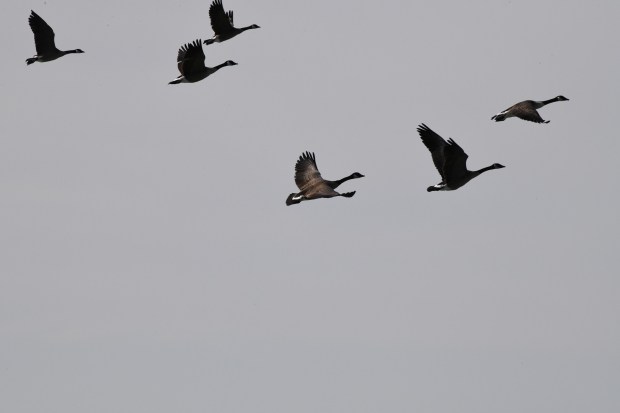
It is a gorgeous, albeit windy, fall day on the Canadian Prairies. I noticed about thirty-five Canada Geese feeding on the soccer field at one of our nearby high schools while five flew overhead. At last count, thirty European Starlings were feeding on the suet at the big table feeder. Mr Crow was also getting peanuts, sometimes, he would take six at a time, swallowing them (seemingly) while the Blue Jays retrieved theirs. The squirrels were eating the ones left on the deck. It was a bit of a feeding frenzy. The temperatures dropped to 0 C last night, and the birds, being more attuned to weather than most humans unless you have arthritis, must feel the end of fall is coming soon.
Notice how, in the space of a few minutes, the suet cylinder is reduced. The Starlings really peck away at it. Their beaks can only eat certain seeds so no Black Oil Seed or peanuts for them. We get this suet especially to give them energy. Tomorrow I plan to put out apples and oatmeal. We will see who is happy!
The days for our nice walks without heavier clothing are swiftly coming to an end. Tomorrow we hope to get out to the park for a goose count!
Nox. When he went back into rehabilitation three days after being released, he was emaciated and required a blood transfusion. Was he not able to hunt? I hope they keep him in and give him more training at hunting! He has had a complete blood transfusion and his condition is now stable.
The triplets at Collins Street are healthy and becoming quite independent. Not sure what the Mum F23 thinks about all of that, but they are growing and we can look forward to a lot of running back and forth and gutter-stomping it seems. It is wonderful they are so healthy! Dad slipped in and even got to feed his little ones. They look like snow people but that cotton ball coat is going to shed itself just as we are beginning to see a change in the plumage around their eyes. https://youtu.be/rucHRHj2VQ4?
There was a nice breakfast feeding with the triplets quickly falling into food comas.
As it got hotter in Melbourne, the kiddos stopped their gutter stomping and she protected them from the hot rains of the Melbourne sun. It is 16 C but hotter up on those top floors of the concrete buildings with the sun beating down.
There were three feedings at Orange before 0800 on Thursday!
More feedings at Orange and the kiddos explore the scrape checking out the Cilla Stones!
Seriously cute with its little bloody beak. Just look at those sparkling black eyes. Adorable.
‘A’ comments: “Meanwhile, the falcon chicks at both scrapes are eating machines. All five appear very healthy and active. The parents are barely able to cope with their demands and are working tirelessly to do so. At Collins Street, the littles are into the gutter and the stomping season has begun. So far, there have been no problems and no-one has got themselves trapped down there. Mum is now leaving the kiddos to get up and down by themselves, as they are capable of doing.
Darling Diamond and Xavier are feeding their pair about eight or nine meals on an average day and the chicks seem to be growing before our very eyes. At every feeding, they seem larger than at the last. Similarly, the trio at Collins Street appear to have permanently bloated crops. “
More osprey nests with eggs in South Australia.
Many will have noticed the netting that Mum brought in to the Port Lincoln nest. So many were concerned that the osplets could get caught in it and be pulled off the nest. We have seen this many times before. Pitkin County comes first to my mind where one chick died and the other spent a year in rehabilitation before being released. The fish fairies came quickly removing the netting and leaving some nice fish.
This happened on the 21st – the removal of the netting so a few days ago.
Wilko had breakfast with Mum at 0611 on Thursday. Kasse slept through all of it. It looks like a rather small fish or partial fish arrived at 1340 and had not been clocked on the obs board when I checked. Both osplets fed. They do need more fish!
Geemeff sent us an article about the Coobwie Osprey nest with the four chicks. I have yet to confirm that the fourth has made it. It was not eating when I left for Nova Scotia and I have not seen any information. If you have, please let me know.
Judy Harrington gives us a good report on what SE33 and SE34 were up to. Notice that they are way up on the branches and could fly any moment save for the fact that currawongs send them back to the nest. Personally I think this is a good thing. They need to get used to and ignore those pesky birds. Hopefully spending more time on the nest watching Lady and Dad deal with them will help.
The two could easily fly Thursday morning. They certainly have me sitting on the edge of my chair and it looks like several hundred more! They were way up in the branches. They came down to the nest several times, went higher, and then down lower. They are very aware of the Currawong. This is a good thing – the longer they stay on the nest the more they should develop skills to either fly out when the Currawong aren’t around or ignore them and follow the path Lady and Dad take to the river. Once at the River, they will be fine. They will be trained to hunt and fish by Lady and Dad. They just have to get down there, not somewhere else!
They are still in the nest at the Olympic Park in Sydney, being harassed by the Curras. That might keep them home so that they can mature more…
‘A’ sends us the latest report from the nest at Sydney: “October 24: An early quartet to welcome the day [don’t you just love the eaglets joining in the morning squawking?], then Lady was off chasing a currawong. Both eaglets moved out on the limb together, side by side. The eaglets were resting – waiting – and Lady brought in a gull just before 10am, along with swoopers. SE33 self-fed well and both were fed a little by Lady. After a quiet late morning, Lady flew in at 12:15. She must have seen Dad coming with a fish. This was grabbed by SE34, who took a long time to break into the flesh. Lady tried to join in, SE33 ate a little, until finally they left it at 2:30pm. A long feed. Dad finished off a few scraps. Both eaglets were then resting on the nest and venturing up the perch branch – flapping and exploring a little. Both eagles were seen down on the river at 16:40. At dusk, the eaglets were standing on the rim of the nest, with a magpie swooping.”
‘A’ continues with her own thoughts which parallel mine – the sea eagles do not eat the chicks of the Curra so why bother one another? “October 24: An early quartet to welcome the day [don’t you just love the eaglets joining in the morning squawking?], then Lady was off chasing a currawong. Both eaglets moved out on the limb together, side by side. The eaglets were resting – waiting – and Lady brought in a gull just before 10am, along with swoopers. SE33 self-fed well and both were fed a little by Lady. After a quiet late morning, Lady flew in at 12:15. She must have seen Dad coming with a fish. This was grabbed by SE34, who took a long time to break into the flesh. Lady tried to join in, SE33 ate a little, until finally they left it at 2:30pm. A long feed. Dad finished off a few scraps. Both eaglets were then resting on the nest and venturing up the perch branch – flapping and exploring a little. Both eagles were seen down on the river at 16:40. At dusk, the eaglets were standing on the rim of the nest, with a magpie swooping.
…
I continue to gain confidence in the eaglets gaining confidence from repeated successes in dealing with the swooping birds. It simply HAS to help, doesn’t it? This has not happened in any season I have seen previously. This is the first time they have had a substantial pre-fledge period where they have self-fed and been fed on the nest while seeing off the swoopers and using the nest as their ‘safe spot’.
You can see the difference between the magpies and the currawongs – the currawongs have totally black heads and a white band across the end of their tails. They are also noticeably larger than the magpies. From my knowledge of these birds, neither attacks in pairs or groups like the smaller birds (such as the noisy mynahs, who attack in twos and threes, repeatedly swooping at the target bird, either simultaneously or in rapid succession, from different directions). These larger birds swoop individually at the target bird, as the magpie is doing in this photo. (The white on the back of the neck in this pic shows the swooper to be a magpie not a currawong, who has no white on its head or neck.) The magpies also have white (or light grey for females and juveniles) on their backs, unlike currawongs, whose backs are black. The magpies have longer, slightly thinner beaks. Apparently, both magpies and currawongs will often steal both eggs and chicks as prey, though I personally have not seen it. They also attack fledglings of smaller birds as prey but presumably not fledglings of the size of the sea eaglets.
They continually say in the literature that the currawongs are merely protecting their young, but if this is the case, why is it that we never see the sea eagles bring in currawongs or magpies as prey? In all the years we have watched the WBSE nest, how many have you seen being eaten? No, me neither. Not a single one.”
At NE Florida, Beau and Gabby slept on the nest tree and then did some great nestorations. This is becoming a beautiful spot for eggs.
Across the state of Florida from Gabby and Beau, M15 and F23 are working diligently on getting their nest ready, too! They have been working on the crib rails and bringing in moss to make everything soft and nice for F23 and her eggs.
It was a scary moment. M15 working on sticks and F23 nearly hit by a car! This is when we are more than grateful for boots on the ground with their cameras like The Real Saunders Photography. Their images are incredible. I urge you to follow their FB feed to see all the action you miss because it is not on the cams. https://youtu.be/5AVTQD7d3Z8?
I have been helping Brian Collins get fish count figures for all the osprey nests that I can. Geemeff sent me the count for Loch Arkaig for this past year and a few earlier. Poole Harbour raised four to fledge. Blue 022 and CJ7 were really busy fishing. I was sent their count today by Jenny Moore. Thank you to Geemeff and Jenny. The individuals overseeing the regulations for commercial fishing of Menhaden in the Chesapeake Bay have no idea how many Menhaden exist in the Bay nor do they have any notion of how many fish osprey take for various size nests. We hope to educate them. If you or if you know someone who did fish counts at a nest for 2024 or earlier, please have them get in touch with me with that data. It will really help our approach.
Here is the count for Poole Harbour. This is amazing information. Notice they even include the time of day and which parent was most active in deliveries.
The fish count from Loch Arkaig:
These are the actual figures with a brief explanation of chick and egg numbers. The vast majority of fish deliveries are Brown Trout, with Mackerel and Flatfish coming in next but in low numbers, and a couple of other species in insignificant numbers eg one eel.
G Fish stats for Loch Arkaig:
2024 Male delivered 255 and female delivered 1 fish: three eggs, three chicks hatched, C3 starved to death at 23 days old due to weather making fishing difficult, C2 died before fledging at 62 days old as a result of weakness due to semi-starvation due to weather, and C1 survived to fledge after being placed on a translocation programme.
2023 Male delivered 396 and female delivered 1 fish: three eggs – one lost in owl attack, one unviable, C3 hatched and fledged
2022 Male delivered 546 and female delivered 0 fish: three eggs – C1 and C2 hatched and fledged, C3 died at 7 days old,
2021 unknown fish: female failed to return and male moved to a non-cam nest with new partner therefore number of eggs and hatches unknown, two chicks hatched and fledged
2020 Male delivered 553 and female delivered 26 fish: three eggs – all hatched and fledged
2019 Male delivered 407 and female delivered 7 fish: three eggs – C2 dead in shell, C1 and C3 hatched and fledged
Calico and Baby Hope always make sure that we take good care of ‘The Boyfriend’ by providing him with food and water, special treats, and several choices of outdoor accommodation. It is not his fault that his owners ‘dumped’ his mother and/or him to live on the streets. He is too frightened to come and live in the house so we do the best we can for him, giving him options which he can choose or not knowing that one day, we will put the food out and not see him again. Life is short for the urban feral cats. Many asked me if I think he will go in the little container home. I don’t think he will. I believe he lives under the deck where Calico had Hope (and maybe some other kittens who did not survive that litter). Calico and The Boyfriend were together before she moved into the house. They were always in the garden and at the feeding station. Although the vet felt that Baby Hope was a kitten from Calico’s first litter, I am unsure. It is possible that he is actually a surviving kitten from Calico’s very first litter (if Hope wasn’t in that litter). It is just my gut feeling. When we lived in the UK, we rescued a small Calico cat and her kitten, a tuxedo. Because he stays where Hope was born, I wonder even more. The neighbours look out by giving food and any time anyone makes a remark about trapping him, we all go crazy so that talk has stopped. He is not adoptable. But he is a gentle soul nevertheless. We do the best we can for him knowing that under that deck he is dry and away from the weather. He has now survived at least two winters there.
Baby Hope always watches The Boyfriend when he eats and, in return, he sits and looks longingly at her for several minutes before leaving. He now comes if I call ‘Kitty, Kitty’ really loud. I try to manage that he gets all the food put out at the beginning and if he wants seconds he can have it. I pick up the deworming medication this week! He is a lovely tuxedo and is now part of our family although not inside with us.
He was intently watching Little Red from a perch on the barbecue table.
Calico’s Tip for the Day concerns feeding the birds outdoors. Look over the list. There are some items that you might not have considered. That said, I disagree with ever feeding birds bread despite even the leader of our bird house building workshop saying that everyone does it after admitting it is unhealthy. So please, no bread. I always give the Crows and Jays cat kibble but I do not soak it.
Calico also found a poster about feeding ducks. The majority of the ducks resident in Manitoba during the spring and summer are now gone. Many will be showing up in ponds near the southern US (if not further). Please keep in mind what to feed them.
Calico would love it if we had hedgehogs in Canada. She reminds everyone in the UK to please leave the leaves. The hedgehogs might need them!
Cockatoo finally rescued after being trapped in shopping mall!
‘J’ has been monitoring the situation at the US Steel Plant where there is the nest of Claire and Irvin. It appears there is a new female there. We do not know the status of Claire. We will continue to monitor. Thanks, ‘J’.
Thank you so much for being with us today. Take care. We hope to see you soon!
Thank you to the following for their notes, posts, videos, images, articles, and streaming cams that helped me to write my post this morning: ‘A, Geemeff, H, J, Jenny Moore, L’, UC Berkeley News, 367 Collins Street by Mirvac, SK Hideaways, Heidi McGrue, Charles Sturt Falcon Cam and Cilla Kinross, Port Lincoln Ospreys, Friends of Osprey Sth Aus, Australian Rural & Regional News, Judy Harrington and Sea Eagle Cam, Olympic Park Eagle Cam, NEFL-AEF, SW Florida Eagle Cam, The Real Saunders Photography, Jenny Moore and Poole Harbour Fish Count, Geemeff and Loch Arkaig Fish Count, Backyard Bird Lovers, For Fox Sake Animal Rescue, Hope for Hedgehogs Woodside, The Guardian.
Thank you to those who sent me screen captures of the ads they received when they read my blog. Hopefully, everything is fixed so that they do not appear again.
Oh, what a day it was. The goal was to finish a few small and manageable tasks since it was so hot outside. Well, nothing was easy. The lights that Wirecutter had given their top rating (for both inside and outside) would only work with a W two-prong outdoor extension cord. Think you could find one in Winnipeg? No. The desire to have lights around the conservatory did not leave my head or Hugo Yugo’s. She loves fairy lights. Consequently, we came home with three boxes to go around the perimeter. Now, attaching the cords to the conservatory was another matter. It turns out those picture frame thingamabobs that you nail into the wall (the brass ones) will slip over a part of the conservatory. Bingo. We have lights. The next was to pick a paint to colour block a section of the wall behind my desk to match the feathers in the oak frames. Done. There was a light switch that needed a cover plate. Done. This weekend was the time to put out unwanted but good-quality items for others to rummage through on the boulevard. Partly through. We did not get the painting done, but we did pick up a delicious pumpkin pie!!!!!!!! Oh, it helped with all the annoyance from the lights. Missey loves the whipped cream.
I would to start with a very sad story coming out of Baltimore. It has to do with starving fledgling ospreys and the decline of Menhaden. It is impacting these birds to such an extent that they get wiped out in the area completely if the industrial fishing of Menhaden is not stopped. If you have not written to your Senator and your Congressperson, then do so. Even if you live elsewhere. Here is the latest article. Imagine 80 starving osplets at one wildlife rehab center. Imagine.
Many years ago I told the story of how a very large female Sharp-shinned Hawk changed my life. All of a sudden the frantic pace of the work world I lived in didn’t matter. Only her. Today, I read an article in The Guardian of another woman working in a high-powered position whose life was changed by a baby Hare. It is moving and the images are gorgeous. Have a read.
In another article, I felt gutted to learn that any elephant has to be killed because there is no food. Wars, famine, habitat loss, drought caused by climate change – what will be the eventual impact on all our wildlife unless we find ways to protect it?
So, what is happening in Bird World? Very little. All nests in Australia except for the Olympic Park Eagles are incubating eggs. The Royal Cam chick is set to take to the skies and oceans any moment. Will Partney and Marrum be able to save any other eggs from the Ravens? That is anyone’s guess, but I would put my dime on ‘no’. Diamond and Xavier continue to entertain us as does M22 and F23 in Melbourne. Dad is doing a pretty good job delivering fish to Mum at Port Lincoln. I would like to hear more news and see more images of our dear Ervie.
What is happening at Hellgate Canyon? Finnegan is just a master angler. He would win every fishing award for the season. It is hard to check on the Hellgate streaming cam without seeing Antali with either a huge crop or a fish delivery or both. Finnegan is working over time to make sure that his second hatch is well prepared. These kids are not starving like those in the area of Chesapeake Bay! The Ospreys inland have done well this season save for the heat and some bizarre nest accidents.
The latest news first: Iris and Sum-eh are still home with Finnegan and Antali. Thanks, ‘PB’ for that message!
At Charlo, it appears that C16 is trying his own luck at fishing. He is often on the nest or perch shaking off the water. There are fish deliveries, but they are certainly not as frequent as those of Finnegan for Antali.
Both juveniles are still at the Newfoundland Snow Lane nest where it was windy with some rain on Saturday. There are still fish deliveries. It was impossible for me to tell if Hope is still in the area.
River has a bulging crop at Sandpoint.
Junebug is home at Dunrovin.
No one is home at Foulshaw Moss.
There is good news coming from Big Bear. The evacuation order has been lifted. Jackie and Shadow should be safe but the area around their nest is full of heavy smoke at times.
The cams at SW Florida are getting their maintenance, so they are ready for the start of Bald Eagle season on 1 October. https://youtu.be/aeeH7EzNV5E?
I love geese. How many times have you heard that? Sometimes Calico thinks that I like geese more than cats. It seems that I am always reading books about things with feathers and never cats. Maybe she has a point. :)))))) Decorah Goose Cam is playing season highlights!!!!!!!!! Oh, you can see the goslings jump again! https://www.youtube.com/live/4FB6bLI39lo?
The NCTC nest of Bella and Scout is live. Bella and Scout were in the nest earlier in the morning.
Thunder and Akecheta were caught on camera during large parts of Saturday.
Wondering what is happening at NE Florida with Gabby and Beau? Looks like we have to wait until the 18th!
Didn’t see E1-M2 at the Kistachie National Forest nest, but his turtle shells are all there! Wonder if the kiddos will have turtle meals this year instead of fish?
One of the highlights of Ferris Akel’s Saturday Tour was a Gallinago or a Snipe. Just look at the plumage.
Ferris was also at the Open House of the Cornell Raptor Centre. It is not clear if the Red-tail Hawk Ambassador was E3, Big Red’s kiddo.
The Peregrine Falcon was very loud and caused Calico some anxiety.
Open Houses are excellent opportunities to learn about the raptors, their needs, and challenges and to just get up close with them. Check out your local wildlife rehabilitation centre. It is normal for the Open Houses to take place in the fall so, you just might be in luck! If not, save the date for 2025.
The RSPB describes the Gallinago or Wilson’s Snipe, “Snipe are medium sized, skulking wading birds with short legs and long, straight bills. Both sexes are mottled brown above, with paler buff stripes on the back, dark streaks on the chest and pale under parts. They are widespread as a breeding species in the UK, with particularly high densities on northern uplands but lower numbers in southern lowlands (especially south west England). In winter, birds from northern Europe join resident birds. The UK population of Snipe has undergone moderate declines overall in the past twenty-five years, with particularly steep declines in lowland wet grassland, making it an Amber List species.”
All About Birds has some Cool Facts about the Wilson’s Snipe:
Wilson’s Snipe look so stocky thanks in part to the extra-large pectoral (breast) muscles that make up nearly a quarter of the bird’s weight—the highest percent of all shorebirds. Thanks to their massive flight muscles this chunky sandpiper can reach speeds estimated at 60 miles an hour.
Wilson’s Snipe feed by burying their bills deep into soft, wet soil to probe for insect larvae, worms, and other invertebrate prey. The bill’s flexible tip can open to grasp food while the base of the bill stays closed. Snipe can slurp small prey from the mud without having to remove their bill from the soil.
Because a Wilson’s Snipe’s eyes are set far back on its head, it can see almost as well behind as in front and to the sides. This arrangement makes it difficult for a potential predator to sneak up on a feeding snipe—it almost literally has “eyes in the back of its head.”
The word “sniper” originated in the 1770s among British soldiers in India who hunted snipe as game. The birds are still hunted in many countries, including the U.S., though their fast, erratic flight style means they are difficult targets.
Although only the female tends the eggs and nestlings, Wilson’s Snipe parents split up the siblings once they’re ready to fledge. The male takes the two oldest; the female takes the younger two with her. After they leave the nest the mates have no further contact.
Researchers have done wind tunnel tests with Wilson’s Snipe feathers to try and duplicate the “winnowing” sound that’s made as birds fly with their tail feathers fanned. They found that it’s the outermost tail feathers, or rectrices, that generate the sound, which apparently happens at airspeeds of about 25 miles per hour.
The oldest known Wilson’s Snipe was at least 9 years, 3 months old, based on a band recovered from a bird that was shot in Newfoundland and Labrador, Canada, in 1973.
‘A’ brings us up to date with the Olympic Park eagles: “Dad brought breakfast (feathered) at WBSE at 06:18 this morning. Of course Lady was there immediately to take charge of the food, and the littles roused themselves from their cuddle puddle for the occasion. They both stand up on their feet to stretch, leaning forward and spreading their wings. Such pretty plumage, changing from one day to the next, and from one striking design to another. SE34 has no hesitation about joining SE33 at the table, moving up beside his older sibling. SE33 is not bothered.
Lady begins by feeding SE33, as per pecking order, but initially it is distracted by Dad on the perch branch so Lady has to offer the bite a second time. Meanwhile, SE34 backs up for a PS anyway. I don’t think SE33 accepted the bite because SE34 was no longer beside him (implying that SE33 was intimidated by the proximity of SE34) but simply because his attention had been diverted when Lady first offered it. I certainly don’t believe SE33 has suddenly become nervous of his younger brother.
By 06:20, SE34 is back in his position at the table, beside SE33. and he shuffles even further forward, taking prime position closest to Lady’s beak. He is soon rewarded with a couple of consecutive bites of red meat. Lady then begins feeding the eaglets alternate bites. I do love the way she does this. Occasionally, one nestling or the other will get a couple of consecutive bites, but she maintains an even-handed approach until one eaglet or the other starts to slow in its eating and indicates it is getting overly full. She is a very attentive mum, and I continue to believe that her experience in feeding and managing her chicks is the reason this nest fledges two every season despite being an obligate siblicide species. In the end, I keep coming back to the wisdom and dedication of these parents. They are a closely bonded pair and when it comes to raising their family, they work as a tight-knit team to provide for and protect their eaglets. I believe they are both in their mid-20s, which is not quite elderly but it’s certainly extremely experienced, and that experience really counts when it comes to keeping the eaglets safe and warm and dry, and ensuring that both eaglets get enough food. Lady has always looked out for her younger hatch when it comes to food. Every season, she ensures it gets food, whether she has to give private feedings early in the morning or late at night, or put her own body between the eaglets, or even to feed the younger chick through her legs or under a wing. And of course Dad is particularly hard-working when it comes to ensuring there is nearly always food on the nest. If Dad is not bringing in food. there is a good reason for it. . “
Calico’s Tip for the Day: No one can be accused of causing cats to run through the house like a Formula 1 circuit. They will do it and defy you. But if you have a new puppy, Calico has found a suggestion for you to make certain you have a ‘calm’ dog.
The dog trainer: playing too much with your puppy
The important thing many owners fail to do with their dog is encourage it to calm down. There is so much emphasis on playing and running. People think they have to play with their puppy because it wants to, but this encourages the dog to be constantly active. It then doesn’t settle well and its behaviour can quickly become problematic. Spending time teaching dogs to walk calmly on a lead and rest at home should be a priority. To learn how, go to a class or follow online advice. Ben Marsh of Balanced Dog
Thank you for being with us today. We are always so happy to have you with us. Take care!
Thank you to the following for their notes, posts, announcements, videos, articles, and streaming cams that helped me to write my post this morning: ‘A, PB’, The Baltimore Post, The Guardian, Montana Osprey Cam FB, Montana Osprey Project, Dyfi Osprey Project, Charlo Montana, Dunrovin Ranch, Sandpoint Ospreys, Newfoundland Power, Cumbria Wildlife Trust, Debbie Shores, Raptor Resource Project/Explore.org, NCTC Eagle Nest, AEF, KNF-E1, Ferris Akel Tours, The Guardian and the Balanced Dog, Olympic Park Eagles.
I thought I would return to normal on Friday, but it did not turn out that way. Despite feeling dizzy and still rather weak, I forced myself to go for a half-hour walk in the park just after some rain so I would not be around anyone. Everything is so green, and the rain that we have had for the past three days has been so welcome. I owe many of you responses, and I will get there – this is just taking a lot longer to overcome than I ever imagined. It is entirely possible that there will not be another blog to go out until Monday – in the hope that another day of absolute quiet and Geemeff’s peppermint tea and saltines will save me.
Hugo Yugo is trying hard to be good.
‘H’ is giving us a smile for the day.
At 10:47 on Friday, the New Guy at the Hellcat Canyon nest of Iris kicked the first egg out of the nest. Don’t let anyone tell you male ospreys can’t count!
Annie and Archie’s chicks are getting their pin feathers! Can you believe it?
A remarks, “Watching the 11am feeding from Cal Falcons (3 May), mum works incredibly hard, circling the chicks to take up feeding from a different angle to reach different beaks. Around 11:17:30, the piece she is feeding them runs out, and even after checking her talons, she has nothing further to give. As she checks the group of chicks in front of her, one grabs at her beak, indicating it is still hungry. (The youngest was at the back, though it leapt valiantly over its siblings to get bites and seemed to be doing relatively well, especially after one of its older siblings face-planted in a food coma and removed one of the obstacles to mum’s beak.
But Annie circles the chicks and around the front of the scrape, 180 degrees around the group to the other side, she finds a decent chunk of food, which she proceeds to feed to the chicks who had previously been at the back of the group. She concentrates primarily on the two younger chicks. As is usual with Annie’s feedings, everyone has a crop by the end of the meal. This piece of prey started off as the body of a largish pigeon, I think, minus the head and legs. These four have demolished it. Poor little Archie must be absolutely exhausted. He is hunting up a storm for this lot, and I can only hope he keeps it up. There’s still such a long way to go if these two are to raise these four and then teach them to hunt. I can only imagine that learning to hunt as a peregrine is a very difficult and exacting task. Mistakes could be fatal. Indeed, I often wonder how parents teach fledglings to dive at speed at a prey bird and hit it at the right speed and angle to kill it without injuring themselves. They don’t eat carrion like eagles, so cannot scavenge or steal food to survive, leaving them with only their parents to rely on until they can perfect a particularly difficult hunting style.”
Annie and Grinnell’s grandchildren get tucked under their daughter, Larry.
‘B’ sent us an article about the new streaming cam for Larry! Thanks, ‘B’.
The chicks are hungry at San Jose City Hall’s scrape of Monty and Hartley.
Oren and Ruth have three hatches at their Syracuse University RTH nest and they are so cute.
Arthur has the Cornell nest he shares with Big Red full of prey, too. I could see chipmunks, voles, squirrels, and birds. The two chicks are getting their pin feathers and it does seem those other two eggs are Dudleys.
Diane and Jack have the second egg of the second clutch on Friday at Achieva.
For French Osprey fans, the first osprey of the 2024 season hatched on Friday!
Louis really likes bringing huge sticks to the Loch Arkaig nest 2.
Bradley still loves his Puffers. Thank you, Bradley, for bringing them to the nest to eat!
At Loch of the Lowes, Blue NCO left to eat. Another osprey landed on the perch. It is unclear if it is Laddie or a stranger.
Gorgeous Tuffy.
Stella and her one surviving chick are hanging in there at the University of Florida-Gainesville. R reports that Poor little Middle is reported to have died around 0200 the other day. Stella looks down at her healthy baby in some disbelief. Her whole season has gone up in flames so to speak.
All three eaglets at Little Miami Conservancy are doing fantastic. The older two are really getting their juvenile plumage while you can see the baby has all of its thermal down (in the back).
Thanks, ‘A’ for stepping in and bringing us some good news form Sydney’s Olympic Forest: “Lady and Dad are not just doing a lot of nest building at Olympic Park in Sydney – they are also mating regularly, and have been doing so for at least a week. Here are the ranger’s reports for the past four days (and who might the ‘third eagle’ be?): May1: Both spent the night by the nest, and Lady came in early when disturbed by a possum passing up the tree. Dad joined her then with an early duet and mating. Both left around 6:30am and returned with sticks. Just after 9am, duets were heard again. They both brought in a few sticks during the morning. Then Dad sat by the nest alone for about an hour, before leaving at 11:20am. Both were then away for the day – somewhere – until Dad returned at 3:26pm with a stick. A very windy afternoon at the nest. Dad brought another stick shortly after and we could hear calls – but could not see the eagles. At 5:10pm, no eagles were seen at the river. At dark, neither eagle had returned home. Dad brought seven sticks today and Lady brought four.
May2: Neither eagle was at the nest last night. A Powerful Owl was head calling in the distance a few times. Eagles were reported at Burns Bay from yesterday afternoon. They were seen soaring and circling over Linley Point in the afternoon and honking early there this morning. At 8:10am an eagle was seen in the Goat Island area flying west up the harbour. Just before 11am, two eagles were reported at Goat Island. And at 14:06pm, we saw a picture of three eagles soaring overhead there. A little later, at 16:10pm, one eagle was seen heading west, but an hour later, none was seen on the river. Then at last light, both Lady and Dad appeared on the nest – moved a stick or two, sat side by side on the branch and then settled for the night.
May 3: Eagles were home last night by the nest. Lady was disturbed early by a possum. Then we heard an early morning duet. Both were then off. Dad returned with sticks over the next hour or two, Lady with just a few. Duets were heard off nest around 7am. Then more sticks and leafy branches coming in and both chewing in the nest bowl. Mating again at 9:29am. At 9:45am, both were off, and were noted down on the river an hour later – one on River Roost, the other on Mangrove Island. At 11:08am, both flew off to the east, then at 11:23am, two eagles were at Goat Island. Rain was steady again in the afternoon. At 15:34pm, one of the eagles caught a good-sized fish. At dark, they could not be seen at Goat Island – so where are they?
May 4: The eagles were away last night, possibly at Goat Island, where they were seen at 11:20am – with a duet heard as well. Then, just before 4pm, Dad showed up at the nest, while Lady was seen at River Roost at 4:25pm. She headed off to the nest soon after and joined Dad. He started bringing in sticks then, and there was a mating at 16:49pm. He brought six sticks in before dark and she brought two. They both then settled for the night close by.
Now this really is early. Surely they are not planning to lay eggs in the dead of winter. The winter solstice is not until 21/22 June for heaven’s sake – which is still over six weeks away – so surely not. Surely they are just enjoying a little quiet grown-up time, yes? They’re not considering producing eggs for a good while yet I presume.
Great, though, to know that they’re together and doing well. Obviously, they spend the whole year together, roosting and hunting and generally behaving as a couple. That’s so sweet. I often wonder whether the storks and ospreys who migrate ever really get to know each other at all, let alone the albatrosses, whose total lifetime of interactions might add up to less than a day when you think about it. Which I hadn’t until now. “
We need a proactive approach to power lines if our ospreys and other raptors are to be saved. Thanks, Geemeff!
Thank you so much for being with us this morning and for all your well wishes! It is appreciated.
Thank you to the following or their notes, posts, videos, articles, and streaming cams that helped me to write my post this morning: ‘A, B, Geemeff, H, PB, R, SK’, Montana Osprey Project, Cal Falcons, USParks Service Alcatraz, SK Hideaways, The Mercury News, SU Hawk Cam, Cornell RTH, Heidi McGrue, Sylvain Larzilliere, Geemeff, PLO, Scottish Wildlife Trust (LOTL), Moorings Park Ospreys, UFlorida-Gainesville, Little Miami Conservancy, Sea Eagle Cam, and The Wildlife Society.
Oh, good morning to all of you. Thank you so very much for being with me today. I am so very, very happy to be with you! Thank you for all of the wonderful stories that you have sent. I will be working my way through them slowly. Much appreciated. We woke up to more snow. Everything is beautiful and white!
The kidlets, Missy and Lewis, had their first vet visit. I am a glowing proud parent. They were soooooo well behaved. They are not litter mates and the adoption person told us that they might not get along with one another. I have not had more than one kitten since I was a child and did not know what to expect.
I remember one stray that someone left at our gate. when I was a child. Oh, I loved that cat. To me the drab brown tabby was the most beautiful cat in the world. My grandmother was very diplomatic and said, ‘He sure is sweet’. I begged to keep this one particular cat. My dad agreed since it was a ‘boy’. Well, he apparently didn’t check very good…a few weeks later we had a pack of kittens. That tabby lived for more than 10 years. She was incredibly sweet. It is very different, having kittens outside with their mother and kittens in the house – in a conservatory, with very large plant pots and tall vines with flowers, or trees…yes, trees.
But, back to the topic at hand. Lewis and Missy are the best of mates. They do everything together including eating out of the same dish at the same time, drinking out of the same dish at the same time, having to have their paws touch when they are sleeping or sleeping in the same tent. Always together. So off they went in the same pet carrier, not separate, together. Not a single peep. At the vet they were so content. Proud Mum here!
I got a tip from the technician at the vet. One of the biggest culprits for cats will be their teeth. I hope if you have cats and dogs are brushing their teeth or giving them things to facilitate good gum health and clean teeth. If you have tried brushing their teeth and it didn’t work, get a nice flavoured tooth paste. Lewis and Missy like the chicken. Take clean nylon stockings or panty hose. Cut a square. Wrap it around your finger, put a dab of the toothpaste on it and away you go. Be sure to do the back ones and those sharp canines in the front. You can get them used to what you are going to do by rubbing on the outside of their cheek for a couple of days. Small toothbrushes or those prickly things you put on your finger did not – at least not for these two. Panty hose do! And I swore I would never wear the darn things again after I retired. So glad there is some use for them!
Missy is the ‘alpha’ You might recall she had Lewis well aware that she is the boss immediately. The vet saw it too! Indeed, the vet smiled and said, “Always the female!” Anyone watching a raptor on a streaming cam knows this. I said nothing. The odd thing is Lewis is so solid and looks ‘so tough’ and Missey appears to be ‘so fragile’. So funny. Missy is half Maine Coon – but both, at the end of the day, are literally ‘alley cats’. Found new borns taken to the shelter from different parts of my city. We are so lucky to have in our lives.
Missey likes to get inside plant pots – with or without soil. This is the tiny artificial tree that has been put up. The soft felted birds have had to be removed. LOL.
Looking so innocent! “We didn’t do it!”
Today’s action was still at the scrape box of Diamond and Xavier. Those parents are really making sure that both Rubus and Indigo are well fed. What a fantastic couple they are. The moderator put some history in the chat today and for those of you that do not know – we now have at least three male peregrine falcons that we know of that have started out as step-fathers.
The last sighting of Diamond’s mate, Bull, was on 30 September 2016. Their erases hatched on the 4th and 5th of October. The first sighting of Xavier in the scrape box at Orange was on the 7th of October. He brought prey to Diamond and the babies on the 8th of October. The rest is history as it is with Alden at UC-Berkeley and M2022 at 367 Collins Street.
Aren’t they adorable? Every day Rubus looses more and more dandelions.
Everyone has been wanting to know when Indigo would fly again. He certainly has been eating well and enjoying being back home. Today, right before 14:38 Indigo got a little frantic, running around the scrape just like he did the day before he fledged. At 143802, Indigo flew out of the scrape box. He returned 35 seconds later! I caught it on video for you.
‘H’ sent this link to me. It is a split screen video that Cilla Kinross made of a feeding. Disregard the word ‘kestrels’. It is definitely Rubus and Indigo. Thanks, ‘H’. Delightful.
Indigo and Rubus both in the scrape as the IR lights are turning off.
The wind was really blowing and there were lots of white caps at Port Lincoln. It made everyone wonder whether or not there would be any fish today but – alas, it turned out good.
At Port Lincoln, Zoe can surely scream for the fish! I have jokingly said that I hope she lives a long and healthy life with many osplets screaming their heads off to her…their poor Dad. Just imagine.
There have been at least 2 fish deliveries today. Mum was on the ropes eating a fish around 1400. Zoe took absolutely no notice. She was not hungry. Isn’t that grand? No one on this nest hungry. The fish are ever so unstable. But – we will take it. Today is a good day. Mum ate her bit and flew to the nest at 141408 and fed her large daughter.
Zoe doesn’t even seem to know or care if Mum is over on the ropes eating a fish. Normally she would be screaming her head off. Not today. It is a good fish day.
When the feeding was over, Zoe had an enormous crop.
All of the family together. Mum has a very nice crop from the earlier feedings.
Lots of food at Port Lincoln. These are the late time stamps from Gtr Kitarr: 19:16 headless fish by Dad, Mum off w the fish, back at 19:29 to feed Zoe. 20:24 Zoe wing flapping & 20:24:14 standing on one leg. 21:10 headless fish by Dad, Mum feeds Zoe in the dark.
Making News:
The investigation of the theft of four precious Albatross eggs continues.
How many of us love Iris? The oldest Osprey in the world whose nest is on the lot of Riverside Health Care Center in Missoula, Montana. A request has come in from lovers of Iris. Here it is:
Here is a very short report on the current status of Sea Eaglets 29 and 30. I also want to mention that my contact tells me that the sea eaglets are at different clinics. The specific names are not being mentioned as is the case with other popular birds to keep the phone lines open for injured wildlife.
There are many birds that I do not know. This bird is one of the first to be spotted when it returns from its winter migration in Africa to the fields in the UK. In Africa, they feed on the insects that the elephants kick up from under their feet so if you ever get to go to Africa on a safari and see a herd of elephants look for these dramatic sulphur yellow birds with their grey heads. In the UK, they follow the farm tractors kicking up the soil to reveal their next meal. They need a good supply of insects and spiders to survive. Besides fields, manure heaps and wet lands are good places for them to forage.
Yellow Wagtails raise two clutches a year if there is suitable nesting spaces and food. Their nests are low on the ground adjacent to wet lands, salt marshes, hay meadows, and some fields of vegetable crops.
Changes to agriculture and crops grown put the Yellow Wagtail under threat. The RSPB has made some recommendations to farmers in the UK which would help stabilise and grow the numbers of these beautiful birds. This includes returning to having some manure heaps for them to forage through. They are beautiful songbirds. Let us hope that those who can do something to encourage their population growth will keep this in mind when they are planning their crops and how they do their farming in the upcoming years before it is too late.
We are waiting for both Zoe and Rubus to fledge. Rubus is not quite ready but is getting more and more interested as Zoe spends time in the scrape and now, that she has flown in and out again. Zoe is doing a lot of wingers. I am a bit old fashioned. The longer they stay on the nest or at the scrape and the stronger they are when they fledge, the more chance they will have of success. Weak tired birds do not do well in the field.
Thank you so very much for being with me today. Send your best wishes to our beautiful sea eaglets as they recover. Take care of yourselves, too. Looking forward to seeing you soon.
Thank you to the following for their posts, their videos, and their streaming cams which make up my screen captures: OpenVerse, Port Lincoln Ospreys, Sea Eagles FB, Montana Ospreys at Hellgate, Charles Sturt Falcon Cam and Cilla Kinross, Royal Albatross FB.
I hope that your day is starting off wonderfully well.
For those living in Melbourne, oh, enjoy those 24 degrees C temperatures for me, too. My forecast is for it to snow in the next hour! And for it to be -1 C tomorrow. Now…I don’t know about your meteorologists but, ours are sometimes not correct and I am really hoping that they will be wrong. Not for me but for all the birds that remain in our City. There are even reports of the first Snowy Owls arriving in the southern part of our province. Cold weather is really and truly on its way. I have never seen all the Snowys on the fields in our province. Looking forward to finally seeing one this year.
There was no snow when I woke up but it is 1 degree and grey. The Blue Jays are gathering peanuts in the shell and the Lilacs are full of little sparrows singing away eating their Black Oil Seed and millet. Just a few seconds ago six Canada Geese flew over.
Thankfully I had the camera ready because I was wanting to try and catch Little Red. He was too quick!
My attempts to lure the European Starlings down from roosting in the far trees did not work. There were, however, some wrens and sparrows that promptly went over to eat the Meal Worms and the Bark Butter. The squirrels were also busy today and Little Red continues to go in and out of the big box that holds the wood. That is where I put his new house – if he would move into it. I am afraid to go and check but it is possible that he is entering from the back hole to the house. Fingers crossed. It would be a great place for him.
There are a few Dark-Eyed Juncos still around looking for Millet.
Dad brought in one of the nicest fish I have seen to the Port Lincoln nest. Mum had been doing her talon dance and Middle had joined in prey calling. When Dad arrived, the fish, like all fish being slimy, slipped…oh, it looked like Mum was going to lose it down the side of the nest. But…she didn’t. She managed to get that very much alive fighting fish up on that nest and then she decided to fly off with it. I do not know what Mum did to that fish in the few seconds she was off the nest but it sure wasn’t wiggling and jerking when she got back. How many times have we witnessed these big fish, alive and fighting, being brought to nests only to hold our breath as they flipped and flopped over the ospreys??? Manton Bay comes to mind for this past season in the UK. My goodness I thought those two babies were going to die. How the one survived I will never know but, she did.
It is not the first time I have seen this happen and I am certain that you have, at one time or another, if you have watched Osprey nests, seen a fish go overboard. It is heart breaking. I cannot say for certain but many say that it takes about 15 dives to get a catch. That is a lot of energy expended to go over the side. And, as we all know too well, a fish can sometimes mean life or death to one of the chicks.
Mum fought that fish pulling and pulling so it would not go overboard.
The other thing that I find interesting in these situations is that the male does not help. It is as if once the fish is delivered he is done..gone. At any rate, three cheers for Mum. She did an amazing job wrestling that fish.
Middle is very clever. Mum is getting the fish situated and Big is already to eat. Middle does not waste any seconds getting to the table but he doesn’t just rush in either. He can see how long that fish is and slowly moves into place.
Middle is going to get a truly good feed.
It is hard to tell but, Middle has a very large piece of fish he is getting ready to hook.
Just have a look at our dear Middle. That crop could pop!
Notice also how heavy the wings are now. The ospreys will let them droop. I also like to point out the dark down on the chest. The ospreys will have a thermal down underneath their feathers that will help them regulate their temperature.
All is quiet. Two very full ospreys. As I write this, the time is just past 1500 in Port Lincoln. I have not seen another fish come to the nest yet but there will be at least 1 more if not 2 today.
It is so nice to have these three nests progressing along nicely without too much worry of anything untoward happening. Oh, yes, I always say that the fortunes of a nest can turn in an instant – and they can. Thankfully we have no worries about predators, like Eagles, owls, or goshawks, diving down to snatch the chicks out of the nest! Those are constant worries at some nests such as those in Finland and now, of course, at some in the US like Cowlitz PUD where all three ospreys were taken by a Bald Eagle.
Oh, how precious. Indigo walked over to give her little brother a cuddle.
Xavier arrived with the afternoon tea. For a moment I thought that he might get to feed Indigo and Rubus but, no…Diamond arrived. It looked like a Starling but then as Diamond plucked it looked less so. The fact that it took longer to remove the feathers with Rubus getting anxious and walking away to Cilla’s stones indicated that it must have been something larger. Oh, my goodness. When Diamond started feeding the two were jumping and stretching for joy! It was a great feeding.
Notice that Little Rubus is at the kind of cotton ball stage too…the fluffy white down just hanging on as the juvenile feathers grow underneath. Indigo is doing a lot of preening and if you catch a glimpse of her tail, it is really growing nicely. They are changing almost right before our eyes. It is now Wednesday in Orange and by the weekend we should see some dramatic differences in the plumage of both.
It sure looks like a Starling!
Diamond arrives and takes the prey. Xavier has a last look. Oh, he loves being a Dad and what a wonderful one he is!
Some of you more familiar with the prey available around Orange can probably identify this tea time treat. It looks like a Starling to me but please correct me if it is something larger.
Poor Indigo. Both ‘J’ and I noticed that she let Little Rubus be right up in front. I do wonder about the fright she had with that one Starling head having a lasting impression or lasting fright.
Rubus gets impatient waiting for the plucking to end and walks over and gets on Cilla’s stones. Do you know why the stones are placed where they are? It is so Diamond will have to lay her eggs so the camera can see them, not hidden in the corner.
Rubus has a ferocious appetite! Not to worry. Indigo did get some food!
Notice how Indigo is changing. You can see those beautiful tail feathers and we are now getting a reveal of her back as the soft down comes away from her eyes. She is going to be just a stunner.
Oh, and thankfully, someone caught the morning feed at 367 Collins Street on video! (I am not able to use my video app on this machine…I hope to be able to make video clips for you soon but, for now, we will rely on others!)
Around 1345 at the scrape of the Melbourne Four in the CBD of Melbourne, the parents are on alert. One is calling from the ledge and they seem to be spending time on the ledge protecting the eyases.
Even if there was an intruder about, the Melbourne Four managed another four feedings lasting over ten minutes. They were at 0641 for 17 minutes, 1126 for 11 minutes, 1629 for 12 minutes, and a really big feed at 1855 lasting for 18 minutes. Thank you ‘H’ for all those times.
Other News in Bird World:
One of our favourite Ospreys, Richmond from the San Francisco Whirley Crane nest in the Richmond Shipping Yards, has had to protect his territory from Ravens today.
This is the latest news on SE30 who was found in a residential neighbourhood. I sound like a broken record. It is incredibly sad that the eaglets are rushed out of the forest so they cannot get their flying strong and be taught how to hunt for prey by their parents. This scenario is repeated annually. Thankfully, all those wonderful people around the Discovery Centre who love these eagles from here and beyond keep an eye on them. It is also reassuring that the right protocols are in place to rescue the eaglets and get them into care. Let us hope that SE29 and SE30 are both kept in care until they are flying strong and know how to hunt! Thank you Judy Harrington!
There is also some progress being made at the North Dame Bald Eagle nest in St Patrick’s Park, South Bend, Indiana. This is the natal nest of Little Bit ND17. Good luck Mum and Dad. They have a huge job ahead of them!
How much is a Bald Eagle’s life worth? Sadly, not much. A Devon, Ohio man shot and killed a Bald Eagle. WKBN27 First News is reporting that a federal judge gave the man a one year’s probation, a fine of $4000 and another $1200 to USFWS.
Thank you so very, very much for joining me today. Take care everyone! See you soon.
Thank you to the following for their posts, videos, and streaming cams that make up my screen captures: Port Lincoln Ospreys, 367 Collins Street by Mirvac, Charles Stuart Falcon Cam and Cilla Kinross, Norte Dame Eagles FB, Eagle Cam, SF Ospreys and Golden Gate Audubon.
I hope that each of you has had a fabulous weekend!
In my earlier blog today, I did not catch the ‘auto correct’ of Samson when I posted that him and Gabby were working on their nest. It is, of course, Samson not Damon!!!! Goodness.
The Sparrows thought it was warm enough for a bath today. And it is. It is a beautiful 14 degrees C – for me the absolute perfect temperature. It could stay like this forever and I would never get tired of it. They had such a good time! For well over an hour, one group after another spent time in the bird bath. They were so excited! I really do love sparrows…and I hope that those that think they will go extinct are wrong! And those that refuse to feed them because they are ‘not special’ will think again. They are so varied that I have a 8 cm thick book on them and still have trouble sometimes with Clay Sparrows and Vesper Sparrows — and I shouldn’t!
During the last month I have seen hundreds of Crows fly over my house around 1700. I did not know what they were doing until ‘N’ posted a YouTube video on Crows flying to join one another at a communal roost. It happens an hour before sunset. Thanks, ‘N’.
But, why did Crows get the moniker ‘Murder of Crows’? Apparently the use of the name goes back to 15th century English literature but, the Crow expert at Cornell University said the term is incorrect. ‘Scientists would call it a flock’. Indeed, Crows are often connected with death because they are black and because they eat carrion (dead animals) like Vultures, Condors, and Eagles. So remember, the next time you see a large group of Crows it is a flock!
As you will know, from reading my blog, I love ‘my’ Crows. Mr Crow has been around the garden for a number of years but, this year, he was joined by three fledglings that grew and grew and grew. (I always say Mr Crow…it could well be Mrs Crow!). This summer they started alerting me to when the wandering well-fed domestic cats were in the garden. They were so loud that their caws could not be ignored. For several days it seemed that they were wanting more food. They must have think I am truly daft. It wasn’t food – it was the cats. I am so grateful to them for protecting the other garden animals. In fact, most of the garden animals live in harmony. There is enough space and lots of food. It is the cats that cause the unhappiness.
But back to the Crows. ‘H’ wrote to me that Crows are signs of bad luck or death in Australia. In North American Indigenous traditions, the Crow and the Raven are good signs. They are signs of protection and often are viewed as messengers of wealth. In Manitoba, the Crow is part of the Creation Story of many of the local tribes just as it is with those in northwestern California. There are ceremonies that use the symbol, the power, and the prayers of the Crow to invoke protections – and these are very sacred, only used and known by those who deal with the Spirits. For the Inuit who live in the far north of Canada, the crow and the raven are often considered the same. You will find the creation stories of the Inuit and the Haida from British Columbia, using the Raven or the Crow, to tell their myths. The myth ‘The Crow Brings Daylight’ describes the moment when the people who lived in total darkness first saw the light that was brought by the Crow.
I hope that the Crow will bring you much luck and will guard and protect you.
All of the nests have had breakfast in Australia early. No one has had to wait for food to arrive despite the ominous clouds that you can see out the window of Xavier and Diamond’s scrape or the rain drops collecting on the camera at Port Lincoln.
Xavier brought in a Starling for Diamond to feed Indigo and Rubus. That was at 063320. Indigo and Rubus watch everything their parents do intently – each is a learning opportunity. The chicks will learn how to pluck and feed through observation. They will watch their parents fly from the scrape and, after they fledge, Xavier will teach them how to hunt. (With hawks and raptors it is often the role of the Dad to teach the fledglings to hunt.) Still, I have seen many, if not most, of the females do this as well. The exception would be the female Ospreys that leave the nests in the UK prior to the chicks fledging.
Notice that Little Rubus is in the corner with Indigo. Everything Indigo does, Rubus copies.
Indigo was so frightened by the Starling head last week. And here is another Starling head dangling! Do falcons have nightmares?
Just about the same time in Melbourne, at 0634, a plump freshly caught pigeon landed on the ledge at 367 Collins Street.
This morning you could really hear the stomping on that metal gutter! The eyases ate and began running up and down getting their legs strong. They are also flapping those little wings. Soon the white dandelions will be covering everything as the down flies off revealing the gorgeous juvenile falcon plumage.
It did not take long for the Melbourne Four to ‘decorate’ the far end of the gutter. Did you know that when falcons are looking for a good territory/scrape box/cliff, they will check to see how much guano is spread all over. The more ‘ps’ the better – it means that the area is rich in prey. An ideal location to have a nest!
Flapping and flapping. The others are almost all the way down to the other end of the gutter. The little one, however, chose to stay in the scrape. Cute wings!
Thankfully, Dad was out fishing early at Port Lincoln (as I am told he always is) and he hauled in a flat Zebra fish at 065757. The feeding was absolutely civil. In fact, it looks like Middle got the largest portion of that early fish.
It is difficult to describe how thrilled I am that Big has settled down and that life on the Port Lincoln Osprey platform is civil. It helps everyone. Middle can now eat without too much fear of reprisal. Still, he should be a wee cautious just in case Big wakes up on the wrong side of the fish one morning.
The nests have had their first meal for Monday in Australia. All is well.
There is no further news on Sea Eaglets 29 or 30 – both are in care. Dad and Lady have been working on their nest. They must wonder where their fledglings have gone. I wonder if they will leave for Lady’s favourite spa location, Goat Island, soon?
Thank you so very much for joining me. Take care of yourself. See you soon!
Thank you to the following for their posts and streaming cams where I took my screen captures: Pinterest, Charles Stuart Falcon Cam and Cilla Kinross,. 367 Collins Street by Mirvac, Sea Eagles@Birdlife Australia Discovery Centre, Sydney Olympic Forest, and Port Lincoln Ospreys.
The day turned out to be a lovely 14 degrees C. I am not feeling 100% but I do not have Covid. I am thankful but, I did call off the small celebration for my BFF’s birthday just in case. I know that some of you have symptoms of long Covid and my heart goes out to you every single day. My problem seems to be a response to the flu vaccine. Nothing serious and it will go away. Please do not worry. The chair I am sitting on is perfect and there is nothing more healing that watching the birds flit from one feeder to another and the squirrels run along the top of the fence. As a friend -who is healing from surgery reminded me this morning – watching the birds outside in the feeders is joyful and healing.
Awhile ago I posted some recent research that found that hospital rooms that had windows looking out to trees had patients who were happier, required less pain medication, and went home sooner!!!!! So look outside and smile!!!!
Making News:
The news on SE30 is coming in slowly. This is the latest from our friends down in Sydney.
Last year was tragic for Nancy and Harry at the MN-DNR Bald Eagle nest. First, the dashing young Harry went missing leaving Nancy to have to not only provide security, at a time when intruders were about, but, also provide food for the two eaglets on the nest, E1 and E2. The weather was miserable. Nancy was unable to provide food for both and E1 threw E2 off the nest. E2 was euthanized. E1 went on to fledge. Nancy was, however, left alone with a beautiful nest but no mate. Well, that seems to be over.
I was thrilled to read that Bonnie Johnson consulted with Pat Burke for the name of the new male. Pat Burke has an encyclopedic memory of the Sydney Sea Eagles as well as many of the Bald Eagle nests. As a wealth of knowledge, she has graciously answered any and all eagle questions that I threw at her. She is a treasure.
Honestly I cannot think of anything scarier climbing up an Osprey nest. Can you?
The Mispillion Harbour Osprey nest on the coast of Delaware is one of the busiest nests off season. ‘H’ has made videos of the Bald Eagles coming and going, occasionally taking sticks. Today, the nest was visited by what appears to be a immature Norther Harrier. As a reminder, don’t think your favourite nest is idle, check it often!
It is often the fringe that gives the Harrier’s ID away. Their face actually looks like an owl at times and the fringe gives them the same ability to hear that an Owl has. Gorgeous birds.
It is time how to turn our attention to the Australian nests to see how they are doing for breakfast.
Dad arrived on the very wet ledge of the 367 Collins Street scrape with a pigeon at 065144. Mum flew in immediately after he landed to feed the Melbourne Four. So, despite the rain, prey is being brought up in good time – either freshly caught or from the pantry. It doesn’t matter as long as the erases get fed, right?!
Mum perched near the Melbourne Four during the night. The erases are too large to brood now and they will remain dry in the rain that Melbourne is experiencing at this end of the ledge.
I suspect something similar is happening at the scrape box of Diamond and Xavier. Dad will fly in with the breakfast and Mum will come and feed Indigo and Rubus. What do you think?
You can see some blue sky and some clouds. It appears as if it will also be a rainy day in Orange. Xavier should be bringing in prey shortly. We all worry about them when the bad weather and heavy rains come. Take care Xavier.
Every time I think of Port Lincoln, I hold my breath before I start looking at the streaming cam. Big has been in such an attack mode lately that – well, since the loss of Little, it can make one overly anxious for Middle. There is, however, no reason to believe that Middle will not fledge. If Middle is a male he might to decide to get off that nest much faster than the lads last year so that he can get away from Big!
A fish arrived early. That could be a good omen but, not always. It does get the nest off to a good start. The times was 063456. It was a nice big fish. Of course, Big had to eat first. Middle was very nervous but by 065018, Middle was trying to figure out a way to get some breakfast. In the end, he decided to just move up next to Big and eat. Middle has become very good at snatch and grab and as long as Big doesn’t tear into him – and she does sometimes when she thinks Middle is getting more food than her – Middle should’ve be able to have a reasonable feed. There is fish left.
Middle is going to be fine. Big has moved away and Mum is finding all the scrap pieces of fish she can for Middle. Now…Mum needs food! Middle has a nice crop. Smiling.
If Big could just turn her attention more to nesting, Middle might be able to enjoy a carefree life til fledge. Remember the chicks will get names and will be banded on 12-14 November.
Everyone has had food but Orange. I am certain that Xavier will come into the scrape, possibly drenched, with prey before long. Indigo is really exploring the boundaries of the scrape and looking out to the world. Rubus has now moved to exploring the corner and sleeping there – Little Brother copying Big Sister!
Thank you for being with me today. Wish for fish and prey. Take care of yourselves. See you soon!
Thank you to the following for their posts and streaming cams where I took my screen captures: Port Lincoln Ospreys, 367 Collins Street by Mirvac, Charles Stuart Falcon Cam and Cilla Kinross, ‘H’ and Mispillion Harbour Osprey Cam, Friends of the Non-Game MN-DNR Bald Eagle Nest, Cornell Bird Lab, Nature Heaven Group, and Sea Eagle Cam.
Yesterday was a good day. All four of the Blue Jays were seen along with all four of the Crow family. The two Chickadees came flitting through. Four grey squirrels and one red one. Loads of Sparrows and Dark-eyed Juncos. I know I have mentioned all of them recently but there is something so reassuring to see them – alive. Urban environments present particular challenges for our feathered friends and, it is like knowing that your whole family is fed, warm, and tucked in for the night. It feels good just like watching the little falcons eat. Something very rewarding.
Making News:
SE 30 was seen in a residential area around the Discovery Centre. What a beautiful sea eagle.
Jackie and Shadow have been working on the nest in the Big Bear Valley. Shadow has a new hair style to show off for this breeding season!
It is that time of year that lead begins to make news – and never in a good way. Read the post by one of my favourite Wildlife Rehab Clinics in the US, A Place Called Hope. It takes one lead pellet or one lead sinker to damage or kill an eagle. When there are alternatives, this is unacceptable. If lead paint is outlawed because it can harm humans, then lead hunting and fishing equipment that causes death to our raptors needs to be outlawed as well.
I wish that I could tell you that all is well at Port Lincoln. A whole fish arrived at 090824. Middle did get some bites but Big ate the majority of that fish making Middle have to do the snatch and grab. At 124709 another fish arrived on the nest. Big is going to eat all of it. She has beaked Middle so that he is afraid to come up to the table. Middle was tucked in tight. Listening and watching. At 13:10:58 Middle slithers up to Mum. Is there any fish left? No. Mum just ate the fish tail.
There will, of course, be other fish. But there is still a problem. We had high hopes that Big would calm down and everything would be civil on the Port Lincoln Nest on Monday. Big did get most of the fish but she was not chasing Middle away from the table.
Both eating on Monday.
By Wednesday everything had changed significantly. If Big continues to eat the way she is, Mum is not getting enough food and Middle will continue to be intimidated and afraid to go and eat.
Big will stop eating to intimidate Middle.
Middle really needs to have a good meal.
There were other fish but beyond the 0909, Big did not allow Middle much. Those fish came in at 1247, 1651, 1931, and 1952.
If Middle moves a speck, Big raises its head. This is not a good situation. Middle neeeds to eat today, Thursday in Australia.
At Melbourne, the problem was the heat. The eyases were very hot. Some made it to the other end of the ledge to enjoy the shade. Mum and Dad had turns acting as umbrellas to block the sun.
Both parents dug in their talons and tried to help the Melbourne Four.
Thankfully the shade came! What a difference a couple of hours makes.
Lots of prey came for the Melbourne Four. It looks like Mum took charge of all the 5 feedings. Thanks to ‘H’ and ‘A’ for the time stamps and information. At the 0552 feeding, the eyases ate for 9 minutes; at 0749 it was 21 minutes, at 1627 for 32-33 minutes, at 1734 for 12 minutes, and a bedtime snack came in at 1859 and the kids ate for 5 minutes.
Indigo and Rubus had five feeds yesterday, too. Those came at 072721, 100848, 105425, 144754, and the last one before light’s out was at 181056. The prey thought to be a Red Waddle bird at 100848 was positively identified as a Noisy Miner later.
Have a close look at little Rubus. He is starting to get pin feathers.
Diamond is making sure that Indigo uses her neck muscles, too!
Diamond is fascinated by the camera!
Migration News:
The news coming for Karl II and his family of Black Storks from the Estonian Karula National Forest appears to be all good. Little Waba flew 298 km and is now in Turkey. S/he did that in one day!
This is an image from where Waba’s tracker indicated s/he is feeding. Just lovely.
There was no new transmission from Kaia. She continues to be in Chad in a dry area it is believed.
Bonus is still in Romania feeding in the ditches east of Latinu.
Karl II really got to flying. he covered 373 km in one day and is now feeding along on the eastern side of the Nile River near Asswan.
Great News.
Two things I try to avoid when bringing you news about our feathered family are politics and religion. Sometimes, politics cannot be avoided because our wildlife are wrapped up in particular views and policies that belong to the different parties in the various governments around the world.
There is a quiet movement behind the scenes to see what can be done to change the intervention laws in South Australia in the memory of Little Bob. What we have learned is that David Speirs -often seen with the ospreys, Janet Forster (Port Lincoln Osprey founder), and who is now President of Friends of Ospreys- was the Minister of the Environment for the State of South Australia and, as you can tell, extremely supportive of the Ospreys. The Liberals lost the last election and the Labour Party is in power. David Speirs (Ervie is named after the village in Scotland where Speirs was born) is now the leader of the Opposition.
Every day something new is discovered. Current regulations and policies are being examined to see how to move forward. The last thing anyone wants to do is to damage the fine work that Port Lincoln and Friends of Osprey have already done. It takes time for change but, no one is forgetting Little Bob least of all Port Lincoln who support intervention but cannot within the current policies and guidelines or they would lose their licenses and everything they have gained in terms of being able to provide for the Ospreys. All of this is good. Little Bob is not forgotten.
Thank you so much for being with me today. Please take care. See you later today with the breakfast news. Send positive wishes to Port Lincoln, please.
Thank you to the following for their posts, videos, and their streaming cams where I took my screen captures: Sydney Sea Eagle Cam FB, Friends of Big Bear Valley, A Place Called Hope, Port Lincoln Ospreys, 367 Collins Street by Mirvac, Charles Sturt University Falcon Cam and Cilla Kinross, and Looduskalender.