Diamond is the mate of Xavier who have their hatchling, Yarruga, in a scrape box on the water tower of Charles Sturt University at Orange. This morning Diamond left the scrape box at 7:44:33. She has not returned. It is now 15:12:54. You can do the math.
I asked and the lead researcher, Cilla Kinross, said on the chat, “I have to say that it’s very unusual for her to be away this long while the chick is still quite small. Once they get bigger and start nagging the parents for food, they stay away longer, even night.” Kinross suggests that we should not worry as hunting accidents happen during storms and it is a beautiful day. Maybe Diamond is enjoying the day.
Xavier has really done a superb job of tending to Yarruga. He has fed the wee one three times so far. This means that he is hunting, feeding, protecting the nest box, and keeping a watchful eye on his eyas that is now walking. Bravo, Xavier.
This is the image of the last feeding with Dad and Yarruga.
I did want to let you know that something could be amiss at Orange. Yarruga can thermoregulate – keep itself warm so it does not depend on Diamond to do this. While there are no real predators that would harm Yarruga, normally a parent would be the security guard for the nest. If Diamond does not return, Xavier will have to play all of the roles of both Mum and Dad. I really hope that Diamond is just sunning herself on the top of a tower or in a tree and that she is home soon. It is difficult not to worry when it has been such a long time and when we know that Diamond is extremely protective of her chick. Please send your positive wishes their way.
Thank you to the streaming cam at Charles Sturt University at Orange Falcon Cam and Cilla Kinross where I took my video clip.
There is a lot to celebrate in Bird World this evening. Everyone on the Taiaroa Peninsula and perhaps the whole of New Zealand are celebrating the arrival of the 2021 Royal Albatross Cam Princess, Tiaki, at the feeding grounds just 70 km off the coast of Chile – safely! This really is amazing. As was pointed out on the Royal Albatross FB page, this young bird fledged on 25 September and arrived in the waters off the coast of Chile, 8500 km away, in 35 days. Incredible. Congratulations!
For those watching the return of the Royal Albatross to Taiaroa Head for the upcoming breeding season, OGK has flown off the peninsula to feed. He continues to wait for his mate, YRK. I have asked and been told that OGK is not the only male still waiting for its mate. That gives me some hope that this adorable couple will still be reunited. They were the parents of last year’s Royal cam princess, Pippa Atawhai.
There has been no new tracking data for Karl II but, on the 28th of October, he had reached Umm Harazat in the Sudan close to where he winters. Udu was at the Farafa Oasis in Egypt on the same day and Pikne was along the Red Sea. I expect that Udu and Pikne could be further into Africa by the time the next transmission comes in.
The Farafa Oasis is an area known as the White Desert.
Udu made a splendid flight across the Mediterranean Sea. The White Desert is home to a number of wells and there is farming in the area. It is most know for its white rock figures.
Pikne’s position:
Karl II’s position:
Moving away from the migrating birds back to Australia, little Yurruga took some big steps today. What a sweet little falcon! Here is a short clip I made of this momentous event.
Yesterday, Dad fed the 367 Collins Street Four in an area that could be viewed easily. There are, of course, concerns that the falcons will fledge from the end where there is no camera view. The owners of the cameras have stated that they will not change the direction of the camera again as it is too disturbing for the birds. That is quite understandable at this stage. No one wants to frighten these lovely eyases and have them fly and fall to their doom. And there is no telling which end of the ledge they will fledge. We just simply wait. They are so strong and healthy. Mum and Dad have been heroic in their efforts to sustain them. So please keep feeding the pigeons in Melbourne – our falcons need them!
There has been no word from the vet team about the condition of WBSE 27 since it was attacked by the Pied Currawong and found on pavement near to the Sydney Olympic Forest.
The Sydney Sea Eagle Cam FB page had originally posted WBSE 27 on the pavement unconscious. This disturbed some people so it was replaced with the image below. I have said that no news is good news but this has been several days since the incident. Send all the positive energy to this beautiful bird that you can!
There is good news at the Kakapo Recovery. The team has discovered that the eggs that are laid but do not hatch are not always infertile. Since the beginning of trying to help the Kakapo to recover numbers, it was always believed that the eggs were simply infertile and that is why there was no chick to hatch. The chicks are dying at an early stage. If they can figure out what is the cause, they might be able to assist these lovely non-flying parrots to have more successful hatches. Here is the posting on the Kakapo Recovery FB page. It talks about their efforts with the University of Sheffield to understand the issue and be able to have more live births of this critically endangered bird. Bravo!
The ospreys on the PLO barge are doing great. Little Bob is 45 days old today. Fledging is coming soon. Oh, how I am going to miss this wonderful trio. They have delighted hundreds and hundreds of people this season. Pure joy!
Look at Little Bob showing off! Besides loving to eat Little Bob really does like to give those wing muscles a go. I don’t think Big Bob is very amused.
In the image below, from left to right: Middle Bob (2), Little Bob (3), and Big Bob (1). If I were to have to base a guess on their gender due to the legs, I am afraid that I would have to change my prediction.
Middle Bob’s legs are definitely shorter and stockier than either Little Bob or Big Bob. Big Bob’s legs look like those of a male. That leaves us with Little Bob that I continue to believe is a female. Oh, I cannot wait for those measurements. They are not 100% certain but, perhaps, they will also do DNA testing on the three when they ring them!
Little Bob gives its two older siblings a big hug.
There is Little Bob looking off to the left after the morning breakfast. Three gorgeous nestlings. Ringing, naming, and measuring will take place the week of 8 November. I will keep you posted to the more exact date when I find out.
Thank you so much for joining me today. I hope that you are all well. Take care!
Thank you to the following for their streaming cams where I took my screenshots, video clips, and maps: Port Lincoln Osprey Project, 367 Collins Street Falcons by Mirvac, Charles Sturt University Falcon Cam at Orange and Cilla Kinross, Birdmap, Kakapo Recovery FP Page, Wikimedia Commons, and Wildlife Computers.
My intention had been to go to the nature centre to check on the geese and ducks but that didn’t happen. First, a note came in my mail about a new book by Ron Dennis and second, I spent way too much time talking about bird feeders, seed, and trays at my local seed store.
First up is Roy Dennis’s latest book, Mistletoe Winter.
The description on the web site says:
Times of darkness offer opportunities to reflect. In Mistletoe Winter, Roy Dennis offers his reflections on the natural world from the past year – from the welcome signs of change to the ongoing problems we are posing for nature, and what humankind must do about them.
roydennis.org
Signed copies can be purchased through roydennis.org I have ordered a copy and will tell you all about it when it arrives.
We feed several hundred birds a day. I am not Kathleening!!!!!! One of the biggest problems is the seed or shells falling on the ground and accumulating, particularly in winter. It is not difficult to clear in the summer and early fall except when it rains. In the winter it is a real chore. We have tried various types of seed and feeders. Today’s experiment is a feeder with a tray that can be screwed on the bottom, covered by a dome, and filled with chipped sunflower seeds. Fingers crossed!
There are definitely changes with the Australian birds. The three osplets at Port Lincoln are looking more and more like juveniles. That is Little Bob there in the very middle looking towards Mum.
I did not see it but it was reported to me that one of the trio mantled a prey delivery at 16:12 yesterday.
Little Bob has turned around and is calling to Dad – helping Mum. How cute. The other two are completely oblivious to what is going on. Maybe Little Bob is in training for its role as the female????
There is a bit of a flurry when Dad arrives.
Little Bob has a nice crest from the blowing wind. It doesn’t look like anyone is mantling at this feeding.
All lined up nicely for the last meal of the day.
The Collins Street Four are one month and one day old. The fluffy down on their backs covering their juvenile feathers is falling off fast! This was early morning. I imagine that there will be more juvenile plumage revealed as the day goes on. It is hard to imagine but in a fortnight these four could fledge.
Yurruga is trying to stand and walk. That cannot be an easy feat in the scrape box. She seems to like to sleep tucked into the corner. Meanwhile, Diamond will move the eggs close together trying to keep them warm. I feel so sad for her.
Little Yarruga face planted in the corner!
Cilla Kinross posted a very short video of Yarruga trying to stand up and walk two days ago.
I want to give you a giggle. Richmond and Rosie are the Ospreys on the Whirly Crane in the Richmond Shipping Yards. Richmond is known for bringing interesting items to the nest. Rosie doesn’t particularly like all of this stuff! This video was posted yesterday on their Throwback Thursday videos. It is very short. Be sure to watch until the very end.
The incident took place in 2017. Thank goodness. If this were live we would all be worried that Richmond is going to get his head caught in that back opening of the cap!!!!!!! That is actually very dangerous for birds.
Thank you for joining me. It is a nice day in the garden. Mr Blue Jay is eating his corn on the cob and Dyson is busy at one of the feeders! Take care everyone.
Thank you to the following for their streaming cams where I took my screenshots: the Port Lincoln Osprey Barge, 367 Collins Street Falcons by Mirvac, Charles Sturt University Falcon Cam and Cilla Kinross.
One of the saddest things is seeing a parent bird look for their fledglings to feed them. That is precisely what WBSE Lady was doing yesterday. She flew around the salt marshes, around the river, and in the area where WBSE 27 (and maybe 28) were looking for them. She had a fish in her talon. With no luck she flew into the forest and left the fish on the natal nest in the old Ironbark Tree. Lady spent the night on that tree.
You can see the fish in the image below.
There is Lady sleeping in the tree on the parent branch. Is she sleeping there hoping that at dawn one of the fledglings will arrive for breakfast like they did before they flew off the nest?
Last year, Lady and Dad would come to the tree with fish trying to lure 25 and 26 back. Once 25 was chased out of the forest by the Currawong there was never another sighting of it. 26 did return to the nest after thrashing about the forest. She was exhausted, and, well, starving. She slept! I do not think that 26 planned to leave the nest the day she did. She flew over to the camera branch. A Magpie helped 26 keep the Currawong away but then, finally, they chased her out of the forest. There was a big storm that night with very strong winds and in the morning 26 was located on a 22nd floor condo balcony about a kilometre away from the nest. 26 was taken into care. There was great hope that she could be ‘repaired’ and become an ambassador bird but that was not to be.
Hopefully 27 will have a much better fate than 26. I hope that they will be able to give it fluids and antibiotics to heal the talons that have been injured. Maybe they will be able to release 27 near to the parent nest but not before it can fly strong. Send your positive wishes its way!
The chicks at the PLO Osprey nest had lots of feedings yesterday – six! They were at 6:39, 7:45, 13:42 (Mum brought it in), 15:01, 19:10, and 20:30. Wow.
I love the image below because of the crest on the chick on the right. Just gorgeous.
Here comes dad! Tiny Little is on the far left looking towards dad.
I do not think the chicks were expecting another meal but here comes the fish at 20:30.
Needless to say, these osplets are really well fed. All that fish is turning into feathers and the bulking up! Within the next 7-10 days they will be banded, measured, and fitted with satellite navigation systems. I understand there are three devices and since there are no other osprey chicks on the other nest (the eggs taken by the crows), then all three should have its very own little backpack.
Yesterday in Melbourne Mum had a terrible time trying to convince the four eyases that it was for their own good that they stayed in the shade of the scrape box. It will be 27 degrees today and no doubt she will be trying to corral them again into the shade. She tried hard to spread her wings to cover them from the glaring rays of the sun but with four it is really difficult.
They are very obedient. One cam running and you can see it pushing under Mum’s wing on the right to get to the shade.
It wasn’t long before the shade covered the entire scrape box area and Mum was not needed. I have often wondered if this is the reason she chose to lay her eggs at that end. Last year it was so hot – trying to keep cool herself as well as the trio was difficult. They were all panting trying to regulate their heat.
In the scrape box in Orange, little Yarruga cast a pellet at 5:55:30. Oh, this chick will be hungry and ready for more food. Wonder if the Starling’s leg was in that cast?? So what does this mean? A pellet is the indigestible material from the crop or proventriculus. Birds of prey or raptors regurgitate this material. Then they will begin to collect more as they eat. The casting of the pellet also cleans out the crop (the proventriculus or granular stomach).
It looks like the chicks are choking when they cast the pellet. It must scare them til they get used to this happening.
Yarruga feels so much better! Now if breakfast would only arrive!!!
It is early morning in Australia and Thursday is just starting for our bird families. I cannot think of anything more grand than having WBSE 28 land on the nest and let Lady feed it! That is really wishful thinking on my part. WBSE 27 will be eating well and by now should be really well hydrated. Warm wishes for a full recovery and return to the wild!
I have been alerted that the satellite tracking for Karl II’s family has not been updated since the 24th. I will be checking on that. It seems highly unlikely that all three of the birds have perished. I simply cannot imagine it. Udu was on Crete, Pikne was in Egypt, and Karl II had not transmitted since the 21st. Pikne’s battery % was quite low. If the GPS works on satellite transmission and it is overcast then the battery cannot function. As well, the birds can get in areas where transmitter signals cannot be picked up. I am so hoping that this is all one big malfunction! I will keep you posted.
It is pitching rain today on the Canadian prairies where I live and it is really, really welcome. The birds are still coming and going from the feeders despite the heavy drops. I noticed when I was picking up all the birdseed, peanuts, and corn cobs that the pet store version of a birdseed story had something interesting. It was a lovely metal holder filled with natural alpaca wool. The idea is that there are no toxins and the birds would pull out small skeins to help with their nest building in the spring. What a lovely idea as a gift for a birder friend! Bags of seed and suet blocks/cylinders would be welcome, too. Gosh. I cannot believe people are starting to get ready for the holidays. Ahhhh…by then Little Bob will have fledged and we will be watching him or her with the satellite tracking.
Take care everyone. Thank you so much for joining me today. See you soon.
Thank you to the following for their streaming cams where I took my screen captures: the Port Lincoln Osprey Project, 367 Collins Street Falcons by Mirvac, Sea Eagle @Birdlife Australia Discovery Centre, and Charles Sturt University Falcon Cam and Cilla Kinross.
At 07:47:24 the Dad of the 367 Collins Street Four flew in with a small bird. He begins to pluck it waiting to see if Mum or one of the chicks will come down to the scrape box. Mum did not show up but one of the four eyases did. I could not possibly tell you which one. Dad continues to pluck the little bird as the chick watches. Dad gets closer to the eyas that is standing in the gutter and the chick takes the bird. Dad looks in the gutter and is assured enough that the eyas is self-feeding that he flies away to find more breakfast for his kids. This is a great moment. The chicks are developing so fast!
Here it is in sequence:
This chick is hungry.
Dad gets in the scrape box to feed his baby. That baby looks like it is bigger than Dad! We will know better once that fluffy white down is gone.
Dad feeds the chick a few bites. Look at the eyas standing so strong. The soft fluffy down is falling off revealing the juvenile plumage beneath.
Little Dad walks over to the chick leaning in the gutter with the bird.
Dad leans down and the chick takes the bird. This is wonderful – a first that I have seen. It is 07:50:18.
Little Dad is making sure that the chick has the prey.
The eyas is mantling the prey!
Dad rockets down the side of the building!
Wow.
At the Port Lincoln Osprey Nest, everyone stood up for breakfast. Chatters were shocked! It is, as far as I know, the first time that all three stood up to be fed. We are quickly approaching the self-feeding phase at the PLO Barge.
Mum is feeding Big Bob as Middle Bob (centre) and Little Bob (left of centre) look on.
That is Little Bob getting the bites. Look at its strong legs.
Little Bob gets full and goes to stretch its wings and do a ‘ps’. I love the look – like beautiful white mod style boots. Middle Bob has opted to scrunch down to eat its breakfast while Big Bob in the background is standing. I cannot say enough how civilized this nest is. There is food security. No one is fighting or rushing another to eat or beaking them. When the chick gets full it moves away and let’s someone else eat. This is what happens on the falcon nests. It is great to see it here.
Names and ringing will come soon!
It was a morning of firsts. Self-feeding with the falcons at 367 Collins (or at least one of them) and the chicks now standing to be fed at Port Lincoln.
I have also discovered that if you wish to pre-order the DVD, Season of the Osprey, premiering on PBS tomorrow night, it is $24.99. Go to the PBS shop on line. They are charging 9.99 for shipping within the US only. I telephoned them and they will not ship the DVD out of the country due to copyright issues and laws. The woman suggested I order a copy and have it sent to someone in the US to mail to me. That is precisely what I did. So if you enjoy the programme and want a DVD they are available for pre-order. Shipping is 14 December.
Thank you for stopping in for this quick update on the progress of the falcons and the osplets. Take care!
Thank you to the following for their streaming cam where I took my screen shots: the Port Lincoln Osprey Barge and the 367 Collins Street Falcons by Mirvac.
One task I take very seriously is alerting readers to the importance of banding and monitoring the birds, reporting sightings, and examining ways to stop human induced injury or death to our lovely feathered creatures. A few days ago I reported the tragic death of Blue 2AA, a Rutland 2015 hatch, who had killed when it landed on a high voltage wire in Spain where he had wintered for the past six years. Here is a well-written article from Rutland that covers many of my concerns with special regard to Duracell, 2AA:
For those of you waiting word about this fabulous documentary, Season of the Osprey, here is the news for viewers in the US:
This is just two days away!!!!!! Please watch and make sure you check your local stations for any change to the time. I also understand that a DVD will be sold at a later date. That is great for folks like me that don’t have cable television. Thank you PBS!
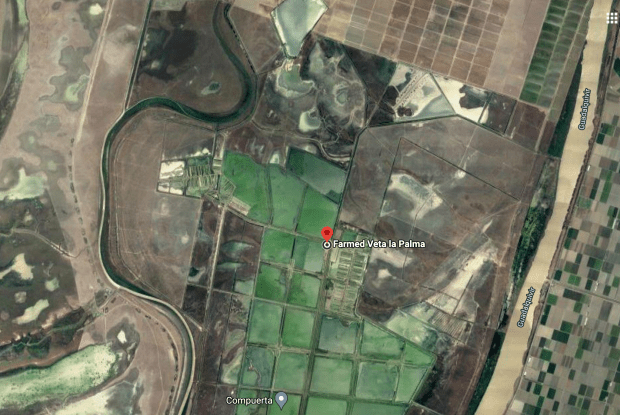
Spotters in Africa and the Iberian Peninsula continue to report Osprey sightings. There are now more than 600 in Senegal alone. I know that each of you will be thrilled to hear that Loch of the Lowes couple Laddie and NC0’s 2021 female fledgling, LR2, has been repeatedly spotted in Spain. She is at the Veta la Palma Espacio Natural Donana, La Puebla del Rio.
This is one of the largest nature reserves in all of Europe. She could not have picked a safer and more appropriate spot for her very first winter. Here are the map images and here is a link to the website so you can see all of the birds and wildlife at this ecological site. I am also posting this in case some of you want to travel at some time to see the birds – all kinds – this time of year – but do not wish to go all the way to Africa.
It is always good news when the first year fledges find a safe place with abundant resources. It is even better when we know about it and can celebrate with them. As you know only about a third of the fledglings succeed so big smiles all around. Laddie and NC0 would be thrilled! Another Rutland bird, Blue 081, a male fledgling of Maya and Blue 33 spent his first year, 2020, and has been seen this year, at Veta la Palma, Cota Donara, Spain. I continue to wait with great hope for news of Blue 463, Tiny Little Bob from the Foulshaw Moss Nest.
It is early morning in Australia. Mirvac has changed the zoom on the camera for the 367 Collins Four but you might find that the eyases are still out of view. I understand that it will not be changed again. You can hear the little ones running around on the metal.
Diamond and Yarruga are awaiting a breakfast delivery.
The trio at Port Lincoln Osprey Barge are still snoozing.
There has been no further word about WBSE 28. WBSE 27 has been seen by several people and photographed near to the Discovery Centre across the river from Lady and Dad’s roost. They will surely know where 27 is and be providing food for it. The eagles first get their flying and landing skills down before fishing and hunting (normally). The parents help them by providing them with food. I sure hope that Lady and Dad also know where 28 is! Ranger Judy reported she has done a walk through the forest adding she did not hear or see anything but that it is a large area.
That is it for today. It is a cool sunny day on the Canadian prairies and it is time to clean up bird seed. The goose flight images were not good last night because of where people had to stand due to pandemic restrictions. I hope to go out to the other nature centre before the end of the month to see if I can catch some of the thousands of Canada Geese making their way south.
Take care everyone. Thank you so much for joining me today.
Thank you to the following for their streaming cams where I took my screen shots: the Port Lincoln Osprey Project, the 367 Collins Street Falcons by Mirvac, and Charles Sturt University at Orange Falcon Cam and Cilla Kinross.
Diamond and Xavier’s little eyas doesn’t seem to care who feeds it – or if it is a Starling or a Parrot – Yurruga just wants food!
Xavier brought in a Starling last evening. As everyone knows, Xavier loves to feed his chick but, he often doesn’t get the chance. Diamond is a very protective Mum.
Xavier arrives at 18:51:01. Diamond is not in the scrape. Yurruga is hungry and starts squealing immediately. It is Xavier’s chance to feed his baby!
“Sssssshhhhhh. Be Quiet Yurruga. Diamond will hear you.”
Yurruga is so hungry it won’t let Xavier pluck the bird before it starts snipping at the feathers in Xavier’s beak.
At one point there were feathers stuck to both Xavier and Yarruga’s beak. They looked like they were putting on moustache disguises.
Oh, dear. At 18:53:06, Xavier feeds Yurruga the leg of the Starling. Diamond is not going to like this.
Xavier realizes what has happened. He watches Yurruga trying to hork (gobble) the leg and foot down its throat.
Oh, dear. Xavier tries to take it back.
Xavier tries to get the leg and foot out of Yurruga’s throat but he can’t. He looks like he is in a panic. The chick will not let go of the leg!
At 18:53:33, Yurruga finishes horking the leg and immediately turns and bites Xavier’s beak.
Yurruga is really, really hungry. It starts squealing and Xavier starts feeding it the meat of the Starling and the organs. Xavier must be terribly relieved that the chick did not choke on that leg! Maybe Diamond won’t find out!!!
Here is a video clip of the incident with its ending.
The morning sun is just waking up and so is Yurruga. It is Monday, 25 October in Orange, Australia. This can only mean another day of adventures with Yarruga, Xavier, and Diamond. No telling what is going to happen! This scrape box is full of surprises.
Here is the link to join in:
This is a great streaming cam and falcon family to watch!
Fact of the Day: Peregrine Falcons are known to lay their eggs and raise their chicks on the sides of cliffs and in human made scrape boxes. It was understood that they did not make or use twig nests because of the chance of disease and pests. At the Knepp Castle, Isabella Tree reports that a pair of Peregrine Falcons have made a nest in a tree. There are, of course, always exceptions to the rule but this might prove interesting if other falcons make the estate their home using trees as nesting sites.
Thank you so much for joining me today. Take care of yourselves.
Thank you to Charles Sturt University’s Falcon Project and Cilla Kinross for their streaming cam. That is where I took my screen shots and video clip.
The following was posted on the Sea Eagle FB Page. I took a screen shot of the entire entry to share the good news with you. Thanks so much to Rohan Geddes for getting those great images.
Lady and Dad roost on the Parramatta River near to the Discovery Centre. I have put the red pushpin at the location of the Discovery Centre. You can see the Parramatta River just at the end of the walk. Many who visit the area have coffee along the river (see Orange Cafe sign) and watch the sea eagles if they are roosting.
This is just great news. Such a relief.
These are such challenging times for these juveniles. They have to get their flying – and as the poster says – their landing – under control while still navigating to get food from the parents. The fact that 27 is so close to the river shows great promise.
There has been only a glimpse of 28 and it is unclear if that was the one on the afternoon of the fludge or later. Send them both lots of positive wishes.
Just a couple of other mentions. The Collins Street Four are on the move. They were out of sight of the camera yesterday. Do not worry! They are running along the gutter to the other end exploring. Yesterday one started and all the others followed!
Yarruga continues to eat and grow stronger. Yesterday it was almost standing upright!
The Port Lincoln osplets had fish at 06:25, 12:56, 14:16 (Mum brought fish in), 17:32 was a fish tail, and 19:24. Here is a peek at that last feeding of the day:
Thank you for joining me this morning for this update on the WBSE fledglings. It is sunny and cold, 2 degrees C, on the Canadian Prairies. There are a few Slate-grey Juncos hanging on but the garden is fairly quiet this morning. I wonder if there will be any Canada Geese landing this evening? If so, I hope to get some good images for you. Take care all. Stay safe.
Thank you to the Sea Eagle FB where I took a screen capture of the posting of WBSE 27 and to the Port Lincoln Osprey Project and the 367 Collins Street Falcons by Mirvac for their streaming cams where I took my screen shots.
It is 5 degrees C or 41 F on a grey Saturday on the Canadian Prairies. The Slate-Grey Juncos have departed and only a few brave souls are in the lilacs around the feeders. Even the squirrels and Mr Blue Jay seem to still be hunkered down and it is already mid-afternoon.
It is, however, morning in Australia. I have to hand it to the parents of the Collins Street Four, they are really working this year to keep these energetic and healthy eyases fed. Here is a two minute video clip of the first feeding of the day. Watch it all. You will notice that the chick on the far left really gets the first bites and this might cause you to worry that it would eat all the food but as the two minutes progress everyone is getting bites and that is how it is – they will all be fed. Another pigeon will come in shortly to top this one off!
For those Rutland Water fans reading this, sad news has come this morning. Blue 2AA known as Duracell has been killed. Duracell has been wintering in Portugal for the past five years and today, he landed on an unprotected hydro pole and was killed instantly. The authorities responded swiftly to cover the lines but, it is just devastating that an Osprey who has lived for six years navigating migration and poles should come to such a sad end – one that could be entirely avoided if every country had laws that required bird protections on hydro poles. I know that many of you are concerned and steps are being taken but, it generally takes a death of a beloved bird to bring about action. How about prevention?!
Speaking of preventions. I promised that I would do a full scale review of Chris Packham’s and Megan McCubbin’s book, Back to Nature. How to love life-and save it. I will do that but for now, if you live in the UK, I highly recommend this book. It is paperback and very inexpensive. It will give you great insights into what is really happening in the United Kingdom and why some things do not change. For those fans of Roy Dennis, Packham doesn’t hold back any punches when it comes to to why the estates want to keep their grouse hunting and how the tax payer is their major subsidy. Why would taxpayers subsidize hunting I ask. Packham gets to the point and if you are a UK taxpayer, you need to understand the environmental issues at hand and the stakeholders.
If you visit or live in the UK, I invite you to look up Knepp Wildland Estate. It is 3500 acres south of Horsham, West Sussex. It is the vision of Charlie Burrell and Isabella Tree and is the only place you can hear turtle doves. Go to their website and read about what they have done to return the land back to the wild and if you haven’t read it, Isabella Tree’s book, Wilding will give you inspiration. Burrell and Tree have been influenced by the Dutch ecologist, Frans Vera.
I am a huge fan of their short videos showing the wildlife. Here is one of a White Stork but there is a host once you get to their website. I just know that you will enjoy them.
Here is another of the wild pigs and Robins.
And here is Isabella Tree talking about Rewilding – and how it can help save the environment, the wildlife, and us.
On my trip to Scotland next year to see the Ospreys I hope to find a way to get to Knepp as well as to Poole Harbour to see the Ospreys gather before migrating.
Everyone in the nests is fine today. It is just such a relief that all is going well. The individuals that run the cameras in Melbourne have said that they will not move the camera and have asked that this information be passed on. They have also asked that viewers not panic if they do not see all of the chicks. They would be out of sight but perfectly safe with Mum and Dad keeping watch over them. So I am passing it on. I know that we would really appreciate that other camera if the eyases decide to spend the majority of their time at that end. But, for now, let us be grateful to be able to watch this amazing family struggle with those four growing falcons!
Thank you for joining me today. Take care, be safe. Smile. See you soon.
Thank you to the Collins Street Falcon Cam by Mirvac for their streaming cam where I took my screen shots and video clip.
Hopefully today’s ramblings will make a point on how to help our birds. Bear with me. I love to tell stories and revisit memorable moments.
More than a decade and a half ago, I was in Beijing teaching some special workshops at the International School and also giving lectures on the history of Chinese ceramics. Yes, you read that correctly. A Canadian was in China talking about Chinese pottery! I had been there several times before and always enjoyed myself and treasured the friendships that I made. This particular visit I was staying in a hutong that had been converted into a small guest house. Hutongs are the traditional courtyard houses, many torn down now. During breakfast I met a very interesting lady whose name was Fanny Farkles. She had retired from owing a restaurant, catering, and cooking school in New York City. I asked her, being terribly curious, what she was going to purchase and take with her as a reminder of her time in Beijing. What she told me has stuck with me. She said, ‘I spent the first 50 years of my life acquiring stuff and I will spend the last 50 getting rid of it’. Instead of ‘something’ she was going for an experience – a 17 course Ming-Dynasty meal fit for the emperor.
It wasn’t until later that I fully grasped the wisdom of what Farkles was saying but when I did, it hit me hard and, like all great insights, you wish you could turn back the clock and start again sometimes. Stuff. This coming year I will be spending much time finding new homes for ‘the stuff’. Thankfully, my resolution for 2021 was not to buy any new books. I almost made it had it not been for Chris Packham’s Back to Nature or Emyr Evans, Monty. Almost any book can be purchased used from a myriad of international sellers but not those two when I checked.
Speaking of Emyr Evans’s book on Monty, the DFYI on line shop is now open. If you are interested, here is the link to their on line shop:*
A signed copy is 15 GBP. If you live in the UK, the postage is a very low flat rate. The round the world flat rate is 11.99 GBP. If you are a fan of the Dyfi’s Monty, the super star of the male Osprey world (by some), it is a great book or gift. It is also a fundraiser for the Dyfi Osprey Project.
One other year a young woman asked women around the world not to buy any new clothes. To wear one thing and switch it up with what was in the closet. It was the year of my black sheath dress. The money saved was given to young women in India to purchase school uniforms because we all know that education is important but you cannot go to school without a uniform in India. It was a brilliant idea.
An article in the environmental section of The Guardian today talks about ‘stuff’ and how to save the environment by not buying. Several months ago, an economist suggested that if everyone in the world cut their spending of non-essential goods by 15% it would have a major impact on climate change. If it is good for the environment then it is good for the birds. Have a read.
A quick check on those adorable feathered creatures that inspire us to leave the world a better place reveals that Middle Bob and Little Bob on the Port Lincoln Osprey Barge had a tug o war over the fish tail this morning. I think Middle Bob won but, that’s OK. Little Bob won when he pulled with Mum!
Despite their amazing growth and those awesome curved juvenile feathers, you can still tell Little Bob from the circle on top of its head. You can also count on Little Bob being as near to where Mum is handing out the food as anyone. They line up and he is there, right at the beak with gleeful anticipation in his eyes.
Mum is happy to oblige!
The feeding is over and Little and Middle are tugging for the tail. The osplet behind Mum is Big Bob. It looks like a circle on its head but it isn’t. It has lines radiating out when you can see the full design.
Middle Bob is eating the tail and Little Bob is checking to see if Mum finds any more food on the nest. Oh, he loves leftovers, too. First up to the table and normally the last to leave. Sounds like Little Bob is a female to me. They need about 25% more food than the males.
Yurruga is currently sleeping off that entire Starling that Xavier fed it for breakfast. It is a wonder the baby didn’t pop but, like a good falcon, when Xavier suggested it eat more and made that chumping sound, Yurruga ate. It is learning to eat when food is available. You don’t always have the luxury of a stash in the corner of a scrape box in the real falcon world.
At least one of the Collins Street Four looks like it wants to try out for one of the local rugby teams. My goodness these chicks are enormous. Look at those feathers coming in. One day we will wake up and they are going to look like their Dad and Mum – it will happen in a blink I am afraid.
No other news from the little sea eaglets that flew off the nest yesterday. Keep them in your positive thoughts.
Thank you for joining me today. Everything at the nests is just fine. What a lovely relief. You take care. See you soon.
Thank you to the following for their streaming cams where I take my screen shots: the Port Lincoln Osprey Project, Charles Sturt University at Orange Falcon Cam and Cilla Kinross, and 367 Collins Street Falcons by Mirvac.
* I might mention books or other things in my blog. I do not make any money if you purchase the items and never will. My purpose is to simply bring news of the birds as they add so much joy to our lives and to alert you to ways that you can help make the world a better place for those birds.