Captiva Ospreys have their first egg and other Bird World News

Calling all Osprey fans. We have lift off. The new couple at the Captiva Osprey Nest have their first egg. Meet Lena and Andy 2. (The previous pair were also Andy and Lena).

Lena 2 laid her first egg at 10:04:08. From her actions, it appears that she could be a first time Mum from her reactions to the egg. She was very cautious which is a good thing and seemed a bit unsure about incubation at first.

Just imagine laying an egg for the first time!

The wind was really blowing. The weather station says it is 18 kph but, the gusts have to be much more than that. I have to remember that the breeze would feel good in southern Florida where the nighttime temperature is currently 24 C.

There is our proud Mum. Isn’t she lovely?

Oops. A big gust caught Lena when she was trying to incubate the egg and almost sent her flying off the nest.

Hang on, Lena!

Ahhh, nice and settled.

The nest is on the same property as the Captiva Bald Eagle nest. The land is owned by a Canadian, Lori Covert.

The first Andy and Lena laid eggs on this nest before. Sadly, the Corvids in the area come to the Osprey nests once the chicks hatch and eat them. As a result, Andy and Lena 1 did not fledge any chicks.

There is currently a discussion about having a poll to see if watchers want the cam left on if the eggs do hatch or have it turned off so that if the Crows come, we do not see what happens. The ultimate decision is, however, with the land owner.

This couple arrived early and laid their egg a month ahead of most. Hopefully that will help them with the Crows as well as any issues with the red tide that can occur in this area. Currently there is no red tide. If you would like to know the impact of the red tide, here is some very good information:

https://www.mysanibel.com/Departments/Natural-Resources/Protecting-Our-Water-Quality/Sanibel-H2O-Matters/Red-Tide-Information

Oh, let’s send this young couple positive wishes. You can watch Andy and Lena 2 here:

My intention was to report -again- on the Port Lincoln lads but it was so exciting to check on this nest first and find an egg had just been laid. Oh, I sure hope they do well.

It is quite clear from happenings on the Port Lincoln Barge why Ervie and Falky don’t have enduring brotherly love for Bazza. But, before I begin, this morning both Ervie and Falky had fish delivered which they ate on camera. Ervie got the first fish from Mum at 07:08 and Falky got a fishy shortly after from Dad at 07:23:25. When I went back to look at Bazza he had a nice crop so he has eaten off camera. I expect that one of the parents made a delivery to him but, it is possible Bazza was fishing and caught it himself.

In the image below, Bazza is on the bottom right perched on the yellow and black ropes. You can see he has a crop. It looks nice and full to me.

A few minutes earlier an incident between Bazza and Falky occurred. Please watch carefully as Bazza attacks Falky shoving him into the water. You will see Falky floating in the water below the ropes. Falky will make three attempts to get out of the water.

Falky kept his cool and did not panic. He managed the situation really well. That said, it is possible that Falky might have drown. I know that I have been watching the dust ups between the three brothers but there are instances when it can go very badly. It was such a relief to see Falky flying free of the water.

Ervie remained on the nest all day. Mum delivered a small fish to him at 15:29:44. Port Lincoln provided some really nice close ups of Ervie.

He’s a lovely juvenile.

There is a rare Stellar’s Sea Eagle that is making its way South. It was up around the Atlantic coast of Canada not that long ago and bird watchers, especially those working on Life Lists were ever so excited!

I want to leave you with a smile on your face. Have you seen anything cuter today than Harriet and M15’s babies, E19 and E20? It is getting much more difficult to tell them apart! They are adorable with their clown feet and big wings. They both have crops and enjoyed the ‘mystery’ meal that Dad brought in.

We could have pips Sunday morning from Captiva and the KNF Nest. Stay posted. We are also monitoring Berry College. So much going on.

Right now there is snow falling on Missey at Barry College. My goodness she just survived a hail storm and incredible winds. Now snow.

Take care everyone. See you soon! Thank you so much for joining me today.

Thank you to the following for their streaming cams where I took my screen shots: Window to Wildlife Osprey Cam, Berry College Bald Eagle Cam, SWFlorida Bald Eagle Cam and D Pritchett, and Port Lincoln Osprey Project.

Tuesday in Bird World

It is a blustery snowy day on the Canadian Prairies. We woke up to more snow and the birds wondering where to find food underneath it. It is fine for the birds that eat out of the feeders but those that feed on the ground will have a tough time of it. I feel for them on days like today. Our temperatures are ranging from -22 C to -14 C. So not warm! And the snow will continue throughout the day and night. It is definitely winter in Canada. We have had 4 or 5 years of drought and hopefully the moisture and rain in the spring will change that!!!

Everyone is trying to see if there is a pip or a crack in the third egg at the WRDC Nest in Miami-Dade county. The two nestlings are doing quite well. R1 does a little of the bonking but R2 is eating very well. Both have had full crops. Personally, I am hoping that R3 does not hatch. These two are doing well and the third hatch – well, we all know that often it is a real challenge for them even with experienced parents.

R1 and R2 are simply ‘can’t take my eyes off them cute’. Adorable. Cuddly. Soft.

A little one peeking out from under Mum after their nice meal. They have been enjoying a variety of fish including Tilapia. Dad seems to always have several varieties on hand for feeding.

Harriet and M15’s E19 and E20 are continuing to do well, also. They are starting to get their pin feathers now that they are 8 and 7 days old. We can look forward to them being ‘itchy’ by the weekend, I would think. They grow so fast.

You can see the pinfeathers easier in the image below. They are just tiny black flecks right now but they are growing in.

Adorable.

Gabby has about a week more of incubation before her and Samson will be busy feeding the bobbleheads! Fingers crossed for both eggs to hatch up at The Hamlet near Jacksonville. I cannot wait. This is one of my favourite nests. Last year the couple fledged Legacy. As an only child on the nest, Gabby and Samson did everything they could to replace the lessons Legacy would learn from having siblings. At one point, when Legacy was so so tiny, they tested her to see if she would walk over to the fish out of the nest bowl. She did and she kept getting stronger and stronger. What a beautiful juvenile she was when we last saw her in the summer.

Mr President and The First Lady have been to visit their nest at the National Arboretum in Washington, DC. Since 2015, the pair have made this nest their home and during that time they have fledged 7 eaglets. Don’t expect eggs for a bit.

Here is the link to their camera.

This morning their nest had another visitor – a Red-tailed Hawk hoping to catch some breakfast.

Jack and Diane have been working on their Osprey nest on the grounds of the Achieva Credit Union in St Petersburg, Florida for awhile now. Jack brought Diane her first breakfast fish the other day and this morning she was waiting for another. Looking for eggs to be laid in a few weeks.

Last year Jack and Diane were one of a few couples, world-wide, that fledged three chicks. For a long time it was touch and go with Tiny Tot Tumbles but Diane started bringing in extra fish including her huge catfish and things turned around for that little one. She must have a secret place to go fishing because she always leaves and comes back with a large fish to feed everyone.

So far this nest has not had the problems with predators taking the eggs like Lena and Andy at Captiva. However, I am a little uneasy at times as the fish deliveries are inconsistent. I even thought that Jack was providing for another nest last year. So, fair warning – this nest can cause one to be anxious at times.

Here is the link to this Osprey camera:

Another good Osprey Nest to watch is up at Oyster Bay, NY, where there were three fledges last year, also. Here is that link and I will bring it and Achieva back up again – along with others – when eggs are about to hatch.

Sometimes it is nice when not much is happening in Bird World. We can sit back and relax and enjoy all of them without the drama. I have not seen nor have I had word that Daisy the Duck has returned to the White-Bellied Sea Eagle nest since she visited on 1 January with her mate. I surely hope that she finds another spot and tries it. Anything is better than the Sea Eagles nest! We want her to succeed. My contact has not sent me an image of her down in the water so let us all image her paddling in the duck pond!

Thank you for joining me today. Stay warm, stay safe! See you soon.

Thank you to the following for their streaming cams where I took my screen shots: SWFlorida Bald Eagle Nest and D Pritchett Family, NEFlorida Bald Eagle Cam and the AEF, the WRDC, The National Arboretum Bald Eagle Cam and the AEF, and the Achieva Credit Union.

Winter Solstice in Bird World

As all of you know, Daisy the Duck has occupied my mind for some 20 days now without much of a break. She has just arrived home to the nest – it is the Summer Solstice 22 December in Australia – and I am going to take some time to check in on the other nests that are normally watched.

It has been a horrible day for Gabby who is incubating two eggs on the Northeast Florida Bald Eagle nest called The Hamlet. It is just outside Jacksonville.

Bald Eagles generally have 35 days of incubation. Gabby and Samson were really wise. They did not start hard incubation until the second egg was laid meaning that the two eaglets will be born close together with no older sibling advantage. They will just bop each other taking turns! This means that the hatch date is 19 January. Mark your calendars.

For me, this is great timing. Harriet and M15s eaglets are set to hatch in 3-4 days. We won’t be watching two bobble head nests at once. Oh, those high winds are really hitting Fort Myers. You can see Harriet’s feathers blowing.

It is a beautiful day over in Decorah, Iowa with the Decorah Bald Eagles. No eggs – it is winter! But the Eagles are around. The nest is at a trout hatchery – lucky raptors. Smiling. Everyone should have a source of fish for their Ospreys and their Raptors. Takes about 350-400 a season. Not bad for giving life to these beautiful birds and their family.

The Bald Eagles in Iowa generally lay their eggs in mid-February.

The Decorah Eagles are not to be confused with the Decorah North Eagles!!!!! It is home to Mr and Mrs North.

The camera is live at Duke Farms in New Jersey. No eggs yet. In fact, it should be about a month until we see eggs on this nest. I hope this Mum has better weather this year! She was encased in ice and snow most of incubation in early 2021.

Diamond is starting the day in the scrape box at Charles Sturt University in Orange. Both her and Xavier have been examining the new gravel that Cilla Kinross provided awhile ago. They have also had bad weather with torrential rains but it looks like they will have a nice day today. Fingers crossed.

Jackie and Shadow at Big Bear Bald Eagle Nest in Big Bear, California are doing nestorations. It looks like they are going to have a white Christmas.

Last year Bonnie and Clyde, the Great Horned Owls, took over a young Bald Eagles couple’s nest on Farmer Derek’s property. They raised two owlets. The nest is currently unoccupied but one of the Bald Eagles did a fly by at 07:19 this morning. Will there be a battle over this nest?

The eagle is right at the horizon line with the blue sky. You should be able to see it.

Anna has taken over incubation duties of the two eggs on the Kisatchie National Forest Bald Eagle nest. This is her and Louis’s second breeding attempt. They fledged Kisatchie last season.

Clive is on incubation duty at the Captiva Bald Eagle nest. Another storm is really starting to churn in that area. It will effect the eagles as well as the ospreys – and, of course, it is the same storm that is hitting Harriet and M15 in Fort Myers.

It is a beautiful winter’s day – perfect for the Winter Solstice – at Glacier Gardens. I wonder what Kindness is doing? She was such a special juvie.

Alaska is a perfect place for Bald Eagles, too. When Dave Hancock put the satellite trackers on the 7 or 8 fledglings in British Columbia that survived that horrific heat wave, all of them flew north to Alaska.

Lena is waiting for Andy to bring her some fish at the Captiva Osprey Nest. This couple was really hit hard – along with Connie and Clive at the Captiva Bald Eagle nest – from the storms the other day. It is good to see that all had no problems. There is another storm brewing today.

Ervie got the morning fish and Bazza is not happy. Apparently, Ervie woke up in the middle of the night and kicked Bazza off the nest. I can understand why he is grumpy.

Ervie is doing a great mantling job. Third hatch turned out to be the ‘King Pin’. Wonder if Bazza remembers how he tried to treat Ervie? Do raptors have a memory like elephants?

Daisy is fine. Wishing for a quiet day for her.

This is a wee bit of a catch up with some of our other favourite nests. Cal Falcons raised $3500 through the sale of t-shirts to support Lindsay Wildlife for treating Grinnell. That is fantastic! There is no news of who Annie will pair with for the 2022 breeding season. Watching birds is all about patience. Sometimes I don’t have any!!!!!!

Thank you so much for stopping in to check on the nests. The birds will weather the current storms in Florida. They are used to them but, still, we worry. Wishing all of you a very happy Winter solstice. Take care. See you soon!

Thank you to the following for their streaming cams where I took my screen shots: NEFlorida Bald Eagle and the AEF, SWFlorida and the Pritchett Family, Captiva Osprey, Captiva Bald Eagle, KNF Bald Eagles, Glacier Gardens, Charles Sturt University Falcon Cam and Cilla Kinross, Farmer Derek, Friends of Big Bear Eagles, Duke Farms, the Raptor Research Project at Explore.org, and the Port Lincoln Ospreys.

The Daisy Chronicles Day 17, continued

Despite the presence of the Sea Eagles, Lady and Dad, at the River Roost on the Parramatta River, Daisy has been blissful since she returned from her morning foraging trip at 07:11:00

The Sea Eagles have not come to the nest. The wind is beginning to really pick up. I have not seen any predators on the nest. That said, the sound is off on the main camera and the Ravens could have been in the branches above like they have been lately or simply flying by. The strong winds might keep them at home!

It is currently 30 degrees in the forest and the winds are blowing at 19 km/h with gusts up to 39 km/h. It is hot and humid for Daisy with the confirmation of thunderstorms (90% chance) from 15:00-18:00. Hopefully Daisy will wait til the rain and winds have calmed before going out for her evening foraging. I am not concerned about her. She has been through many storms but, rather, for the priceless down covering those eggs.

It is nearing 11:30 on the old Ironbark Nest. The wind is rocking the tree but Daisy does not seem bothered. I have no noted any predators around and it is unclear if the Sea Eagles are still at the River Roost. The sound is still off line.

Other Nest News. A video has been posted of the thunderstorm that hit Orange last evening. Lightning, hail, thunder, and high winds. Diamond is in the scrape. You can see she is frightened. This morning Xavier arrived on the ledge of the scrape box and there was much relief he was alright. You can imagine that was this type of storm that also hit Daisy in Sydney.

Need an Osprey fix? Lena can see Andy in the distance and she is fish crying. Here is that video:

Samson is so happy that him and Gabby have their first egg as of yesterday. Just look at those two!

Over at the Port Lincoln Osprey Barge, Ervie picked up the first delivery of the morning -despite the choppy water and winds – from dad at 06:30:41.

Falky got the 07:39:44 fish.

Last time I checked Bazza was alone on the nest wishing for a fish.

Thank you so much for joining me. There is not much to report about Daisy which is, after all, a good thing. Hopefully the weather will not be as bad for her as it was for the Peregrine falcons, Xavier and Diamond, at Orange. I will monitor her throughout the rest of the day. Take care everyone. Stay safe! Look to the birds for joy!

Thank you to the following for their streaming cams where I took my screen shots: the Port Lincoln Osprey, the NEFlorida Bald Eagle Cam and the AEF, and the Sea Eagles@Birdlife Australia Discovery Centre Sydney Olympic Park.

Thursday in Bird World

The camera for Daisy’s nest is offline. This is the last image and it was raining at the time. Daisy will come to the nest just as she has done for the first 7 days to lay egg 8 today. It will become increasingly difficult for Daisy to cover the eggs as the number increases unless there is a miracle on the nest and a bunch of leaves fall for her to gather. As I pointed out in an earlier blog, Daisy had much more down last year and this was helpful but – it is not helpful in the rain as it shrinks and is for naught. We can only hope that Daisy’s luck continues but we must be prepared that it is a long slog for our little duck until these eggs hatch. Anything and everything can happen.

I will bring a brief update on Daisy later this evening if the camera starts streaming. Just wish our little duck all the luck you can.

There are wonderful reports coming from Jean-Marie Dupart in Senegal. The Osprey count is more than he would have imagined and he is having to report early. Dupart believes, by the end of the month, that he might have counted 1000 individual Ospreys!

At the Kalissaye Reserve, there were 127 for the entire month of November. Already in December for one week, the count is 160. Saloum Park had 64 birds for all of November and now already there are 90. Dupart is overjoyed.

The Kalissaye Reserve is a small nature centre or reserve near the Casamance River. The Casamance Region is know as ‘The Green Garden of Senegal’.

Wet lands and the Casamance River in the background. This is the area of the Ospreys. Wikimedia Commons.

This is Saloum Park or Delta in Sengegal. These look like perfect places for our Osprey to over winter.

Wikimedia Commons
Wikimedia Commons

The Port Lincoln Lads had plenty of fish yesterday. Ervie had the first two fish at 06:19 and 08:39. Bazza had the next four deliveries! At 14:22, 15:58, 17:33, and 20:40. Falky did steal one of Bazza’s fish so he did get something to eat yesterday. Mum delivered the 14:22 fish to Bazza – she even looked like she might have even fed her big boy! I think Bazza is indeed Mum’s ‘baby’ despite the fact that he was the first hatch.

The Captiva Osprey Pair, Andy and Lena, arrived back at their nest early.

I will give you this link to watch this nest but there is a word of caution. Andy and Lena have had many successful hatchlings but have never fledged any Osprey. The reason is that the Crows come and eat the chicks. That is so sad. Maybe this year Andy and Lena will have good luck like Port Lincoln.

The Kakapo Recovery has announced that 2021 adoptions are closing today – that is the 10th of December in New Zealand. If you are a supporter of the Kakapo Recovery, you might wish to adopt one of the non-flying parrots as a holiday gift to all your family.

There are two eggs at the Captiva Bald Eagle nest with Connie and Clive and two eggs with Anna and Louis at the KNF nest in central Louisiana.

Connie’s new mate, Clive, looks at the two eggs.

You can watch Connie and Clive here:

Louis is just a great dad down at the KNF Bald Eagle nest. Last year he was so excited when Kisatchie hatched that there were 18 fish on the nest for the eaglet and Mum. There was no way they could eat all of them. This year he is really helping to build up a really cosy nest!

This is Anna and Louis’s second breeding attempt. Last year they fledged Kisatchie. They are in a very old nest in the Kisatchie National Forest. It had belonged to another Bald Eagle couple who had fledglings up to 2013. Kisatchie, last spring, was the first eaglet to fledge from the nest in 8 years. It was a wonderful event.

Here is the link to Anna and Louis’s nest. I promise they are a fun couple.

Thank you for joining me today. It is so nice to have you stopping in to check on the birds. Isn’t that a great count of Ospreys in Senegal? Wow. I am hoping that Blue 463 might be spotted — our very own Tiny Little Bob from the Foulshaw Moss nest in Cumbria. Take care everyone.

Thank you to the following for their streaming cams or their FB Pages where I took my screen shots: the Kakapo Recovery, the KNF Bald Eagle Cam, the Captiva Bald Eagle Cam, Port Lincoln Osprey Project, Sea Eagles @Birdlife Australia Discovery Centre, Wikimedia Commons, Captiva Osprey Cam, and Jean-Marie Dupart for his report on the Ospreys in Senegal.

Whew!

I know that some of you have watched birds fall out of nests including Silo Chick at Patuxent River Park last summer. Remember that feeling when you saw that little osplet fall into the water, heard the splash, and saw the others looking down? Felt helpless? Of course. Thankfully that story ended well. I have no idea how many called but the osprey was located and literally tossed back into the nest. It was an enormous relief. Others are not so lucky.

I posted a new owl box streaming cam in Joburg, South Africa just the other day. An orphaned Spotted Eagle owl was put in the box with two other owlets. The mother accepted it! Fantastic. The adopted owl is 5 days older than the other two and it got curious about the outside world today and fell out of the nest box!

What no one knew, at the time, was that the owl landed on a huge platform under the box. If it doesn’t get back into the box on its own, it will be placed back inside the box. Relief.

Yarruga was starving this morning. There were two prey deliveries at the scrape box and there was not a scrap left of either meal.

Yarruga was so excited when the second meal appeared that she could not stand still to eat. She literally ran around the scrape box as in the images below.

Xavier was certainly glad when that feeding was over! There is not a drop left for either of the adults. Yarruga was soooooo hungry after having only 2 feedings yesterday. She does love her food! And she is certainly growing. Look how big she is next to Xavier!

In fact, Yarruga should have had a nice tasty little duckling yesterday but Diamond saw it and quickly took it from Zavier and flew out of the scrape! One has to imagine that this is quite the delicacy (as opposed to the dreaded Starling!). After her injury, I am actually glad that she got it.

Port Lincoln did a nice close up of the juvenile feathering of the three osplets this morning. Just look at the variations in the depth of the white juvenile feather banding. Little bob is in the middle.

As the dominant bird, Little Bob often gets the first bite. She is full and letting the other two have their turns as she looks out to the water in the image below. Of course, I am saying ‘she’ because of her thick legs. Wait til Monday when the banders declare she is a he. How funny! Whatever gender, that bird is gorgeous and I will continue to celebrate the times that she put Big Bob in his place.

There she is below.

Victor Hurley, the main researcher for the Peregrine Falcons in Victoria has been posting information on the 367 Collins Street FB Page. The last posting was on ‘Dispersal’ because, as we know, the falcons will be fledging shortly. I imagine that there are many things in this column that would be of interest to many of you. This is what he wrote:

First Flight Normally, this is not such a serious undertaking as that from an inner city high rise ledge. Normally pre-fledgling Peregrine Falcons will scramble around across their natal cliff for quite some time before taking their first flight. Mostly this is successful and they land high on another ledge or small perch. In a city location they will land on the roof top of another building nearby. If the winds are tricky then things can go south pretty quickly. Once they have mastered their first flight then they will spend increasing time “on the wing” and following and learning from the parents how to hunt. As soon as each youngster achieves their first kill the adults (parents) will stop providing any more food and that youngster is on their own to find food. Once all young are successfully hunting then depending upon the experience and ruthlessness of the adults they will all be chased with serious determination out of the territory altogether. In some cases this may occur in December or even early the nest year. Either way the young tend not to return again to the nest ledge that we have been observing. Maybe occasionally, but then only briefly.

Plumage differencesLeading up to this first flight the adults restrict the level of food resources they bring to the nest. This explains the weight loss of the nestlings. The wings of the nestlings are still growing but they are also losing weight. This makes them lighter with larger wings which provides for a “lower wing loading” which makes their first flight easier. Neat, huh! The other point I thought I would raise here is that of the plumage differences. Peregrine Falcons as with most raptors and many other bird species have a juvenile plumage phase and an adult plumage phase. The juveniles are in essence a brownish colour with vertical splotchy stripes over a “dark milk tea” fawn base colour on the front and dark brown wing, back and head. Whereas the adults have a near black hood for the head, slatey grey wings and back with a soft cream bib and base colour overlayed with fine dark grey-black horizontal stripes. The tail and main wing flight feathers are also longer in the juveniles and they moult shorter feathers with each year as they get older.

Natal dispersal This is the ultimate question. Where and how far do Peregrines disperse to find a place of their own in which to breed. Natal dispersal is the distance (and direction for those interested) in how far fledgling Peregrine Falcons ultimately move to find and establish (read take over for the most part) their own breeding site. Amongst Peregrine Falcons in Victoria, as with most bird species the world over, the females disperse further from their fledging site to breeding site then do males. Based on observing 127 breeding adults with leg bands (placed on them as nestlings) the females dispersed on average 64km (range 6-280km) and males average 25km (rang 1.6-90km). This differing dispersal distance minimises the likelihood of siblings interbreeding. The average age at first breeding is as follows: females 2.6 years (average) and for males 3.3 years (average). Another way of presenting this same data includes presenting the direction as well as the distance males and females disperse. No bias in dispersal direction was recorded.Victoria is a relatively flat area of the planet, its highest point above sea level is Mt Bogong (1,979m) and~80% of Victoria is <200m ASL. So for a predatory species like the Peregrine Falcon that doesn’t migrate annually due to milder winters and having the highest wing loading of any Peregrine sub-species globally, in a state (Victoria) with limited high altitude cliff faces with an abundance of low lying wetlands and associated birdlife and a very diverse range of parrot species what is a cliff nesting raptor to do? A look at all (256) of the Peregrine Falcon nests ever described in Victoria provides the answer to this question. The Peregrine Falcon in Victoria has overcome these obstacles by adopting a range of novel nesting situations (by nesting in stick nests of other birds, tree hollows and of course buildings (a growing trend globally). So this leads to another interesting question. Do those birds raised in one type of nest only adopt others of the same “nest type”? or will they readily disperse to a different type? That is to say, do they become behaviourally “imprinted” on the nest type they are raised on? Again thanks to the long term banding of nestlings and resighting of adults (with telescopes) by volunteers with the Victorian Peregrine Project the natal dispersal patterns of 127 Peregrine Falcons have been identified so far showing that 30.2% have adopted a different (novel) nest type from the one they were hatched and raised in. Between the sexes dispersal patterns are similar with 26% of females and 23% of males adopting different or “novel” nests in which to breed. Combined 30.2% of Peregrines undertake novel natal dispersals to find a place to breed. So the myth of nest type imprinting has been pretty thoroughly exploded with these bird banding results.Further to this, slightly counter-intuitively, novel dispersal events (dispersing from one nest ‘type’ to another) were less dispersive with no sex bias. That is those individuals who adopted a ‘novel’ nest type did so by dispersing a shorter distance on average than those undertaking a typical natal dispersal. Presumably they are doing this in order to exploit a familiar (geographically closer) food/prey resource by adopting a novel nest type in order to remain close by to that prey resource.So back in 1991 when Peregrine Falcons were first identified breeding at 367 Collins Street, Melbourne it was one of only two or three nest sites on built structures that were known. Since then over 20 new sites have been discovered and the number continues to grow. Nest site selection is driven by its proximity to food resources as well as the security (from predators and human disturbance) and how protected the nest is from rainfall and water runoff.Surviving the first two years…The third question (although not chronologically) is what is the survivorship of young Peregrine Falcons in their first two years prior to breeding. Generally, it is accepted that there is a ~a 66% die-off of Peregrine Falcons within their first year. Given the youngest breeding is at two years post hatching I have trawled the VPP database again to investigate causes of mortality of ~240 banded Peregrine Falcons in their first two years post banding. Most banding occurred at or around 24 days post hatching. When considering the various incidents there was no sex bias. That is neither sex is more prone to any cause of death compared to the other. Rock falls, cliff collapses or storms bringing down trees or stick nests have been a surprisingly regular threat to young of this species. The constant and ever present shooting of Peregrine Falcons continues to this day. The first ever band recovery of a Peregrine Falcon in Australia was in 1958 in Victoria. Disease of course is Trichomoniasis and predators varies from Red Foxes, Brown Falcons and even Peregrine Falcons in limited circumstances. Secondary poisoning has generally been a result of pigeon control campaigns.”

This information would, in general, apply to all falcon populations. And if you read all that – it is a ‘Double Whew’ for today. I have been reminded that Victoria Hurley is doing a Q & A tomorrow. I cannot find the link to it. If I do I will send it out later.

Thank you for joining me. Everyone has been fed at least once if not twice already. Diamond is looking much better. No news on WBSE 27 yet and nothing on Grinnell. Take care!

Thank you to the following for their streaming cams where I took my screen captures: Port Lincoln Osprey Project and Charles Sturt University Falcon Cam and Cilla Kinross.

Is it Tiny Tot Tumbles?

There is never 100% certainty in identifying a bird four months or a year or two after it has flown off the nest unless there are Darvic rings and bands. For ospreys, there are facial features – the head – that remain the same for their entire life once they have reached the age of fledging. I have been told, by Osprey experts that I respect, that an osplet born in the spring of 2021 could no longer have the white curved feathers on its wing tips. I am trusting that information to be true.

As many of you know, I have a very special interest in Osprey third hatches. I am particularly focused on these little ones that survive but who have been denied food by their siblings and who might have died due to siblicide. I will be collecting data from nests for the next decade to see if there are any patterns on these particular survivors. Do they do better in the long haul than their siblings? It is extremely difficult if they have not been ringed. The best way to study their survival is both a Darvic ring and a sat-pak with a battery that would last for four years, like the one on Solly who hatched in 2021 at the Port Lincoln nest.

Over the past month or so, a number of Ospreys have landed on the Achieva Osprey Nest in St Petersburg, Florida. Several remind me of the intruder that Tiny Tot Tumbles battled last summer. Have Jack and Diane visited? Maybe. I admit to being so focused on Tiny Tot Tumbles that I ignored the other two siblings and parents in terms of identification markers.

On 30 October an osprey landed on the Achieva nest. I stared at that ‘face and head’ for two days. Could it be?

Staring at me every time I open the fridge or close it is a large magnet of Tiny Tot Tumbles. The screen capture was on 20 June, two weeks before she left the nest for good. Tears began to flow.

There are thousands of images of Tiny Tot in my external hard drives. From the moment she hatched, to the little one running around the rim of the nest trying to get some food. There were days that I counted each bite of food that she got. Notebooks full. That fridge magnet image was taken on a day when Tiny Tot was at her loveliest. She would sit on the perch for hours – she was elegant! And she was a formidable opponent. Any intruder was ousted from the nest. She often battled them alongside Jack, her dad.

A slider to move back and forth to compare.

I am convinced that the amazing osprey that landed on the Achieva nest in St Petersburg at 12:57 on 30 October is, in fact, Tiny Tot Tumbles. She has been away and survived for four months, grown and matured. The white plumage forming the V is very thin on both of those images.

There have been visitors that have, of course, a similar V but the amount of white plumage varies with each of them. The bird below has visited the nest often but it is not Tiny Tot.

This was Tiny Tot Tumbles on 3 July. Look at the white lines from the beak forming a ‘V’. They are thinner on Tiny Tot than on the bird above.

Here is Tiny Tot Tumbles on 27 June mantling.

This is an image of Tiny Tot Tumbles on 26 June. I had enlarged it from a screen capture so that everyone would note the very specific head – the thin white lines, the heart shape of the white. Sadly, the resolution is not good.

These following two images were posted on 20 and 21 June, respectively. The top one is the one on 20 June that I used for my fridge magnet. The next one is the following day, Tiny Tot on the perch.

She is so elegant. She has grown and filled in since she flew off the nest. There she is on the perch looking like she is applying to be on the runway for the most beautiful Osprey of 2021!

Here she is as a wee babe. It was easy to imagine with the difference in age and size that Big Bob might cause problems. In the end, both Big and Middle Bob, sibling 1 and 2, prevented Tiny Tot from eating for a total of 12 full 24 hour periods during the first six weeks of her life.

There is Tiny Tot submissive and hungry over to the right. Big Bob has been unmerciful in its attacks on her on this day.

What changed on the nest was Diane going out and fishing. She began to bring back big catfish and there was always enough to feed Tiny Tot. By 7 April, Tiny Tot has grown and is getting big enough that the older siblings might try to thwart her from eating but she is unstoppable. If she did not get enough to eat, Tiny Tot would root around in the nest. She always found scraps and was known for even cleaning off fish flakes from discarded bones. It is difficult in the ‘real world’ and it takes this kind of tenacity to survive.

Tiny Tot has a nice big crop on 9 April! Just look at her there in the middle of the image below.

This is 10 May. Tiny Tot is gorgeous. She is beginning to get that characteristic head that we all recognized. Her juvenile feathers are coming in and she has survived! In the end, Sibling 1 fledged and returned to the nest once, the following day. Sibling 2 fledged returning for a bit for food. Then Tiny Tot was all alone. Jack brought in fish for her and she stayed – as she should – honing her flying skills and getting ‘street smart’ protecting the nest. On 5 July, precisely four months after she hatched, she flew off the nest. We never thought we would see her again.

I am grateful that Tiny Tot has paid a visit to the nest to show us all that she is thriving. She has put on weight from the elegant pose on the perch post but that striking head remains the same.

I hope that Tiny Tot visits the nest over and over again. She was gallant in her protection of it for Jack, her dad, and with him on occasion. And, for the record, she could be a he. There were never DNA tests taken or any banding. Just keep your eye out for this beautiful osprey. Could we be lucky enough to see s/he raise osplets on this very nest in the future?

Take care everyone! See you soon.

Thank you to the Achieva Credit Union for its streaming cam in St Petersburg where these screen shots were taken.

Monday in Bird World

One of the most wonderful things about the time I spent teaching university classes is the students you meet. Often you get to see them grow up from being first years to graduating and, at other times, you are lucky enough to follow them through adulthood. I often think I was so blessed as I continue to stay in contact with so many watching their extraordinary lives unfold. One of those students is an artist living in northern Manitoba who treated me to a late Halloween treat – images of the Northern lights or the Aurora Borealis from where she lives in Northern Manitoba. These colourful dancing lights are energized particles from the sun slamming into our atmosphere. They say that this happens at 72 million kmh (or 45 million mph). My mind cannot even comprehend how fast that is. When this happens, Earth’s magnetic field redirects those same particles toward the North Pole. That redirection is what causes the Aurora Borealis. I would like to share them with all of you.

Aren’t these incredible? When my children were little, living on the acreage in southern Manitoba, you could look out over the flat landscape of the prairies and see them so clearly.

Oh, what a wonderful treat. Thank you!

The moderators on the chat at the scrape box of Diamond and Xavier have confirmed that Diamond was also limping and had a droopy wing the day that she was away from Yarruga for ten hours. She appears to be getting better. Yesterday little Yarruga was so hungry. Yarruga is definitely as loud as big brother, Izzi. If we ever worried, right after hatch, that Yarruga might have trouble feeding, we do not have to anymore. Here is a clip of Yarruga trying to take the prey and self-feed! Yarruga is 3 weeks old. S/he is going to be a formidable falcon.

Xavier is doing all of the hunting. This morning Diamond fed Yarruga early.

The sun is casting a golden glow on the trio of the Port Lincoln Osprey barge. It has been confirmed that they will definitely be ringed, named, and at least one of them will receive a sat-pak on either 8 or 9 November. When I hear the precise time I will let you know. Last year PLO posted a video of everything later. I do hope they will do that again this year.

I am also told that the two chicks at Thistle Island are a bit younger than the PLO trio. I am so selfishly hoping that Little Bob gets a tracker.

There is going to be a live-streamed Condor release tomorrow. The Zoom event will start at 9:30 am Pacific time (that is 11:30 CDT) with the release pen opening at 10 am PT or 12 noon CDT. Every year young condors are released into the wild on the Central Coast of California. This year they will release six which includes #1031 Iniko, the daughter of Kingpin and Redwood Queen, who survived the Dolan fire. Iniko will be released on 4 December but three other birds will be released tomorrow. If you would like to watch this event – and any release into the wild of a condor is fantastic – then you need to sign up. Here is the link to do that:

https://www.ventanaws.org/zoom-chats.html

If you would like to watch the live-streaming condor cams, here is the link to the Ventana Wildlife Society where you can locate the camera you want:

https://www.ventanaws.org/condor_cam.html

I am so very grateful for these Zoom events. It is one of the good things to come out of the pandemic. I hope that every group continues using them so that those of us far away can join in.

A report on the Ospreys in Finland has been published. It is in Finnish but you can cut and paste and use Google Translate. There are a few images of the nests, etc. They are lovely. Here is that link as I know that some of you watch the Finnish Osprey nests faithfully.

http://128.214.237.21/sites/default/files/files/linnut_vk2020_086-093_saakset_artikkelit_10293.pdf?fbclid=IwAR2HZ8k187x2tvZvT0UfesEMjKgQyZQ2WpxcJDJpycQsmlAFuzeckF6IoXg

There have been images of a pair of Ospreys on the Achieva nest in St Petersburg, Florida. At this point, I cannot confirm they are Jack and Diane. They certainly could be but as one loyal watcher has said, “They do not behave like Jack and Diane.” There is time yet. Last year eggs hatched the first week of March which means they were laid the end of January/early February. If they are not Jack and Diane, Jack will surely run them out of town!

The only confirmation on WBSE 27 is the following from yesterday:

We all hope that WBSE 27 will be kept until it is completely healed and flying well so that it can be released with some hope that it will be able to survive. What a beautiful bird. Those Pied Currawongs are quite dangerous. It is not always safe to be the juvenile of the Apex Raptor on the block! Get well soon WBSE 27.

There have been no new transmissions from Karl II, Udu, or Pikne. It is assumed that Karl II has reached his wintering grounds in the Sudan since his last GPS showed that he had arrived there safely. Pikne was along the waters of the Red Sea. There are real worries for little Udu. He crossed the Mediterranean Sea which would have been exhausting. He will need food and water. His last location was an oasis but they use hot sulphur water for the crops and this is not good for Udu. It is hoped that he made it to the Nile River. Send positive energy to him and also to WBSE 27.

Thank you so much for joining me today. Everyone is fine. You cannot see the Collins Street Four unless they are running down the gutter but they are doing well. More down is being shedded off those wings every hour. Take care all. See you soon.

Thank you to the following for their streaming cams where I took my screen shots and video clips: Port Lincoln Osprey Project, Charles Sturt University Falcon Cam at Orange and Cilla Kinross, Eagle Club of Estonia Forum, and for the FB Page of the Sea Eagle Cam@Birdlife Australia Discovery Centre for the image and announcement about WBSE 27.

Season of the Osprey

One task I take very seriously is alerting readers to the importance of banding and monitoring the birds, reporting sightings, and examining ways to stop human induced injury or death to our lovely feathered creatures. A few days ago I reported the tragic death of Blue 2AA, a Rutland 2015 hatch, who had killed when it landed on a high voltage wire in Spain where he had wintered for the past six years. Here is a well-written article from Rutland that covers many of my concerns with special regard to Duracell, 2AA:

https://www.lrwt.org.uk/blog/abi-mustard/osprey-threats-and-sightings?fbclid=IwAR1orkmPXp58chrj5RANcoqoGuM09ucy8dWhE-NTBmCUsg_Cl2mXtQE-B3A

For those of you waiting word about this fabulous documentary, Season of the Osprey, here is the news for viewers in the US:

This is just two days away!!!!!! Please watch and make sure you check your local stations for any change to the time. I also understand that a DVD will be sold at a later date. That is great for folks like me that don’t have cable television. Thank you PBS!

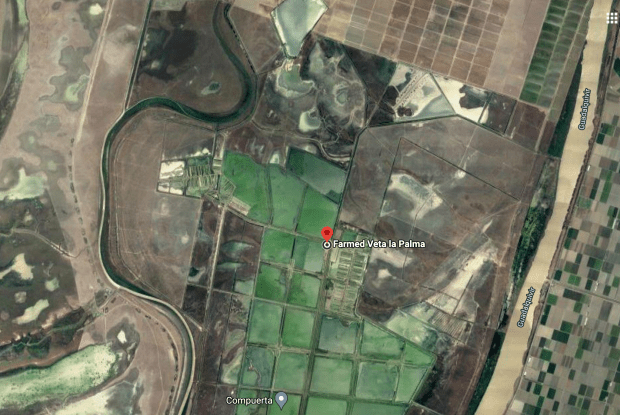
Spotters in Africa and the Iberian Peninsula continue to report Osprey sightings. There are now more than 600 in Senegal alone. I know that each of you will be thrilled to hear that Loch of the Lowes couple Laddie and NC0’s 2021 female fledgling, LR2, has been repeatedly spotted in Spain. She is at the Veta la Palma Espacio Natural Donana, La Puebla del Rio.

This is one of the largest nature reserves in all of Europe. She could not have picked a safer and more appropriate spot for her very first winter. Here are the map images and here is a link to the website so you can see all of the birds and wildlife at this ecological site. I am also posting this in case some of you want to travel at some time to see the birds – all kinds – this time of year – but do not wish to go all the way to Africa.

It is always good news when the first year fledges find a safe place with abundant resources. It is even better when we know about it and can celebrate with them. As you know only about a third of the fledglings succeed so big smiles all around. Laddie and NC0 would be thrilled! Another Rutland bird, Blue 081, a male fledgling of Maya and Blue 33 spent his first year, 2020, and has been seen this year, at Veta la Palma, Cota Donara, Spain. I continue to wait with great hope for news of Blue 463, Tiny Little Bob from the Foulshaw Moss Nest.

It is early morning in Australia. Mirvac has changed the zoom on the camera for the 367 Collins Four but you might find that the eyases are still out of view. I understand that it will not be changed again. You can hear the little ones running around on the metal.

Diamond and Yarruga are awaiting a breakfast delivery.

The trio at Port Lincoln Osprey Barge are still snoozing.

There has been no further word about WBSE 28. WBSE 27 has been seen by several people and photographed near to the Discovery Centre across the river from Lady and Dad’s roost. They will surely know where 27 is and be providing food for it. The eagles first get their flying and landing skills down before fishing and hunting (normally). The parents help them by providing them with food. I sure hope that Lady and Dad also know where 28 is! Ranger Judy reported she has done a walk through the forest adding she did not hear or see anything but that it is a large area.

That is it for today. It is a cool sunny day on the Canadian prairies and it is time to clean up bird seed. The goose flight images were not good last night because of where people had to stand due to pandemic restrictions. I hope to go out to the other nature centre before the end of the month to see if I can catch some of the thousands of Canada Geese making their way south.

Take care everyone. Thank you so much for joining me today.

Thank you to the following for their streaming cams where I took my screen shots: the Port Lincoln Osprey Project, the 367 Collins Street Falcons by Mirvac, and Charles Sturt University at Orange Falcon Cam and Cilla Kinross.

Less can be more

Hopefully today’s ramblings will make a point on how to help our birds. Bear with me. I love to tell stories and revisit memorable moments.

More than a decade and a half ago, I was in Beijing teaching some special workshops at the International School and also giving lectures on the history of Chinese ceramics. Yes, you read that correctly. A Canadian was in China talking about Chinese pottery! I had been there several times before and always enjoyed myself and treasured the friendships that I made. This particular visit I was staying in a hutong that had been converted into a small guest house. Hutongs are the traditional courtyard houses, many torn down now. During breakfast I met a very interesting lady whose name was Fanny Farkles. She had retired from owing a restaurant, catering, and cooking school in New York City. I asked her, being terribly curious, what she was going to purchase and take with her as a reminder of her time in Beijing. What she told me has stuck with me. She said, ‘I spent the first 50 years of my life acquiring stuff and I will spend the last 50 getting rid of it’. Instead of ‘something’ she was going for an experience – a 17 course Ming-Dynasty meal fit for the emperor.

It wasn’t until later that I fully grasped the wisdom of what Farkles was saying but when I did, it hit me hard and, like all great insights, you wish you could turn back the clock and start again sometimes. Stuff. This coming year I will be spending much time finding new homes for ‘the stuff’. Thankfully, my resolution for 2021 was not to buy any new books. I almost made it had it not been for Chris Packham’s Back to Nature or Emyr Evans, Monty. Almost any book can be purchased used from a myriad of international sellers but not those two when I checked.

Speaking of Emyr Evans’s book on Monty, the DFYI on line shop is now open. If you are interested, here is the link to their on line shop:*

https://www.dyfiospreyproject.com/

A signed copy is 15 GBP. If you live in the UK, the postage is a very low flat rate. The round the world flat rate is 11.99 GBP. If you are a fan of the Dyfi’s Monty, the super star of the male Osprey world (by some), it is a great book or gift. It is also a fundraiser for the Dyfi Osprey Project.

One other year a young woman asked women around the world not to buy any new clothes. To wear one thing and switch it up with what was in the closet. It was the year of my black sheath dress. The money saved was given to young women in India to purchase school uniforms because we all know that education is important but you cannot go to school without a uniform in India. It was a brilliant idea.

An article in the environmental section of The Guardian today talks about ‘stuff’ and how to save the environment by not buying. Several months ago, an economist suggested that if everyone in the world cut their spending of non-essential goods by 15% it would have a major impact on climate change. If it is good for the environment then it is good for the birds. Have a read.

https://www.theguardian.com/environment/2021/oct/20/we-need-to-stop-buying-stuff-and-i-know-just-the-people-to-persuade-us

A quick check on those adorable feathered creatures that inspire us to leave the world a better place reveals that Middle Bob and Little Bob on the Port Lincoln Osprey Barge had a tug o war over the fish tail this morning. I think Middle Bob won but, that’s OK. Little Bob won when he pulled with Mum!

Despite their amazing growth and those awesome curved juvenile feathers, you can still tell Little Bob from the circle on top of its head. You can also count on Little Bob being as near to where Mum is handing out the food as anyone. They line up and he is there, right at the beak with gleeful anticipation in his eyes.

Mum is happy to oblige!

The feeding is over and Little and Middle are tugging for the tail. The osplet behind Mum is Big Bob. It looks like a circle on its head but it isn’t. It has lines radiating out when you can see the full design.

Middle Bob is eating the tail and Little Bob is checking to see if Mum finds any more food on the nest. Oh, he loves leftovers, too. First up to the table and normally the last to leave. Sounds like Little Bob is a female to me. They need about 25% more food than the males.

Yurruga is currently sleeping off that entire Starling that Xavier fed it for breakfast. It is a wonder the baby didn’t pop but, like a good falcon, when Xavier suggested it eat more and made that chumping sound, Yurruga ate. It is learning to eat when food is available. You don’t always have the luxury of a stash in the corner of a scrape box in the real falcon world.

At least one of the Collins Street Four looks like it wants to try out for one of the local rugby teams. My goodness these chicks are enormous. Look at those feathers coming in. One day we will wake up and they are going to look like their Dad and Mum – it will happen in a blink I am afraid.

No other news from the little sea eaglets that flew off the nest yesterday. Keep them in your positive thoughts.

Thank you for joining me today. Everything at the nests is just fine. What a lovely relief. You take care. See you soon.

Thank you to the following for their streaming cams where I take my screen shots: the Port Lincoln Osprey Project, Charles Sturt University at Orange Falcon Cam and Cilla Kinross, and 367 Collins Street Falcons by Mirvac.

* I might mention books or other things in my blog. I do not make any money if you purchase the items and never will. My purpose is to simply bring news of the birds as they add so much joy to our lives and to alert you to ways that you can help make the world a better place for those birds.