Ospreyland with Telyn and the Port Lincoln Gang

This is just a glorious fall afternoon and with 27 and 28 degrees C, I have spent much of my time today outside.

Underneath all of these beautiful Creepers is a very ugly chain link fence.

‘Something’ decided to break the large cylinder suet holder. All the normal suspects eat without doing any damage. Little Woodpecker loved to hold on to the bars. So what was it? The obvious is the raccoon. But do raccoons eat bug and nut suet with fruit? Or maybe one of the well-fed domestic cats have reached up and pulled it down trying to get to the birds. The nuts and bolts were scattered and a piece broken. It is definitely a mystery. These incidents continually remind me that a feeder cam might come in handy.

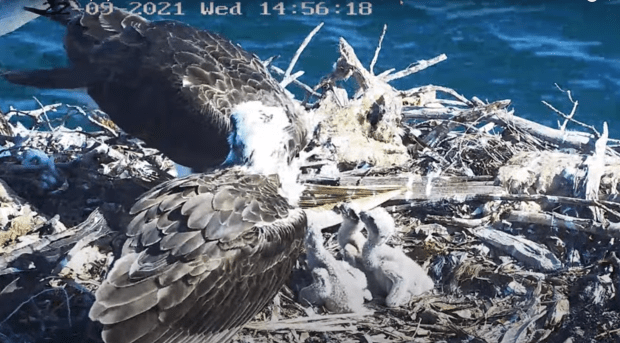
Idris brings Telyn a fish after her commanding performance during Storm Hannah.

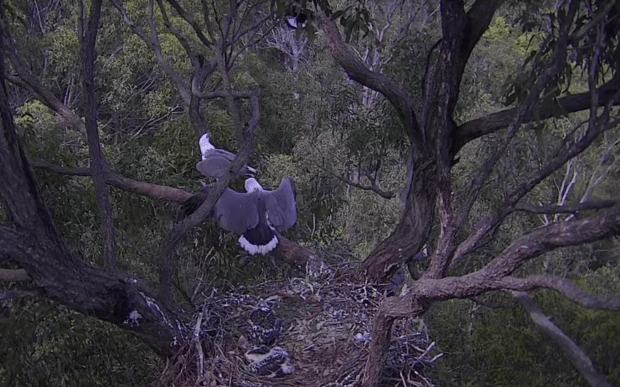
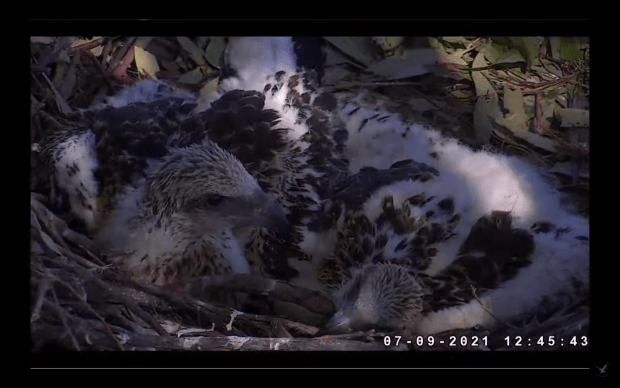
I have been meaning to share a video with you and until someone else mentioned it today on the PLO chat, I had forgotten. It is about Telyn. Telyn is the mate of Idris at the Dyfi Osprey Nest in Montgomeryshire, Wales. I think you will have a genuine appreciation of how protective and fierce these Osprey mothers can be!

This is the backstory. This is a weather warming that the BBC Weather Service issued on the 25th of April 2019 as the storm ravages.

https://www.bbc.com/news/uk-wales-48050305

And here is the video of Telyn incubating her three eggs in 2019 during that monster of a storm:

Wasn’t that incredible?! She just hunkered down deep into that nest. Wow.

What a gorgeous sight – the sun coming up over the horizon full of energy, joy, and hope at Port Lincoln.

It is 16 degrees C with 84% humidit. The weather network mentions the potential for rain and a thunderstorm. The wind is blowing at 13 km/h.

Mum and the babies are all sleeping with the gentle rock of the barge. Oh, just look at them! Old enough to regulate their own temperatures and too big to fit under mom. I bet if it rains she will quickly become the Mombrella! or she will stuff them under her. What do you think?

Sometimes breakfast is early but it seems the average is around often around 9:30 lately.

Mom is standing up looking for a fish delivery. Meanwhile, just look at those chicks and how dark they are today. Will we be able to tell who is Little Bob anymore?

Those feathers must be really itchy.

At 8:57:45 Dad brought in a whopper for Mum and the kids.

Everyone is going to be full. Great fish, Dad!

Little Bob is eating first (of course).

Oh, my gosh. I see food comas coming on quickly. Every chick ate. Every chick has an enormous tight crop. They were completely civilized. Mom and Dad PLO you are doing good!

That is Little Bob closest to the fish. So far I can identify him by his cere. Look at his crop. Do you think Ospreys ever get indigestion? And look at how much of that nice fish is left. Mom eat it up! There will be some left for Dad, too.

Oh, my. Itchy feathers and colossal crops. Time to snooze in the warm Australian sun while Mom has some nice fish for breakfast.

Every once in awhile I get little tears. They start and they must won’t stop. Not because I am sad. It is because I am so joyful and full of hope for this nest this year. Let’s keep up the momentum. Each chick will be rewarded with their very own sat-pak! We can follow them like we do Solly.

Speaking of Solly, she is a year old. Her tracker was out of sorts for a few days and had people worried but she was fine. Boots on the ground spotted her on her favourite tree at Eba Anchorage. Solly, you have done well! We are all so very pleased for you. Happy Birthday!

Just a peek at ‘not an Osprey’. Everyone seems to be fine eating in the beautiful warm sun at Port Lincoln, but in Melbourne, all eyes are on the Mum at 367 Collins Street. Will those four eggs start hatching at once? and how soon will that be?

Gosh, she’s beautiful!

That is it. I waited to make sure that everyone was fed and full at the PLO and they certainly are.

Thanks for joining me. Take care everyone. See you soon!!!!

Thank you to the Port Lincoln Osprey Project and FB page and the 367 Collins Street Falcons by Mirvac for their streaming cams where I took my screen shots.

Big crops at Port Lincoln

The sun is bright and it is another blue sky day on the Canadian prairies. By evening, the temperature will be the same as the islands in the Caribbean — 29 C. It is hard to even imagine it and yet, day after day, this has been the story of 2021.

Just as remarkable as my weather is the parenting on the Port Lincoln Osprey nest. The historical information only goes back to 2015 so we know the couple have been together for six seasons, at least. In that time, they have fledged 10 chicks. In 2015, the eldest killed the two younger ones and went on to fledge. In 2016, it was a repeat of 2015. In 2017, the eldest tossed the youngest from the nest. 2 fledged that year. In 2018, two fledged. In 2019, two fledged. They were Calypso and Star. In 2020, the eldest killed the youngest. Solly, the eldest and DEW, the middle, fledged.

2021 will be a record for this nest if all three survive and all three fledge. It is looking good but, anything can happen to change this.

Yesterday, there was a fish delivery at 9:37:58. That was the one where Little Bob was running to the table. Everyone was full after and as far as I could determine no fish was left. There were two other deliveries.

The second delivery came at 14:49:57. The angle of the camera meant that it was difficult to see the chicks being fed. That said, each and every one of them had enormous crops when the third fish arrives at 18:19:09.

Mom sees Dad coming with the fish and starts doing her calling. Look at how the trio blend in so well with the dark material that has been brought to the nest. Also notice that they are now beginning to appear like old charcoal coloured rugs with light grey stripes! These three are doing so well. It is glorious.

Thank you, Dad!

Mom reaches over, carefully, to get the fish without stepping on the chicks.

Look at all of them lined up so nicely. There is no nonsense. Each gets fed til they are full or there is no more fish. There is definitely food security going on and it is shown in the civil way that the chicks react to a fish arrival.

The sun will be going down soon and these chicks are going to sleep with huge crops. They look like they could pop! Dad will have to go and get another fish for him and Mum.

Dad is spending a bit more time on the nest when he delivers a fish. Has this been a tactic by him and Mum to keep the kids lined up like a choir eating and not fighting? Whatever they are doing, it has been a couple of days since Big Bob tried to reinforce its dominance. Indeed, it has been a wonderful Osprey nest to watch!

One other check in. The two adults at the 367 Collins Street Peregrine Falcon scrape are going to be busy soon. They are incubating four eggs and the first one laid is now 38 days old. It is definitely hatch watch for this couple!

Thank you for joining me and checking in on the Osprey chicks. It is so nice to have you with me. Enjoy your day. Take care. See you soon.

Thank you to the following for their streaming cams where I took my screen shots: 367 Collins Street Falcon Cam and the Port Lincoln Osprey Project.

Godwits…and more

I have heard the name but have never seen the bird – or, at least, I do not think I have. With my lousy shorebird IDs, I might have even confused this beautiful long-legged shorebird with a Greater Yellowlegs. Of course, everyone would have laughed.

Godwits are ‘very’ long legged shorebirds but their legs are not yellow! Their beak is ‘very, very’ long and is bi-coloured – light rose and espresso -and ever so slightly upturned at the end. They are called waders because they live in the mudflats and the estuaries. See how their legs go deep into the mud, too. They feed by sticking that very long beak into the mud, rooting around for worms and small shellfish.

“Bar-tailed Godwit” by naturalengland is licensed under CC BY-NC-ND 2.0

The breeding adults have a chest that ranges from a deep terracotta for the males to a brighter orange for the females. The wing and back feathers are more brown and white overall with a touch of the breast colour, sometimes. They have gorgeous dark eyes.

“Bar-tailed Godwit” by 0ystercatcher is licensed under CC BY-NC-SA 2.0

The juveniles have a cream coloured breast with overall brown and white feathering.

“Bar-tailed Godwit” by 0ystercatcher is licensed under CC BY-NC-SA 2.0

What is so miraculous about these shorebirds is their migration. They breed in Alaska and fly in September to New Zealand! They make only one stop, normally. And they do the trip in record time. It is an 11,265 kilometre journey or 7000 miles. They accomplish this in eight days! Yes, you read that correctly, eight days.

“Bar-tailed Godwits” by naturalengland is licensed under CC BY-NC-ND 2.0

Neils Warnock, the Executive Director of Alaska Audubon in 2017, remarked, “These godwits are epic migrants. We had a bird, E-7, that we had tagged, and she left New Zealand in the spring. She flies non-stop seven days, ten thousand kilometres, to the Yellow Sea. All of the Bar-tailed Godwits of Alaska, they stop at the Yellow Sea.”

The Yellow Sea is located between mainland People’s Republic of China and the Korean Peninsula.

Historically the mudflats of the Yellow-Sea have been rich with food for the Bar-tail Godwits so they can fatten up and make the rest of the journey to their winter homes in New Zealand without having to stop. Today, the mudflats of the Yellow Sea are under threat – they are disappearing with coastal development. This could prove to be a major challenge for these beautiful shorebirds. There have been many studies and the researchers have seen a drop in the number of shorebirds by 30% in the last few years because the mudflat areas have been reduced by 65%.
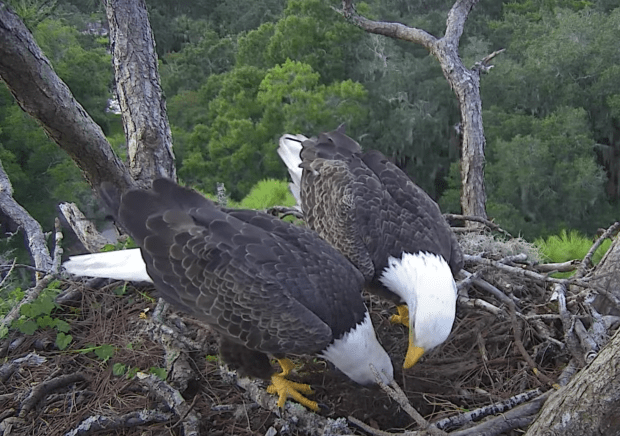
https://www.science.org/news/2017/04/migrating-shorebirds-danger-due-disappearing-mudflats

The reports of the shrinkage of the mudflats has been coming in since 2013 with alarms sounding.

Today the Pukorokoro Miranda Shorebird Centre in New Zealand reported that Bar-tailed Godwit 4BYWW made his flight in 8 days and 12 hours arriving home at 03:00 on 26 September. He flew 12,200 km. His average speed was 59kph. 4BYWW may have set a new distance record for the Bar-tail Godwits. We will know when the others return home. Isn’t that amazing?

What I found most interesting was her route. She does not appear to have gone via the Yellow Sea. Is this because of the decline of the mud flats? Have the birds adapted their migratory route? I definitely want to look at this more closely.

This was the satellite tracking image posted by the Pukorokoro Miranda Shorebird Centre FB page:

The Centre was tracking another four adults and 3 juveniles on their journeys home. One of those, 4BWWB, has been reported as flying non-stop for 163 hours and over 10,000 km. Seriously, my head can’t comprehend what that must be like. I am also truly amazed at what these sat-paks can tell us about the birds and their amazing resilience. Just incredible.

Tiaki officially fledged on the 25th of September. The Royal Albatross cam chick of 2021 is foraging off the coast of New Zealand at the present time. She will eventually make her way to the waters off of South America near Chile. We wait for her return in four to six years to Taiaroa Head where we will hear that beautiful Sky call, again.

While millions and millions of birds are moving from their summer breeding grounds to their winter homes, others are waiting for eggs to hatch. Holly Parsons posted a table of Diamond’s incubation history.

Xavier and Diamond’s first egg was laid in the scrape box on top of the water tower at Charles Sturt University in Orange, Australia on 31 August this year. Cilla Kinross, the main researcher, is expecting a hatch from 6-9 October with the most promising day being the 7th. Can’t wait!

Diamond was catching some sleep this morning. If all of the eggs hatch, her and Xavier are going to be very busy!

If the hatch is expected around the 7th of October at Orange, then what about those Melbourne Peregrine Falcons? The first egg was laid on the 21st of August – yes, that is right. Ten days before the Orange falcons. So, I am going to be looking for a hatch at Melbourne starting in two days!!!!!! This means that all of the Melbourne eggs, if viable, will hatch before those in Orange. It will be nice to get to enjoy them without trying to watch both at the same time!

For those of you wondering about those beautiful White-bellied Sea Eagles, 27 and 28, here they are. Talk about gorgeous.

Things will really be starting to ramp up shortly. Bald Eagle breeding season in the United States begins in a few days. Looking forward to checking on some nests to see if the birds have returned – such as Anna and Louis who had the first hatch on a nest in the Kisatchie Forest last year since 2013. His name was Kistachie – very appropriate.

Then there is always the trio at Port Lincoln. They had two feedings this morning and a third at 11:31:27 when Dad brought in a very small fish. All of the chicks were well behaved – quite civil to one another. And, of course, Little Bob is right there in front! Look carefully you can see him.

Life is good. Everything seems to be going really well for all the nests.

Thank you so much for joining me today. I hope you enjoyed learning about the Godwits as much as I did. Incredible birds. Take care everyone!

Thank you to the following for their streaming cams where I took my screen shots or for postings on their FB pages that I have shared with you: Port Lincoln Osprey Project, 367 Collins Street Falcons by Mirvac, Falcon Cam Project at Charles Sturt University and Cilla Kinross, Pukorokoro Miranda Shorebird Centre, Sea Eagle Cam @Birdlife Australia Discovery Centre, and Cornell Bird Lab and NZ DOC.

Feature image credit: “Bar-tailed Godwit” by 0ystercatcher is licensed under CC BY-NC-SA 2.0

Everyone is Fine

One of the problems with the streaming cams is the ‘chat’ feature. There, I have said it. The same persons come on at different times of the day, every day or every other day and say the same negative things. There is one on the PLO chat that always says, ‘The mother never feeds the youngest’. ‘Mama feed in order never feeds youngest.’ Seriously! Either they can’t rewind, they don’t watch, or they just want to stir the pot of negativity. I think that it is all three. So I go back to an old cry out of mine, Streaming cams need 24/7 knowledgable moderators. They need them to stop the bots coming in and they need them to stop the negative chatter. Even more so, if something happens on the nest they need to have emergency numbers to call or place them on the streaming cam site at the top.

The Port Lincoln Osplets are doing fine! And it is something to celebrate. One of the most exciting things is to watch them grow and grow they are. these chicks are losing their light grey coat to get their second, darker grey down. You can see the little pin feathers starting. still, each retains a tiny bit of its egg tooth. The feet are getting bigger, wings are growing and the tiny tails are starting. If you didn’t know the different species at this age of 9-10 days, just look at that beautiful dark mask going from the cere to behind the eye. that is the distinctive bandit mask of the Osprey!

Dad comes in with another fish. the big one that arrived earlier is all gone.

The chicks are getting bigger and they don’t like sleeping under Mum like they did when they first hatched. Indeed, these little ones seem to be tumbling around underneath her much of the time.

Awwww. Such sweeties.

Because it is winter in Australia, the light changes early. Mum and dad are on the nest and the little ones are getting another feed. Notice how much they have grown. It is as if someone took them and stretched them in the last couple of days. They no longer appear like short fat little chicks but they are entering another phase where they will begin to look like thin reptiles with long necks.

Each is doing fine. There were not as many big fish yesterday as during the high winds but everyone was fed and no one was left out.

I literally checked into the White Bellied Sea Eagle nest to see how WBSE 27 and 28 are doing. Lady was feeding them.

That is WBSE 28 at the front of the nest with its big crop. 27 is practicing its self feeding with a small piece of prey.

This nest will have two fledges this year. I so hope the Pied Currawong do not chase them out of the forest so they can fly and return to the nest for more meals while they get their piloting in order.

Lady Hawk did a video of 27 learning to self-feed and 28 nibbling at her toes. Have a look:

The strongest earthquake in recorded history hit Melbourne, Australia yesterday.

https://www.heraldsun.com.au/news/victoria/earthquake-tremor-felt-across-melbourne-and-regional-victoria/news-story/f8dca1048e48a500e3308dabedfdb1c1

The first thing many thought of were the four eggs of the Peregrine Falcons at 367 Collins Street.

Dad was on the eggs at the time and stepped off wondering what was happening.

Everything appears to be fine. Some buildings were damaged but no one was killed. Thankfully! We are nearing hatch watch for this couple.

In Orange, the running joke has been Xavier wanting his time to incubate the eggs.

Xavier doesn’t want to give up his incubating time!

Do you know why the male Peregrine falcon is called Xavier? It is one of those heart wrenching stories that makes you love this little male bird even more.

Diamond’s eggs were ready to hatch. Her mate, Bula, disappeared and was presumed dead. As we all know, the chicks would have died. Instead, enter a new male who starts helping with the chicks and raises them as if they were his own. Because he was a ‘saviour’ of the family, he was named Xavier.

The researcher at Orange is Cilla Kinross. She did a cute video of the negotiations between Diamond and Xavier over the incubation duties.

Everything is changing at these four nests in Australia. The White-Bellied Sea Eagles are exercising their wings, jumping, and hopping about. They are getting more adept at self-feeding although 27 still is the one that gets to the prey first it seems. Lady does come in and feed them. Branching will be next but not for a bit, thankfully. We will be watching for the four at Collins street to hatch in about four or five days. Diamond and Xavier’s chicks will follow but not for a week or a little more. And, of course, the change in the Osplets at Port Lincoln will be significant. They will look like skinny reptiles all wound around one another. The key is that everything, at this moment in time, is just fine. There are no worries. So enjoy them!

It is another beautiful fall day in Manitoba. The Green Heron has departed and I always missed it. Perhaps another will come next year! The Blue Heron is also gone but I hear there are waves of Dark-Eyed Juncos headed towards the city. I cannot wait. They love to pick apart my red outdoor carpet. Such cuties. I am going out for a long walk and to check on the Wood Ducks. Perhaps they will cooperate and there will be some good photos for me to share with you.

Thank you for stopping by. Check out the streaming cams – the birds are doing great. And, if you feel up to it, shut down the negativity. There is already enough in the world. The birds bring us joy. Take care all. See you soon.

Thank you to the following for their streaming cams where I took my screen shots: Port Lincoln Osprey Project, 367 Collins Street by Mirvan, Falcon Project Cam at Orange, Sea Eagles @ Birdlife Australia Discovery Centre.

Gabby is home!

Gabrielle or Gabby flew into the NE Florida Bald Eagle nest near Jacksonville today, 12 September. She might well have been on the branches or around earlier but I have her at 19:33:12. What a wonderful sight – to have this fabulous couple back safe and sound on their nest. Samson doesn’t migrate and he was seen several times during the summer and, in particular, when the camera maintenance was taking place. Both eagles got busy inspecting the nest. They were digging around and I wondered if they were looking for ‘Eggie’ that Samson had buried last year after Legacy spent so much time taking care of it, incubating and rolling. Oh, Legacy, what an amazing character you turned out to be!

They seem to have a discussion. Samson is on the left in his Levi Black Stretch ‘Slim Fit’ jeans and Gabby is on the right.

I wonder why they are so preoccupied with this one spot. Is this really where ‘Eggie’ could be buried?

More discussions!

All is right in The Hamlet. How comforting seeing them both roosting on their branches of the nest tree. In 2020, Gabby returned on 12 September, too.

This is their third season. In 2019 they fledged Jules and Romey named after Samson’s parents, Romeo and Juliette. This was their nest – indeed, it is the nest where Samson hatched. Last year, they fledged Legacy. What a sweetheart. She sure stole a few hearts!

After all the excitement in NE Florida, I decided just to check on the other nests. No hatch, yet, at the Port Lincoln Osprey Nest. For those of you watching the Royal Cam chick, it has been confirmed that her neighbour chick, SSTrig, fledged late afternoon 12 August nest time. SSTrig is the first chick to hatch and fledge of adults, Green Lime Green and Red Lime Black. Tiaki and SSTrig did not always get along very well. You might remember their little altercations.

At the White Bellied Sea Eagle nest in Sydney, Australia, a bird arrived around 13:35 13 August. WBSE 28 was more or less in a submissive pose during the entire feeding. WBSE 27 ate 98% of the gull. I wondered what had happened earlier but the camera feed would not let me rewind that far back – which seemed odd since you can always go back at least 8-12 hours. But, not today.

The adults at the 367 Collins Street Osprey Nest in Melbourne continue to make their well rehearsed handover of incubation duties. These two are really quite incredible.

I know that some of you have been wondering why dad isn’t bringing mom food at the nest. Prey will not be brought until the eyases hatch. There is a place up above the nest where the male leaves prey for the female so she can eat.

Here is cute little dad.

And beautiful mom. A couple more weeks. These two better rest as much now as they can! Four eyases. Oh, my goodness. I cannot wait.

Xavier has come in to see if he can have a turn to incubate their eggs. Diamond doesn’t get off and hand over the duties as easily as the mom at Collins Street. Poor Xavier. Xavier will often bring prey to the ledge and Diamond will take it and fly out of the scrape to eat it.

Why do the two falcon couples do this? keep prey out of the scrape when there are eggs? For cleanliness and not to bring in any parasites or insects. That is also the reason that falcons do not use twig nests.

It is now the wee hours of the morning on the Canadian Prairies. I didn’t intend to write another blog but, oh how I wanted to let you know about Gabby. This is wonderful news. Harriet and M15 are back at the SW Florida Bald Eagle nest. And that reminds me that I need to check and see what is happening at Captiva.

Thank you for joining me for this quick alert. Have a great Monday everyone.

Thank you to the following for their streaming cams where I took my screen shots: The Falcon Cam at Charles Sturt University in Orange and Cilla Kinross, The 367 Collins Street Falcons by Mirvac, NE Florida Eagle Cam and the AEF, and Sea Eagles Cam@ Birdlife Australia Discovery Centre.

As the Nest Turns 11 Sept

The female on the Port Lincoln Osprey barge woke up to some rain and by mid-day there was rough weather. The moderator of the PLO chat said they hoped that the chick would choose to stay in the egg!

It is currently 12 degrees C with a wind speed of 42 km/h or 26.09 miles per hour. Blustery. Not good for fishing. Best wrapped up in a cosy blanket with a cup of tea and a good book. Hang in there mum.

Aran is still in the Glaslyn Valley. Doesn’t he look grand on one of his favourite perches looking over ‘his’ territory. As much as others might have their eyes on their natal nest, Aran doesn’t intend to hand it over to either Tegid or Aeron, Monty’s boys, Z1 and Z2, respectively.

Some are worried. My notebook just said that ‘Aran migrates after the middle of September.’ That was accurate but not precise enough.

As it happened, Tiger Mozone on the PLO chat and so I was able to ask him. Immediately – literally – there was a link to ‘Tiger and Chloe B’s Osprey Data’.

https://www.imagicat.com/Glaslynstats2021.html?fbclid=IwAR1uxYgOaHJ85Yo7zbbEpttPlKvHn_N4zWrrL-TLutWheHwn_AQQRZPLr8c

These are the dates that Aran was last seen at the Glaslyn nest from 2015-2020:

  • 2015. 25 September
  • 2016. 16 September
  • 2017. 12 September
  • 2018. 22 September
  • 2019. 16 September
  • 2020. 15 September

The average is September 17th. That is six days from now. There is no need for anyone to be alarmed that Aran is still in the Valley, worrying that he is unable to migrate due to his earlier injury. Aran is ‘being Aran.’

Everyone that watches the Royal Cam Chick at Taiaroa Head, Tiaki, you should be giving a shout out to Ranger Sharyn. She located Tiaki 150 metres from her natal nest and the streaming cam. She carried her back to the general area of the nest – and just in time. LGL flew in and fed her daughter shortly after.

Here is Tiaki seeing her mom and coming quickly for that delicious squid shake. These chicks can really move when food is involved — or running away from ‘the dreaded basket’ when the rangers come round to weigh the chicks.

Victor Hurley, the Peregrine Falcon specialist who uses the streaming cam in Melbourne to study the falcons, is looking for some help. He was on the 367 Collins Street Falcons FB page today asking for individuals to accurately provide the time stamp for the incubation hand over duties. Later, he will be looking for time stamps for prey delivery. If you would like to help, please go to the 367 Collins Falcon Watchers and PM Hurley.

Here is a great example of what he is looking for. Mum is getting off the eggs and Cutie Pie ‘Dad’ is falcon walking on the ledge. They are such a good team.

It is windy in Sydney, too. WBSE 27 and 28 had a tiny bird – looks like another gull chick – around 6:29. 28 held back until almost all of the bird had been eaten by 27. That is a bit unusual for the first feeding in the morning. Normally 28 is right up front ready to go.

Notice that 27 stood for its breakfast! Oh, these two are really developing. Both have been standing more and trying to walk.

Another food item comes to the nest around 10:00. This time Lady splits the meal between both of the chicks.

28 is on the left and 27 on the right. You will notice that while the wing and back feathers are growing in nicely on both, 27’s tail is longer and 27 is noticeably larger.

In his book, Soaring with Fidel, David Gessner reminds readers that at the time of migration the juvenile Ospreys are transformed in appearance from when they were first fledglings. Gone is the white scallop on the feathers, gone is most of the down, the eyes are yellow, the dark feathers are darker, and the birds have ‘slimmed down’ somewhat.

So today an Osprey appeared on the Achieva Nest in St Petersburg. Help me out here. Could we be looking at a slightly older Tiny Tot?

The top two images are of the visitor today. The top one looks more like the face of Tiny Tot with the trademark ‘heart’ on the top of the head.

These are the first images that I grabbed of Tiny Tot out of the hundreds that I have. I wish that I could get both of the birds in the exact position.

Of course, it could be my mind playing tricks. I would dearly love for this to be Tiny Tot.

When I was scrolling for images of Tiny Tot, I cam across this one of Tiny Little. The Two Tinys are the stars of survival for 2021. The most amazing, clever, determined to live little birds who beat the odds. What I wouldn’t give for Tiny Tot to have a Darvic ring! Then we would not be guessing who is on that nest.

I will leave all of you with this mystery and a reminder of how inspiring these two little ospreys are to all of us.

Thank you so very much for joining me today. Take care everyone. Stay safe.

Thank you to the following for their streaming cams where I took my screen shots: PLO Osprey Project, Cumbrian Wildlife Trust and the Foulshaw Moss Osprey Nest, Sea Eagles @ Birdlife Australia Discovery Centre, Achieva Credit Union St Petersburg, 367 Collins Street Falcons, and Bywyd Gwyllt Glaslyn.

Bird World 9 September 2021

WBSE 27 and 28, the two little sea eaglets in the old Ironbark Nest in Sydney’s Olympic Park, had an early morning breakfast of bird.

Ah, just guess who was the first one up at the breakfast table? If you said, 28 you are absolutely right.

The little bird filled up their empty tummies but it wasn’t big enough -like a grand fish -to fill their crops, too. After breakfast the pair did some wing flapping, standing, and attempts at walking. They still need their wing tips to help with their balance.

Look at the tail that is growing on WBSE27! 27 is the one flapping its wings below.

Well, the Australian Magpie was not giving the White-bellied Sea Eagles a break today. For a couple of hours after feeding the eaglets, Lady defended the nest ducking and honking as the Magpie swooped down trying to hit her.

In the image below, Lady is honking at the Magpie.

Here is a good image of the bird as it goes to land on a branch of the nest tree. This bird is cheeky – they must taste terrible or Lady could have that Magpie for lunch! I would not blame her.

In this image you can see the Magpie caught in flight right above Lady’s head.

Here the Magpie is flying around Lady. It is right over her head.

Dad came to help Lady. All of the big raptors – at the top of the food chain – attract all the small birds and owls. It is surprising how much physical damage these small feathered creatures can do. Last year, BooBook Owl injured Lady’s eye. They can, of course, knock the eaglets out of the nest.

Tiaki looks out to the world that awaits her. Her name means protector of the land and the seas. I hope that they also protect her.

As Albies fly around her in the strong winds, Tiaki raises her wings. She will be off on her big adventure soon.

The chicks are all hovering in the strong winds. In a blink they will be gone. I think I put down 12 September on the guessing game but it could just be any time. Quarry Chick fledged 3 days ago.

Tiaki received her GPS tracker today. Ranger Sharyn Bronte said, “A wider study of the entire Northern Royal Albatross is being conducted this year. And in a first for a Royalcam chick Tiaki as received a tracker. Trackers have deployed on northern royals on the Chathams where 99% of the world population of this species breeds.We are extremely lucky to have 20g devices are available to track LGK, LGL and Tiaki. Although LGL’s device failed it has provided valuable data. Devices are extremely light compared to the weight of the bird and attached to back feathers. These feathers molt within a year and the device will fall off. The device is solar powered and will remotely send data until molting.”

If you read my column regularly, you will know that I am a big supporter of GPS trackers. I also support Darvic bands. Much new information on the migrations, winter and summer breeding grounds – and yes, deaths, are revealed amongst other things. Studying birds or watching them in their nests is never for the faint of heart. Their lives are full of challenges, most placed on them by humans.

Last year, a lovely Polish woman wrote to me to tell me she didn’t know how I could be so calm when ‘bad things’ happened to the birds. Those were not her exact words but that is what she meant. I was not the least bit offended. The truth is I feel for each and every one of them. That caring is inside a bigger box that is now labelled ‘ avian activist’. I want to help stop those things that cause the birds injury or death when it can be avoided. Rodenticides, sticky paper traps, lead shot, lead bullets, lead in fishing equipment, fishing line, fishing nets, windows, garbage dumped on the roads, habitat loss, wild fires caused by arson, electrocution, bread fed to the birds —— and simple neglect or oversight. Like having emergency contact numbers for the streaming cams where there is no 24/7 chat with knowledgable moderators.

I am working on a way to remember Malin, the Osprey nestling at the Collins Marsh Nature Centre, whose life was needlessly cut short. The Malin Code. Osprey streaming cams that follow The Malin Code would have either 24/7 moderators who can access emergency help immediately or emergency numbers at the top of the historical information on the nests. Individuals who are in charge of parks or areas with nests would be trained to recognize the physical signs (11 of them) from food begging to alerting and the 8 vocalizations. It is the least requirement. The other is that they pay attention to what is happening on the nest. They need to know the difference between a juvenile and an adult. Etc. Whew. Yes, I get worked up. If you can think of anything else that these organizations should be doing, let me know. Don’t be shy! At the end of the year, the streaming cam that best implemented The Malin Code would get a donation, big enough to motivate them to do what is right for the birds.

OK. On to what is happening in some of the scrape boxes:

Diamond and Xavier spent some time in the scrape box together today. There was a bit of a conversation between Diamond and Xavier. I need to learn to speak falcon.

There is a real soft spot in my heart for the little male Peregrine Falcon in Melbourne. Maybe it is the ledge where he comes scurrying in to take his turn incubating the eggs or when he brings prey to the eyases.

He is the cutest thing and makes the biggest messes plucking pigeons right in the nest with the eyases. But, last year, I noticed that those three girls really knew what to do with a feathered bird. They were not shy. By the time they fledged, they were professional pigeon pluckers. Can you say that fast 10x?

What a cutie! Our stealth raptor.

Have you ever wondered about the black faces of the Peregrine Falcons? Did you know that the size and intensity of the black varies by region? Have a read.

Cody and the lads down in Kisatchie National Forest have done a great job with the camera for the Bald Eagle Nest of Anna and Louis. Cody says that the sound is going to be fantastic.

Isn’t that a gorgeous sunset over Lake Kincaid? Such a lovely spot for a Bald Eagle nest —- and, of course, there is the lake that is stocked with some really nice fish. Couldn’t get much better. Everyone is just waiting for the Eagles to return.

Speaking of Bald Eagles returning, both Samson and Gabby are at home in Jacksonville and Harriet and M15 are in Fort Myers. All that reminds me I have to check and see what is happening at Captiva.

I want to leave you with an image of Tiny Little. She is one of the fledgling Ospreys in my long time study of third hatch survivors. She has a Darvic ring-Blue 463. Here she is as a wee one.

Blue 35 is feeding Tiny Little by herself. Look at ‘big nasty sister’ in the middle. It really is thanks to excellent parenting that Tiny survived – and became the dominant bird. Gosh, I wish she had a tracker. Is she at Poole Harbour? has she made it to Brittany? will she go to The Gambia? or Senegal? or Southern Spain? My ‘wish list’ includes getting someone to look for her if I can’t be there myself during the winter of 2022.

That’s it for me tonight. Tomorrow I am off in search of a Green Heron. Take care everyone. Stay safe. Be kind. Remember: Life is for living.

Thank you to the following for their streaming cams where I take my screen shots: 367 Collins Street Falcons, Sea Eagles @ Birdlife Australia Discovery Centre, The Kisatchie National Forest Bald Eagle Cam, The Falcon Cam Project Charles Sturt University at Orange and Cilla Kinross, Cornell Bird Lab and NZ Doc Royal Albatross Cam and FB Page and The Cumbrian Wildlife Trust and the Foulshaw Moss Osprey Nest.

The Birds ‘Down Under’

As people in North America wait for the Bald Eagles to begin preparing their nest and breeding, much of the ‘bird’ action is in Australia. I pulled up a map so that we can locate the nests that are on streaming cams in Australia – fondly known as ‘Down Under’ here in Canada.

I made the map a little larger just so it is easier to see. Or is it just me that is having trouble reading all that small print?!

The White-Bellied Sea Eagle Nest is in Sydney. On the map it is in bold letters on the lower right hand side. The Peregrine Falcon Nest of Xavier and Diamond is in Orange. Orange is just outside of Sydney. Trace your finger to 10 o’clock from Sydney and you should see Orange in grey letters. The 367 Collins Street Falcons are in Melbourne. It is at the very bottom in black letters. The Port Lincoln Osprey Barge is in Port Lincoln. This is a small place. Locate Adelaide which is up the coast from Melbourne on the left. Take your finger and move it over in a straight line to the left from Adelaide to the bottom of the second peninsula. There is Port Lincoln. I am also going to include Solly’s Location so you can see where she is relative to where she hatched and fledged at Port Lincoln. Solly is currently staying the majority of the time at Eba Anchorage. Solly is 311 km from the place she fledged. Prior to Solly, the general understanding was that Eastern Ospreys stayed much closer to their natal nest. The evidence from the satellite tracking is changing the understanding of how far these fledglings might travel upon fledging.

Time flies. It was only a blink and Pippa Atawhai, the 2020 Royal Cam chick, had fledged — BUT, that was a year ago. Now we are waiting for Tiaki to fledge soon. It seemed like the month of August just melted. It was on the 3rd, the 6th, and the 9th that Mum at the Port Lincoln Osprey Barge laid her eggs for the 2021 season. At this very moment, the PLO FB Page is taking guesses on when the eggs will hatch. Yes, we will be moving into hatch watch within a week. Baby Ospreys are coming. Oh, those lovely little reptiles!

Dad continues to bring in materials for the nest. They are all over the place – big strips of bark and moss – even some more rope. He is a bit of a pack rat. Thank goodness he hasn’t been bringing in toys like Richmond and Jack in the US. It would be awfully crowded if that were to happen.

Watching this nest is not for the faint of heart. Siblicide is a regular occurrence.

The dominant hatch of 2021 was Solly. She is 352 days old on 7 August, Australian time. Solly was considered, out of the two surviving chicks, to be the one that would succeed. We have no news of DEW and unlike Solly, DEW was not equipped with a satellite transmitter. Solly has, however, demonstrated that she can survive and today she flew rom her normal home tree in Eba Anchorage to Perlubie to check out the fish. This is the graph from the satellite transmission.

The Port Lincoln Osprey Project is taking guesses as to the date of the first hatch on their FB page. You don’t need to be a member to pick a day – go and have some fun!

The White Bellied Sea Eaglets are doing fine. They are well fed and protected and they are growing so fast. Those beautiful juvenile feathers are coming in changing their appearance almost daily. They had a good fish feast the morning of the 6th and the wee ones slept and then woke up and began picking up sticks and leaves on the nest moving them about with their beak. They are not yet steady on their feet but they are standing more and 27 was attempting to walk today.

Both still had big crops after the fish breakfast. 28 got the majority.

Just look at those beautiful colours coming in. 27 is on the left and 28 is on the right.

Here 27 is standing watching 28 play with some sticks with its beak and talons. The sea eaglets are developing at a normal pace. It is all good.

The golden glow of morning fills the scrape box of the Peregrine Falcons, Xavier and Diamond, in Orange.

Each parent takes turns incubating the eggs so that the other can have a break. Diamond will do the overnight incubation and Xavier will be the security guard.

Here is a short video of the hand over of incubating duties from Diamond to Xavier:

Remember that the males are about 30% smaller than the females. Xavier works with his feet and wings to get those three large eggs under him so they can all be warm.

It is even harder for the tiny male at the 367 Collins Street nest who has four eggs to warm!

Mom arrives for her turn.

She is working her wings too to get those four eggs under her.

Looked at how poofed out all those feathers are. Wow.

Here is Dad. His feathers are all poofed, too. He is so tiny compared to mom. My goodness – he really does have to work to get all four under him properly.

After wiggling about he gets everything settled. We will be looking for hatch towards the end of September.

Thank you so much for joining me. All of the birds in Australia seem to be doing just fine. We will watch the sea eagles change colour before our eyes and anticipate the arrival of the Ospreys. It’s a few weeks before falcons start hatching. Take care everyone.

Thank you to the following for their streaming cams where I took my screen shots and video clips: The 367 Collins Street Falcons, The Falcon Cam at Charles Sturt University and Cilla Kinross, Sea Eagle Cam @ Birdlife Australia Discovery Centre, and the Port Lincoln Osprey Project and FB Page.

PLEASE NOTE: I am taking my computer in for servicing. I hope to have it returned to me sometimes on Thursday so I will be back with another newsletter Thursday or Friday.

Third Egg for Diamond and a Rescue

Saturday Morning. I don’t think that this Swainson’s Thrush knew that he would be spending so much time with me. I suspect that he did not know that he was in for an adventure and a car ride.

Indeed, it is unclear how this little one wound up behind my kitchen in the grass. There were no window strikes. He turned around and faced different directions and thinking that it was simply stunned, I waited for 45 minutes. Still nothing. It tried to fly but that wouldn’t work so…….into the comfort of the transport box on soft, soft sheets and away we went to Wildlife Haven. It was still alive on arrival. Thank Goodness.

As I answered all of the questions by the intake helper, it was a reminder that it is migration season – something we have been talking about for several weeks. Juveniles are finding themselves in trouble all over the place – so what do you do?

  1. You should have the phone number of your nearest wildlife rehabber in your contact list. Check and see if you have that and it is current.
  2. As much as you would like to, please do not feed the wildlife anything – anything. It could cause the to be worse. No cow’s milk, no baby formula! You can offer them a very shallow bowl of water – think saucer actually so they don’t drown.
  3. Do not pet them. The bird or animal is stressed enough. Any undue stress could cause them to have a heart attack.
  4. Keep them in a quiet, dark place. I have a large box that my organic groceries come in. On each side are holes for handles. This is good for the air circulation and allows the box to stay warm and dry while at the same time they are not seeing you.
  5. Don’t let your pets around the injured bird or animal.

Swainson’s Thrush does, during migration, often find itself in back gardens and parks. It often gleans for food on the ground. In our case it could also have been at any one of the feeders or on the ground where the other birds kick off seed. Something, however, had caused it not to be able to fly. It wanted to but just didn’t have the battery power. I hope that it does well in rehab and is on its way to its winter home soon.

Speaking of wildlife rehabbers, they love donations. Many of the raptors like to play with toys. Did you know that? It helps them from being bored. I cannot imagine being a Red Tail-Hawk imprinted on humans that cannot be allowed to fly free. The rehabbers are always in need of food including rabbit and cat/dog kibble. Many rehabbers post a list of wanted items on their website and, of course, they are happy for donations no matter how big or small. So when you think of gifting, think of these folks that are not for profit and survive on donations, please.

Our wildlife rehabber also has one other concern for people who feed the birds. “If you feed the animals in your yards, they may learn to depend on the availability of food from you and may not store for the winter months. So if you are going to feed later in the fall, it is best to continue feeding until the spring months.”

There is very little news out in Bird World. Birds are flying or sitting on eggs. The only ones that seem to be feeding little ones are the White-Bellied Sea Eagles and that continues to go well. Those babies are getting big. Look at those beautiful juvenile feathers coming in.

WBSE 28 can give as good as it gets. This nest has turned around for the good.

Tiny Little’s dad, White YW, is still in his territory as of this morning.

Aran still remains at the Glaslyn Nest. Mrs G was last seen on Sunday, 29 August. Aran does not normally leave til the middle of the month so his presence is not unusual. I need to check on the dates for White YW.

Can you see Aran?

Another male that is still at home is Louis up at Loch Arkaig. In fact, Louis is still feeding Aspen and Alder. I am not sure when it was that Dorcha left on her migration. This makes Louis’s fledglings some of the last to migrate. Here they are sunning themselves on a branch. — You will recall that Louis’s mate, Aila, did not return from migration this year. He made a nest with his new mate, Dorcha, away from the old nest with the camera. Louis is simply a fabulous dad. He even fishes at night if the family needs food. We wish them all the best when they do leave and look forward to their safe return next spring.

Last but never least, Diamond, the Peregrine Falcon in the scrape box on the ground of Orange University laid her third egg this morning around 06:29. Will she lay 4 eggs like the female in Melbourne? or will this be it and she will start the hard incubation. We wait and watch.

Thank you so much for joining me today. Take care and stay safe. See you soon!

Thank you to the following for their streaming cams or FB Pages where I took my screen shots: The Falcon Cam Project Charles Sturt University and Cilla Kinross, The Cumbrian Wildlife Trust and the Foulshaw Moss Osprey Nest, the Friends of Loch Arkaig FB Group, Bywyd Gwyllt Glaslyn, and the Sea Eagle Cam@Birdlife Australia Discovery Centre.

Thursday in Bird World, 2 September

It is pretty quiet at the nests these days – that lull if you like between the Ospreys leaving for their migrations in Europe and the US, the Bald Eagles slowly returning to their breeding areas, and the falcons and Ospreys incubating eggs in Australia. The biggest news in Bird World is that Diamond laid her second egg at 20:55 September 2nd.

Xavier taking a turn incubating and rolling the eggs for a bit this morning. Gosh, those are big eggs!

The Osprey was officially adopted in 1994 as the is the provincial bird of Nova Scotia, one of Canada’s ten provinces. Nova Scotia is a peninsula surrounded by the Atlantic Ocean, the Bay of Fundy, the Northhumberland Strait, and the Gulf of Maine. It is one of Canada’s Atlantic or Maritime Provinces. At its widest, 128 km, it is easy to reach any body of water easily. It is said that Nova Scotia has more Ospreys than the United Kingdom in its entirety. Many live on McNab’s Island at the mouth of Halifax Harbour.

@Wikimedia Commons

The lighthouse was built in 1809. In 1852, Dr. Abraham Gesner was given control of the lighthouse. In December, Gester used a fuel that he had just discovered – kerosene – to operate the light.

“McNabs Island” by KellyMercer is licensed under CC BY 2.0
“Maugher Beach Lighthouse (McNabs Island, Nova Scotia) – (Adventure of the Seas – August 1st, 2018)” by cseeman is licensed under CC BY-NC-SA 2.0
“Wharf at McNabs Island” by wdrwilson is licensed under CC BY-NC-ND 2.0
[[File:Osprey Bird.jpg|Osprey_Bird]]
[[File:Osprey on Sandy Hook (70318).jpg|Osprey_on_Sandy_Hook_(70318)]

Ironically, there were hardly any Ospreys in Nova Scotia two decades ago. The use of DDT had weakened the eggs to the point that the birds were virtually going extinct. Since 1979, the Osprey Management Program, operated jointly between Nova Scotia Power and the environmentalists at the Department of Lands and Forestry to relocate nests that are on top of live utility poles to safer unused poles nearby. Each year they partner with the Museum of Natural History to live stream an osprey nest. The Osprey are in Nova Scotia from April to September. At the end of the summer, when the juveniles are old enough, they leave for their winter grounds in the Caribbean and South America.

The first little video is from 2014. Seven years ago, when streaming cams were not so HD. Here is a typical Osprey family of five in Nova Scotia on top of one of the partnership nests.

Here is another short video of 2020 showing the improvement in cameras. It shows the hatch of the second chick at this nest on 9 June.

Speaking of Osprey, Sharon Leigh Miles took this image today of an Osprey at Mt Sentinel in Missoula, Montana. It is Iris’s favourite tree and it is presumed to be Iris, the grand dame of North American Ospreys. Hopefully she will visit her nest before she leaves. She is the oldest Osprey in the world.

In other news, White YW, the male at the Foulshaw Moss Nest, dad of our one and only Tiny Little, Blue 463, is still in Cumbria. He was photographed there today. White YW hatched at Bassenthwaite in 2008. Gosh, he is a great dad. One of the unsung heroes. Chris Wood has received word that the estuaries that the UK Ospreys travel to for their winter season are filling up with water. Wonderful! Yesterday, I saw Cormorants here in Manitoba and today a couple seem to have taken over Maya and Blue 33’s nest at Rutland (at least for part of the day). The two little sea eagles are getting along fine. Food remains plentiful and they are growing, flapping, and learning to walk. Those clown feet are really growing. Just look, with food, 28’s feet are getting huge. Wow.

I am attaching the progress map of the Ospreys and Black Storks:

Pikne, in orange, is really travelling well. She has gone straight south almost beating Karl II in royal blue. You can follow them, too. Here is the link:

http://birdmap.5dvision.ee/EN

Thank you so much for joining me. Take care. Stay well. Look for egg number 3 on 4 September down in Orange.

Thank you to the following for their streaming cams where I took my screen shots: The Falcon Cam Project at Charles Sturt University in Orange, The Montana Osprey Project FB Page, Sea Eagle Cam @Birdlife Australia Discovery Centre, and BirdMap.