As one of you recently told me, it has been one heck of a week. Ten days, actually. It seems like forever. Thank you for all your letters of support, the virtual tea and scones, and just being there.
Little Toby is really on the mend. He got to go out for a nice walk today to do his ‘business’ and then get a treat! Here is he is in his little red jumpsuit! On Monday, Toby is going to grace the 5th floor Ward North of the Victoria Hospital. I hope he brings a lot of joy to everyone including his ‘Daddy’.
Toby is just so much better. The hospital is ‘working’ on Donald.
This morning, someone posted an image of a tuxedo cat being hit by a car just a block away. Was it Brock? Toby and I looked and called on our walk. Then, Brock showed up at the feeder. He has a slight limp in his front left leg, but being so very independent and strong, he would not allow me to hold him or get him help. So send him good wishes.
I constantly worry about our eagle families, especially when a bird or waterfowl is brought to the nest as prey for the babies. ‘AR’ sent some news about Avian Flu: “I found some new research on bird flu and I am sending the link :
Here in Florida, we are still losing birds. In Lakeland Florida, the resident swans are dying, we have lost 12 so far 🙁 Lakeland is closer to NEFL than it is to SWFL, so I have been checking in daily that the babies are alright. “
There is good news out of the Redding nest of Liberty and Guardian. Oh, don’t we love good news?!
Arthur was spotted Saturday on Ferris Akel’s tour and today Suzanne Arnold Horning got a photo of Big Red – so all is well at the Cornell Campus.
Oh, I am so tired. Ann and I decided that visiting at the hospital makes you more tired than running a marathon. I hope all of you are well and that 2026 will straighten itself out if it is wrecking havoc with you as well.
My reports will continue to be short for awhile til things settle down. Please take care. See you tomorrow.
Thank you to the owners of the streaming cams that allow us to watch our favourite raptor families, to SK Hideaways for their videos, to ‘AR’ for sending me the article on Avian Flu and reporting on what is happening near the NE Florida nest of Gabby and Beau, to Suzanne Arnold Horning and Woody for chasing down our favourite Red-tail Hawks.
It is Halloween. It is also Diwali, the Festival of Lights. Will you be celebrating either of these holidays? In years past, we used to get at least 75 children at the door wanting treats, and that all changed. I am thrilled that some of the streets in our neighbourhood are being blocked off so that the children can run from house to house and cross the street without worry of being hit by a car. On Saturday, there was the walk at Bird’s Hill, and CPAWS put on all the games and treats. There have been events at many of the community centres. Everyone is trying to make it safe for the little ones to be outside. The biggest Diwali party took place at our convention centre a couple of weeks ago.
I remember several years spent celebrating this holiday on the Indian Subcontinent eons ago. The food was delicious! It was the same later in Singapore. We have put up extra lights in the garden this year and will be thinking of our friends in India and Singapore as they celebrate good over evil and light over darkness.
National Geographic Kids gives this information on Divali: “Diwali, or Dipawali, is India‘s biggest and most important holiday of the year. The festival gets its name from the row (avali) of clay lamps (deepa) that Indians light outside their homes to symbolize the inner light that protects from spiritual darkness. This festival is as important to Hindus as the Christmas holiday is to Christians.
Over the centuries, Diwali has become a national festival that’s also enjoyed by non-Hindu communities. For instance, in Jainism, Diwali marks the nirvana, or spiritual awakening, of Lord Mahavira on October 15, 527 B.C.; in Sikhism, it honors the day that Guru Hargobind Ji, the Sixth Sikh Guru, was freed from imprisonment. Buddhists in India celebrate Diwali as well.”
Now, ‘The Girls’ are wondering how much you know about Halloween. They consulted Good Housekeeping and it says, “If you think Halloween is a uniquely American tradition, grab a mini Snickers and settle in, because you’ve got some learning to do. Dressing up in a creative costume, traipsing around in the gathering dusk to collect the best candy or throwing a monster bash with friends are all time-honored holiday traditions. But Halloween didn’t start stateside at all.
In fact, the origins of Halloween go back thousands of years to the Celtic celebration of Samhain (pronounced “sow-win”), a festival that marked the end of the harvest season and ushered in a new year. During Samhain, the veil between the worlds of the living and the dead was thought to be especially thin, so people could communicate with loved ones who had passed on.
Whether or not you buy into the supernatural, it’s still fun to learn a little something about the meaning behind your favorite Halloween traditions before you head out trick-or-treating. Turns out, the holiday has a much more interesting (and sometimes even spookier!) backstory than many people realize. Travel back in time with us to learn what some of the very first celebrations of Halloween looked like, including throwback ghoulies and ghosties, what people used to carve in place of pumpkins and even the elements that Valentine’s Day and Halloween have in common. We can guarantee there wasn’t a glitter pumpkin or superhero costume in sight.”
Calico urges you to keep your kitties inside during Halloween. (She thinks they should be inside all the time and Calico should know – she lived on the street!)
The best news in the world is that Lady and Dad are feeding SE33 and SE34 over away from the river from the moment and while they might be getting harranged by Currawongs and other small birds, they appear to be flying strong and eating well as of the time I am writing. Seeing the eaglets and their parents together just made me shed tears of joy. I hope you did, too!
I will continue to post all of the news that I can find. Some might overlap with earlier reports.
It is really, really hot on that ledge in Melbourne. The temperature ready for lower down is 16 C. I wonder what it is on that ledge. Just look at Mum.
News from New Jersey says that Ospreys are staying later this year. In Manitoba, there are still lots and lots of geese and ducks. Perhaps this is the reason for the low migration numbers of raptors below. I sure hope so. The Red-tail Hawk count makes me cry. Let’s hope this is just a late season or these raptors are in trouble.
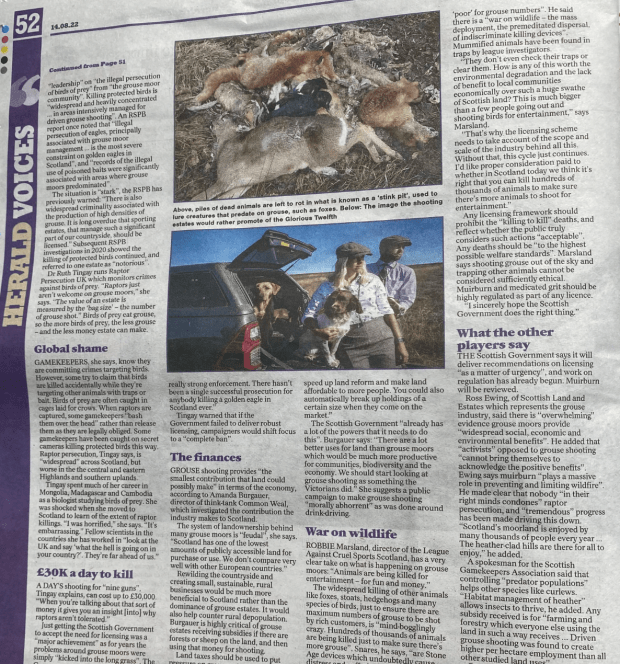
It seems that we take one step forward and one or two backwards when it comes to protecting wildlife and habitat. More news from Geemeff:
This is a damning report on the state of the environment and rewilding just after we read about huge swaths of land being put into trust and not into grouse shooting.
Osprey accepted the platform that had to be removed and rebuilt in South Australia. Wonderful news. Now if we can get Ervie a mate and a platform with a camera all of our dreams will come true. Little Envies!!!!!!! Think about it.
Breakfast at Port Lincoln. Gosh, Dad is doing a good job this season. Would love to give him a pat on his feathered back. Keep up the good work!
Beau and Gabby continue to work in their amazing nest. As we enter November, we can hope that fertilized eggs will appear by the end of the month with a hatch on Samson’s hatch day (24 December).
‘H’ sent me some sad news this morning regarding the cameras at NE Florida: “We’ll be lucky if we get to see any of Gabby and Beau and their family this season. As you know, cam 2 is down all season due to a broken cable. Well, now the cam 1 issues have been diagnosed: a partially broken cable. Not all the strands within the cable at the nest are being used to transmit to the server… meaning that some of the cam 1 cable fibers are broken. Cam 4 is still okay so far.”
I cannot imagine know knowing if Gabby and Beau have babies this year. Was it the hurricane that damaged the cables (Milton)? Do the cameras get an annual check up here? I wonder.
It was raining at the West End, too. Thunder was looking out over the territory.
This is a very good use of funds. They will get to the bottom of all the questions about Menhaden and quotas and surely to goodness will help save the Osprey in the same way that the warnings from Rachel Carson issued about DDT did in the 1970s. There are many species at risk because of the commercial fishing of Menhaden being allowed by the State of Virginia. It needs to stop before they are wiped out entirely and there are no more ospreys, not even starving ones.
Scotland is one of the most nature depleted countries in the world. It is home to so many raptors. So why not rewild 33% of Scotland. This film asks that question. Our narrator is a 26 year old who has eco- anxiety. Take some time to watch. It isn’t just Scotland. There are some gorgeous images and thought provoking questions. Even a good comparison between Scotland and Norway, the Oder Delta between Germany and Poland, and other sites that have rewilded. Happy ecosysystems and biodiversity link to the nature and climate crisis. https://youtu.be/FFypWj1bjPk?
Missing story time with Calico and the other three girls is not a good thing. I apologized this evening profusely and we settled down with treats and a good book. It got Calico’s Ten Golden Paw Award and she thinks you might want to put it on your holiday list for those special children in your life. It is not about raptors, but about seals and comes to us from Wales. The main characters are the seals that come to the island to have their pups and to rest. The other central character is Tina, a little girl who lives on the island where her Mum is the local vet. It is summer holiday season and Tina is determined to make the holiday goers that come to the island understand how to respect the seals. The book is: Rescue at Seal Bay by Gill Lewis. The only colour illustrations are on the front and back covers. All others are black and white drawings, just in case you wanted to know. The story is really good and Calico didn’t mind not seeing images in colour! It is listed at $14.99 CDN at the online retailers.
Calico found a lot of books written by Gill Lewis. We just ordered another one for her birthday – Sky Hawk. It is about Hen Harriers! I can’t wait to read it.
Thank you so much for being with us today. Please take care. We hope to see you soon.
Thank you to the following for their notes, posts, comments, images, videos, articles, and streaming cams that helped me to write my post today: ‘A, Geemeff, H, J’, OpenVerse, National Geographic for Children, Eagle Cam, Judy Harrington, Rohan Geddes, 367 Collins Street by Mirvac, SK Hideaways, Hawk Mountain Migration Chart, pressreader.com, Fran Solly Coffin Bay Community Notice Board, Port Lincoln Ospreys, Charles Sturt Falcon Cam and Cilla Kinross, Nesting Bird Life and More, Elain, NEFL-AEF, Androcat, Raptor Research Project/Explore.org, PIX Cams, FOBBV, IWS/Explore.org, Joanie Millward, Menhaden – Little Fish, Big Deal, The Scottish Rewilding Alliance, Gill Lewis, Harley Thomas White.
The challenges that our wildlife face in their annual migrations is daunting. War causes untold human suffering but, at the same time, the invisible or silent victims of war are often the birds and mammals. In seeking out challenges from my readers, the very first response I received was about the war in the Ukraine and the closing of Belarus’s largest wildlife NGO. Many of my readers live in countries impacted by this particular human conflict – Latvia, Estonia, Belarus, Romania, Poland, and, of course, The Ukraine and Russia. When they think of migration challenges both in the spring and now the autumn – global human conflicts were the first on their list. Other challenges to migration include habitat destruction, hunting for pleasure, climate change which I am now going to call global heating and climate breakdown thanks to Bill McGuire’s informative and straight to the point book, Hothouse Earth. Global heating has a huge impact on our raptors as we have seen from the heat domes that have killed chicks in the Pacific Northwest. Global heating also causes the ocean, river, and lake waters to warm killing the fish that our beloved ospreys and eagles rely on for food. Water pollution by microplastics and plastics is causing great harm to migrating birds along with the tonnes of human waste dumped into the oceans. Elements of the modern world – glass and electric lighting kill billions of birds while human apathy and meanness takes a toll. If you take all of the threats together the most significant single cause has its roots in our lives – human lives.
The war in Ukraine that began on 24 February 2022 is having devastating effects on wildlife, including farm animals and migrating birds. This includes many challenges such as all out destruction of protected sites, wildfires that have destroyed forests killing the wildlife and their homes, chemical pollutions caused by the shelling, soil and water pollution including oil spillages harm marine biocenosis forming, air pollution, waste water flows directly into the Dnipro River, and the sheer loss of biodiversity that once enjoyed the conservation areas of the region. The industrial, atomic energy, and nuclear waste dumps are cause for real concern. An expert on how wars impact our environment, Thor Hansen, says, “If we are concerned about biodiversity and conservation in the world, we need to be worried also about conflict and patterns of conflict.”
The Ukraine is home to 35% of Europe’s biodiversity which includes 70,000 plant and animal species. Many are rare. At its onset, fires started by military attacks had damaged 100,000 hectares of natural ecosystems, according to the European Forest Fire Information systems. 900 protected areas have been degraded with some completely destroyed by shelling, bombing, oil pollutants, and military maneuvers. This area is known as the Emerald Network, conservation areas created to preserve habitats and species. There are 14 wetland (or Ramsar) sites that are internationally recognized that are under the threat of complete destruction. “These include the large shallow lagoons and the largest island of the Black Sea in Karkinitska and Dzharylgatska bays; the Dnipro river delta, a refuge for nature in a region known for its huge agricultural fields; and the bogs, meanders, and natural meadows of the Desna river floodplains in the Sumy region.” These provide shelter, food, and nesting sites for birds of prey. What was once a biodiversity hotspot is now nothing more than a target of the war.
The wetlands around the Dnipro River are destroyed or threatened.
In the map below you can see the river that runs through Kyiv, then Cherkasya down to Dnipro flowing to Odessa and the Black Sea.
The Black Sea near Odessa known as the Black sea Biosphere Reserve is a haven for the migrating birds including Karl II who traditionally stops and spends several days here, if not weeks. It is the site for 120,000 birds who also spend their entire winter here including the White-tailed Eagle, the Red-breasted Merganser to name a couple of the raptors and shore birds.
‘B’ sent an article discussing the symbolic importance of the storks to the people of The Ukraine with horrific images of destruction and recovery. It is an excellent read!
‘A Silent Victim’ provides us with insights into how every aspect of nature is lost when human conflicts take place.
The ongoing destruction of habitat was right up there with human conflicts globally – war also destroys habitat as does the ever increasing human population’s need for bigger houses and land. Hunting and climate change are also included in this really interesting article that ‘CE’ sent to us. The research comes out of East Anglia University.
Here is an article on hunting pressures on birds as well as lighting.
Chris Packham accuses the Maltese for the slaughtering of migrating birds who fly over the island. It is not just the turtle doves which sadly can be shot legally but, many other birds including Ospreys that are killed illegally. Everyone seems to turn a blind eye when it comes to enforcement. — It is not just the Maltese. Lebanon is known for the shooting of storks so much so that a letter was sent from Stjepan Vokic to Lebanon’s President to please appeal to his citizens to stop killing the migrating birds for sport.
The National Audubon Society is urging everyone around the planet to turn those lights off. Is night time lighting one of the biggest direct threats to our raptors who are flying south in the autumn? It certainly appears that it could be!!!!!! The following article from the Audubon Society is extremely informative and it also gives sample letters that can be used by those who have the authority to turn out the lights in public buildings.
So is the biggest killer of migrating birds night time lighting? Take the lead from the Audubon Society and work towards darkening the skylines everywhere! It could save billions and billions of birds.
Ordinary citizens can help save the lives of billions of birds according to the Wake Audubon Society in North Carolina where Raleigh goes ‘lights out’ for our birds. Each of us should turn off all of lights -including outdoor ones- from 2300-0600 beginning the 15th of August until the end of migration. Spread the news to your neighbours and friends!
‘L’ reminds us that migrating sea birds continue to be endangered by the long line fishing boats as well as plastics floating in the ocean. It is not unusual to see varied species of Albatross and Petrels dying because they are full of plastic and not fish! This article states that the pollution of ocean waters is killing more albatross than was first thought.
Our heating planet with the changes in weather patterns and the intensity of floods, droughts, hurricanes, and wildfires add challenges around the world to the birds that migrate as well as those that don’t. Rivers and wetlands dry up, droughts cause a lack of food during migration, hurricanes are nothing short of devastating.
The fires and the drought brought on to southwestern France is unprecedented in the country’s history.
The Loire Valley in France has not been this dry in 2000 years.
Conservation Without Borders posted this today – speaking directly about the harm happening to the Ospreys this moment as they fly through France to get to their winter quarters from the wildfires and the drought.
Wildfires in the United States and Europe have caused migrating birds to fall out of the skies – dead. We can help halt some of the wildfires. Did you know that portable disposable barbecues are causing immense destruction by fire?
In her new book, Cold Canyon Fire Journals. Green Shoots and Silver Linings in the Ashes, author Robin Lee Carlson gives us insight into her 5 year study of the aftermath of the Wragg Nature Reserve fire. She includes not only the horrific results of the wildfire but a glimpse into how the land and the wildlife recovered.
In my own province, continuous torrential rain caused flooding that impacted the spring nesting of all the birds that migrate through and to Manitoba. It caused the Bald Eagle nests to be swept away at Hecla Island and the duck and geese eggs to be covered with water at many local ponds. The result was fewer and fewer hatchlings this year. The muddy waters made it difficult for many raptors who live on fish to see their prey.
This morning The Guardian has a discussion of wind turbines. All I am going to say is that it is an easy fix to paint one of the blade a different colour to save the birds because governments and utilities seem intent on placing them in migratory paths. It is incorrect to compare the number of birds killed by wind turbines with that of domestic cats as many of the utility company charts will show to convince us they are safe as they are. They can wipe out entire species such as the Marbled Murrelets over the projects lifetime. The threat posed by wind turbines grows with each facility constructed in a high-risk area for birds.
Pesticides are lethal poisons. They can kill migratory birds directly or they can kill them indirectly by destroying their food sources. There is positively no ‘Eco Green’ solution to keeping a lawn pristine and green.
Pesticides also cause migratory birds to lose their way and can cause considerable weight loss. Neonicotinoids harm songbirds in addition to the pollinators. They are neuro-active poisons that are related to nicotine. In Canada these are marketed as : Imidacloprid, Clothianidin, and Thiamethoxam.
‘L’ thought outside the box for many of her suggestions to the threats and challenges that harm migrating birds. They include exhaustion -flying through bad weather or being forced off course and having to fly hundreds of miles extra; starvation when large flocks of birds descend on a single area and there is not enough food for all; predation for the song birds from domestic cats; disease such as Bird Flu that passes quickly through large flocks of birds; natural disasters; and juvenile inexperience.
Many of those living near the two major oil disasters in the last twenty years were eager to share the harm that millions of barrels of oil being dumped into pristine conditions can do to wildlife. I have only to close my eyes and I can see the water fowl covered with oil in Louisiana and the volunteers rushing to wash them with Dawn dishwashing liquid. That was the Deep Water Horizon oil spill of 2010. In his book, The Tarball Chronicles. A Journey Beyond the Oiled Pelican and into the Heart of the Gulf Oil Spill, David Gessner tries to show the connectedness of life and how emergencies such as the Deep Water Horizon and the Exxon Valdez spills are threats from the bottom of the food chain to the top. He also gives us a glib look at the reporting of these huge life changing moments and how the press runs from one disaster to another – while nothing changes.
The presence of active wildlife rehabilitation centres is not just for local injuries. The migrating birds are on the move. What happens if they get injured or sick? who cares for them? What if the current or future economic crises make it impossible for donations to come in to keep the centres open? what if volunteers do not have the funds for petrol to drive for hours to pick up and deliver birds to care? The result is that there is no place to care for any wildlife – no short term care and certainly no long term facility to help them recover.
Our beloved feathered friends have no choice. Their food sources dry up in the places where they breed during the spring and summer as winter returns. They are hard wired to fly south to their winter homes and north in the spring to their breeding grounds. They seek out routes that offer easy flying and good food sources. They seek out mountain ranges that offer thermals to help them not use so much energy in flight. Many fly up and down the coasts where there is plenty of food. Those Ospreys on the east coast of the United States may winter in Florida or along the Gulf. Many will, however, travel during hurricane season over Cuba and down to Venezula and Brazil to their wintering spots. As ‘L’ reminds us, the inexperienced juveniles may have trouble. The kilometres that the birds undertake is hard to imagine and yet they will make this trip twice a year – some traveling more than 10,000 km. It is up to us to help in any way that we can. We owe it to them.
Thank you to everyone who wrote in and for those of you reading my blog this morning. What a joy it was to open the mail and see your thoughts. I must be the most fortunate blogger on the planet to have such empathetic readers who care deeply for our feathered friends. Urge everyone to help make their journey an easier one.
It was really quite a treat to get an update on Victor. It appears that he is improving but, not out of the woods yet.
My day to Hecla Island did not turn out quite like expected. I had left hoping that the water levels near Black Wolf trail were dry and that the parks staff had cleared the trails. This has not happened.
For those of you watching streaming cams, you are used to seeing the nests in trees. According to provincial parks staff at Hecla-Grindstone Provincial Parks, some do have nests in trees. Most, however, have their nests along the shore on the Black Wolf trail. Those nests were ruined by the extreme rain and flooding in our province. Because it is still too wet, the parks staff cannot even start to think about clearing. I might have said – one told me he is very worried about what he will find. A single Bald Eagle has been seen by some.
Not to be disappointed, the challenge came to see what birds I could find. Red-winged Blackbirds and Barn Swallows were constants.
On the road from the Black Wolf trail there was a turkey vulture in a tree. It flew off the minute the camera was ready! Of course.
There were two American White Pelicans.
Some Canada Geese.
There were a lot of Double-breasted Cormorants including some immatures. What a delight to see some youngsters.
There were four Trumpeter Swans – in two separate locations. I caught the white out of the corner of my eye. First thought was pelicans but when I went down a rather lonely and quite muddy road, it turned out they were swans. I could see no cygnets anywhere. Perhaps they were hiding.
There were ducks taking advantage of the still flooded fields and ditches just like the swans.
Things change. So tomorrow I will head back and give those eagles one more try but the real event came after I had returned to my hotel. My legs needed stretching and the ice cream stand across a small street had been beckoning to me ever since I arrived. It was a lovely late afternoon and I took that cone down to the marina to see the gulls. Then I stopped. About 6 metres in the air above the marina right in front of me was ‘the’ Osprey. He was hovering. I know that it was not several minutes but it felt like it. Tears just started rolling down my cheeks. It doesn’t matter how many Ospreys you see, they are always special. This is the closest I have been to one in the wild. What a moment. He did not see any fish and moved on but, nothing can surpass that time standing there watching an Osprey look for its fish dinner – not even a Bald Eagle.
I had hoped to write an extensive blog on migration for tomorrow. This will not happen until Monday now so you have time to send me what you think are big challenges to the birds as they make their fall travels. Every bird that I saw today will begin leaving Manitoba in about a week -some earlier and some later waiting until October.
Thank you so much for joining this evening. It is lovely to hear about Victor. Take care. See you soon!
If the weather is good, I really encourage you to go to your local nature centre to check out their programmes, look at the displays, sit and watch the birds, or walk on the trails.
As I walked through the Interpretative Centre, one of the staff was asking anyone if they wanted to watch a feeding. There were lots of pre-school children yelling ‘yes’ or ‘me, me’ and running ahead of their parents and grandparents. I thought they were going to feed the ducks. Silly me. It was salamanders. There are, however, many activities at the nature centres for all ages. In the fall, both of ours have birdseed sales with good discounts for members and much better seed. Then there are pumpkin carving adventures as well as astronomy evenings.
The grasses lining the ponds of Oak Hammock Marsh are quickly changing colour. Last week they were much more green and there was a lot more water. The staff are draining the water from the wetlands as it would happen naturally during a time of drought.
Closer to the Interpretative Centre is a series of board walks talking you out into the marsh.
Along the way there are pavilions. It is here that some of the walking tours stop to listen to information. They are also good places just to sit and catch your breath in the heat.
Whenever I look at these pavilions I am reminded of the gardens of the Chinese literati (learned individual, well educated, often writers and poets) who created gardens with ponds and pavilions like these for admiring nature, to find inspiration, or to sit and write or paint.
There were definitely not as many waterfowl at the marsh today as there was last week.
This is a good view of one of the pavilions and the adjacent ponds and marshlands.
It was really hot out on the trails around the marsh. Even the ducks were paddling so fast that they were often a blur.
These two Canada Geese were paddling quite slowly along the shore. They were not in a rush!
The dabbling ducks were looking for food.
Sometimes you had to look very closely to see them up against the reeds.
The reflection of the reeds with the blue sky was quite beautiful.
One of the things that I did today was purchase a book. It is The Crossley ID Guide to Waterfowl.
My interest has always been raptors. I can easily identify them although a Cooper will sometimes confuse me with a Sharp-shinned. I do not know my ducks and I am just now getting a handle on sparrows. We have two big rivers, two large lakes, Hudson’s Bay and a host of other smaller lakes and water features in a growing number of new housing estates. These are the birds in the parks near me or in my garden. It would help for me to recognize them. It would also help the e-Bird consultant for our area because then I would not be bugging him all the tim! Wish me luck.
These are Green-winged Teals preening themselves.
There is a look out point near the end of the trail. There you could see the ducks and geese arriving. It was 16:00.
Common on the Canadian Prairies are rose hips. The roses appear in the spring while the rose hips, the fruit of the rose, is in the fall. They generally grow after the petals have bloomed and have fallen off. They are rich in nutrients including vitamin C. People collect them and make tea or rose hip syrup or jelly. It is delicious.
The Dark-eyed Juncos have even appeared at Oak Hammock Marsh. You can hardly go anywhere without seeing several.
This is a Thirteen-lined Prairie Dog. They are diurnal and are most active during the day where they can be seen looking for food and going in and out of their tunnels.
There were a couple of these sparrows that were in my garden so I know this one’s ID. It is a juvenile Harris’s Sparrow. So cute. Eventually its entire crown will be black.
As we were leaving the Canada Geese were flying in to feed on the recently harvested farmer’s fields. Here they come in a beautiful ‘V’ formation.
While I did not see very many birds, it was simply a gorgeous day to be outside. The trails are so much nicer to walk on than the concrete of the city. There is such joy just closing your eyes in the sun and listening to the geese. It is the sound of fall. I am also very grateful to the individuals who have established this beautiful nature centre and have purchased the marsh and are being good stewards. There is absolutely no hunting permitted on any of the land – and the area is huge. Bravo! These ducks will not be fattened up, tagged, and then wind up in a count as to whether they were shot in state or out of state like some nature centres do. Rosalie Edge, the individual who purchased Hawk Mountain and lobbied against killing raptors, has certainly rubbed off on me!
All of the other nests were doing just fine when I checked on them. Meals had arrived at both 367 Collins Street and the Port Lincoln Barge. In fact, Dad brought in a really nice fish that still had its head. It was flapping and I am so glad that Mum out it out of its misery before it went flying over the edge or knocked one of the chicks off. Hatch watch will begin for the falcons at Charles Sturt University in a couple of days and the big fall e-Bird count is 9 October. More details to follow in a couple of days.
Take care all. I hope you had a wonderful day, too.
My Hibiscus and the Vermillionaires for the hummingbirds continue to think it is summer. And why wouldn’t they with blue skies, sun, and 24 degrees C. The only things that seem to be on track for autumn are the trees and Virginia Creepers that are changing colour daily.
Today was a bit of an outing. Located about 20 km north of Winnipeg, the Oak Hammock Marsh is home to an Interpretative Centre, third floor viewing area, a marsh boardwalk and several trails through the marshes. Oak Hammock Marsh is a joint project between the Province of Manitoba and Ducks Unlimited Canada. The marsh covers a 3600 hectare restored wetland area in the Interlake (between Lake Winnipeg and Lake Manitoba) area of our province. The marsh supports 300 species of birds as well as a myriad of mammals, reptiles, amphibians, fish, and insects. My interest is, of course, in the birds.
There are daily tours of the grounds, special education programmes for schools, early bird breakfast and migration fests, and a Goose Flight dinner which is completely sold out.
It was a wonderful day – short sleeve weather with plenty of birds and lots of places to stop and catch your breath along the trails.
Tip: If you were going to visit Oak Hammock Marsh and you just want to walk the trails and not go inside the building, you do not pay the entrance fee.
One of the things that I like about Oak Hammock is that at each trail there is information on the wildlife that you ‘might’ see there. Of course, there are no promises that the Yellow-headed or Red Winged Blackbirds will be there when you are but, in general, these are areas where certain birds congregate if at the marsh.
These are a great help to me – I am a raptor person who is just beginning to learn about waterfowl and shorebirds! I would have loved having Ferris Akel with me telling me which was the Greater Yellow Legs and which was the Spotted Sandpiper. There are a stack of books open surrounding me right now and the images are disappointing. That said, let’s give it a try and see if some of these bird identifications work – and if you spot an error, tell me! Do not be shy about it.
The images are not great. This beautiful raptor soared for so long in the warm thermals coming off the prairie landscape. She was obviously hunting. She would come down and bank and then go so high she was like a speck of dirt. You wanted to rub the lens of your camera to see if she was real. This is an adult female Northern Harrier. Notice how slim the body is with the long tapered wings and tail.
In the image below she is gliding – holding her wing tips higher than the body. Northern Harriers is one of the easiest members of the hawk family to identify because they glide so close to the ground. They have excellent vision but are known to also hunt by sound
She has soared above the marsh and glided down for a closer look for her prey. In the image below she was banking but also pulling up. You can see that distinct white upper covert.
It was simply mesmerizing watching her hunt and then go back to soaring in the thermals of a beautiful fall day.
Did you know that Northern Harriers were once called Marsh Hawks? In Europe they are often called Hen Hawks. This marsh is a perfect place for our Northern Harrier female to have her nest. She will build it on the ground usually in long grasses or cattails. These hawks line their nest with cattails – and all over the marsh were cattails and other soft prairie grass.
It was quite difficult to actually hear any of the other bird voices (or calls). The Canada Geese were flying overhead, landing on the ponds, and in the fields surround the marsh.
This adult male Yellow Headed Blackbird paid no attention to me. He was foraging for insects, seeds, beetles, on the ground. They apparently also eat dragonflies and there were a lot of those on my walk today. Here he is with his distinctive yellow head and chest with white patches on his black wings. He has a black bill.
There is an understanding that if Yellow-headed Blackbirds are in the same area as Red-winged Blackbirds then the Yellow-heads will be dominant. I do not know if that is the case at Oak Hammock Marsh because the numbers of Red-winged Blackbirds seem to really outnumber the Yellows.
It’s a male Red-winged Blackbird, below. I think it is a juvenile male because the red patch above the yellow is faint. They are covered by thousands of the most beautiful ebony feathers. Their black eye and beak disappear in all the dark plumage.
The Red-winged Blackbirds also have their nests on the ground which they line with dried cattail leaves, reeds, and grasses. The marsh is a perfect place for them to nest, too, with all those cattails!
This Greater Yellowlegs was quite busy foraging in the mud. Because of its streaked neck, this should be a juvenile. The Greater Yellowlegs is larger than the Lesser and has a longer bill with longer legs and noticeable knees. These birds also nest on the ground near water making Oak Hammock Marsh a perfect nesting area.
It looked so small walking along the soft mud of the marsh.
Two female Blue-winged Teals. We have Blue-winged teals throughout our province but they prefer, like so many of these birds, the marshes. Sadly, many marshes have been drained for farming over the past 60 years and then turned into housing estates leaving the Teals to have to adapt to living in ditches and dugout ponds. Their dark beaks are quite wide and flat. The females are a mottled brown.
Aren’t they gorgeous?
A pair of American coots diving and dabbling like ducks in the waters of the marsh today. American Coots can forage for food on land as well. Some people call them ‘Mud Hens.’ They eat insects, worms, tadpoles and fish as well as land and water plants. Their white bill with the black plumage helps to identify them.
As I was leaving, more and more Canada Geese were arriving in their typical ‘V’ formation. The fields were filling up and so were the ponds. It was 15:00. Must go back out closer to dusk! There is something energizing about seeing all of those geese flying in – and the only sound being heard was not the noise of the city but the honk of the goose. Just lovely.
Thank you so much for joining me today. I know that most of my readers live in places around the world far away from Manitoba. Please do check out your local nature centres. There are wonderful surprises awaiting you. Take care everyone. See you soon.