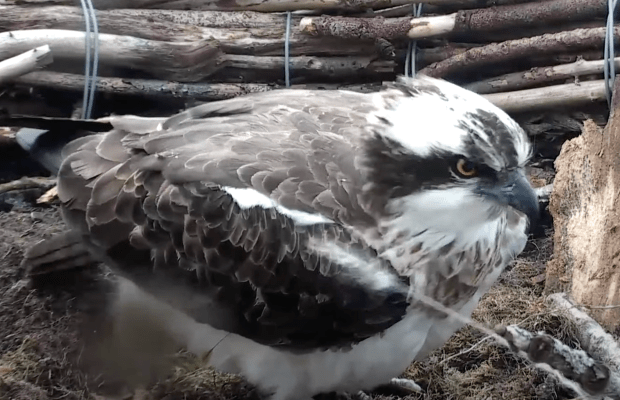
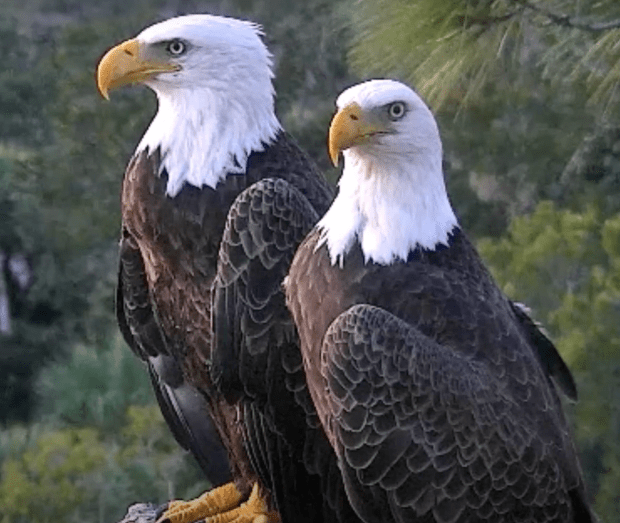
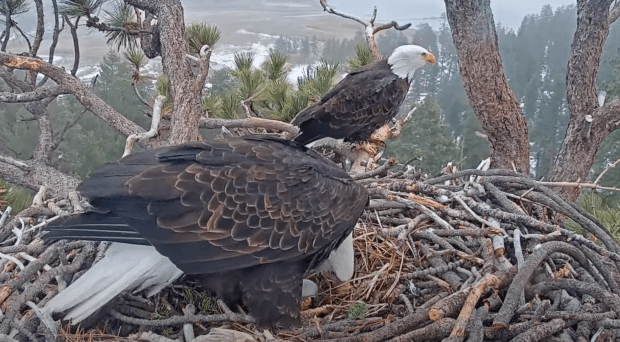
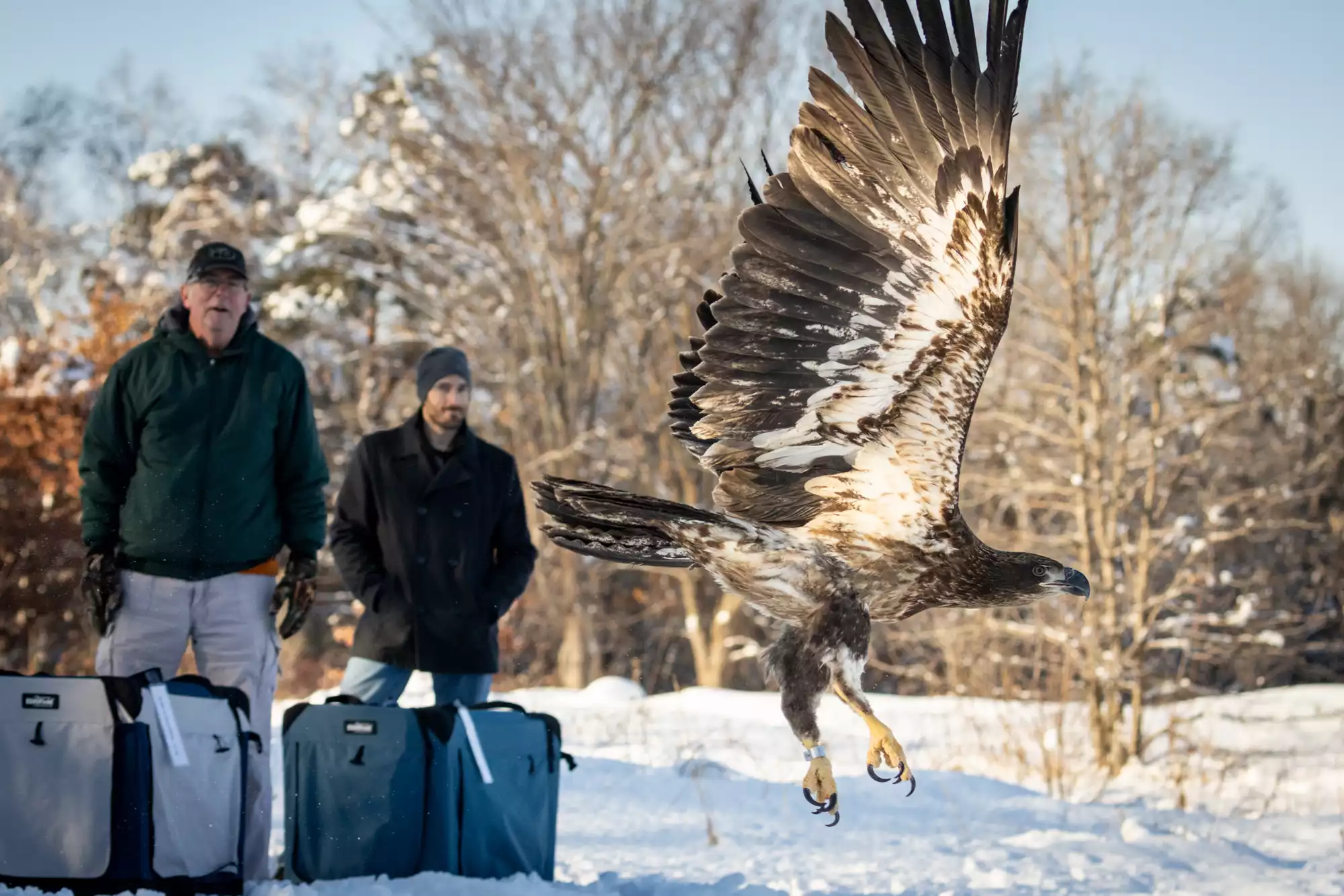
While I was away…

Hello Everyone,

I did not go anywhere exotic. I rarely left my home and garden, and it was a joyful week – full of time with Hope trying to socialise this bundle of joy, calming and reassuring Lewis, petting and reading to Calico and Missey, and writing two articles. There was also time to do what was intended – begin writing up the report on the 2023 Osprey breeding season data forms, focusing on the deaths and why they occurred. I needed the cats to balance off the sadness. Sometimes, you can see the birds waiting for their mate to return, and they don’t. Or the babies starving on the nests because society has yet to understand our need to care for them. If we are to survive, the birds, the animals, and the insects need to as well. As I mentioned before the break, the cats have taught me to live in the moment, enjoy, be thankful, and not dwell on the past or the future so that it wrecks ‘the now’. Still, there is an obligation to do what can be done to make the lives of those around me – the neighbourhood community cats, the garden animals, or the birds – as good as possible. Having travelled the world many times, missing what is right at one’s doorstep is easy. For me – now – ‘there is no place like Home’. I am as joyful watching the Blue Jays flit into the little covered feeder for peanuts as I would be walking along the waterfront in Kuching or Penang.

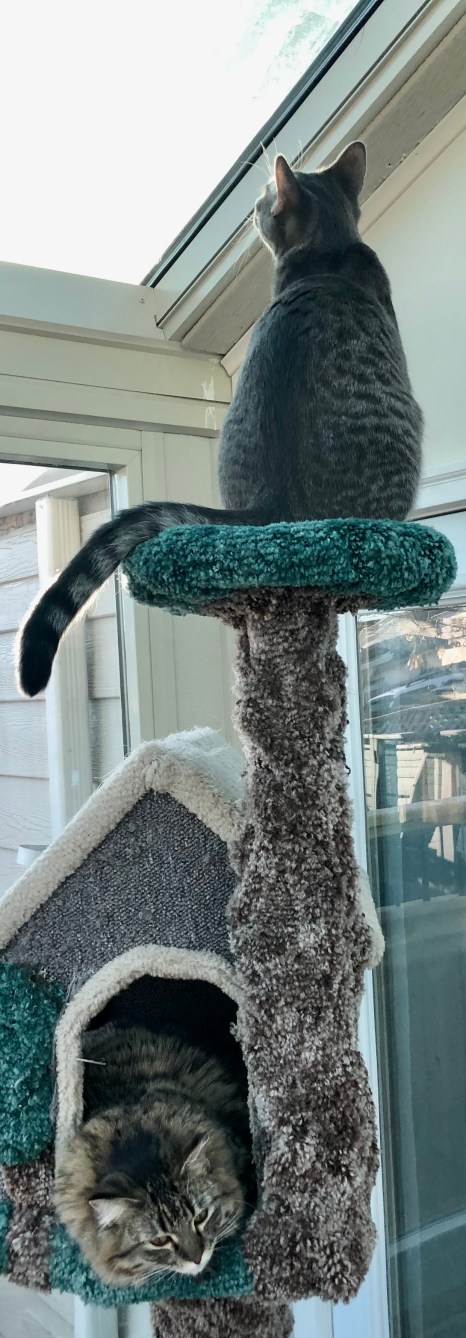
There was also another cat tree to put together. Poor Missey has been looking out a small window with bins full of birdseed stacked one on the other and a wicker basket with a blanket at the top. But this cat tree is nothing like the solid one I have had for two decades. It was obnoxious to assemble with the holes and screws not always lining up easily. Tip: If you have the funds and know someone handy with wood, get them to build you a solid one out of good plywood. You can take it to a local upholster to get it covered. At the end of the day, Missey prefers the wicker basket on the bins. Of course. My house looks like I have opened a cat daycare centre at times. Too funny, but it is driving me a little nuts, so there will be some consolidation this week!

Before checking what happened while I was away, Geemeff sent me a link to the BBC1 programme on Birds of Prey. Ospreys are about halfway through the 57 minutes, and the couple is Brodie and Asha from Loch Garten. But don’t just skip ahead because you will miss the most beautiful landscapes, and the images of the raptors are extraordinary. Enjoy.

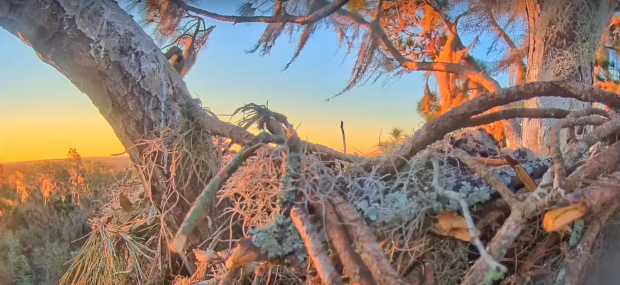
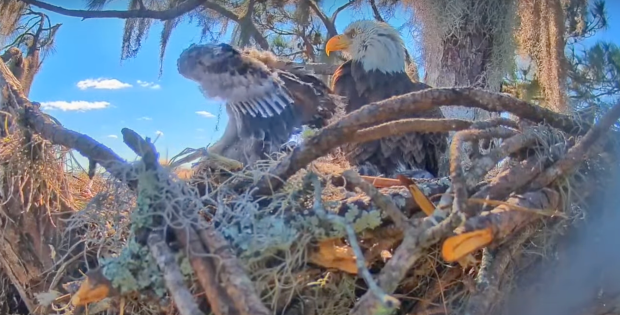
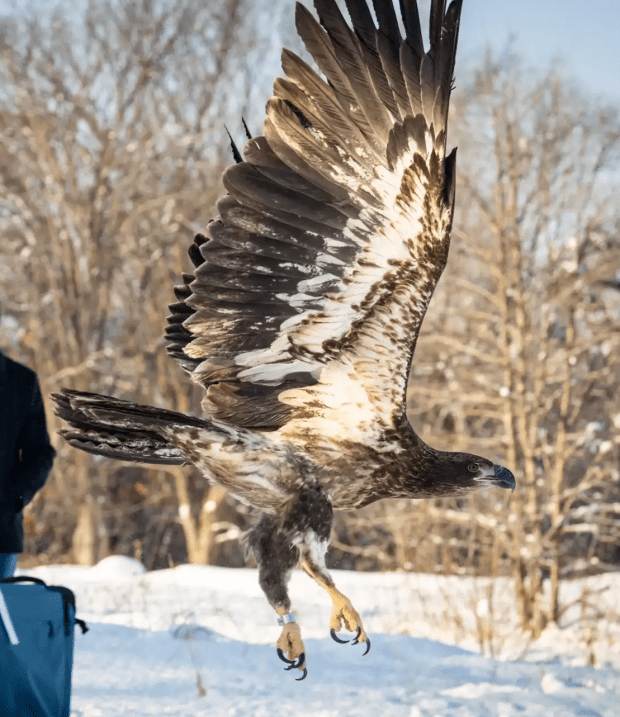
Ranger Sharon confirms Manaaki fledged. Thanks, ‘R’.

Mum L came to feed Manaaki. She looked for him twice. Bittersweet moments for these dear parents.

Upcoming announcement:

Sunday: It seems that a nest of Ospreys is causing trouble for some organisers of a Green Man Festival in Wales. Let us hope that this does not result in any harm to the platform or any birds.

Ervie travelled and might have met his sister, Calypso.

Ron and Rose began making changes to their refurbished and refortified nest in Miami-Dade County.

PG&E put up a new pole and nest for ospreys in the SF Bay Area. We need more of this!

Many Ospreys are still in Canada and have not started their migration. Lucky is well known in the Newfoundland Virginia Lake area.

Sea Eaglets enjoyed another ‘eel meal’.

Monday:

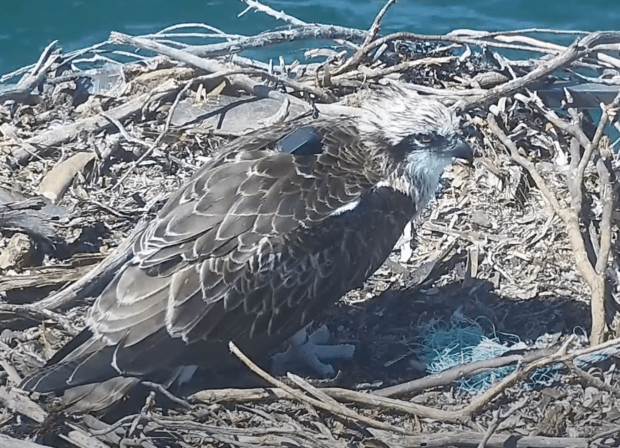
Mini visited the nest again Sunday evening at 2018 (17 September). It was already dark. Her leg looked to be bothering her. I wonder if the water has been rough and fishing hard? Mini will be 4 months old, 123 days.

My Mini mug arrived. She and I will have morning coffee together. The screen capture images work well for digital printing on items. The company I used said it was not a high enough resolution, but I told them to print it anyway. The image turned out lovely.

This will be the last sighting of our dear girl. She has come to the nest to say goodbye. Soar high for decades, dear one. May your crop always be full, may your leg heal, and may you thrive. You gave us such joy and showed us what determination can do.

Thunder and Akecheta were together at the West End.

Gabby arrived at the NE-Florida Nest early. She looks out on her territory and its uncertain future. V3 was last seen on the 16th of September. He has been missing for two days now.

Tuesday: Black Storks flying over the Straits of Gibraltar.

Hope is growing and changing. She is no longer ’round’.

Calico loves her cuddles and still wants a story whenever I am with them. It is such a great way to get them used to your voice.

Cuddle time with Mamma and Baby Hope.

How did Avian Flu or HPAI impact the breeding season? News from the BTO gives us insight.

Has HPAI impacted breeding raptors?

Highly Pathogenic Avian Influenza (HPAI) has been in the news because of its all too obvious impacts on our breeding seabird colonies and wintering goose populations. However, the disease has affected a wide range of bird species, including birds of prey. Because raptors tend to be more dispersed and often inhabit remote locations, there has been concern that the impact of HPAI on these species could have been underestimated.

BTO Scotland staff Mark Wilson, Anthony Wetherhill and Chris Wernham were commissioned by NatureScot to examine Scottish Raptor Monitoring Scheme (SRMS) data for any evidence of an impact. The team compared SRMS data from the 2022 breeding season with equivalent data from previous years, assessing whether there had been significant changes in reported numbers or breeding success of raptor pairs, and whether any of the changes detected were likely to be caused by the HPAI outbreak.

The analyses provided strong evidence for declines in breeding success consistent with impacts of HPAI on the productivity of Golden Eagle and White-tailed Eagle in 2022. These impacts were evident in most of the Scottish regions where these eagles breed but, for both species, they appear to have been greater in areas where pairs had access to coastal and marine habitats, indicating a possible link to predation and scavenging of infected seabirds and waterfowl.

Other factors that could explain the differences observed between 2022 and other years, particularly in breeding success, include variation in weather, prey availability and survey effort. Of these, the weather recorded in 2022 may have contributed to the observed differences but seems unlikely to entirely account for all of them.

The work, which has been published as a NatureScot report, highlights the valuable role played by coordinated monitoring of our raptor populations.

BTO, e-mail of 19 September 2023

And in Melbourne…

At Patchogue, a local enthusiast and lover of Mini, Isac, said on Tuesday when he went checking, “just saw an osprey crossing from the creek to the lake and have a fish in her talons. I think this our lil 4”.

Do you live in Alabama?

M15 and F1 are getting serious. Androcat brings us the action.

It is a beautiful poem to the Welsh Ospreys…completely written by AI.

Black Storks on the move. No data from Bonus and no new data from Karl II.

One of Atlantic Canada’s favourite male Ospreys, Lucky, is still providing fish to his chicks.

The fledgling from the Minnesota Landscape Arboretum nest was still home.

CORRECTION TO INFORMATION I WAS GIVEN: The male at the Arboretum nest is not 21 years old. Here is the correct information: “This male is G/B MS….a five year old that was hatched in 2018 on a nest in Carver Park.”

RUTLAND WATER, home to many ospreys but my fav male Blue 33 and Maya fledged their 250th Osprey chick in 2023. Congratulations. The event is being celebrated widely and there is even a BBC Radio Programme on the 22nd of September.

Mini has not returned to the nest since Sunday the 17th. That was three days ago. A local believes they saw Mini fishing.

SE 31 and 32 are getting more steady on their feet.

It’s scandalously hot on F22 at the 367 Collins Street nest. Question: Last year, we witnessed the effects of the hot sun and heat on the eyases. So why was the scrape not taken down in that area or, instead, why wasn’t a shade put on it like at the other end?

Thursday: Mark Avery gives us a brief update on Bird Flu in the UK.

“In 2023, up until 17 September, 46 species have tested positive. The last month has seen just one addition – 4 Pheasants in Moray.  Here’s the list: Gannet, Cormorant, Shag, Fulmar, Mute Swan, Whooper Swan, Pink-footed Goose, Greylag Goose, Barnacle Goose, Canada Goose, Mallard, Teal, Moorhen, Coot, Black-headed Gull, Mediterranean Gull, Herring Gull, Common Gull, Lesser Black-backed Gull, Great Black-backed Gull, Kittiwake, Roseate Tern, Common Tern, Arctic Tern, Sandwich Tern, Little Tern, Razorbill, Guillemot, Puffin, Curlew, Ringed Plover, unspecified heron (!), Grey Heron, dove/pigeon, Wood Pigeon, Pheasant, Red Grouse, Sparrowhawk, Goshawk, Buzzard, Kestrel, Peregrine, Tawny Owl, Barn Owl, Reed Warbler and Carrion Crow.” 

What is happening at the NEFlorida Bald Eagle nest of Gabby? V3 has not been seen in some days and I fear that the tragedy of Samson has beset a potential mate for Gabby. Will there be a clear partner before breeding season in 2023? or will all be lost due to territorial disputes?

Friday: New studies on migration with relation to Black-tailed Godwits and Red Knots reveals much about how young birds travel to their winter homes.

There has been chaos at the scrape of Diamond and Xavier due to the persistent presence of a young female falcon. Diamond has engaged with the female, and as of today, Friday, the nest is calm and back to normal. We need Diamond safe. She is not a youngster and she is incubating eggs.

Here is the video of that moment! This must be very unsettling for Diamond and Xavier.

Lotus and Mr President have been photographed together at the Washington Arboretum Bald Eagle nest.

Ervie is exploring more territory.

The Pritchetts are getting ready for a new season with M15 and his young and beautiful new mate. I hope that they have many successful years – even a decade – together raising little eaglets that spend time at the pond.

Saturday: Ervie is flying inland.

Gabby has been working on the nest with the new visitor. There has been no sightings of V3 and the AEF says they have not seen any fights on camera. There now could be two suitors. ‘As the Nest Turns’ has begun. Poor Gabby. The AEF is labelling them A1, A2, etc. Gabby prefers the smaller A1 and not A2. Hoping that V3 was just run out of the territory but, what a way to start the year.

Now Anna has been injured. She returned to the KNF E-1 nest – limping with a head injury. None of this is good…. but let us hope it is all minor with Anna.

Jackie and Shadow have been seen together in the tree on cam 2. I still love the diamonds that appear on the nest when the sun is just rising at Big Bear.

SE31 and 32 have changed significantly over the past week. Just look at that plumage. My friend, the late Toni Castelli-Rosen, loved the plumage of the White-Bellied Sea Eaglets. The two are much more steady on their feet and they are flapping their wings. Beautiful eaglets.

Dad has been working on the ND-LEEF nest. The new female has also been present. (Home of ND17, that wonderful third hatch survivor that went into care at Humane Wildlife Indiana – finally!).

Eagles at Duke Farms.

Calico has come out of her operation in fine form. She has been playing like a kitten for the past 3 days, and Hope loves it. They both seem to have springs on the pads of their feet. What joy it is to see Mamma and Hope play together. After, they can often be found sleeping side by side on the top of their makeshift tent where they can look out at the garden animals.

The bells will be ringing in New Zealand as the first two Royal Albatross have returned for the 2023-24 breeding season!

This short article explains this much-anticipated event.

‘A’ is very excited and provides more details and a video explanation of the ringing. ” Meanwhile, the official ringing of the bells in nearby Dunedin to welcome the returning toroa will occur this Monday, 25 September, at 13:00 local time (in the US on Sunday 24 September at 3pm Hawaii time/6pm PST/9pm EST). Here is a brief explanation of this beautiful tradition: https://www.youtube.com/watch?v=uanfnBN6OPI&t=36s. How adorable is the little girl?”

Sunday: Lady and Dad reinforce the side rails as SE31 and 32 become more active in the nest!

Ervie got home safely!

Speaking of getting home safely, V3 has returned to the NEFlorida Bald Eagle nest of Gabby. He is a little worse for wear in places. Will Gabby show up? Will V3 take the prize? We wait.

Pepe and Muhlady are working on their nest in Central Florida as are many other eagle couples throughout North America.

Akecheta was visiting the West End nest.

This is disgraceful! You can look no further than the driven grouse estates. This is precisely what Hamza was referring to when discussing the persecution of the Hen Harriers in Scotland!

Thank you so much for being with me this morning as I ate back into Bird World. I hope each of you had a good week and are enjoying the crisp autumn air. Take care. See you soon!

Thank you to the following for their notes, posts, videos, and streaming cams that helped me to write my newsletter over the past week: ‘A, H, Geemeff, L’, Geemeff and BBC1, PSEG, Sharyn Broni, Conservation Without Borders, The Sunday Times, PLO, WRDC Pam Kruse and SF Osprey Cam with Rosie and Richmond, Ian Winter and Ospreys of Newfoundland and Labrado, Sydney Sea Eagles, IWS/Explore.com, NEFL-AEF, Birdlife, BTO, Karen Lang and Orange, Australia Peregrine Falcon, 367 Collins Street by Mirvac Alabama Coastal Briefest. Androcat and SW Florida Eagle Cam, Dyfi Osprey Project, SK Hideaways, Looduskalendar, Twin Cities Metro Osprey Watch, Mark Avery, Inatra Veidemane and Bald Eagles in the USA, Hakai Magazine, MI McGreer, Karen Long, Gracie Shepherd and Raptors of the World, Katie Phillips Conners, Tonya Irwin and KNF-E1, FOBBV, ND-LEEF, Duke Farms, The Royal Albatross Centre, Superbeaks, Sharon Dunne and Royal Cam Albatross Group NZ, and Raptor Persecution UK.

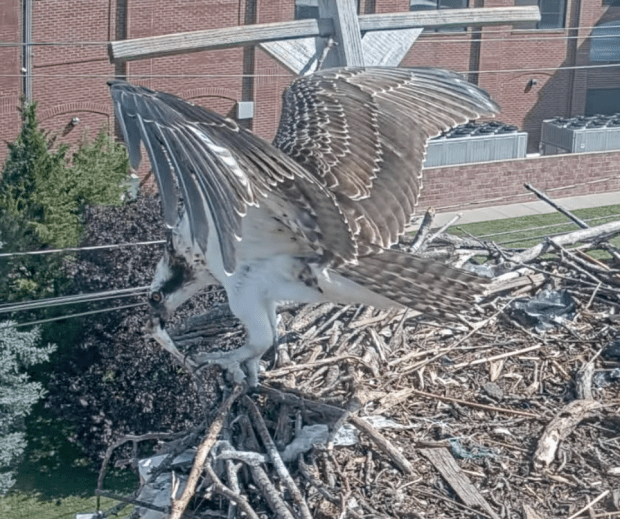
Is Mini Better? Saturday in Bird World

12 August 2023

Good Morning Everyone…

Oh, it has rained. We are to have rain throughout the weekend and into next week. The river does not look so dismal (muddy and low) and there were lots of Canada Geese out swimming when I went to the farmer’s market this morning. We have everything local save for peaches which are coming in from Ontario. Oh, how I remember the big peaches my mother used to buy that came from Georgia when I was a wee lass. The juice would roll down your chin! These are not quite that good, but – they are delicious.

Calico continues to visit every 3 hours and eats like she has 25 kittens somewhere…that somewhere is beginning to be a monkey on my shoulder. If she were healthier, that Go Pro would be strapped on her and off we would go….but she isn’t. So we wait. Waiting is a little like waiting and watching Mini’s left leg heal. We all want it to happen now. ‘M’ reminded me of Royal Albatross OGK. He was missing for 40 days and returned with a limp. It was painful to watch, but he eventually healed. OGK would come down the hill ever so slowly. Made us all ache in sympathy. OGK is due to return this November on Taiaroa Head – if he did not perish. I have him on the Memorial Wall but will be ever so delighted to delete that…he was the most amazing dad. Do you remember?

The many faces of Mini today. To my untrained eye, Mini’s leg did not look any worse on Friday.

She did not lose that fish piece that arrived from dad around 0951. She almost did and then she recovered. She will fly away with it in her beak.

1627. A much bigger fish came on the nest and Mini also flew off with it in her beak. Let’s hope that she did not lose it! That would have been a feast!

This amazing Dad is off – more fish to catch – a huge family to feed!

Mini is off at 1429 with the fish in her beak.

1838. Mini is really wanting Dad to land with a fish for her.

Mini is not lethargic. She is flying and eating, and she is managing. This is all good. We need to just breathe – in and out – and send all our positive energy to our brave girl. She can do this! Healing takes time. It does not happen in a day.

In other news:

Let’s start with the nests that ‘H’ is monitoring:


Fortis Exshaw: “Oh, dear.  It’s either feast or famine for JJ.  There were two fish delivered to the nest by Louise (13:24,16:16), and the older sibling, Banff, ate them both, mouth to tail.  Life is difficult for JJ.  Not only is JJ at the bottom of the pecking order, but JJ seems to be a smaller, non-aggressive male.  Fortunately, JJ ate quite well on 8/10.  The stepdad, O’Hara, made an appearance at the nest on 8/11.  At 1850 Louise landed in the nest, quickly followed by O’Hara.  He helped Louise ward off an intruder, and stayed at the nest for several minutes.  There had been some concern that we had not seen O’Hara for a few days. The last positive identification of O’Hara was on 8/8.  But truth be told, with all the pixelation of the video lately, we could have easily misidentified an adult doing a quick fish drop as being Louise.  One day at a time . . hoping for some fish for our beloved JJ today.”

Kent Island – ‘Good Golly, Miss Molly!’  Molly fledged, at 60 days of age.  But . . we did not get to witness her take off for her maiden flight.  The Explore.org livestream was showing one of their frequent ‘highlights’.  Bummer.  When the brief ‘highlight’ period ended, we saw that the nest was empty!  Tom soon landed with a fish to lure Molly back to the nest, and he was joined by Audrey.  Molly was later spotted in a nearby tree (photo credit Mrs. Com).  By nightfall, Molly had not returned to the nest.  Congratulations to Audrey, Tom, and Molly!  Well done, all.

Osoyoos –  The livestream returned, and we saw that the osprey family was doing well.  My goodness, ‘Junior’ had grown in the past 48 hours.  And, it was evident that s/he had progressed with the wingercising, even achieving a few inches of lift off the nest.  There were five fish brought to the nest after the stream returned.

Forsythe – Oscar brought three fish to the nest for Ollie.  Ollie spent more time away from the nest on 8/11.  Older sibling Owen, has not been seen for 8 days, and we hope that she is doing well.

Dahlgren – D12 caught a small fish!  In recent days, D12 had landed on the nest with a fish a couple of times, but we weren’t sure if she actually caught it herself.  This time, we witnessed the catch.  D12 scoped out the fish directly below the nest, made a pinpoint dive, emerged with her catch, circled around and landed on the nest with her prize.  Well done, D12!  Older sibling, D11, was not seen on 8/11.

Severna Park – We are fortunate to be able to still see the fledglings.  One or both can often be found at the nest.  Oscar is doing a great job making sure his juvies are fed. 

Thank you so much ‘H’ for your keen eye and your informing commentary!

The story at the Osprey nests throughout the Northern hemisphere is that of final fledges, fledglings returning to the nests hoping for fish meals, and pending migration.

Muonio Finnish Nest: The first fledge was on Friday. Just look at that crop in the middle! The one on the far left is getting ready to take its first flight. Bravo!

Ilomantsin: The fledglings – all have flown now – are returning to the nest and Mum is more than happy to feed them when she gets a chance.

MN Landscape Arboretum: Maybe it is just me but I would love to see this chick get some more fish! The small mud puppies are easy for the chick to eat but gosh…could we have a few more please and thank you.

Steelscape: ‘PB’ reports that it was a fantastic day for the third hatch who had been losing out severely. Fantastic news.

Sandpoint: This is not a nest that I have observed in previous years. It was added this year to the data base. Does anyone know if these are inexperienced parents? Or is the local fish situation really dire? Timestamps on the chat for Friday: By Karyn: Fish count stands at 3 from Keo Ts 5:38:58. Coco steals 5:53:32 and downs tail 6:09:04 2nd fish 10:47 and most eaten by dad. Coco tries to take from Mom but ends up with one bite & literally a tail. 3rd fish is a micro mini at 11:47:11 and mom eats the head and Coco steals…just a few bites to that fish.”

Cowlitz: Everything looks good. Fledgling continues to return to the nest!

Clark PUD: Fish on the nest and look at that wing span!

Seaside: Naika and Kawok are on and off the nest wanting fish! It is all good.

The Bridge Golf Club Ospreys: The cam had been going on and off line and now it is back up. Reports are the two surviving chicks have fledged but are returning to the nest for fish! Congratulations everyone!

Dyfi: The UK nests are getting rather lonely. T he fledglings no longer have to wait on the nest for fish to arrive. They can see their parents and chase after them or they can go and practice in the water preparing for their future fishing adventures.

Telyn has migrated from the 13-28th of August in past years. Wonder what it will be this year?

Glaslyn: Aran is delivering fish to the two lads. Elen was last seen at the net on Friday morning. It is possible she is taking time to prepare for migration – or has she departed?

Llyn Brenig: Everyone has a fish!

Llyn Clywedog: The rain drops hitting the nest sound like someone tossing small stones and the wind is howling in the distance.

Loch Arkaig: The nest of Dorcha and Louis is not quiet. Ludo is right there waiting for Dad to bring him a fish – and he is decidedly not silent about it! This chick is going to need lozenges before the season is over!

Tatarstan Eastern Imperial Eagles: Oh, goodness the plumage on these birds is magnificent. They both lived…lots of food and superb parenting. They are both females.

Sydney Sea Eagles: Perfect little angels at this feeding. 31 had a huge crop and Mum was filling 32 to the top of its crop, too! There is such a variety of prey in the pantry – birds, fish, and eels. Pin feathers are starting to emerge and if you note the size difference already, you ,right be inclined to believe that 31 is a Bib Sister while 32 is a wee brother.

Loch Garten: KL5, the 2020 male fledgling from the Loch Garten nest, appears to not be going anywhere. He is looking for his own nest as are many two year old returnees. Thankfully he will be leaving for migration sooner than later and will allow some peace and order to return to the nest. The juveniles are getting much experience defending this nest and themselves against very aggressive intruders.

Congratulations to the West Midlands for the very first ringed osprey in centuries!

Kurzeme Black Kite: Dad is making all the deliveries for Bronza. Mum was last seen on 8 August and is most likely preparing for her migration by fattening up off the nest. What a gorgeous Black Kite!

Stepping back in time: There have been many favourites on the SW Florida nest but E17 and 18 were nothing short of adorable…will never forget 18 having to go into ‘time out’ in the rehabbers!!!!!!

It is an important moment for those involved in the reintroduction of raptors in the UK.

Birds In Helping Hands wants us to spread the word and not use insecticides and herbicides.— Please write down the ingredients for the safe weed killer (if you are inclined to kill them) somewhere for next year! Tell friends and family. Most of the cleaning firms in my City only use white vinegar – no harsh chemicals at all. Think about it. We need to protect those who cannot protect themselves.

Most of you have experienced some very hot weather this summer. Ever wonder what that heat does to our birds? to the seas that they depend on for their fish? Birdlife International has a short informative article to educate all of us.

Thank you so much for being with me today! Please take care. Hoping to see you soon.

Thank you to the following for their comments, notes, postings, articles, tweets, and streaming cams that helped me to write my blog today: ‘H, M, PB’, PSEG, Fortis Exshaw, Kent Island, Osoyoos, Forsythe, Dahlgren, Severna Park, Finnish Osprey Foundation, MN Landscape Arboretum, Pam Breci and the Joy of Ospreys FB, Clark PUD, Sandpoint, Cowlitz PUD, Seaside, Diane Lambertson and The Joy of Ospreys FB, Dyfi Osprey Project, Bywyd Gwyllt Glaslyn, Llyn Brenig, Geemeff and The Woodland Trust, Tatarstan Imperial Eagles, Sydney Sea Eagles, Sue Wallbanks and Friends of Loch Arkaig Ospreys, West Midlands Ringing Group, LDF, Laura Davis Nelson and SWFL Eagles, @Timmackrill, Birds in Helping Hands, and Birdlife International.

Tiny Little works its wings…Thursday in Bird World

6 July 2023

Good Morning Everyone,

I went out in nature again today to clear my head about the Newfoundland Nest. The second chick has died, and Hope is brooding it tonight the DNH egg ton. Hope became the resident female in 2019, for those who do not know. Before this time, this nest had fledged many osplets. In 2019, Hope demonstrated that she rarely fed her chicks, forcing them to crawl to the edge to get fed. Two died of starvation; one fledged that year. None of the chicks survived in 2020, 2021, 2022, and now again in 2023. This year Hope showed a little more instinct to care for the chicks than in previous years. It is just extremely sad and now this season is over for the ‘Last Hope’ nest and we must move forward because many things are happening.

I do want to start with a positive note from the FortisExShaw nest as I know it has been difficult lately with all the tragedy. ‘H’ notes that Louise, the female at the FortisExshaw nest, did a really clever thing yesterday. She fed the two big ones til they passed out but had fish remaining. Then she stopped the feeding and did some nest work. Once the big ones were sound asleep, she fed Little. Brilliant! Now this has been seen at other nests where the third hatch was having problems – Tiny Tot Tumbles at Achieva in 2021 and Foulshaw Moss in 2021. Great strategies and both of those tow chicks survived to become the dominant bird on the nest.

My blog is short this morning. Instead, I will also have an update on some of the nests I monitor and those of ‘H’ in the early evening on the 6th. Then things will be back to normal!

These are a few of the birds from the Oak Hammock Marsh from the morning of 5 July. The Red-tailed hawk soared in the thermals above me for about 20 minutes. I left and it was still up in the clouds. What an incredible sight – so peaceful.

A Killdeer.

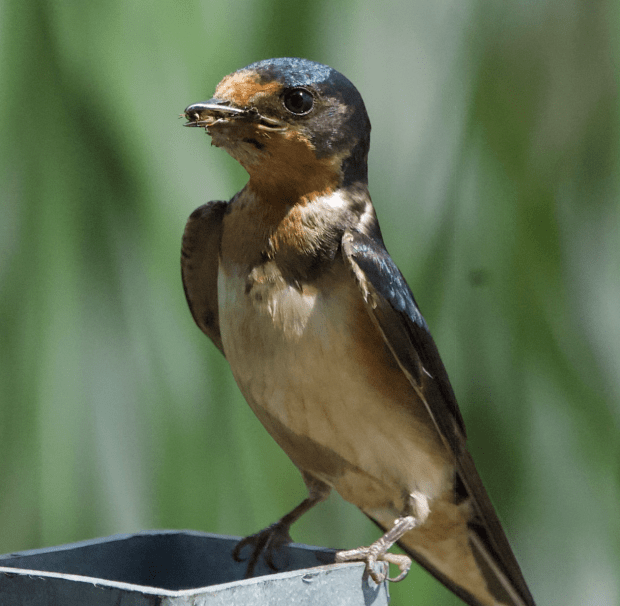
There was an explosion of Barn Swallows around the pavilion. Are they curious about humans? They are such cuties and look, it is banded.

A Juvenile Red-tailed Hawk who was loving flying.

The oldest sibling at the Outerbanks 24/7 fledged on the 4th of July. It returned to the nest, so all is well, but there were fireworks near the nest on the 4th. Everyone reading my blog knows that fireworks are dangerous to our domesticated pets. Imagine the raptors – all the birds and wildlife- living in the urban centres. Why should they be subjected to this trauma? It is a lot of money just for a little bit of satisfaction when so many other causes could use those funds for the long-term benefit of many. While we work on our less use and purchasing of plastic, we can write to those individuals in our communities that plan events and ask them not to use fireworks or balloons or anything that could harm our precious animals. People do have power and we can guide positive change but we have to let the right people know that these events are no longer acceptable.

Here is an informative article for the CBC in Calgary, Alberta, that addresses the issue of harm to humans and animals froj fireworks. This will help you get started on the logical argument and the science of why we should now stop these loud displays, including the debris left for animals to get entangled, birds abandoning their nests, anxiety, and loss of hearing..There are many similar articles on the Internet also.

At Patchogue today, one of the two oldest siblings hovered magnificently and flew to the perch at 12:26. It flew to the opposite side of the nest at 16:53. For Eagles, we would call this branching so I am not officially saying this osplet fledged but we are ever so close.

One, Two, and Little Mini were all at the rim flapping like crazy today! Maybe they are all males and the Three that pecked at Mini is a female. We will never know! The females tend to fledge after the males but there are always exceptions. Mini has eaten well today even snapping fish bites away from Big at the 18:10 feeding.

You know those lumps in your throat you get…well, Mini is just too curious about this flying business and I thought goodness, this osplet is going to fledge soon. I am not ready for Little Mini to fly! And it looks like she is missing a vital feathery her right wing tip, one of the primaries (it looks like with this image).

Here is an image illustrating the feathers of an osprey that was supplied by Dr Erick Greene of the University of Montana at Missoula several years ago.

Can you pick Tiny Little out of the chicks below? She appears to have surpassed Three in size…Three with is great necklace! So in order from left to right – Big, Third, Tiny Little, Second. Incredible.

This nest is amazing.

There are only 7 breeding pairs of ospreys in Denmark. Today marks a very historic event – the ringing of the first osplets in Danish history. The trio were from the Grim Skive nest wish is the 4th largest forest in Denmark in Northern Zealand. The nest is in a beautiful live tree. The link to the camera is below. Go and check this out!

https://naturstyrelsen.webstream.dk/?fbclid=IwAR3qzWDwCtYshOd5UtY-QLdy9rkzPntbUNDQFw8C-f2jWGuvVtpkxzkLxDg

You might be aware that there are growing concerns with the food supply for the Bald Eagles, which is normally Chum Salmon (the Salmon who have spawned and then die). Here is a good article and it shows us how the Eagles and farmers are adapting in Washington State – something that could be a solution elsewhere if the trend continues with the salmon.

The article comes from the last Living Bird Magazine from Cornell Bird Lab.

Oh, Ervie, it is so nice to see you! Our 2021 third hatch from the Port Lincoln Osprey barge is looking good. I wonder if he is still fishing with Dad at Delamere sometimes? It will not be long til we will be checking on that Port Lincoln nest for eggs as the Australian season begins!

I love the fact that they mention Ernie’s necklace — do not ever judge a bird to be a male or female by its necklace alone!!!!!!!

Checking on another Australian male that we love – Xavier – he brought a grebe as a gift to Diamond on the morning of July 6 and she accepted it! For those of you who do not know this darling falcon couple in Orange, Australia, Diamond is very particular about her prey and she does not like Starlings! A Grebe or parrots are tasty treats.

These lovely images of the Ms out and about on the Cornell campus were taken by Suzanne Arnold Horning on 5 July. They all seem to be doing very well as they navigate trees, buildings, birds, and squirrels. Thank you Suzanne for allowing me to share your wonderful images.

A new nest recommendation for all my falcon and hawk lovers – The Dorest Hobby Falcons is highly recommended by my colleague SP! Their first hatch with two more, hopefully, soon. Have a look at this incredible manmade nest – modelled after that of a crow – and these parents feeding this just-hatched chick.

They are correctly called Eurasian Hobby. They are a small raptor, like a kestrel. You might look at them first and think of a Peregrine Falcon. They eat insects and small birds often caught in flight by the talons and then transferred to the beak. They are capable of very sophisticated “high-speed aerial manoeuvres”, according to the RSPB.

We try to do what we can for our beloved feathered friends. That help takes many forms, from donations to bird feeding stations, bowls or bird baths holding water, volunteering for bird counts, and lobbying our politicians to improve their lives. Sometimes there are also simple fixes that we can make in our homes and gardens. Many are urging that all new buildings be bird-friendly. This includes collision-proof glass or Swift bricks in the UK.

Thank you so much for being with me. Take care, everyone! Check back later for the nest round-up with me and ‘H’.

Thank you so much to the following for their notes, videos, photographs, and streaming cams that helped me write my blog for this morning: ‘SP, T’, CBC Calgary, PSEG, Erick Greene, Naturstyrelsen DK, Cornell Bird Lab, Buxx Hockaday The Guardian, Wildlife Windows, and Friends of Osprey Sth Aus.

Fledges, Zeus missing? and more…Thursday in Bird World

22 June 2023

It is always good to go somewhere and soak in a very different environment and then, it is always good to be ‘home’. It was hard to leave the island. There had to be one last stop by the rocks and the water with the Pelicans and Hooded Mergansers. Before I could get there, a family of Canada Geese swam by! Oh, joy!

This beautiful female Common Merganser sitting on ‘her’ rock watching her babies swim.

Pelicans have to be the comedians of the shore. Notice that the pelican on the right has a ‘caruncle’ – a protrusion from the top beak. It is thought that these are there to attract a mate as they are shed after mating and eggs are laid. Both males and females grow them.

Lake Winnipeg is the 10th largest freshwater lake in the world at 25,514 sq km. It is also very shallow – something that causes these huge swells. At its deepest, it is only 38 m.

The water pounds against the rocks when it is windy – I find it soothing. They were all there, so it was a nice goodbye, and then, crossing the causeway, there was a single Tundra Swan and, to my delight, a Bald Eagle (not an adult but too far at a distance to determine age) who was none too happy that I stopped to say hello! It was near the Black Wolf trail, where their nests are located.

The distance is about 80-90 metres. That eagle with its keen sight knew where I was all the time. It had flown from an old dock to that tree in the distance to keep an eye on me.

I love it when the garden animals realise that I am home! Or maybe it is the smell of those peanuts in the feeders! LOL

Poor Junior looks a little bedraggled now that he is moulting. That Blue Jay in front – well that is the little fledgling that was sitting with the stone birds last week.

Dyson is looking a lot better than she did a few days ago.

There were so many birds getting drinks.

Moorings Park Victor is having a ball, skimming the water for fish, and coming to the nest wet! What a delight!

Little Mini is doing very well despite the Bigs getting some small fish to self feed on previous days. ‘R’ sent me two images of Mini up feeding at dawn and again when another early fish arrives. It seems that things are back to normal with Mini eating well in the early morning and evening. Don’t you just love this little character?

A big fish came into the nest at 18:44, and Mum happily fed Mini from 19:54-19:21, when she was too full to eat another bite. Mum got to enjoy some nice fish. We should no longer have to worry about Mini, but because she is a fourth, I will continue to watch her closely until she fledges! It is simply a delight to see this little one work hard to stay alive and is now thriving.

Mini also had the most amazing ‘ps’ at 20:31. That wide ribbon of white going in front of the perch is going to make a big splash on the sidewalk.

Deyani fledged on Wednesday and returned to the nest. Perfect.

Angel arrived to an empty nest.

Deyani returns to get the little bird for her lunch that Angel brought. This is excellent—the continuation of the nest as a place for prey.

On Wednesday, the Ms were getting a little antsy. One was on the fledge ledge and the railing today sending out the signal that they could fly anytime now and M1 did. She flew Thursday morning.

We almost had an ooops.

Here is the video of that flight!

Perhaps I am the only one but this eyas at the Evergy Topeka scrape – while it has now its back and wing feathers broken out of their shafts – still has the most peculiar head. Where is its plumage?

Climate change is revealing new places for our birds to try and live. Here is some news from Sanibel Islands.

Storms are really playing havoc with the osprey nests along the NE coast of the US today. This is the report from ‘H’. “Ospreys near the Mid-Atlantic coast are not eating well today.  Rain and heavy winds.  So far today as of 1955:

Barnegat Light, three early fish – Little had 36 bites at the first meal, and at the other two meals the view was blocked. I note that the wind is terrible and Mum is soaked as night begins to descend.

Kent Island, one early fish (two meals)

Dahlgren, two early fish

Patuxent 1, one afternoon fish

Severna Park, two early fish (I think that’s all) 

SCMM, no fish so far !!! And now we may know why. ‘H’ reports: “Worrisome.  Zeus was not seen at all yesterday.  We assume he had no luck fishing for the family, but he did not stop by the nest.  Hera flew off the nest this morning at 0810 and did not return until 0953.  We assume she went fishing.  When she returned, she did not have a fish and her crop was flat.  It is damp and chilly, 63 degrees.  For some reason, she has not returned to brooding the chicks at 10:20.”

This is very sad, indeed. Hera might know that something has happened to Zeus and that she cannot care for the osplets alone. We wait. Send good wishes to all of these nests, please.

Forsythe, no fish so far (Big and Middle self-fed Mini’s carcass) !!!

Boathouse, plenty of fish and feeds.

Exshaw, three feedings so far.  I watched the feeding at 1630 (mdt) to make sure Little was getting fed, and the answer is a very big YES.  Louise went out of her way to make sure Little in the back row had many bites, even some big ones that the little stinker surprisingly managed to swallow.

As you can see, some of the nests are doing splendidly and do not have weather issues – others have severe wind and rain causing a lack of food and those horrid wet and cold conditions that can make osplets vulnerable. We may lose some chicks off these nests. I am particularly concerned about Barnegat Light.

Here is a sweep of some other nests:

Cowlitz PUD: The osplet was seen attacking Mum’s beak because it is hungry. The fish are small and most often not enough of them.

Finally!

Boulder County Fair Grounds: Everything appears to be alright. Little got a private feeding!

Outerbanks, North Carolina: Everything is good. Chicks are self-feeding and also being fed.

Dunrovin: Three healthy osplets!

At the Finnish Nests:

#1. It appears that all three are doing good.

#3. Little sometimes hangs back but manages to get up front and get some of the big fish that are brought to the nest.

#4. Everything appears to be alright. Lined up nicely for meals with a wee bit of bother sometimes – but not during feedings that I have observed.

#LS5: Everything looks alright with this nest and its two osplets. It is the only Finnish nest with only two this year.

Janakkalan: The third hatch often gets fed after the two big ones.

In the UK, banding will occur at all of the nests we have monitored as long as the weather holds and there are banners. Chicks cannot be banded after 45 days for fear of causing a premature fledge/fludge. The ideal time is 35-38 days.

Loch of the Lowes: Blue NC0 has to protect her chicks from bad weather.

Nice fish for a late night meal. Laddie has been delivering a lot of fish. On the 15th of June, he delivered a record eleven for the nest.

Dyfi Osprey Project: The ringing of the two osplets of Idris and Telyn will take place on 27 June, weather permitting. Awwwww, sleeping sweeties.

Glaslyn: I love seeing Aran and Elen sharing the perch. The chicks are growing and healthy and all is well.

Loch Arkaig: Geemeff catches the delivery of fish number two in the early afternoon….It is identified as a whole Silver Tourist (a species I do not know but gosh, what a nice one!). I can only imagine if a fish like this landed on the Cowlitz PUD.

Poole Harbour: Breakfast is served at 0426. Blue 022 is really an early bird.

Llyn Clywedog: Dylan fed the Bobs a really nice Brown Trout for their tea on Wednesday.

For the fans of the Albatross, the Royal Cam chick has a name. A really nice compilation by Sharon Dunne aka Lady Hawk.

Does M15 – our amazing SW Florida Dad – have a new mate? Oh, this is fantastic – let us hope that these two bond and we see them in the late fall at the nest. So grateful to those photographers on the ground.

You might really enjoy seeing the winners of the Audubon Photography Awards. There are so many talented individuals!

And now for something extraordinary – we really could use a pick me up after the weather and Zeus missing…Middle at Achieva. He is fattening up at the Tampa Bay Raptor Centre and will attend flight school next week. How wonderful is that? Thanks, ‘H’.

Thank you so much for being with me today. Take care everyone. See you soon – and do not forget to send good wishes to these beautiful nests. Many of them might be in some trouble today.

Thank you to the following for their notes, videos, postings, photographs, and streaming cams that help make up my blog today: “A, H, L, R’, Moorings Park, PSEG, Window to Wildlife, Cornell Bird Lab, Evergy Topeka, NBC2 News, Conserve Wildlife Foundation of NJ, Chesapeake Conservancy, Dahlgren Ospreys, Patuxent River Park, Severna Ospreys, SCMM, Forsythe Ospreys, Audubon Boat House, Fortis Exshaw, Cowlitz PUD, Boulder County Fair Grounds, Outerbank ospreys, Dunrovin Ranch, Finnish Osprey Foundation, LOTL, Dyfi, Bywyd Gwyllt Glaslyn, Geemeff and the Woodland Trust, Lady Hawk and NZ DOC, Laura Davis Nelson and SWFL Eagles, and Audubon.

Sunday in Bird World

16 April 2023

Good Morning Everyone,

On Saturday, a grey day in Manitoba started drizzly and cold. The birds were at the garden feeders an hour early. It was pretty interesting. There were more Black-capped chickadees and woodpeckers today than in previous days. The conservatory has genuinely been a blessing. It is like sitting with them in the middle of the garden but separate, not bothering them. They seem unaware of my presence, looking out the windows, often with my camera. Thankfully, the sun is up, and it is a bright day in Manitoba this morning.

Missy has taken to enjoying looking out the window from inside a large ceramic platter that has become a new sleeping spot!

Lewis is such an ‘angel’ when he is sleeping.

Our continuing good news story comes from the World Bird Sanctuary. Murphy and his Eaglet are doing well. The folks at World Bird Sanctuary are working hard to get some images out. These are screen captures from a short FB video they posted. Things look good. Just look at Murphy, 31 years old, wanting to be a Dad, sitting by his eaglet. Does it get any better?

In the images below, Murphy is teaching the eaglet what to do.

Murphy and his eaglet made the news – well, they are making the news around the world. We are so in need of joyful happenings and this is certainly one of those.

Other happiness comes from the Achieva Osprey nest and San Jose City Hall. I received word from ‘H’ of the two big celebratory occasions. First up, there was fear for Middle Bob at Achieva. He has not eaten much for at least two days. On Saturday at 16:44, a big fish landed on the nest, and Middle Bob was fed for 25 minutes. Today, Middle managed to get to a place where he could get fed and be protected from the aggressive older sibling. It was a relief to all watching. It is one day at a time on this nest. It is an extremely difficult Osprey platform to watch – and it isn’t any easier this year than it was in 2021.

At Dale Hollow, DH18 stole the fish and had a good feed. Again, River is doing her best with all the intruders in dire circumstances. She has been feeding them every day. Perhaps not nearly as much as she would like or they need but, they are being fed. We have to remember that River also needs to eat. It is extremely difficult for single-parent raptor nests. We send her and DH17 and DH18 our most positive wishes.

Do you recall the year-old falcon, the San Jose City Hall male who tried to feed his first egg? Well, as of Saturday, he has four eggs that he will have to feed in a little over a month! They will need a full pantry!

‘H’ also sent me a link to a tribute to Connie-Clive-Connick. Nice one! Connick is healing. His blood is coagulating and CROW is attempting to find out what impacted his primaries.

Anna and Louis are taking very good care of Trey as her leg injury heals. Mum Raptors love to fill those babies up to the top of their crop to keep them on the nest. Trey, you need to rest your leg not be flying all over the tree!

In Latvia, Milda and Voldis now have two little White-tail eaglets. It is so hard to see them in that deep nest bowl.

Saturday is the day for Ferris Akel’s tour and there was plenty of waterfowl today including a Wilson’s Snipe. Oh, I love shore birds and am so looking forward to seeing some ‘live’ here in Manitoba this summer. I did not know that the female Wilson Snipe tends the eggs and nestlings. Once the chicks are ready to fledge, the adults split them up. The male takes the two oldest and the female takes the two youngest.” Separate training!

Ferris checked on one of the Bald Eagle nests and to everyone’s surprise there were eaglets – at least two – their heads poking above the rim. Adorable.

The highlight of the tour today was the Great Blue Heron Rookery at Montezuma.

Sunset at Montezuma.

Iris brought in a whopper to the owl pole and had a really good feed. Then she spent time sitting in her nest watching the activities in the parking lot. I have not noticed Louis being over yet and my friend, ‘T’ says he will wait until Star has eggs under her and she can’t check on him! Too funny. Ospreys have such interesting behaviours.

Iris is great at catching whoppers.

Just look at the size of that fish. She could easily take first prize in the local fishing contests.

There are now three eggs at the Patuxent River Park Osprey platform #1.

The Glaslyn Valley is waiting for a new Queen. It looks like Aran might have one!

The unringed female is a natural beauty. Those intense eyes remind me of Mrs G.

Aran preparing a fish for his beautiful female.

She is waiting in the nest when Aran brings it to the rim.

She accepts!

Good night, Aran. You might have a formidable new mate who will protect your chicks against anything!

There is no rewind on the Foulshaw Moss camera in Cumbria. Polly Turner caught Blue 35 laying the season’s first egg for her and White YW. I am incredibly fond of this female and how she was able to ‘trick’ her two much larger by a long shot osplets so that she could feed the tiny third, Blue 464 two years ago.

The first egg was laid at the Dahlgren Osprey Platform in Virginia on 11 April. Jack has been filing the nest with plastic objects, not toys, but, junk. There was concern for the egg. ‘H’ notes that it is now four days since the first egg and no second one. We wait.

‘H’ reports this morning that 4 days and 16 hours after the first egg, Harriet at Dahlgren laid her second egg.

M15 continues to be rather amazing, as are his two fledglings. The female intruder wanted a fish M had brought to 21 and 22. She landed in the nest, trying to take in. E21 flew in to help dad – he was fearless. Then 22 came in to assist. What a team they made. The female still made off with the fish, but seeing those three work together cooperatively was remarkable.

A must watch. M15 defends the nest from the female intruder! Fish goes over board.

It is just so much calmer within the scrape at Cal Falcons. Lou really wants to feed his trio.

More of Lou – and Annie – and the trio from SK Hideaways.

It seems that each of us has, at one time or another, yelled – loudly or silently – at the GHOs on the Pritchett property that continually hit and harassed M15 and the Es. At the same time, we look at Bonnie and Clyde’s two owlets and want to ‘cuddle’ with them. They really are quite adorable.

The three eaglets at Dulles-Greenway had big crops throughout the day. The plastic bags on the nest have multiplied. There are now two. Hopefully, the wind will blow them from the nest before any eaglet gets tangled. You might remember that nests have been cleaned when too much human debris could endanger the nestlings.

‘A’ notes that it was Rosa that brought in the squirrel that has been feeding the little ones. Martin arrived in the nest empty taloned yesterday to Rosa’s dismay. So far this nest has done well with the three. We do not need any intermittent lags in prey delivery right at this stage!

Wet little munchkins.

I have lost track of when the goslings are due to hatch in Decorah. Do you know? It will be grand to see them all take that leap of faith again this year.

Just down the road is the Decorah Hatchery nest with its cute little eaglet. It started raining late in the day and HM is keeping baby warm and dry.

Abby and Victor are 44 days old today. Stunning. Their juvenile plumage is nothing short of gorgeous.

A portion of England’s wetlands seek UNESCO heritage status. Wetlands. How often do you think about them? They are critical during migration, and they are essential for the ducks and waterfowl or the raptors that hunt them. We need more wetlands across the globe. Many regions are working to increase theirs. What is happening where you live?

https://www.theguardian.com/environment/2023/apr/15/avian-super-highway-uks-pitstop-for-migrating-birds-seeks-unesco-status-aoe?CMP=share_btn_link

Thank you so much for being with me today. Take care everyone. Hope to see you soon!

Thank you to the following for their notes, observations, videos, posts, and streaming cams that helped make up my blog today: ‘A’, ‘H’, Australia Raptor Care and Conservation, World Bird Sanctuary, Achieva Credit Union, Heidi McGru and Achieva Ospreys with Jack and Diane, Dale Hollow Eagle Cam, San Jose City Hall, Onabebe and Captiva Eagle Cam, Tonya Irwin and KNF Eagle Cam Fans, Looduskalender Forum and Latvian Fund for Nature, Ferris Akel, Montana Osprey Project, Ashley Wilson and Patuxent River Park Osprey Nest, Bywyd Gwylld Glaslyn, Polly Turner and Friends of Loch Arkaig Ospreys, Dahlgren Ospreys, Sw Florida Eagle Cam, Cal Falcons, SK Hideways and Cal Falcons, Farmer Derek, Dulles Greenaway, Decorah Goose Cam, Moorings Park Ospreys, and The Guardian.

Karl II is home, 2 babies for Annie and Lou…Wednesday in Bird World

12 April 2023

Good Morning Everyone,

Spring really has arrived. It was a balmy 14 degrees C here on Tuesday with a clear blue sky and bright sun. The same weather promises for today. Yipppeeee. When the weather is good, I encourage all of us to get outside. Even if you sit on a chair and let the sun warm your face. It is all beneficial. Make a habit of it!

The snow is melting and causing some local flooding, the geese, Cormorants, and pelicans fly overhead and it is a great day to be outside and appreciate all the effort the migrants have made to get here. A bald eagle flew low on the road, banked and landed on the ice at one of the lakes. I stopped and found it had spotted some carrion, likely a dead goose.

Other geese were finding open areas of water.

Geese are very territorial as they begin to prepare for nesting. I did not have my long, long lens on the camera. I am about 10 metres away, and he is still warning me off!

The staff have all of the goose and duck boxes full of fresh straw just waiting for new occupants.

Meanwhile, at home, all Lewis can do is dream about another Dove landing on the roof! Lewis makes Missy tired…he is still very much a kitten!

Missy prefers the Japanese snacks!

Ospreys move nests. Yes, they do. In fact, at Kielder Forest some have kept people guessing as to whether they would stay or go. The male at nest 1A White YA disappeared last year. Now the female has left that nest and moved to another. Kielder is putting out a call for female ospreys! Know anyone?

The remarkable story of a rock, an eaglet, and Murphy! From World Bird Sanctuary continues in the most positive way:

There is good news coming out of CROW. After treatment, Connick’s blood is clotting normally. Now they are trying to figure out why he had the loss of so many primary feathers. Thanks, CROW!

Annie and Lou’s little eyas is such a cutie pie. Cal Falcons caught the first feeding on video for us.

As I write this, it is 19:14 at The Campanile. Annie is giving us a good look at her sweet baby.

Lou meets his baby.

Annie even allows Lou to have a couple of incubation duties. Fantastic. Thanks SK Hideaways!

Ah, thank you, Annie for showing us the two little ones!

DHM and DHD have a precious little one, too – DH2.

At Dulles-Greenway, Martin and Rosa are doing such a fantastic job raising the three. ‘A’ comments today: “The three at Dulles Greenway have the most GIGANTIC crops. Three chicks in total food comas, mama looking down at her babies. She has fed them and fed them and I have rarely seen larger crops in my life… The youngest is just a firecracker. Always has the biggest crop on the nest. Always front and centre at meal times. Just the sweetest little eaglet. I have seen little or no bonking on this nest. The three just lie around, growing and playing, and eating like small peagles (pigs/eagles).”

The eaglets were fed several times in a row always crop dropping. This is a wonderful nest to watch. If you haven’t checked in on them, please do.


There are terrific storms hitting the UK. It was particularly windy and rainy in Wales so much so that Idris and Telyn at the Dyfi nest took to the ground instead of staying in the trees or nest. Poor Telyn. She was readying to lay her first egg.

The weather in Wales is very wet. The new female at the Glaslyn nest beat Aran there on Wednesday. Mrs G is now well past her return date, sadly. She left a fantastic legacy of ospreys and will always be remembered and loved. Glaslyn will no doubt be issuing a lovely memorial once they are sure Mrs G is not returning.

‘T’ writes: “What a wonderful day for the cameras and watchers in the Baltic countries! Karl II is back! Kaia is not too far. Osprey Teo is back in Latvian nest. And!! A new camera is already installed on Kergu’s nest. So more black storks we will see in Estonia. Kergu is on a bird map with Karl and others.” This is wonderful news. So many storks have been slaughtered in Malta and Lebanon- such sadness. Now will cute little Teo get a mate this year?

Karl II wasted no time getting from Moldova to his home! Fantastic.

Here is the video of Karl II’s arrival!

Welcome home, Teo!

Everyone loves SP chick in New Zealand. I have promised ‘A’ to put in this cute video and I kept forgetting amidst the drama of the hatch at Cal Falcons. Here we go! What a cutie pie. Life is good with our little gardener.

Everyone reading my blog knows I love ducks and look forward to their arrival. Here is a lovely short article on the Gadwall and why we should appreciate these little non-flamboyant ducks more.

https://www.theguardian.com/environment/2023/apr/11/country-diary-the-unassuming-gadwall-deserves-a-closer-look?CMP=share_btn_link

Checking on Dale Hollow and Achieva: River brought in at least three nice fish for DH17 and DH18 and herself. Everyone ate well. Still, River had to warm off intruders while feeding her babies. She is doing well. Continue with your best wishes.

There also appears to be an issue of a possible nest takeover at Dale Hollow. Intruders have been about and landing. A floater? A take over? We can only watch and wait.

When I last checked, Jack had delivered two flounder to the Achieva nest in St Petersburg and both osplets as well as Jack and Diane had eaten well. Relief. Again, like Dale Hollow, send positive positive wishes to this nest also.

In fact, my count was wrong. Jack brought in five fish today!

This is a short report on what is happening in Bird World. All nests are good except those I worry about – Achieva and Dale Hollow. We take them one day at a time. Shadow continues to get in the nest cup, hoping for a spring miracle – the first male eagle to lay an egg! While he and Jackie are otherwise as affectionate as ever. Eggs are being incubated, eaglets fed, and Ospreys in the UK are either incubating or working on nests. Send them all your good wishes as we wait to see if either of the remaining two eggs will hatch at Cal Falcons.

Thank you so much for being with me today. Take care everyone. See you soon!

Thank you to the following for their notes, posts, videos, tweets, and streaming cams that helped make up my blog today: ‘A’, ‘T’, Kielder Forest, Wild Bird Sanctuary, CROW, C White and the Captiva Island Eagle and Ospreys, Cal Falcons, SK Hideaways and Cal Falcons, Raptor Resource Project and Explore.org, Dulles-Greenaway, Bywyd Gwyllt Glaslyn, Estonia Eagle Club, Latvian Fund for Nature, Lady Hawk and NZ DOC, The Guardian, Dale Hollow and Barbara Snyder and Achieva Credit Union.

It’s 2 eggs for Jackie and Shadow, 2016 Royal Cam chick returns…Sunday in Bird World

15 January 2022

Good Morning Everyone,

Oh, what a lovely weekend we are having on the Canadian Prairies. It is currently -5 C with a 4 km/h wind. It is lovely. Just lovely except that it is ‘grey’. No blue sky. No sun. Looking forward to a walk in the forest today! Will keep you posted on what I see. I hope the weekend has been kind.

Making News:

Eagle Nest Removal. One of our blog family did some additional research on the removal of the nest on that cell tower that I mentioned a day or two ago. ‘B’ located a news article from South Carolina with information including the e-mail address to write if you are concerned by these actions. As we are all too aware, nests are being cut down and blown down by weather and it is breeding season. You should read the article carefully. The eagles were present and around – this was NOT a disused nest! Indeed, it is outrageous that it was removed.

I will include a link to the article. ‘B’ draws our attention to a final paragraph. If you wish to voice your concerns about this incident – please use the e-mail below. The link to the article is below the quote and above the albatross image. Thank you for taking the time to speak up for our raptors who cannot speak for themselves!

“The South Carolina Department of Natural Resources responded to reports of the removal of a large raptor nest in Mt. Pleasant, South Carolina. The United States Fish and Wildlife Service has initiated an investigation regarding the removal, and inquiries concerning this incident should be directed to Office of Communications, United States Fish and Wildlife Service Southeast Regional Office at fw4_comms@fws.gov .”

https://www.newsbreak.com/news/2890157123613/fed-investigating-removal-of-mt-pleasant-eagle-s-nest

The 2016 Royal Cam chick, Moana, has been confirmed to have arrived at Taiaroa Head after 7 years at sea. Talk about incredible. Just think about that. She is very steady on her feet and Ranger Sharyn wonders if she didn’t arrive earlier and wasn’t spotted. She settled down by her half-brother GLY for a bit. Oh, my goodness. This is fantastic news.

“American Golden-Plover with Yellowlegs” by Dendroica cerulea is licensed under CC BY-NC-SA 2.0.

Have you ever seen a Golden Plover? We do not, as far as I know, attract them to Manitoba but, oh, they are so gorgeous. I can only imagine them at sunset!

https://www.theguardian.com/environment/2023/jan/14/country-diary-a-golden-glint-in-the-gwynt?CMP=share_btn_link

More lead poisoning. I was going to try and put together a form letter for everyone to send to their various agencies but, the laws regarding lead vary from State to State and Country to Country. If this is an issue where you live – and it certainly is in the US and Canada – find out what the laws are. We know that some states have partial led bans. Get informed. Then use some of the information from posts such as the one below to write to your state and federal agencies asking them to ban lead from fishing and hunting equipment. Your letter should not be longer than a page and it should get to the point with facts.

Lincolnshire detectives warn that the poisoning of raptors could lead to human death. “The RSPB has described Lincolnshire as “a national hotspot” for the persecution of birds of prey”. How sad. Why do people believe they have a right to kill or severely injure animals or birds?

https://www.bbc.com/news/uk-england-lincolnshire-64225792

The AEF has made a memorial video of Samson. It shows some beautiful close ups of him, images of him and Gabby, and their kids. Get a tissue. I assume that they have now determined that something fatal has happened. So very sorry and sad. He was a magnificent partner and dad and I will just never forget the tender care he gave to Legacy and Jasper and Rocket. I did not watch this nest the year of Jules and Romeo).

There has been some discussion about physically challenged raptors. Here is another example of an eagle with one leg that landed on the Fort St Vrain nest in Colorado. Wonder when it lost its leg? and how it hunts its prey? There are places where challenged raptors can live out their lives; ‘L’ send me some information on them but, what about in the wild? Is it a case for not euthanising raptors if they have a single leg injury? I am, of course, thinking of our beloved WBSE26 right off the top but, there are others. I don’t know the answer. I am thinking out loud. Is it inhumane to even think that eagles could be freed with one leg? It is curious.

Checking on the nests:

Jackie laid her first egg on 11 January at 15:58. It is a horrible day in Big Bear Valley. It started out rather nice and quickly changed into high winds with pelting hail/rain/snow. Jackie will be laying egg 2 on this miserable day. Shadow has taken turns incubating and the pair have been on and off and always one of them around the nest at Big Bear.

At 12:28, there was still only one egg. The weather has changed the hour prior and is starting to get quite nasty for our darling Jackie.

Gabby at 13:54 Saturday. The cameras went out shortly after.

The second egg was laid before 17:11 on Saturday the 14th. In miserable weather. Poor Jackie. She must be hungry, too. Let us all hope tomorrow is a better day.

It looks like it is a much nicer day in central Florida for Superbeaks.

The first image is an unusual one. I am posting it here so you will see the blood feathers coming in on Pearl’s wing.

Connie and Clive’s little eaglet has fish juice on its feathers. It cannot be helped. Poor thing. Connie definitely likes to eat and I have yelled at her a few times to feed the baby! There is fish on the nest. Once Connie gets started and is not distracted, the eaglet normally winds up with a crop. Poor little one is also learning how to handle those huge bites…hence all the fish juice everywhere.

Anna is a bit like Connie. She sure likes her fish! Anna is making KNF E1-03 really stretch its neck to get any food. I must admit to getting irritated at both Anna and Connie. I want to see them feeding that wee babe til it can’t move and then having a big lunch themselves! Oh, well…they are never going to listen to me.

At the KNF E3 nest of Alex and Andria, E01 and 02 are doing fantastic. They look like two old wooly grey carpets. There is always an adult around but both can regulate their temperature now and it is a lovely day near Kincaid Lake in Louisiana.

Lots of good feedings and M15 and Harriet together in the later afternoon. These two are such sweethearts. I wonder if they are both male?

Ron and Rose were working on their nest on Saturday. That Rose is certainly a sweetheart. She is so smitten with her man.

MO and FO have both been at the Captiva Osprey platform nest on Saturday. (This is the same osprey).

Jack and Diane have been at the nest on the parking lot of the Achieva Credit Union in St Petersburg. They seem to be vigilantly watching for intruders instead of actually working on any aspect of the nest. Diane’s leg looks like it is almost entirely healed. Wonderful news.

Jack went fishing and came in with a nice fish breakfast for Diane at 07:52.

In Australia, Zoe had no fish deliveries on the 14th and nothing so far (noon) on the 15th none. The waters are very choppy. She is 119 days old. Mum and Dad could have trouble getting their own fish. Mum delivered one fish on the 13th. It looks as if Zoe is hunting around in the nest for leftovers, even dried fish. Is she catching her own? I don’t know but Mum and Dad fish at Delamere where Ervie does and Zoe might have followed them. Surely the parents are encouraging our girl to become independent and move out of the nest. She isn’t fish screaming either but that could be because Mum and Dad are not visible.

Nearly 1600 on Sunday for Zoe and no fish deliveries for more than 48 hours. She is either extremely hungry or she is fishing and eating off cam.

We will end in Australia with Elain’s nest highlights from Orange and the family of Diamond, Xavier, and Indigo.

Beautiful Diamond.

Save for poor Moana and Jackie, it has been a very quiet day. Pip watch soon for Berry College!

Thank you for being with me today. Take care everyone. See you soon.

Thank you to the following for their posts, videos, and streaming cams where I took my screen captures: Sharon Dunne and Royal Cam Albatross Group NZ, Openverse, The Guardian, Terry Carman and Bald Eagles Live Nest Cams and News, BBC, AEF, FOBBV, Superbeaks, Window to Wildlife, KNF-E1, KNF-E3, SWFL and D Pritchett, WRDC, Achieva Credit Union, Port Lincoln Ospreys, Charles Sturt Falcon Cam and Cilla Kinross, and Elain and Charles Sturt Falcon Cam and Cilla Kinross.

Rose and Ron bonding…Friday in Bird World

13 January 2022

Good Morning Everyone,

Here it is, Friday the 13th. I wonder how many people reading this are superstitious?

On Thursday afternoon, I put on the heavy coat and took out the camera and battery, warmest boots, scarf, toque and headed out to the nature centre. It was -12 degrees C with only a 4 kph wind and 84% humidity. Damp. It was a lovely day in the forest and a few friends were around the feeders.

Several Red Squirrels were running about enjoying the peanuts knocked down from the feeders by the birds or another squirrel ‘friend’.

‘Squirrel Friend’ in action!

A sweet little female Downy Woodpecker enjoying the suet. I love feeding suet in the winter because, unlike peanuts and Black Oil seed, have to be cleared up regularly.

The Black-capped Chickadees are simply precious. They flit about taking one seed, fly to a branch, open and eat it and fly back to get another – all day long.

What a treat it was to see a White-breasted Nuthatch.

Merlin Sound ID alerted me to a Yellow Flicker in the area but I did not see it. The deer were not around today near the hide.

Making News:

It is easy to worry about our favourite feathered families with the heavy rains and floods that have been happening in California (and at other places in the US and around the world). That makes it so much of a relief to see that Annie and her new male friend are at The Campanile and are safe.

They are putting sat pads on Ospreys in Senegal! It seems that the people in Africa are as curious about where their ospreys go to breed as we are to find out where they winter. This is just grand.

Creating new wetlands is a good thing.

If you missed The Flight of the Osprey presentations/shows/talks, Geemeff has reposted the links so that you can watch/hear:

The expectations are that Avian Flu will continue to kill domestic and wild birds. Are you noticing any shortage of eggs? Tests are going on now as duck hunting season is in full swing in places like California. The researcher in this article ” will deliver her samples to UC Davis, where lab personnel will test them first for avian flu in general and ultimately for the specific strain known as Goose/Guangdong (Gs/GD) lineage highly pathogenic avian influenza (HPAI). Gs/GD HPAI is the deadliest and most infectious bird flu ever to strike Europe or North America, according to wildlife epidemiologists. The strain ravages domestic poultry flocks and can sicken and kill more species of wild birds across a greater geographic area than any previous outbreak, leaving an unprecedented trail of death. So far, the virus has affected more than 52 million domestic poultry birds in the U.S. and has been tested for and confirmed in 4,362 wild birds across the country.” 

The first eagle in SW Virgina confirmed to have bird flu. This year there could be some very serious hardships.

I was interviewed last week about the impact of war on wildlife. Today there is an article appearing in The Guardian about Hooded Crows around Babyn Yar near Kyiv. Keeping in mind that there has been so much destruction in Ukraine, it is a very interesting article to read.

https://www.theguardian.com/environment/2023/jan/12/country-diary-the-silently-screaming-ravine-is-now-filled-with-bird-chatter?CMP=share_btn_link

In the mailbox:

‘L’ send me the latest Audubon news that shows their lobbying of the federal government has included many of their concerns about the environment and wildlife. Thanks, ‘L’. Have a read:

https://www.audubon.org/news/recently-passed-federal-funding-package-makes-investments-natural-climate

‘A’ has noticed that Clive is bringing a lot of trout to Connie and CJ7. Where is the trout coming from? That is such an interesting question. Thank you for asking it, ‘A’. I am reminded of when Dylan has brought Brown Trout into the nest at Llyn Clywedog that he shares with Serena Blue 5F. Dylan could get them from the local Reservoir but often humans are there fishing. I was so impressed with John Williams who tracked Dylan in a round about way and discovered that Dylan will escort intruders up to 25 miles away from the nest and it seems he stops along the way back home to fish! So now, where does Clive get those trout? Believe it or not, Captiva is well known for its winter fishing which includes Trout. Fresh Water Fishing Advice said this, “Spotted seatrout fishing is good in Captiva year-round. The season to fish for spotted seatrout in the region is high between January and October. The best time of the year to catch spotted seatrout in the area is between April and June.”

Checking the Nests:

The two eaglets at Superbeaks are growing and growing and then growing some more. It is difficult to get a screen capture of both of them together so I was pleased about the first image. It is early morning and Pearl and Tico are waiting for a fish delivery and breakfast. Their crops are empty!

Tico is 34 days old and Pearl is 35 days old today.

It is not long until fish arrive on the nest and these two get fed til they are full to the brim.

It is a wonder they can bend over. I am very impressed with these parents, PePe and Muhlady.

The two eaglets at the Kistachie National Forest E-2 nest of Alex and Andria are nothing short of precious. So civil to one another.

It is possible that KNF-E1-03 will be an only eaglet this year. In fact, this chick could be from the second egg. No matter. It will thrive under the watchful eye of Louis and Anna.

17:42. Probably the last meal of the day for the wee eaglet. Some people love the little pink feet but I love those little wings and the peek at the tail appearing.

Tonya Irwin gives us a short video of Louis taking care of E1-03 Thursday morning. Louis is such a proud daddy.

Shadow saw the precious egg that Jackie laid at 1600 on Wednesday early Thursday morning. Tine 07:06:22. After this, he flew out and returned with a nice fish for Jackie.

Jackie does not want to begin hard incubation until she is sure the second egg is in the nest. Otherwise the eaglets would be too different in birth times and this could cause severe rivalry. But, Jackie also knows that she cannot leave the egg alone or the Crows will get it. Little Fiona came to the nest but Fiona will not bother the egg.

One good way is for Jackie to perch near the egg – or Shadow – protecting the nest should a predator arrive.

What a sweet look – a marvel. Jackie looking at that egg she has laid. Oh, let us all hope that this is a good year for our Big Bear Valley couple. They deserve it. What fantastic parents they were to Spirit.

Notice how Jackie is sleeping over the egg to protect it from any predators but it is not yet hard incubating so if there is a second egg, the eaglets will hatch closer together. What a brilliant idea to keep the Crows at bay.

The California news is already celebrating Jackie and Shadow’s first egg! Oh, how wonderful.

https://www.nbclosangeles.com/the-scene/the-first-egg-of-2023-arrives-for-big-bears-beloved-bald-eagles/3071805/?_osource=db_npd_nbc_knbc_eml_shr

Connie and Clive’s little one had a nice big crop today. There are lots of fish on that nest! Some of them are hidden. The little one looks fine despite some concerns over Connie eating more than she is feeding the chick. It does not look like the second egg will hatch. Like the KNF-E1 nest, it is possible that this chick was actually from the second egg.

Gabby and V3 were working on the nest this morning. He is rather handsome. I know he is not Samson but there are things about him that remind me of Samson – like his tight ‘jeans’.

HeidiMc caught Ron and Rose bonding in the WRDC nest in Miami yesterday. They are such a funny eagle couple! I love how Rose nibbles on Ron’s feathers. Oh, so sweet.

The beaking at the Southwest Florida nest of E21 and E22, kidlets of Harriet and M15, is not that bad. The problem is E22 who does seem to stare E21 right in the eye and then aim at him/her with its beak and then E21 shows 22 who is boss.

Look carefully. You are going to see black dots. Those are not bugs. The plumage is beginning to change. Yes, already. You will see the thermal down but you will also begin to see tiny black dots where the shafts of the feathers are emerging. You will also notice that the egg tooth is disappearing.

E22 you should never look 21 in the eye. Never!

For now, 21 is the oldest and is the boss. Just leave things alone.

A short clip from SK Hideaways showing E21 and 22 eating a meal and rather behaving. They do not always. E22 can still get rough.

It is raining in Fort Myers and Harriet is keeping the two wiggle worms underneath her!!!!!! M15 has a big rabbit on deck for dinner when it stops.

Indigo the beetle-slayer! and Diamond chaser. Indigo is so proud of his beetles. Just imagine what it will be like when he gets his first ‘real’ prey!!!!!!!!!!!!

There is lots of news and things happening in the world. It is hard to keep track of everything and report on all the birds. All of the hatched eagles at every nest appear to be doing just fine. That is wonderful news. Diane at the Achieva Osprey nest appears to be so much better on her her injured leg. She even flew off with a fish in that leg’s talon today. I do not think we will see any more chicks at Captiva or KNF-01. Keep watching as we have Berry College Eagles coming up and for all of the Royal Albatross fans, the pip on the Royal cam chick is about a fortnight away?

Thank you so very much for being with me. Please take care of yourselves. See you soon.

Thank you to the following for their questions, their tweets, their posts, videos, and streaming cams that make up my screen captures: ‘A’, ‘L’, Cal Falcons, SKHideaways and Cal Falcons, Project Tougoupeu FB, BBC Dorset, Geemeff, Bay Nature, L Doyle and Bald Eagles Live Nests and Cams, Audubon News, Superbeaks, KNF E3, KNF E1, Tonya Irwin and KNF-E1, FOBBV, NEFL-AEF, HeidiMc and SWFlorida Bald Eagles and D Pritchett, SWFlorida Bald Eagles and D Pritchett, SK Hideaway and SWFL Eagles and D Pritchett, and Elain and Charles Sturt Falcon Cam and Cilla Kinross.

Bobbleheads, pips…Sunday Morning in Bird World

Good Morning Everyone!

Oh, Saturday looked promising for a nice walk in the forest. No! It was only -12 C but the winds were gusting more than 16 kph which means wind burn. I ‘decided’ reluctantly that it would be a good morning to clean house while listening to Ferris Akel’s tour. At the same time, I was very much aware of the European Starlings – all 40 of them – that had descended on the garden. Out went two new cylinders -a plain butter bark one and a seed cylinder. The images are poor because of the light. The Starlings came not just to eat but to ‘sun’ themselves on the tips of the lilac branches rotating their bodies to get warm. Brilliant.

These Starlings are nothing short of gorgeous. They live in harmony with the many sparrows that show up at the feeders. It is the squirrels that cause most of the havoc claiming the entire 10 metres of lilac bushes as their own.

All four of the squirrels were out and about – Dyson and two summer babies and Little Red. The images of them could not be lightened any more. It is unfortunate as this little summer offspring of Dyson is so cute. My offering is one meagre image. This little male was finding peanuts in the snow and eating them. So sweet.


My top story is a shout out to the wildlife rehabbers and the vets in Prince Edward Island for undertaking only the second spinal cord compression injury and the eagle surviving! When I was a professor, one of the things I valued was curiosity above almost everything else. ‘What if I did this?’ ‘How can we improve that?’ ‘Could something like this work?’ Questions that often result in our wildlife having a second chance at life. I wish more vets and rehabbers were as curious as some who make milestones in our understanding of raptor injuries and the potential with groundbreaking surgeries. Congratulations to everyone.

More good news. Another six of the Bald Eagles who suffered in Minnesota from phenobarbital poisoning (and some with high lead levels) were recently released. The staff at the wildlife rehab centre had to physically remove the poisoned/euthanized pets from the stomach of these beautiful birds before they could be treated. There were thirteen in total. One had Avian Flu along with the poisoning and died. Another two died leaving ten that were nursed back to health.

‘A’ has reminded me that pip watch will begin in one week at the Royal Albatross Colony on Taiaroa Head. The Royal Cam parents are GLY and L. What is so fascinating to me is how the NZ DOC recognises the impacts on Climate change and is trying to do something about it! ‘A’ included this quote from Ranger Sharyn Broni when she wrote, “

Virtually all the eggs will be hatched in the incubators as the increasingly hot summers make the risk of fly strike too great. We see the effects of climate change on these large birds quite markedly. During the 1950s for example, this type of work would have been unnecessary. By the 1990s conditions were more frequently hot enough to cause fly strike at some nests some of the time. It was during the 1990s that methods to repel flies and also to keep toroa cooler on the nest began. By 2018 fly strike is almost a certainty if the egg is left at the nest to hatch.

The dummy egg holds the parents on the nest while the egg hatches in the incubator over several days. The nest will be sprayed with AIL (Avian Insect Liquidator) to clear out any flies that may be living in the nest. The newly hatched chick has AIL applied to it prior to it being returned to the nest.“

It is a whole lot better cleaning out kitchen cupboards and little ‘kitten’ things all over the house while listening to Ferris Akel’s Saturday Morning Bird tour of the Montezeuma/Ithaca area of the Finger Lakes area of upstate NY. I can stop and look if I hear something of interest or just listen. Ferris is a great advocate for being outside and for birdwatching as a way to let the stress of the world go! I will keep reminding all of us this winter as it is far too easy to stay inside on bad weather days. And sometimes advisable to do so!

There were Snowy Owls, swans of various species, gulls of various types including a Black-backed gull, Canada geese, Red-tail Hawks (a young adult with a red tail and light eyes), Northern Mockingbird, and Bald Eagles on the morning’s tour.

The images were chosen for very specific reasons.

Snowy Owls like ‘snowy, northern climates’. There are always a few around a small airport that Ferris frequents. They are commonly seen in the fields of the province where I live, and one, as you know, is in Southern California this winter!!!!!

A juvenile Tundra Swan with the grey head. Strangely, we have one still living in Winnipeg in an area that has some open water. It should not be here. Will it survive? So far our temperatures have not been constant -32 to -38 C. So, I am hopeful. Our climate is changing so it will be interesting if more stay in the future.

It is Bald Eagle hatch season in the US and while we all get giddy over little pink tootsies, it is good to know how the little eaglets change in their appearance until they become the iconic bird with it sure white head. The image below – look closely, has the yellow smile I spoke about yesterday in the eaglets on the Superbeaks nest. Its eyes are still dark but not as dark as the month olds at Superbeaks. They will continue to lighten. The cere, mandible, and beak are all espresso brown. The head is brown and the body has scattered white and brown striations on the chest. The eagle at the top fits nicely into being a year and a half old according to Avian Reports picture chart on eagle development (below this image). If it were a year old it would have prominent white streaks in its head.

The two eagles below are an adult pair. The beak and the head are definitive means of attributing age. Look at the chart often. It will not take you long to single out the age. But, always remember, eagles can get ‘stains’ on their feathers, especially the tail feathers and sometimes the head. So then look at the beak!

This is a gorgeous Red-tail Hawk. We know that it is at least a year old because it has its red tail. But the eyes remain light so it is not a full adult yet. What a beautiful hawk. My goodness you would think that it was a copy of a young Big Red with its extraordinary apron.

Those eyes are part way between a juvenile (blue/green) and an adult (dark chocolate).

Ferris spotted Big Red when he entered the Cornell Campus. For some reason, the sighting was very emotional. Big Red will be 20 years old this year. What she has gone through to survive that long is beyond imagination. As far as we know, she has only ever had one chick not fledge and that was K2 who had to be taken into care because of a beak/jaw infection/deformity and who had to be euthanised. She is the most famous Red-tail Hawk in the world and rightly so. She will be laying eggs in mid-March.

Ferris caught up with Big Red on one of the light stands as the light was really going late in the day. You can see the wind is really blowing. She is holding on tight to the bars of the stand. Every sighting of her is a joy. It is 1 degree C and the wind is blowing at 14 kph on the ground so it is really windy on the top of the tower. Evan the tower is moving a lot.

Ferris also found L4, the 2022 fledgling of Big Red and Arthur. It was the first year that Big Red had four eggs and had four fledglings. No one believed a 19 year old hawk could do that – Big Red is changing everything we know about Red-tail Hawks in the wild.

In this side view, you can clearly see that the eyes are still light. Not yet a year old.

L4 looking up as some Canada Geese fly overhead.

Little E22 is already such a cutie. Harriet and M15 are a dynamic duo. The DNA running through those two eagles gives us very strong eaglets right out of the broken egg shell. E22 is standing up pretty good…only a few hours after hatching.

Want some fish, E22?

By late afternoon, it was apparent that 21 and 22 had several feedings. There was fish juice all over them. Any bearing came accidentally from 22 whose eyes are not yet focusing. Harriet and M15 must be the most patient feeders!

At 1757, they both had juice and matted feathers everywhere especially 22. The following image gives you a terrific look at that egg tooth and how it extends so much below the mandible. Imagine the eagle on its back hammering away.

Harriet and M15 are great partners. It was only a matter of time before 21 bonked 22. So Harriet, who had been feeding the pair alone, called in M15 to help. Lady Hawk caught the tandem feeding in the following video.

At Anna and Louis’s KNF E-1 nest there have been plenty of opportunities Saturday morning to see the eggs but, no obvious pip. Eggs are 39 days old and 34 days. Average hatch time in Louisiana is 35-39 days so folks are sitting on the edge of their seats to see if this young couple will have a hatch (or two) this year.

Both Anna and Louis have been incubating and rolling the eggs. Louis is a great provider and Anna has proven to be a really good eagle Mum. I was so hopeful they would have two chicks this year as the food resources are there but, it might well be that they, again, have only one. One is fine!

Oh goodness. There is a pip seen after 1300 Saturday. Jumping up and down! Tomorrow there will be a wee one for Anna and Louis. (could be later in the day on Sunday depending on its progress)

At 1652, you can really see the progress that little eaglet is making. Well done!

It is raining in Louisiana this morning. Louis covered the eggs with nesting material not giving us any hint as to how the hatching is going!

At the E3, nest of Alex and Andria, the two eaglets are growing like bad weeds in the garden plot.

Look at the bottom of E3-01!!!!!!! Well fed eaglets, both of them.

Eggs are being rolled at Metro Aviation. It is unclear if there is a pip. I saw a black spot but I think it is nesting material. Will these eggs hatch? The first egg is 42 days old today. The second egg is 39 days. Remember the average is 35-39 for Louisiana Bald Eagle eggs. It is possible that neither egg is viable. But we wait and hope for this couple.

At Berry College, Pa Berry was on the nest. We have some time before pip watch for these two Georgia Bald Eagles. Egg 1 is 26 days old today and egg 2 is 23 days old.

All is well at Superbeaks! Both are on the nest and I haven’t had to scream yet today about the lack of chair rails…but, oh, I wish these eagles would strengthen the sides of this nest.

Rolling eggs at Captiva. Next week is pip watch for Connie and Clive at the Captiva Bald Eagle nest. That is a very clear camera image!!

At the Captiva Osprey nest, Andy and Lena are now replaced by FO and MO. They need to bring more nesting material and everyone would love to see some fish gifts. There is still time! Rumours have it that the pair mated on the nest for the first time on Saturday. I did not see it and I screamed at the rewind on the camera! I can neither confirm nor deny.

Elain continues to keep us up to date with her daily video summaries from Orange. Indigo made only one appearance on the 7th of January! Much more quiet, yes.

Geemeff posted an article on Twitter that is really informative about tracking devices and how they are so useful to our understanding of the movements, behaviour, and challenges our wildlife face. It is a really good read!

So where does a disappearing elusive Australian Painted-Snipe go if no one has hardly ever seen one? Just look at how lovely it is in the image above. I love that white eye line.

https://www.theguardian.com/environment/2023/jan/08/vanishing-bird-the-mystery-of-the-near-mythical-australian-painted-snipe?CMP=share_btn_link

Keeping closer to home and keeping in mind that lovely book, Slow Birding (I think it is the favourite of 2022), I want to remind all of us that we can do things at home now or next year to enrich the lives of the visitors to our own gardens.

  • Provide shelter. No, it doesn’t need to be some elaborate structure. It could mean leaving some of those tall perennials in place to provide a place away from the wind or rain. If like me you have had to cut trees down (yes, sadly), place the limbs and branches around the garden preferably stacking them. Great shelter. In addition, the rotting wood will provide great feasts for birds that feed on insect life. I have several different 60 cm tree trunks that are now about 20 years old. The birds peck away at them in the spring and summer as they are slowing breaking down into a kind of mulch.
  • Looking at the seed and garden catalogues and wishing. Consider – and you must consider your own planting zone – climbers for shelter in the fall and winter but also plants that are bird, bee, and butterfly friendly in your area. I am looking for quick growing berry bushes and a couple of trees with berries right now to plant in the spring. The birds will all thank you.
  • If you have the space, the finances, and the physical ability, why not set up a couple of bird feeders? Feeding the birds really gives them a boost and a better chance at winter survival. Also consider seeds with shells and no shells. All of my garden birds love the Black Oil Sunflower Seeds but the empty shells make a huge mess. You can purchase already hulled seeds. (I rake mind and push them to the back of the mini-forest where they break down and help the soil). If you do put up feeders or bird feeding tables, you have to be able to clean them. Feeding birds is also about responsibility to them so they do not get disease. “The National Wildlife Health Center recommends cleaning bird baths and feeders with a solution of nine parts water to one part bleach. (If there is visible debris, scrub it off before soaking in the bleach solution.) Dry out the feeder before hanging it back up”.
  • Want to give the birds some treats? These ideas I originally found on the RSPB website. You can blend birdseed with unsalted nuts, raisins, and lard and press it into moulds or over pinecones and hang outside. Do you have some old hard cheese that could be grated? (no Blue apparently). Birds love it. My Starlings are loving pieces of apple and pear as well as raisins, sultanas, and currants. It is a good way to use up some bruised fruit. I put chunks into a tray feeder.

It is always my pleasure to bring you some of the recent news about our feathered friends. I did not cover Zoe today but rest assured, the girl is eating! Dad brought her a fish yesterday and it is believed Mum added one to that as well. Most days she has 3 fish delivered by Daddy and Mummy Door Dash. Oh, they must be wishing she would move out of the house?? But, they will dutifully continue to feed their girl. No fear. They are dedicated. It is nearing noon in Australia as I write this and Zoe is 112 days old and she is yelling at Mum who is on the ropes for a fish. Time to become independent dear girl. Or are we set to break other records? She is exploring the area but is she exploring places where she could catch fish? And Ervie! Oh, I wish someone would submit some images of Ervie. Missing that beautiful boy.

Oh, thank you so much for being with me today. It is wonderful to know that there is such a supportive community ‘out there’ for our feathered friends. Please take care! See you soon.

Thank you to the following for their tweets, announcements, articles, posts, videos, and streaming cams where I took my screen captures: ‘A’ and NZ DOC, Ferris Akel Tours, Avian Reports, SWFL Eagle Cam and D Pritchett, Lady Haw, and SWEagle Cam and D Pritchett, KNF 1, KNF 3, Metro Aviation, Berry College Eagle Cam, Superbeaks, Window to Wildlife, Elain and Charles Sturt Falcon Cam and Cilla Kinross, Geemeff, The Guardian, and Port Lincoln Ospreys and Friends of Osprey.

Is V9 the winner? and other news for Thursday in Bird World

22 December 2022

Good Morning Everyone,

It is still freezing. The last time I checked it was -26 degrees C. The furnace is working over time. But I am out of the parking pad and someone is coming to clear all of the snow so I won’t get stuck in there next time there is a blizzard. Tomorrow is the day to make sure that the birdseed and the cat food are topped up so that there is plenty to take all of the garden friends along with Missy and Lewis into the new year. I do not know about you but, I dislike crowds immensely, hate malls even more, and hope to get out and home before many wake up in the morning. Fingers crossed.

It is the day after the Winter solstice. A long time friend sent this to me and I want to share it with you – even if it is a day late.

A Winter Solstice Blessing

May you find peace in the promise of the solstice night, that each day forward is blessed with more light, that the cycle of nature, unbroken and true, brings faith to your soul and well-being to you. Rejoice in the darkness, in the silence find rest and may the days that follow be abundantly blessed. (Source unknown)


Bird World has gotten very quiet for the past few days. The only action that is happening is at the nests of Gabby and Ron where there remains some question as to which of the visitors each of them might choose. SuperBeaks is just steady as you go. This nest will go on my must watch list of eagle nests for next year.

Now at Northeast Florida. Too many visitors to follow. Too many discussions over who is who or if one is old enough to mate, etc. There is plenty of evidence for 4 year olds fathering healthy chicks including Harry at the MN-DNR nest in 2021 and again in 2022 before he disappeared. Is it possible Gabby might not have a mate this year? Of course it is. We should sit back and relax. It is a learning opportunity.

The camera has been down. There is another camera that the AEF have access to while the cameras we use to see the nest are down. Well done Gabby and V9. I gather they are friendly and working on the nest. Great news. Now if he can prove that he can keep intruders away, bring fish, and be truly a grand mate for Gabby — well, there could be little eaglets popping their heads up at this nest in the new year. Hopeful.

There is news of Rita requiring a little more removal of the wing. It is not clear if this is the tip that was removed several days ago or a new surgery. I am trying to clarify. It is certain that she will not fly again and they are looking for a permanent home for her. And this brings me to a problem that we all must consider every time we want a bird to be an ambassador or an educational bird —— they must have a place to go. That place has to have funds to feed and care for the wildlife they have. Many places are just over run with raptors and other birds. So when you consider making donations, please do keep this in mind. The costs involved are high and almost without exception these facilities work on a shoe string through the generosity of volunteers and donations.

Meanwhile Ron seems not to have settled on a new mate yet and appears to not like at least one of the females coming around.

In San Jose at the City Hall, Sequoia, the son of Grinnell and Annie, is calling his mate! This is just so wonderful. While it never makes up for losing birds, it is sure nice to see ones that we have watched from hatch to fledge begin their own families.

For those of you that love Peregrine Falcons and want to know more, here is a hefty book that has come out. Mark Avery wrote a good review in his recent monthly blog and this is part of his report, “This is a monumental book about what is regarded as the fastest animal on the planet (or flying over it). At over 500 pages, and amply and attractively illustrated, this is a tribute to and reference source about a marvellous bird. The brilliance of this bird is well captured in many of the photographs but the text is full of information about Peregrines from everywhere in the world where they occur. Chapters cover falcons in general, an introduction to this species, flight, diet, breeding behaviours and characteristics, movements, friends and foes and population numbers and trends. It feels like an encyclopedic coverage and the book is packed with information, but information delivered in a very palatable form.”

Speaking of falcons, Indigo is still being fed, still hiding food in the scrape and having Mum, Diamond, take it! Indigo has also started something unusual. Bringing grass into the scrape box! Goodness.

The SuperBeaks nest is wonderful. I am so glad that several readers asked me about them. I have had several giggles. While we have been frustrated not being able to see the eaglets, ‘S’ admits that we are getting a reprieve from worrying about them, too. We aren’t sitting and counting the bites this one or that one gets. We just sit and watch PePe bring in large fish and Muhlady feed the bobbleheads. We cannot even seen any beaking! It is actually quite nice. By the time we can see them clearly all of that will have passed!

There is a wee little head showing in the top image.

Both Pepe and Muhlady are on the nest vocalising.

Have not seen Jackie or Shadow at the Big Bear nest today but, there were a couple of Crows (or are they Ravens – difficult to tell) visiting trying to find any leftover bits of fish. Jackie and Shadow were there on Tuesday working away.

Here is a very short compilation for the winter solstice with recent images of the eagles at Big Bear – our adorable Jackie and Shadow.

The GHOs have been after M15 at the SWFlorida nest again – and, of course, since their nest is on the same property, we can expect an increase in this behaviour. Do the Eagles bothered the owls? Probably not. Maybe they should!

Cornell has put out its season highlights from the Royal Cam nest at Tiaroa Head. It opens with OGK doing a sky call – so get the tissue box. What a grand mate and dad he was. Last seen in mid-May (19 May I am told). We will forever miss him as will his long time mate, YRK, who will, perhaps, find another mate and raise more chicks. We will have to wait and see. And it could be a very long wait.

I know that many of you have wondered what happened to Mahlala, the Red tail hawk raised by the eagles on Gabriola Island. Their eaglet Junior, you will remember, was electrocuted on a power pole. I found this announcement today re their FB presence: “UPDATE: 12 20 22 GROWLS Eagle Nest Cam (Gabriola Rescue Of Wildlife Society). This FB Group is temporarily paused for 168 days. An admin paused this group on July 30, 2022. Group activity will resume on January 15, 2023 at 3:00 AM“.

No one knows why the FB was abruptly paused.

As for Mahlala, there are a large number of Red-tail Hawks in the general area. She was not banded so it would be difficult to tell her apart from any other unless you had clear identifying features which we don’t because the camera images were not clear. Did she return to the nest? Maybe GROWLS will tell us when they come back to life!

I posted an image of L4 that was taken during the Ferris Akel Tour last Saturday. Here are other images from this morning’s Cornell Hawks Twitter feed. It is nice to see the juvenile still doing so very well. That is a nice crop – and still in Mum and Dad’s territory without problem.

No. 21 The Red List. The Woodcock

Oh, look at that image. The eyes set way back on their head allow them to see predators when they have their long beak thrust into the ground hunting for food. They have short legs and are rather ’round’ compared to other birds.

Males perform a remarkable ‘sky dance’ on spring and summer nights, in a high, twisting flight, with chippering, twittering, bubbling sounds. These sky dances attract the females who will mate with one of the males. The males – like Daisy the Duck’s mate – take no part in the care of the eggs or the hatchlings!

Audubon Society says, “Downy young leave nest a few hours after hatching. Female tends young and feeds them. After a few days, young may begin probing in soil, learning to search for food. Young can make short flights at age 2 weeks, fly fairly well at 3 weeks, independent at about 5 weeks.” So not like ducklings or goslings that are precocial – able to care for themselves after 24 hours of hatching.

“Woodcock vintage drawing” by Free Public Domain Illustrations by rawpixel is licensed under CC BY 2.0.

There are Woodcocks that are resident in the UK and there are others, several hundreds of thousands, that fly from Finland and Russia – a distance of some 3000 km, to over winter in the UK. They arrive during the first week in November. They like damp woodland where they nest in a feathered scrape on the ground. There are stories of the Woodcock carrying their chicks between their legs and body in their feet if danger should arrive. There are also stories of them carrying a stick in their mouth when they fly over the ocean to the UK so if they tire during their flight they have some wood to land on in the ocean.

Many feed at night thrusting their long beak probing around in the soil – their heads go up and down so often they have been compared to ‘sewing machines’. They fine worms and Beatles and suck them up like spaghetti. Can you imagine? I would love to see one.

British writers such as Drayton, Shakespeare, and Milton used them as a metaphor for ‘foolish love’.

“Woodcock Scolopax rusticola” by Peregrine’s Bird Photography is marked with Public Domain Mark 1.0.

The threats for the Woodcock vary from geographical location. In the US, fires are burning up habitat, climate change is drying up the wetlands, spring heat waves are driving the chicks from the nest, and heavy rains are endangering the eggs and the nests altogether. In all areas, habitat loss is driving a decline in populations. In the UK, those threats also exist along with the legal hunting of the Woodcock which begins on 1 November despite their being on The Red List. Wild Justice has asked the government to change the date to 1 December to try and help protect during the breeding season!

Two recent short articles from The Guardian are quite good.

https://www.theguardian.com/environment/2008/jun/08/birds.woodcock?CMP=share_btn_link

https://www.theguardian.com/environment/2015/jan/06/country-diary-claxton-norfolk-birds-woodcock-snipe-wigeon?CMP=share_btn_link

Thank you so very much for being with me today. Please take care of yourselves. See you soon!

Thank you to the following for their streaming cams, their notes, their posts, and videos that make up my screen captures: Cornell Hawks Twitter page, Superbeaks Bald Eagle Cam, Charles Sturt Falcon Cam and Cilla Kinross, Mark Avery Book Reviews, San Jose City Hall, Openverse, NZ DOC and Cornell Bird Lab, FOBBV, San Jose City Hall, WRDC, and the NEFL-AEF.