A new book by Roy Dennis

My intention had been to go to the nature centre to check on the geese and ducks but that didn’t happen. First, a note came in my mail about a new book by Ron Dennis and second, I spent way too much time talking about bird feeders, seed, and trays at my local seed store.

First up is Roy Dennis’s latest book, Mistletoe Winter.

The description on the web site says:

Times of darkness offer opportunities to reflect. In Mistletoe Winter, Roy Dennis offers his reflections on the natural world from the past year – from the welcome signs of change to the ongoing problems we are posing for nature, and what humankind must do about them.

roydennis.org

Signed copies can be purchased through roydennis.org I have ordered a copy and will tell you all about it when it arrives.

We feed several hundred birds a day. I am not Kathleening!!!!!! One of the biggest problems is the seed or shells falling on the ground and accumulating, particularly in winter. It is not difficult to clear in the summer and early fall except when it rains. In the winter it is a real chore. We have tried various types of seed and feeders. Today’s experiment is a feeder with a tray that can be screwed on the bottom, covered by a dome, and filled with chipped sunflower seeds. Fingers crossed!

There are definitely changes with the Australian birds. The three osplets at Port Lincoln are looking more and more like juveniles. That is Little Bob there in the very middle looking towards Mum.

I did not see it but it was reported to me that one of the trio mantled a prey delivery at 16:12 yesterday.

Little Bob has turned around and is calling to Dad – helping Mum. How cute. The other two are completely oblivious to what is going on. Maybe Little Bob is in training for its role as the female????

There is a bit of a flurry when Dad arrives.

Little Bob has a nice crest from the blowing wind. It doesn’t look like anyone is mantling at this feeding.

All lined up nicely for the last meal of the day.

The Collins Street Four are one month and one day old. The fluffy down on their backs covering their juvenile feathers is falling off fast! This was early morning. I imagine that there will be more juvenile plumage revealed as the day goes on. It is hard to imagine but in a fortnight these four could fledge.

Yurruga is trying to stand and walk. That cannot be an easy feat in the scrape box. She seems to like to sleep tucked into the corner. Meanwhile, Diamond will move the eggs close together trying to keep them warm. I feel so sad for her.

Little Yarruga face planted in the corner!

Cilla Kinross posted a very short video of Yarruga trying to stand up and walk two days ago.

I want to give you a giggle. Richmond and Rosie are the Ospreys on the Whirly Crane in the Richmond Shipping Yards. Richmond is known for bringing interesting items to the nest. Rosie doesn’t particularly like all of this stuff! This video was posted yesterday on their Throwback Thursday videos. It is very short. Be sure to watch until the very end.

The incident took place in 2017. Thank goodness. If this were live we would all be worried that Richmond is going to get his head caught in that back opening of the cap!!!!!!! That is actually very dangerous for birds.

Thank you for joining me. It is a nice day in the garden. Mr Blue Jay is eating his corn on the cob and Dyson is busy at one of the feeders! Take care everyone.

Thank you to the following for their streaming cams where I took my screen shots: the Port Lincoln Osprey Barge, 367 Collins Street Falcons by Mirvac, Charles Sturt University Falcon Cam and Cilla Kinross.

Wednesday in Bird World

One of the saddest things is seeing a parent bird look for their fledglings to feed them. That is precisely what WBSE Lady was doing yesterday. She flew around the salt marshes, around the river, and in the area where WBSE 27 (and maybe 28) were looking for them. She had a fish in her talon. With no luck she flew into the forest and left the fish on the natal nest in the old Ironbark Tree. Lady spent the night on that tree.

You can see the fish in the image below.

There is Lady sleeping in the tree on the parent branch. Is she sleeping there hoping that at dawn one of the fledglings will arrive for breakfast like they did before they flew off the nest?

Last year, Lady and Dad would come to the tree with fish trying to lure 25 and 26 back. Once 25 was chased out of the forest by the Currawong there was never another sighting of it. 26 did return to the nest after thrashing about the forest. She was exhausted, and, well, starving. She slept! I do not think that 26 planned to leave the nest the day she did. She flew over to the camera branch. A Magpie helped 26 keep the Currawong away but then, finally, they chased her out of the forest. There was a big storm that night with very strong winds and in the morning 26 was located on a 22nd floor condo balcony about a kilometre away from the nest. 26 was taken into care. There was great hope that she could be ‘repaired’ and become an ambassador bird but that was not to be.

Hopefully 27 will have a much better fate than 26. I hope that they will be able to give it fluids and antibiotics to heal the talons that have been injured. Maybe they will be able to release 27 near to the parent nest but not before it can fly strong. Send your positive wishes its way!

The chicks at the PLO Osprey nest had lots of feedings yesterday – six! They were at 6:39, 7:45, 13:42 (Mum brought it in), 15:01, 19:10, and 20:30. Wow.

I love the image below because of the crest on the chick on the right. Just gorgeous.

Here comes dad! Tiny Little is on the far left looking towards dad.

I do not think the chicks were expecting another meal but here comes the fish at 20:30.

Needless to say, these osplets are really well fed. All that fish is turning into feathers and the bulking up! Within the next 7-10 days they will be banded, measured, and fitted with satellite navigation systems. I understand there are three devices and since there are no other osprey chicks on the other nest (the eggs taken by the crows), then all three should have its very own little backpack.

Yesterday in Melbourne Mum had a terrible time trying to convince the four eyases that it was for their own good that they stayed in the shade of the scrape box. It will be 27 degrees today and no doubt she will be trying to corral them again into the shade. She tried hard to spread her wings to cover them from the glaring rays of the sun but with four it is really difficult.

They are very obedient. One cam running and you can see it pushing under Mum’s wing on the right to get to the shade.

It wasn’t long before the shade covered the entire scrape box area and Mum was not needed. I have often wondered if this is the reason she chose to lay her eggs at that end. Last year it was so hot – trying to keep cool herself as well as the trio was difficult. They were all panting trying to regulate their heat.

In the scrape box in Orange, little Yarruga cast a pellet at 5:55:30. Oh, this chick will be hungry and ready for more food. Wonder if the Starling’s leg was in that cast?? So what does this mean? A pellet is the indigestible material from the crop or proventriculus. Birds of prey or raptors regurgitate this material. Then they will begin to collect more as they eat. The casting of the pellet also cleans out the crop (the proventriculus or granular stomach).

It looks like the chicks are choking when they cast the pellet. It must scare them til they get used to this happening.

Yarruga feels so much better! Now if breakfast would only arrive!!!

It is early morning in Australia and Thursday is just starting for our bird families. I cannot think of anything more grand than having WBSE 28 land on the nest and let Lady feed it! That is really wishful thinking on my part. WBSE 27 will be eating well and by now should be really well hydrated. Warm wishes for a full recovery and return to the wild!

I have been alerted that the satellite tracking for Karl II’s family has not been updated since the 24th. I will be checking on that. It seems highly unlikely that all three of the birds have perished. I simply cannot imagine it. Udu was on Crete, Pikne was in Egypt, and Karl II had not transmitted since the 21st. Pikne’s battery % was quite low. If the GPS works on satellite transmission and it is overcast then the battery cannot function. As well, the birds can get in areas where transmitter signals cannot be picked up. I am so hoping that this is all one big malfunction! I will keep you posted.

It is pitching rain today on the Canadian prairies where I live and it is really, really welcome. The birds are still coming and going from the feeders despite the heavy drops. I noticed when I was picking up all the birdseed, peanuts, and corn cobs that the pet store version of a birdseed story had something interesting. It was a lovely metal holder filled with natural alpaca wool. The idea is that there are no toxins and the birds would pull out small skeins to help with their nest building in the spring. What a lovely idea as a gift for a birder friend! Bags of seed and suet blocks/cylinders would be welcome, too. Gosh. I cannot believe people are starting to get ready for the holidays. Ahhhh…by then Little Bob will have fledged and we will be watching him or her with the satellite tracking.

Take care everyone. Thank you so much for joining me today. See you soon.

Thank you to the following for their streaming cams where I took my screen captures: the Port Lincoln Osprey Project, 367 Collins Street Falcons by Mirvac, Sea Eagle @Birdlife Australia Discovery Centre, and Charles Sturt University Falcon Cam and Cilla Kinross.

Season of the Osprey

One task I take very seriously is alerting readers to the importance of banding and monitoring the birds, reporting sightings, and examining ways to stop human induced injury or death to our lovely feathered creatures. A few days ago I reported the tragic death of Blue 2AA, a Rutland 2015 hatch, who had killed when it landed on a high voltage wire in Spain where he had wintered for the past six years. Here is a well-written article from Rutland that covers many of my concerns with special regard to Duracell, 2AA:

https://www.lrwt.org.uk/blog/abi-mustard/osprey-threats-and-sightings?fbclid=IwAR1orkmPXp58chrj5RANcoqoGuM09ucy8dWhE-NTBmCUsg_Cl2mXtQE-B3A

For those of you waiting word about this fabulous documentary, Season of the Osprey, here is the news for viewers in the US:

This is just two days away!!!!!! Please watch and make sure you check your local stations for any change to the time. I also understand that a DVD will be sold at a later date. That is great for folks like me that don’t have cable television. Thank you PBS!

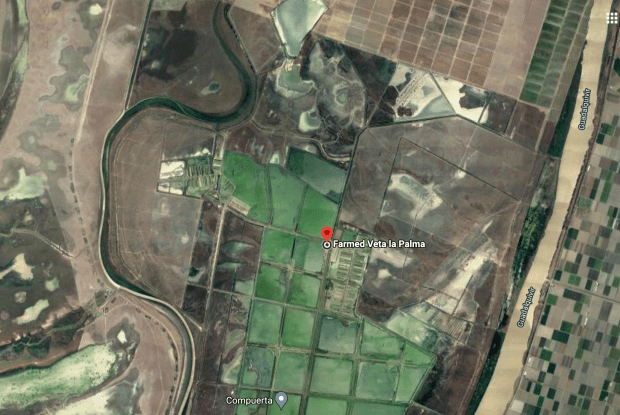
Spotters in Africa and the Iberian Peninsula continue to report Osprey sightings. There are now more than 600 in Senegal alone. I know that each of you will be thrilled to hear that Loch of the Lowes couple Laddie and NC0’s 2021 female fledgling, LR2, has been repeatedly spotted in Spain. She is at the Veta la Palma Espacio Natural Donana, La Puebla del Rio.

This is one of the largest nature reserves in all of Europe. She could not have picked a safer and more appropriate spot for her very first winter. Here are the map images and here is a link to the website so you can see all of the birds and wildlife at this ecological site. I am also posting this in case some of you want to travel at some time to see the birds – all kinds – this time of year – but do not wish to go all the way to Africa.

It is always good news when the first year fledges find a safe place with abundant resources. It is even better when we know about it and can celebrate with them. As you know only about a third of the fledglings succeed so big smiles all around. Laddie and NC0 would be thrilled! Another Rutland bird, Blue 081, a male fledgling of Maya and Blue 33 spent his first year, 2020, and has been seen this year, at Veta la Palma, Cota Donara, Spain. I continue to wait with great hope for news of Blue 463, Tiny Little Bob from the Foulshaw Moss Nest.

It is early morning in Australia. Mirvac has changed the zoom on the camera for the 367 Collins Four but you might find that the eyases are still out of view. I understand that it will not be changed again. You can hear the little ones running around on the metal.

Diamond and Yarruga are awaiting a breakfast delivery.

The trio at Port Lincoln Osprey Barge are still snoozing.

There has been no further word about WBSE 28. WBSE 27 has been seen by several people and photographed near to the Discovery Centre across the river from Lady and Dad’s roost. They will surely know where 27 is and be providing food for it. The eagles first get their flying and landing skills down before fishing and hunting (normally). The parents help them by providing them with food. I sure hope that Lady and Dad also know where 28 is! Ranger Judy reported she has done a walk through the forest adding she did not hear or see anything but that it is a large area.

That is it for today. It is a cool sunny day on the Canadian prairies and it is time to clean up bird seed. The goose flight images were not good last night because of where people had to stand due to pandemic restrictions. I hope to go out to the other nature centre before the end of the month to see if I can catch some of the thousands of Canada Geese making their way south.

Take care everyone. Thank you so much for joining me today.

Thank you to the following for their streaming cams where I took my screen shots: the Port Lincoln Osprey Project, the 367 Collins Street Falcons by Mirvac, and Charles Sturt University at Orange Falcon Cam and Cilla Kinross.

WBSE 27

The following was posted on the Sea Eagle FB Page. I took a screen shot of the entire entry to share the good news with you. Thanks so much to Rohan Geddes for getting those great images.

Lady and Dad roost on the Parramatta River near to the Discovery Centre. I have put the red pushpin at the location of the Discovery Centre. You can see the Parramatta River just at the end of the walk. Many who visit the area have coffee along the river (see Orange Cafe sign) and watch the sea eagles if they are roosting.

This is just great news. Such a relief.

These are such challenging times for these juveniles. They have to get their flying – and as the poster says – their landing – under control while still navigating to get food from the parents. The fact that 27 is so close to the river shows great promise.

There has been only a glimpse of 28 and it is unclear if that was the one on the afternoon of the fludge or later. Send them both lots of positive wishes.

Just a couple of other mentions. The Collins Street Four are on the move. They were out of sight of the camera yesterday. Do not worry! They are running along the gutter to the other end exploring. Yesterday one started and all the others followed!

Yarruga continues to eat and grow stronger. Yesterday it was almost standing upright!

The Port Lincoln osplets had fish at 06:25, 12:56, 14:16 (Mum brought fish in), 17:32 was a fish tail, and 19:24. Here is a peek at that last feeding of the day:

Thank you for joining me this morning for this update on the WBSE fledglings. It is sunny and cold, 2 degrees C, on the Canadian Prairies. There are a few Slate-grey Juncos hanging on but the garden is fairly quiet this morning. I wonder if there will be any Canada Geese landing this evening? If so, I hope to get some good images for you. Take care all. Stay safe.

Thank you to the Sea Eagle FB where I took a screen capture of the posting of WBSE 27 and to the Port Lincoln Osprey Project and the 367 Collins Street Falcons by Mirvac for their streaming cams where I took my screen shots.

Saturday Cuteness in Bird World

I thought that it was going to be hectic for Mum and Dad to keep the Collins Street Four supplied with pigeons. I never thought about the parents chasing them all over the gutter to make sure that each one gets fed! I don’t think any of us ever have to worry about the dedication and focus of these Peregrine Falcon adults. This feeding was quite extraordinary!

Did little Yurruga spend the night sleeping in the corner of the scrape box while Diamond tried to incubate her unviable eggs?

The feeding of Yurruga at Orange is so different than that of the Collins Street Four. However, looking ahead one week we should anticipate that Yurruga will be excited and nipping at the prey as the Melbourne falcons.

Yurruga makes some of the cutest faces and gestures.

There was a peanut size fish delivery at the Port Lincoln Osprey barge earlier but the three osplets and Mum are still waiting for Dad to bring in something substantial.

Dad brought the tiniest fish to the nest this morning in the Sydney Olympic Forest. He waited for about half an hour but no eaglet appeared. The Pied Currawongs were a menace to Lady, too, and eventually they ran him off the nest.

I remember Lady and Dad coming to the nest last year trying to lure 26 back so they could feed her. I wonder if one of the eaglets is still in the forest? There have been no reports since 15:30 on the day 28 fludged and 27 had its forced fledge.

OGK continues to wait for the arrival of YRK at the Taiaroa Head Royal Albatross Colony in New Zealand. Send every speck of positive energy his way. I so hope she flies in this week!

Here on the Canadian Prairies the weather has turned quite coolish. The number of birds in my garden have dwindled. Today there were only six Slate-grey Juncos and the House Sparrows. Grey Squirrel loved it because he had more than enough seed to fill him and four others to the brim! Tomorrow I will be at the nature centre to watch the thousands of Canada Geese land at dusk. It is eerie – the garden being quiet. I cannot imagine a world without the sound of the birds.

Thank you for joining me. Do take care. Stay safe and be happy.

Thank you to the following for their streaming cams where I took my screen shots: the Port Lincoln Osprey Project, 367 Collins Street by Mirvac, Sea Eagle @Birdlife Australia Discovery Centre, Charles Sturt University at Orange Falcon Cam and Cilla Kinross.

Breakfast at 367 Collins Street!

It is 5 degrees C or 41 F on a grey Saturday on the Canadian Prairies. The Slate-Grey Juncos have departed and only a few brave souls are in the lilacs around the feeders. Even the squirrels and Mr Blue Jay seem to still be hunkered down and it is already mid-afternoon.

It is, however, morning in Australia. I have to hand it to the parents of the Collins Street Four, they are really working this year to keep these energetic and healthy eyases fed. Here is a two minute video clip of the first feeding of the day. Watch it all. You will notice that the chick on the far left really gets the first bites and this might cause you to worry that it would eat all the food but as the two minutes progress everyone is getting bites and that is how it is – they will all be fed. Another pigeon will come in shortly to top this one off!

For those Rutland Water fans reading this, sad news has come this morning. Blue 2AA known as Duracell has been killed. Duracell has been wintering in Portugal for the past five years and today, he landed on an unprotected hydro pole and was killed instantly. The authorities responded swiftly to cover the lines but, it is just devastating that an Osprey who has lived for six years navigating migration and poles should come to such a sad end – one that could be entirely avoided if every country had laws that required bird protections on hydro poles. I know that many of you are concerned and steps are being taken but, it generally takes a death of a beloved bird to bring about action. How about prevention?!

Speaking of preventions. I promised that I would do a full scale review of Chris Packham’s and Megan McCubbin’s book, Back to Nature. How to love life-and save it. I will do that but for now, if you live in the UK, I highly recommend this book. It is paperback and very inexpensive. It will give you great insights into what is really happening in the United Kingdom and why some things do not change. For those fans of Roy Dennis, Packham doesn’t hold back any punches when it comes to to why the estates want to keep their grouse hunting and how the tax payer is their major subsidy. Why would taxpayers subsidize hunting I ask. Packham gets to the point and if you are a UK taxpayer, you need to understand the environmental issues at hand and the stakeholders.

If you visit or live in the UK, I invite you to look up Knepp Wildland Estate. It is 3500 acres south of Horsham, West Sussex. It is the vision of Charlie Burrell and Isabella Tree and is the only place you can hear turtle doves. Go to their website and read about what they have done to return the land back to the wild and if you haven’t read it, Isabella Tree’s book, Wilding will give you inspiration. Burrell and Tree have been influenced by the Dutch ecologist, Frans Vera.

https://knepp.co.uk/home

Here is the link to their page that talks about their vision. It is a good read.

https://knepp.co.uk/the-inspiration

I am a huge fan of their short videos showing the wildlife. Here is one of a White Stork but there is a host once you get to their website. I just know that you will enjoy them.

Here is another of the wild pigs and Robins.

And here is Isabella Tree talking about Rewilding – and how it can help save the environment, the wildlife, and us.

On my trip to Scotland next year to see the Ospreys I hope to find a way to get to Knepp as well as to Poole Harbour to see the Ospreys gather before migrating.

Everyone in the nests is fine today. It is just such a relief that all is going well. The individuals that run the cameras in Melbourne have said that they will not move the camera and have asked that this information be passed on. They have also asked that viewers not panic if they do not see all of the chicks. They would be out of sight but perfectly safe with Mum and Dad keeping watch over them. So I am passing it on. I know that we would really appreciate that other camera if the eyases decide to spend the majority of their time at that end. But, for now, let us be grateful to be able to watch this amazing family struggle with those four growing falcons!

Thank you for joining me today. Take care, be safe. Smile. See you soon.

Thank you to the Collins Street Falcon Cam by Mirvac for their streaming cam where I took my screen shots and video clip.

“We need to protect all species while they are common so that they do not become rare.”  

Rosalie Edge urged everyone, in the quote above, to appreciate all of the birds (and other species) that are part of our daily lives. Edge knew that what is once common can go extinct quickly if we do not begin conserving the species when it is abundant. That is precisely why she purchased Hawk Mountain and why the continuing migration counts matter. If you count then you can plot a decline or a rise. If you don’t count, you never know. I will add that if you do not put a sat-pak on an Osprey chick in Port Lincoln, you will not know how far the fledglings travel from the natal nest. Solly’s tracking information confirmed that they venture much farther than ever imagined! Tiaki is more than half way to Chile today. She is making excellent progress. It is also comforting to see those GPS monitors moving on all the migratory birds including the Black Storks from Latvia and Estonia. We learn, we appreciate, we treasure what we have in front of us and take care of it.

This is the article I was reading from the online Audubon Magazine. It is a Canadian who has gone to look for Snow Geese and, instead, gets fields of Canada Geese.

http://www.audubon.org/news/an-ode-common-birds-and-cherishing-what-weve-got?ms=digital-eng-social-facebook-x-20211000-nas_eng&utm_source=facebook&utm_medium=social&utm_campaign=20211000_nas_eng&fbclid=IwAR1IgW1HN7CnFVTuog07daZxKTAyrr_n5CSuRACCHXMVyz2B1H-QhzxFDzE

It is a good read. I love my sparrows and the regulars to the garden and rejoice in the seasonal visitors but it is the sparrows, the 3 Blue Jays, the 1 Black Capped Chickadee, and Mr and Mrs Woodpecker that are my regulars. And, then, of course, there is Mr Crow and the Squirrels. They keep me busy and happy when all the other exotics are gone to their winter homes. So have a read, it is short and really has a couple of good ‘hitting home’ messages.

If you did not see, boots on the ground in the Sydney Olympic Park around the Parramatta River report that WBSE 27 and 28 have been seen and heard them. This is excellent news. I hope that someone will get some good photos of these two. Wouldn’t it be grand if they did survive against the odds? Oh, I hope so.

This is one of the best video clips I have seen of the Collins Four. Dad, that little cutie, arrives with the pigeon meal. Two of the eyases are out of the scrape and into the gutter. The largest one – has to be a really big female – is ready to eat. Notice how she stands up erect and walks with her feet! Getting out of the scrape box, for the other two, is a little easier than getting back. Dad just seems to get smaller every day! Enjoy.

Yurruga is just waking up with a big yawn in the scrape box on the water tower of Charles Sturt University in Orange.

Xavier brings a completely unprepped bird into the scrape box for Yurruga. This might make a mess and the little one might be urging Xavier to hurry and finish but that chick is watching and it will be learning how to do this plucking itself.

Yurruga has a really loud screaming voice when it wants food. My goodness they can probably hear the little one clear across the campus.

The screaming for breakfast has stopped. Yurruga will be very full if it eats all of that Starling!

Yurruga ate all of the Starling except for the head and is stuffed!

Oh, wait! Xavier wants the chick to eat all of the bird. So here goes all of that Starling!

Xavier, that was an excellent feeding!

The trio at Port Lincoln are still sleeping. No doubt Dad will have a fish on the nest soon.

It looks like everyone is doing very well, indeed. That is fantastic. If you have been waiting for the Dyfi on line Shop to open in Wales, it is now functional. Emyr Evans’s book on Monty is for sale.

Thank you so much for joining me. Take care everyone. See you soon.

Thank you to Charles Sturt University Falcon Cam at Orange and Cilla Kinross and 367 Collins Street Falcons by Mirvac for their streaming cam where I took my screen shots.

Wow! Just look at the PLO Chicks

I am sorry to be so late in sending off my newsletter today. It was not intended and if you have worried, I apologize. The day wasn’t meant to be so busy but it simply turned out that way with a last minute trip to get 200 lbs of bird seed tacked on to the end.

Just look at these beauties. Overnight the three osplets on the Port Lincoln Barge turned into juvenile beauties. Those are serious feathers! Just look, all pushed out from their quills, perfect layering with that gorgeous white line and tip of the juvenile. Each one also seems to have grown a perfectly white beard over night. Their eyes are also that dark amber colour that will, when they are adults, turn to yellow.

Gosh. I can hardly take my eyes off of them. They are stunningly beautiful. If I could look like a bird it would seriously be a juvenile Osprey.

Mum was looking out over the water hoping that Dad was off fishing – and he was. He landed on the nest at 7:46 with a breakfish for everyone.

Little Bob, the closest to Mum’s beak and the front, is 34 days old today while the two older siblings are 36 days old. There is a ways to fledge – thank goodness, but, for now, we can enjoy how grown up they all are and how wonderful this Eastern Osprey nest has been this year. It has brought nothing but tears of joy! It goes to show how having chicks that hatch close together and plenty of food deliveries are a great combination to success.

Dr Victor Hurley heads up the research on the Melbourne Peregrine Falcons. He has been doing this for many years. He wrote a very good article about what the differences are for the two falcon nests in Australia with streaming cams – 367 Collins Street Falcons in Melbourne and Charles Sturt University in Orange and Cilla Kinross. The 367 Collins Street scrape box had 4 hatches this year while the Orange scrape box of Diamond and Xavier had one. So what is the difference to the falcons? is it better to have one or four? Dr Hurley believes for the falcons it is better to have four eyases and be run off your feet feeding them because the chance of one of them surviving to adult hood is greater than a scrape having only one chick. He believes, however, that it is beneficial to the chicks to be the ‘only One’ instead of one of four in terms of food resources. Still, others believe that the stress on the parents to feed four instead of one is immense but, we are looking at it from the chick’s perspective. Anyone watching the scrape boxes just know these growing chicks just want food!

While Dr Hurley did not address other issues, I wonder if being part of a larger hatch group helps in terms of understanding how to live in the real world where there will be pressure from others. Maybe it doesn’t matter? Last year, the male from the Collins Street scrape used to come into the nest and pluck a freshly caught pigeon. It was a terrific mess but those three girls could sure pluck a bird – and do it fast before they fledged – a skill essential to survival. Catch, pluck, eat, and go! I beg to be corrected but it seemed that Izzi had some difficulty with plucking even after an age when he should have had his own territory. So I wonder if they learn quicker and faster as part of a group??? and having plucking imprinted on them so many times?

The little eyas at Orange is 13 days old today while the Collins Street Four are starting their third week. Each is right on track in terms of development. Indeed, the little Orange eyas has been scooting around on its tarsus for a couple of days now and is very strong and healthy. – slightly ahead of the curve The plumage is changing radically on the Collins kids and they are standing and walking.

Kate St John did a wonderful blog on the developmental stages of the peregrine falcons. I want to share that with you.

Dad is trying out larger pieces of pigeon on the four. The prey came in one after another the other day. They are losing the soft down around their eyes and getting the juvenile feathers and they are also getting their wing feathers.

I am afraid that I got a little carried away with the images of Xavier and Diamond’s eyas. Not only is it loud – soon to rival Izzi – but it can also make the cutest faces.

They are all doing well. Last I checked the Bald Eagles in the United States are all still working on their nests. There is some intrigue at the Captiva Nest and the speculation as to who the male will be this season. Joe is gone and it appears Martin has been ousted also. Meanwhile, Harriet and M15 along with Samson and Gabby are steady as you go! To my knowledge there has not been a fledge at the WBSE nest in the Sydney Olympic forest but this could happen any time. And – for the lovers of Jack and Diane – it seems that the couple might be back on the Achieva Osprey nest in St Petersburg together. They have a lot of nestorations to do!

Thank you for joining me for this quick catch up. I will be shaking my head and smiling at just how beautiful three juvenile ospreys look in the PLO nest. Take care all. See you soon.

Thank you to the following for their streaming cam where I took my screen shots: Charles Sturt University at Orange Falcon Cam and Cilla Kinross, the Collins Street Falcons by Mirvac, and the Port Lincoln Osprey Project.

Tuesday in Bird World

It is a grey and windy day. As the weather channel promised, our summer heat wave in October seems to have come to an end (for the moment) with the arrival of single digit temperatures. The recent rains have caused the ground and old tree stumps to come alive and the sparrows and thrashers are thumping the ground having a good old time. It reminds me – continues to remind me – why we should not be raking our leaves or mowing the grass. Gently rake them into a corner if you have to. The birds really will thank you!

It is also nearing Halloween and all around me I can see the windows and doors decorated – many have elaborate displays outside.

I believe Halloween was the favourite holiday of my children – you got to dress up, get candy, and have parties at School. I recall pulling the two oldest in a sled one year as the snowflakes fell faster and faster. We did not need to go more than a block. Their pillowcases were full because they were the only ones out on such an incredible wintery night. The grandchildren enjoyed decorating the trees and, sadly, I remember using some of that web material with little black plastic spiders. That was a long time ago when I did not know better – but I do now. As a reminder to everyone, please be careful if you decorate. It will be a tragedy if animals get caught and have to be euthanized just for a bit of fun.

Oh, gosh, golly. Xavier and Diamond’s little chick just took its first steps!

Meanwhile, the Collins Street Four – which are a week older – are now standing up. They are also getting curious about the outside world and one nearly gave several streaming cam viewers a heart attack when it walked up to the edge of the ledge.

The Collins Four having some fun. Look at the size of the wings!

In case you are wondering why the scrape box is so messy this year, it is because the wind does not blow through it like it did at the other end. On a positive note, the chicks have been supplied with some shade and neither them or Mum have been as hot and panting as much as last year.

At the Port Lincoln Osprey Nest, the osplets had, at least, five fish yesterday – probably a couple more. I could not rewind the camera prior to 16:00 and all had big crops at that time. One of the most interesting interactions was between Little Bob and Mum. They had a tug-o-war with the fish tail. Mum won!!! It was very cute. that fish tail was from the 18:02:17 fish Dad brought in.

The osplets are doing really well walking around in that twig lined nest, too. They are covered more and more with feathers each day. Those feathers seem to be pushing out of those quills right before our eyes.

Dad brought in a bedtime fish for the family at 19:39:16. It is difficult to tell one from the other but there is Little Bob in its usual spot, right up by Mum’s beak.

Where is Solly, the first hatch of the Port Lincoln Osprey Barge in 2020? She seems to have decided to take a quick trip to Streaky Bay before heading back to her special tree in Eba Anchorage. It is such a relief to see the movements of the birds – to know they are safe, living their lives well.

If you were following some of the Montana Ospreys, a map of their locations has been released on the Montana Osprey FB page this morning. It shows that all of the Ospreys arrived in Mexico or Central America. Such good news. Their satellite trackers are working splendidly.

Both of the little sea eagles, WBSE 27 and 28, were still on the nest early this morning. That doesn’t mean that they will be there in a couple of hours.

I am a huge fan of Gabby and Samson’s at the Northeast Florida Bald Eagle nest near Jacksonville. The morning was just starting. The couple spent the night on the branches and as the sun came up, Gabby could be seen working on the nest.

At various times during the day, Samson, Gabby, or both, can be seen preparing their nest for the new breeding season. Here is a link to the streaming cams (there are several but this one looks directly into the nest), so you can check on them.

Tiaki, the 2021 Royal Albatross Cam Chick, is making really good time on her way to Chile. She was well beyond the International Date Line this morning. So, with that news, everyone in Bird World is doing well today. Smile. It is all good!

The sun is out and the Slate-grey Juncos are on the deck and the sparrows are having a drink out of the bowls. I wonder what other garden critters will show up? No Halloween candy for them! But they are getting extra dry corn cobs.

Thank you for joining me. Take care each and every one of you. See you soon.

Thank you to the following for their streaming cams where I took my screen captures: Port Lincoln Osprey Project, NEFlorida Bald Eagle Cam and the AEF, Sea Eagle Cam@ Birdlife Australia Discovery Centre, and the Montana Osprey Project and the Port Lincoln Osprey Project FB Pages for the sat-pak maps showing the location of the migrating Montana Ospreys and Solly.

Gorgeous day for birding

It is a gorgeous day today. 24 degrees C. We still, for at least today, have summer weather. This meant seeing new and old friends today at the park. There were at least 12 male Wood Ducks, as many females, a host of female and a few male Mallards, and, of course, Canada Geese.

This adult male Wood Duck with its distinctive red eye and green helmet thought that I might have some seed for him to eat. He did not seem to want to take ‘sorry’ as a proper answer.

The duck below is all wet from diving around in the park stream.

Their plumage is absolutely outrageously gorgeous.

There were a few adult female Wood Ducks but not nearly as many as the males at Kildonan Park today. Because there are issues with identification between the juveniles and those in eclipse, I have come upon a bit of a foolproof method for me. The duck below is an adult female Wood Duck. She lacks the red iris and eye ring of the adult male; she does have a yellow eye ring and a distinctive white eye patch. Her bill is dark. I do not want the iridescent green on the top of the head to fool me. This bird is lacking in the 2 pale lines from the throat extending around the neck and onto the cheek. To see those, look at the images of the adult male.

There were a number of Mallards, both male and female.

All of the animals were having a wonderful morning around the duck pond. There were many who brought specialty bird seed just for them. Others, like this little Red Squirrel, were finding acorns and seeds in the grass.

As I was sorting through these images to show to you, there were several knocks on the front door. Several times I went out and no one was there. There are times that sounds carry but, then the knocking got louder and louder. This time I caught the visitor! My house is covered with cedar shakes. It looks more like a cottage in a forest but there is someone who loves those cedar shakes. When I opened the door he flew to the apple tree.

Unfortunately the automatic focus set its mind on the leaves and not on the woodpecker! And she was not certain that he wanted his picture taken or not.

I say ‘she’ because that gorgeous read crest would extended all the way down to the bak if this were the male. But, it is not, it is a female.

You can see that its body is mostly covered in black feathers with a flaming red crest. There is a white throat and its beak is a long dagger shape sadly hidden by the leaves. This particular Pileated Woodpecker lives around my garden year round (and the neighbour hood). She will make her nest in the cavity of a dead or dying tree lining it with wood chips. When she is knocking on my cedar shakes she is looking for ants, wood-boring beetles, and insect larvae. She also likes berries and nuts and I have seen her on the large suet cylinder as well as the telephone pole drilling away. The woodpeckers particularly like the bug and nut suet if you are trying to attract them.

I am particularly concerned for both this Pileated Woodpecker and the male and female Downy that live around my garden. My city has sprayed orange dots on two of the 119 year old Maple Trees in front of my house on the boulevard. If they are to cut them down, is one or both the home and nest of the woodpeckers?

The Grey Slated Juncos are still here today along with a few White Throated Sparrows and Song Sparrows.

It is easy to tell the White-throated Sparrow because of that distinctive white patch under the beak forming the throat – hence, the name. There are also two black bands and three white on the crown along with two very distinctive yellow patches above the eye. The White-throated Sparrows come to Manitoba to breed during the summer. By the end of the month, all of them will be gone to their winter homes.

The Song Sparrow comes to Manitoba also for summer breeding. Soon they will also be away on their journey south. For now, a few are in the garden scratching around the grass and leaves for insects and bug larvae. They are beautiful with that plumage of rust and grey with streaks of white.

It has been a lovely day. I have it on good authority that all of the nestling falcons are fine as are the osplets at Port Lincoln. Yesterday, they once again had 7 feedings! Speaking of feedings, the list of what Mum and Dad have brought in for the Collins Four is anything other than 99% pigeon. This year they have averaged 7.4 prey items per day with 3 being the lowest number of deliveries and 11 being the highest. They have had pigeon, New Holland Honeyeater, Rainbow Lorikeets, Quail, Silver-eyed Gulls, Sparrows, Spotted Pardalotes, Starlings, Wattlebirds, and a White plumed honeyeater. This is quite the surprise. Normally the urban falcons exist primarily on pigeon. I wonder if the people in Melbourne are no longer feeding the pigeons so that the falcons have to look to other species? In Orange, the diet is varied with lots of parrots and Starlings.

A late delivery yesterday was a green parrot. I do not specifically recognize the ‘type’ but will try to find out.

The only streaming cam I have not checked on today is the one for the White-bellied Sea Eagles. Indeed, WBSE 27 was jumping all over the tree and it or both might have fledged. I will alert you if this is the case.

Thank you for joining me. I hope you enjoyed the ducks! Take care. See you soon.

Thank you to the Collins Street Falcon Cam by Mirvac where I took my screen shot of the delivery of the green parrot.