Sunday in Bird World

8 May 2022

I had a lovely letter from a friend today. Like so many of you, she has tried to watch some of the nests and gotten attached to the birds only to have her heart pulled out when an older sibling shoves them out of the nest or, in other instances, they were starved or killed by beaking or both. It has been a tough year on the nests. Tough even for me.

My friend pulled back and has started watching Big Red and Arthur’s nest on the campus of Cornell and Annie and Alden on the grounds of UC-Berkeley. Her question this morning was simply to clarify that hawks and falcons do not practice siblicide. The answer is that the preponderance of siblicide occurs in eagles (some species more than others), egrets, boobies, herons, pelicans and, I am going to add ospreys to that list. There are lots of reasons, some explored in earlier blogs but, it is safe to say that if you wish to enjoy the birds on the streaming bird cams, falcons and hawks are generally a very safe choice as are ducks and geese. Because the chicks are precocial (are fully feathered, can walk and swim and eat on their own), the ducks and geese need those chicks to hatch all at once. They delay full incubation until the last egg is laid. Robins do that too and so do hawks and falcons. In this way, the older chicks are not that much bigger (normally) than the younger. The ducks and geese and even the raptors need their babies to fledge at the same time. So incubating them so they will hatch together really helps. It is called synchronous hatching (begins hard incubation after the last egg is laid) as opposed to asynchronous hatching where the parent immediately begins hard incubation immediately after the first egg is laid.

Annie makes a kind of chee-up sound when she is ready to put the food in the beak. The chicks learn this. Annie might well give the biggest chick the first few bites but she immediately moves around giving the youngest some. Today, the Peregrine Falcon Mother at the scrape in Oudenaarde, Belgium spent a whole hour making sure that all 5 of her eyases were fed and full. No one left the table hungry. The Mum at the Manchester NH falcon nest also has five eyases. Not one of them went to bed hungry tonight despite their size difference – the smallest had a big crop just like the largest. That is what hawks and falcons do!

A clump of falcons in a feather bed.

The wee one is piled on top of one of the siblings to stay warm.

Here is Annie feeding her two chicks brunch on Mother’s Day! Watch carefully how she feeds the big one several bites, then the small one and then goes back and forth. Annie is a pro. Both are well fed!

And Cal Falcons posted a second feeding just a short time ago. It is really cute. Alden checks in on the babies who see an adult and open their beaks. Alden is so cautious and nervous. He It very happy when Annie arrives with lunch he provided in her beak from the other side of the scrape!

Here is that feeding. It is so cute. Notice how the little one gets full and then gets back up for some more. Falcons eat everything. Nothing is wasted. Some of the first few bites were feathers.

It doesn’t get much better than the Red-tail Hawk nest of Big Red and Arthur at Cornell. Little L4 is growing and surviving and well, I haven’t watched this nest 24/7 but I have not seen any tendencies by the oldest to interfere with the younger ones.

SF Bay Ospreys does not want us to forget about Rosie on Mother’s Day. I adore her and if there is an osprey nest in the US to watch that is stable – Rosie and Richmond in SF are it! —- Oh, and no. Ospreys are not prone to Avian Flu. They eat fish.

Someone dressed Spirit up. LOL. Good thing I don’t have the software to do this!!!!!!! I think Spirit is a Jackie in the making, too.

We all loved Kindness at Glacier Gardens. Many have been watching the nest cam and have been wondering where the eagles , Liberty and Freedom, are. Well, they have built a new nest! Here is the video reveal of that find:

The camera remains off line at the UFlorida-Osprey nest if you have been checking. It is unclear when it will be back on. If it is a mechanical issue it would be difficult since the chicks are older.

The Dale Hollow Eaglets have full crops and are drying off today. These two are doing very well.

Some nest renovations have been going on at the National Arboretum. I don’t think DC9 appreciated some of those branches.

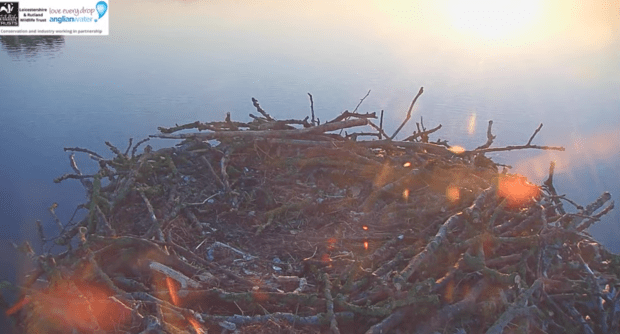
At 2045 there is still no hatch at the Manton Bay nest of Blue 33 (11) and Maya. Maya is certainly restless tonight.

If you are a fan of Lady and Dad at the Sydney Sea Eagle nest in the Olympic Forest, you will know that the couple have been working on the nest. We are about three weeks away from the first egg being laid.

Where’s Ervie? Looks like he still hanging around the barge area of Port Lincoln. Fine by me!

It has been a busy day at all the nests and throughout different regions as the migratory birds continue to move through. My garden was full of White-throated and White-crowned Sparrows again today along with the usuals. The little Chickadee couple love to have a swim!

The Starling was not so pleased when Dyson came along and wanted some of the seeds.

Dyson is trying to try out for the local gymnastics team. Look at her stretch! She is losing her winter fur and the tufts on the end of her ears are gone. Ironically, her tail is much thicker. She is in really good health. Good to see.

I hope that each of you have had a wonderful day today and, hopefully, if you could, got to spend some time outside. It really is energizing – even for a few minutes sitting in the sun. Thank you so much for joining me today. It is a joy to have you here. See you soon!

Thank you to the following for their streaming cams and/or FB pages where I took my screen captures: SF Ospreys, Cal Falcons, Peregrine Falcon Network, Cornell RTH, Friends of Big Bear Valley, NADC-AEF, DHEC, Sea Eagle Cam@Birdlife Australia Discovery Centre, Port Lincoln Osprey Project, and the LRWT.

A Hop, Skip, and a Jump through Ospreyland

Several people have written and asked about the third or last chick placed on the Patuxent River Park Osprey Nest 2. Many call that little one the ‘Silo Chick’ since it fell out of a silo and was fostered on this nest at the River til fledging. This little one seemed to have a short run, hopefully, of bad luck as it also fell out of the Patuxent nest as well and was rescued by Katherine Dami and her boyfriend. That little Osprey was so lucky! The flurry of activity around that rescue made me realize that every streaming cam needs to have an active 24/7 emergency number to the local wildlife rehabber or the person who would instigate emergency rescue at the nest. Ah, but back to the topic at hand. Silo chick fledged and has not been seen at the nest. Katherine, when asked, wrote to ‘S’ and said that they had not observed Silo Chick at the nest. Katherine did say that a large number of fledglings have gathered together and were honing their flying skills on another spot in the Patuxent River. So let us all hope that Silo Chick is there! If I hear anything more I will let you know. That nest looks very empty right now. Some fledglings like to be fed on the nest. A good example of that is LM1 and LM2 up at the Loch of the Lowes but maybe these three are being fed off camera.

So far there are only two eggs on the Port Lincoln Osprey Nest in Australia. I am quietly cheering that it remains only two. There are nests, such as that of Blue 33 and Maya at Manton Bay Rutland, that can feed and manage four chicks but, Mom and Dad at PLO will do better if there are only two. It could stop the rate of siblicide on this nest.

Tiny Little our ‘Big Girl’ at the Foulshaw Moss nest snagged herself a nice fish this morning from dad, White YW. After losing one to a bigger sibling last evening it is grand to see her eating away. Indeed, it is always nice to see Tiny Little!

Aran and Mrs G have been staying around the nest at Glaslyn. There was even sky dancing observed. The Ospreys want to seal their bond before migration. I am so happy to see the two of them around the nest. There was a time when Aran was injured and not flying much or fishing that I was concerned that Z2, Aeron, from the Pont Croesor Nest nearby or his siblings including Z1, Tegid, who has a nest in Snowdonia, might be eyeing the Glaslyn nest.

Mrs. G on the nest:

Aran up on his perch.

There has been a lot of discussion about when NC0 will leave the Loch of the Lowes Osprey nest in Scotland for her migration. She is still here and she is fishing – hauling in some nice ones for her two babies who prefer to eat on the nest. This was Sunday late afternoon.

The anticipation and seeing mom arriving with a fish:

NC0 lands it.

LM2 got the fish and ate really fast with older sibling hanging around.

Maya is also still at Rutland Manton Bay – there had also been questions about whether she was still around. Seen on nest with chick around 18:00 Sunday. Blue 33 had just brought in a fish for Blue 095.

The Friends of Loch Arkaig have just announced that the names of Louis and Dorcha’s two male chicks for 2021 on the alternative Loch Arkaig nest will be Aspen and Alder. The names are derived from the two popular trees in the area. They took 45.5% of the votes. Well done!

People have been wondering where Iris is. The cam operator spotted her early this morning, around 9am, on her favourite perching spot on Mt Sentinel. Iris is fine and is enjoying her summer. Worries, of course, continue for the Montana Ospreys as the Clark Fork River water levels are at all time lows. The trout are dying. The New York Times carried an article on this urgent matter. If you don’t have a subscription you might not be able to open the article and I apologize but do try. Just look at the level of the water in the image and the dead trout. So terrifying.

Speaking of Iris, I promised the Montana Osprey Project that I would mention their fundraiser – The Iris Pens – this weekend as a reminder to everyone. Dr Erick Greene has collected a few more twigs and sent them off to the workshop of Richard and Sharon Leigh Miles in South Carolina. The pens are $45 US and that includes postage.

This is Dr Greene with the box of Iris twigs.

This is Richard and Sharon Leigh Miles opening up the box of twigs they received from Dr Greene.

Richard begins by cutting the sticks in their workshop.

Pens get their beautiful shape on the lathe.

This is what the finished ‘Iris Pens’ look like – the colour and patterns will depend on the wood that the pen is made from. Iris spreads her love to various trees and shrubs!

The pens have been made and sold out for the past few years. This year as in other years we wish for Iris’s safe return to us from her migration next spring. If you want an Iris Pen, do so quickly. The original 35 are gone and, as mentioned, Dr Greene has sent some more twigs the birds knocked out of the nest to Richard and Sharon. Follow these directions supplied by the Montana Osprey Project.

1) Send an email to montanaospreyproject@gmail.com2) If your mailing address is in the US, on the subject line of your email, type your full name followed by Pen OrderFor example To: montanaospreyproject@gmail.comSubject: Your Name – Pen Order3) If your mailing address is outside the US, on the subject line of your email, type your full name followed by International Pen OrderFor example To: montanaospreyproject@gmail.comSubject: Your Name – International Pen OrderIf yours is an international order we will get back to you with a few additional instructions.4) The email’s body should include the following information:a) Your name b) Your email c) Number of pens you would like to order.d) Total amount ($45.00 per pen). Shipping is included in this price.e) Your mailing address just as it should be on the envelope. f) Send the email to MontanaOspreyProject@gmail.com5) For those of you who live in the United States, make out a check out to: Montana Osprey Project – Erick Greene(We are not set up to take credit card or Pay Pal orders. Sorry – has to be a personal check or money order)6) Mail your check to:Dr. Erick Greene – Montana Osprey ProjectDivision of Biological Sciences 32 Campus Drive University of MontanaMissoula, Montana USA 598127) For those of you who live outside of the US, send us the email with all of your information, but hold off on sending a check. We will get back to you with a few more instructions.

I can’t wait for mine to arrive.

Thank you so much for joining me today. I am off in search of hawks and ducks this afternoon. It is sunny and warm but we are going to venture out in the heat anyway! Take care all. See you soon.

Thank you to the following for their streaming cams where I grab my screen shots: Collins Marsh Nature Centre, Manton Bay Osprey Nest and Rutland Water, LRWT, Scottish Wildlife Trust and Friends of Loch of the Lowes, Port Lincoln Osprey Project, Patuxent River Park Osprey Cam 2, Cumbrian Wildlife Trust and the Foulshaw Moss Osprey Cam, Brywd Gwyllt Glaslyn, and the Port Lincoln Osprey Project. I would also like to thank Richard and Sharon Leigh Miles for allowing me to use the information and the images for the Iris Pens and for their dedication to the Montana Osprey Project. A big shout out to Dr Greene for his devotion to the Montana Ospreys. Thank you!

Featured Image are the two 2021 chicks of Laddie, LM12, and Blue NC0 waiting for NC0 to get the fish to the nest. Their numbers are LR1 and LR2.

Late Saturday and early Sunday 17-18 July in Bird World

If you have watched Kindness, the Bald Eagle nestling at Glacier Gardens, then you might have caught her nipping at her mum’s beak. It looks like she is trying to kiss mum. A couple of days ago a video was made showing Kindness interacting with her mum. My goodness, Kindness, you are lucky your mum is so patient! Have a look.

At the Port Lincoln Osprey barge, it looks like the final touches have gone on the nest renovations. The egg cup is now lined with very soft pieces of bark. Mom decides to try it out!

Dad flies in with something else on his mind! No eggs yet but mating is taking place. Season will begin soon!

As we approach fledging at all of the Northern Hemisphere Osprey nests and migration in a month to six weeks, if you fear Osprey withdrawal, here is the link to this nest. Just a warning. This nest has had instances of siblicide in the past.

The Port Lincoln’s eldest chick from the 2020 season, a female named Solly, was fitted with a satellite tracker. Solly is 301 days old and she is still hanging out at Eba Anchorage and Kiffin Island. It sure seems that Solly has found her forever home at Eba Anchorage. For those of you unfamiliar, the movements of Solly changed what everyone understood about Ospreys in Australia. It was believed that ospreys stayed near to where their natal nest was located. Solly travelled over 200 km to Eba Anchorage and Perlubie giving the researchers fresh insights to the behaviour of these ospreys.

To my knowledge there has been no sighting of DEW, her younger brother. He did not receive a tracker but he did get a metal ring and a Darvic colour band.

Suzanne Arnold Horning was on the Cornell Campus again this evening. How lucky she was to get some great images of Big Red with a squirrel down on the ground – and it wasn’t raining. (Send the rain to the Canadian Prairies when you get tired of it, Suzanne!).

It was wonderful to see Big Red with prey that she was going to eat herself. She needs to build up her strength after laying eggs, incubating those eggs, and feeding and caring for the three Ks until fledge. Even now she is doing some prey drops and is busy training the Ks to hunt.

Big Red with Squirrel. @ Suzanne Arnold Horning

The Robins were giving Big Red a lot of grief. Could it be because Arthur has been up at their nest eating their babies? Or the fact that K1 caught a bird today and it was rumoured to be a young Robin?

Robins being rather assertive around Big Red. @ Suzanne Arnold Horning

Big Red and her squirrel also attracted another visitor – a Turkey Vulture!

Would you mind sharing asks the Turkey Vulture. @ Suzanne Arnold Horning

The pair also attracted a human who was said to have tried to interfere with the situation. Both of the birds were fine. Big Red was eating and the Turkey Vulture appeared to be waiting to see if she left anything.

One of the things that I have learned is that hunting is difficult and prey is not abundant always. Raptors can wait for hours, half a day, or even a day to catch prey to eat. It is estimated that only 1 out of 3 juveniles live to the age of two years – mostly due to starvation. Humans should not interfere when a raptor is eating. As a result of the human intrusion, Big Red chose to fly away from the human who was interfering. This also caused her to leave part of her meal. The vulture did eat the rest – so in the end everyone ate- but it was a situation that should never have happened. Remember if you see a hawk hunting or eating, please leave them alone. Finding their meal is not that easy.

Turkey Vulture at Cornell. @Suzanne Arnold Horning

The scientific name for the Turkey Vulture – Carthartes Aura – means ‘cleansing breeze’. They are scavengers, eating mainly carrion. They have dark espresso coloured feathers, red legs and head, with a white beak. Like the condor, there are no feathers on their head. This is a great evolutionary trait so that pieces of the dead do not stick to them causing disease or parasites. The Turkey Vulture’s sense of smell is so great that they can find a fresh killed animal a mile away! The only raptors larger than the Turkey Vultures are the Eagles and the Condors. What I find interesting is that they are the only raptor that cannot kill their own prey. They simply do not have the right talons to do this – their feet are more like that of a chicken. That said they can tear through really tough hides with their beak. In other words, the Turkey Vulture was never a threat to Big Red.

As I prepare to settle in for the night, Tiny Little is waking up. The early morning fog over the marsh is just starting to clear. You can see the parents, or siblings, or both back on the parent tree. Tiny Little is still sleeping like a duckling on the nest. Good Morning Tiny Little! Let’s get that gear box into forward today.

Tiny Little is also checking the nest for any little tidbits of leftover fish. And just like Tiny Tot he has found some lurking under those sticks.

Tiny Little was doing some prey calling and looking up in the sky. The morning fog doesn’t seem to be clearing. What a beautiful colour it is – that sort of golden pink gradually fading into the grey-blue-green. Lovely.

Update: Tiny Little had a huge breakfast. It is now mid-afternoon and Blue 462 is working on a fish that arrived. 464 is standing next to that fish and Tiny Little, 463, is ignoring it right now. She is probably still full enough from the morning not to bother. Unclear if Tiny Little has taken a second flight today. I stayed up waiting! But had to give in to being tired.

This is the image of the afternoon line up for a fish! 462 is eating, 464 is pretending to be Tiny Little and bugging his big sibling. Tiny Little is over at the side duckling style. Tiny Little is full from breakfast and knows that Mum will come to the rescue later if she gets hungry.

There is a beautiful peachy almost coral sky as the morning begins at the Poole Harbour Osprey nest. CJ7 and Blue 022 are roosting elsewhere.

Golden diamonds are falling on the nest of Blue 33 and Maya at Rutland Manton Bay. No one is home. They are all perched elsewhere. Blue 33 does make food drops at the nest for the two Bobs.

A little later, Blue 095 flies into the nest and settles down and then flies out again.

Blue 095

Oh, wow. Just look at that sun coming up over the Dyfi nest of Idris and Telyn in Wales. It is so bright you cannot see the perch!

A very short video of Ystwyth fledging at 7:59 am on 17 July is here:

It is serene up at The Loch of the Lowes. No one is home but it sounds like there is a fledgling on the camera perch.

What you don’t see here is that later, NC0 is on the nest, spots a fish, goes out and gets it, and gives it to LM2.

Early Morning at Loch of the Lowes. 18 July 2021

The only thing you can hear at Glaslyn are either bees or wasps on the microphone! Oh, it is so beautiful and green. It has been hot at this nest, 26-29 degrees C – and the birds are staying cool in the shade of the trees. Even with the heat the landscape looks so lush. What a gorgeous way to begin the day.

Early morning at Glaslyn. 18 July 2021

Thank you so much for joining me today. I so enjoy hearing from all of you. Stay safe! See you soon.

Thank you to the following for their streaming cams where I took my screen shots: Byrwd Gwyllt Glaslyn, Dyfi Osprey Project, Scottish Wildlife Trust and Friends of the Loch of the Lowes, Cumbrian Wildlife Trust and the Foulshaw Moss Osprey Nest, Poole Harbour Osprey Project, LRWT and the Manton Bay Ospreys. I would also like to thank the Port Lincoln Osprey Research Project and the PLO FB page where I took a screen shot of Solly’s recent tracking. And last but never least, I would like to say a huge thank you to Suzanne Arnold Horning for allowing me to use her images on my blog. She holds the copyright on them so please do not use elsewhere. Thank you.

What is gorgeous in Ospreyland?

This entire day has been ‘weird’. It started with only four hours sleep after checking on Tiny Tot’s nest all night. I have no idea what I was thinking. Tiny wouldn’t have flown from wherever she was just to be bounced about, would she?

And then there was the intruder on the nest. This intruder is just giving me a headache. I think I want Tiny Tot to show up on that nest so bad that I forget that there have been a number of visitors to the nest, several that Tiny Tot fought off valiantly. Still there is some kind of family resemblance.

This bird is still bugging me. It is nearly 4:30 pm. I know that I took a screen shot similar to the top one where you could see the white ‘V’ and the scalloped white of the crest making the heart. Tiny Tot had that. This bird has the thick short legs of Tiny and the sweep of the feathers is long BUT it is not elegant like Tiny Tot. The eyes are not the same. But then who knows what your eyes would look like after a hurricane.

This picture of Tiny was taken on 4 July the day before she ‘seemingly’ left the nest permanently for broader horizons. You will notice the white line above the wing is the same. Each of the birds have some dark on their legs, a little strip like a band but not a band.

And this is Tiny mantling her fish on 4 July.

Sadly, these birds are not banded and we only have images to compare that aren’t always sharp and from the same angle. What do you think?

Now, I think every bird is extraordinarily beautiful, but some more so than others. Today, the Dyfi Osprey Project posted an image taken by the individual who ringed two Ospreys in a nest in the Lake District in Cumbria England. They are females, Blue 460 and Blue 461. I took a deep breath and knew that I had to redefine what ‘gorgeous’ means when looking at an Osprey chick.

These are Monty and Glesni’s grandchildren. Their father is Merin. He hatched at Dyfi in 2015. They have Monty’s piercing orange eyes! Gosh I hope they do not lose them to become yellow. Look at the crest with the peach, the soft little white beards. I will be staring at these two beauties for days.

There are reams of files, both analog and digital, tracking UK Ospreys. And this again shows why it is important to get these birds banded. It is now known that at least four of Monty and Glesni’s chicks have returned to successfully breed. Of course, there could well be others. There is Aeron (Z2) who has been chasing intruders away from his PC nest at Glaslyn, then there is Tegid (Z1), one of my third hatch wonder children, who has a nest in Snowdonia, and Clarach in Aberfoyle, Scotland. Gosh, I would love to get a close look at the chicks of Tegid and Aeron!

Mama and Legacy were both asleep when I checked in at the Fortis Red Deer Osprey Nest.

There are both parents on the nest with Legacy yesterday. She is really growing now that the hot weather is gone.

There has been a lot of bad weather going around Alberta and there are dark clouds still around the Fortis Osprey nest at Canmore today. You can just see the two Bobs if you squint. Everything in the nests seems stabilized after a turbulent period of heat and storms. Warm wishes that it stays this way.

Here is a quick check in of a few of the nests. The Two Bobs at Rutland Manton Bay continue to perfect their flying skills after fledging. The Only Bob in the Clywedog Nest in Wales has been doing some wingersizes and the Two Bobs up at Loch of the Lowes are starting to think they might like to hover and fly. There could be a number of fledges coming up in the nest week. Mrs G has been catching fish and so has Aran. The overzealous two year old, Blue 022 has been bonding some more with CJ7 at the Poole Harbour Nest. If they both return from migration it will be great to see some chicks on that nest – the first chicks in 200 years born in Poole Harbour. Will that be the headline? The eldest fledgling of Big Red and Arthur, K1, the Red tail hawks at Cornell, probably caught her first prey item today – a little vole – witnessed by the Hornings. K3 enjoyed observing! Those two are excellent fliers. Can’t wait to take another tour with Ferris Akel to see how they are doing. Will be sure to let you know.

My friend, ‘R’ knows more about Albatross and Petrels than I will ever know. She is curious about the Goony Albatross that ended up in Bempton Cliffs in the UK. He should be in the South Atlantic. Maybe he thinks he is a yellow headed Short-tailed Albatross of the North Pacific? or a gannet? ‘R’ and I will try and put our heads around this one over the coming week. Here is the story on the BBC:

https://www.bbc.com/news/uk-england-humber-57683184

And what is this about the fish being addicted to meth? What happens to the birds that eat the fish? I will be following up on that along with a tribute to Tiny Tot and a story of a Sulphur-Crested Cockatoo in a Renaissance painting. Those are coming up this week.

Thank you for joining me today. Have a really enjoyable rest of the day no matter where you are.

Thank you to the following for their streaming cams where I grabbed my screen shots: Fortis Alberta Red Deer, Fortis Alberta Exshaw, and the Achieva Credit Union. I also want to thank the Dyfi Osprey FB Page where I took the screen shot of Merin’s chicks.