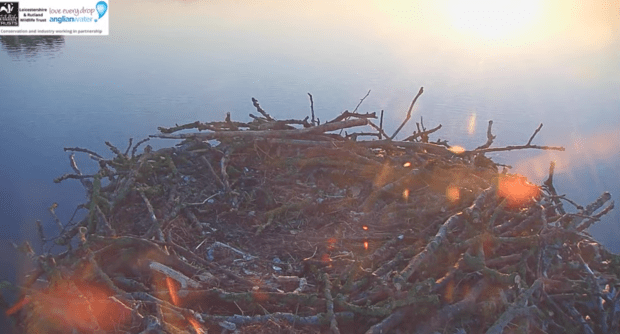
Thursday in Bird World

There were certainly tears flowing and hands clapping around the world as the identification of the juvenile Osprey that flew 350 km from its natal nest in a week was confirmed as Falky, the 2021 hatch at the Port Lincoln Osprey barge. This is simply incredible and Falky has now changed the understanding of how far male Ospreys travel from their natal nest. Yes, indeed, it is a game changer for sure. Now we can start looking for Bazza, DEW, and Star with the mindset that just because no one sees them around the area of the barge, it doesn’t mean they are not out there. They could be near Adelaide or north of Eba Anchorage or even farther afield. Perhaps a South Australian contest to spot the raptors would be appropriate. Get everyone looking while, at the same time educating them to the challenges the declining number of Osprey face in Australia.

Speaking of threats to raptors, my friend ‘S’ sent me a link this morning because I have mentioned the growing concerns over Avian flu. Thank you, S. It is a great list of the threats to the birds regardless of their geographical location and a good reminder to us all. Have a read:

https://hawkwatch.org/learn/threats-to-raptors

Today, the eaglet in the Kisatchie National Forest is one week old, according to the rangers. To celebrate, Louis brought in a Razor Backed Turtle. It is a delicacy and quite the favourite of Bald Eagles.

You can just see it above Anna’s back. The temperature is 3 C (37.4 F) and dropping at the site of the nest to -2 C as that cold front moves through the region. Stay warm everyone!

That baby might like a taste of that turtle! Will Anna save it for herself??

Louis continues to stock the pantry and I am thrilled because it means there is always food! Good thing we don’t have to have the smell with the sound and visuals from the nest. Whew.

The KNF nest is just beginning to dry out after last night’s torrential rains.

Before the thunderstorms hit, Anna filled up the eaglet to the brim. As she has done for several days, Anna had the eaglet stretch its neck to get the food. All of this helps to strengthen the little one’s muscles.

Within minutes of finishing, the rains came down. Anna was a fantastic Mumbrella. She held that pose just like she was a statue.

The storm passed earlier than forecast. Anna might have been soaked but just look at that little one. It is dry and fluffy. Thank you, Anna! You are a fantastic Mum.

Yesterday, the camera zoomed in on Ervie at the Port Lincoln Osprey barge. He had been fishing and is preening and drying off his feathers.

Ervie had three fish deliveries yesterday – 06:37, 07:41, and 14:02 which was a huge fish. Ervie still had a nice crop hours later!

For the fans of Jack and Diane at the Achieva Osprey Nest in St Petersburg, Florida, Jack delivered a fish to Diane. Here is a video clip of that offering this morning. I wonder when we should be expecting some eggs at this nest???? Fish offerings remind me that the time is drawing close. It is 22 degrees C at Jack and Diane’s nest – a nice day, not too hot.

That little eagle needs to stay under Pa Berry and Missy. The temperatures have dropped and it is 4 C or 40 F at the nest at the moment.

B15 is energetic and happy. Quite the handful! And like the eaglet at the KNF nest, it has the cutest little tail.

E19 and E20 both had good sized crops after the noon feeding on the SWFlorida nest of Harriet and M15. We can relax. All seems to be going well. It is 24 degrees C – another nice day in a Florida winter!

I wish I could say the same for Big Red and Arthur up in Ithaca. At the present time it is -8 C. There are a few flakes of snow and what was on the ground is not melting. So why is this temperature bad for Big Red and Arthur if there aren’t any eggs to worry about? It is the prey. When it gets cold, those voles, mice, chippies, squirrels, etc hunker down and go to sleep. The hawks go hungry. I wish I could deliver them a care package!

It is a good day in Bird World albeit a cold one. Send warming wishes to all of the nests. These winter storms in the US are not over yet! But the tears of joy for Falky and the implications of that distance in searching for the other birds continue to fall.

Thank you so much for joining me today. Take care. See you soon!

Thank you to the following for their streaming cams or their FB pages where I took my screen captures: Cornell Bird Lab RTH, KNF Bald Eagles, Berry College, Port Lincoln Osprey, Achieva Credit Union FB, and SWFlorida Eagles and D Pritchett.

Tuesday in Bird World

The snow that began last night is continuing to come down in the garden. It is gusty and blowing and the birds are having a difficult time finding a place to get out of the wind. I would love for someone to contradict me but, I do not recall this much snow in 15 years. Thankfully, there is no reason to get out, not even for birdseed. We have at least another two weeks on hand! There are times that I think the garden visitors eat better than their caregivers! It is the running family joke.

You might have felt that I am a little ‘shy’ of that WRDC nest of Ron and Rita’s. This is a new Bald Eagle couple to me. It is really difficult to see if R2 is getting much food. Clearly R1 is a bit of a brute. R3 would not have had a chance. The adults often stand in front of the camera so the view is restricted or, else, I can only see R1 bonking the little one. There is lots of food. Ron is a good provider.

I want to imagine that I am terribly wrong and that the adults are feeding R1 until it passes out in a food coma and then are making sure that R2 is full to the brim. If you have seen this please let me know! I would be delighted.

Some good news. There is no sign of Daisy the Duck on the White-Bellied Sea Eagle Nest in the Sydney Olympic Forest. Continue to send your positive energy to our little duck so she finds a safe place to hatch some eggs!

The bad news – unless you are a GHOW fan – is that Mrs Hootie laid her first egg on the Savannah Osprey nest of Scarlett and Rhett. Where will this longstanding Osprey couple lay their eggs?

The snow is melting in Ithaca, the home of Big Red and Arthur.

The Clark Fork River is open in places near Missoula, Montana. It is hard to imagine but in 9 weeks Big Red should be laying eggs and in 10 weeks we will be looking for Iris, the oldest Osprey in the world, to return to her nest at Hell Gate Canyon.

There is some snow in Latvia and like here in Canada, I expect that they will see more. Milda’s nest is waiting for her albeit there have been intruders.

The eaglet at the KNF nest was stretching its little wings this morning. It is 6 days old and is energetic, curious, healthy, and happy. What more could you want?!

Anna and Louis are quickly becoming one of my most favoured Bald Eagle couples!

Pa Berry fed B15 til it passed out in a food coma. I had missed seeing him brooding or feeding so this really put a smile on my face. B15 is a little character. Full of life! So happy.

Pa Berry was really aerating the nest this morning!

R15 is so cute. I wonder if R15 will get attached to ‘eggie’ like Legacy did last year?

The two eaglets of Harriet and Mitch are doing fine at the Hilton Head Island Bald Eagle nest. Have a close look. That second layer of dark grey down is covering them and there are feathers peeking through. Soon they will look like E19 and E20.

E20 looks on as E19 is eating at the SWFlorida Bald Eagle Nest. It will wait til E19 is finished and then will go and have food.

Ferris Akel posted a very short video of the Canada Geese and the Snow Geese from last Sunday’s tour. I had not seen so many since our migration in September-October here in Winnipeg.

Ervie is on the nest and will, no doubt, be ramping up the volume screaming for a fish once the dawn breaks at Port Lincoln. Oh, Ervie. Are you going to be another Izzi? We do adore you and we wouldn’t mind! On the other hand, you did get the sat-pak! Will the conclusion be that at least one male Eastern Osprey likes to stay at the natal nest? Oh, Ervie, you do put a smile on our faces.

Thank you for joining me today. It is so nice to have you with me. Take care! See you soon.

Thank you to the following for their streaming cams where I took my screen shots: WRDC, KNF, Port Lincoln Osprey Project, Hilton Head Island Trust, SWFlorida and D Pritchett, Berry College, Cornell Bird Cam and Montana Osprey Project, Cornell Bird Cam and RTH, Cornell Bird Lab and Savannah Ospreys, Latvian Fund for Nature, and Sea Eagles@Birdlife Australia Discovery Centre Sydney Olympic Park.

A Perfect day in Bird World. 2 fledges and a discovery

What a day it has been. Yurruga fledged from the scrape box in Orange, Australia and is doing well. Will she come back to the scrape box? Maybe she will put in an appearance, maybe not.

Bazza has been down on the deck twice and has flown to the nest. I must admit I thought flying over the nest counted as flying but apparently it isn’t quite for some. So today, at 09:25:45, Bazza flew.

Ervie has been cleaning up on the fish. Falkey is looking at the fish and Bazza is over in the left hand bottom corner.

That really is a nice fish Ervie has and, unlike yesterday, he is eating first thing.

Bazza spreads his wings.

So it is an ‘official’ fledge.

There are boots on the ground and probably out in boats looking for him. He had to land somewhere!

Whew. Bazza landed back on the nest at 10:24:48. You could see the family looking and chirping. And guess what? He even got to eat a nice big piece of fish that Ervie left on the nest. Fantastic.

Even Mum and Dad are looking up.

Last but not least, Cornell Bird Lab posted an image of Big Red and Arthur taken by Boggette at BeeBee Lake. BR had not been seen since 16 October. They were together on a tree obviously fed up with the construction noise on Campus. They are alive. BR has been located. That is all that matters.

It just cannot get any better. Congratulations again to the Port Lincoln crew on a historic moment. First time all hatched and all fledged from this nest. Incredible. I am positively giddy.

Thank you for joining me. Take care. See you soon.

Thank you to the Port Lincoln Osprey Project for their streaming cam where I took my screen shots.

Saturday in Bird World

Sometimes you don’t need any words to go with the images. It was 13:30 Saturday 20 November at Diamond and Xavier’s scrape box in Orange, Australia. Yurruga is 44 days old.

Some of the volunteers at the Lindsay Wildlife Hospital are on the grounds around UC-Berkeley in case there is a falcon that needs to go in care. So far nothing. Annie has been seen soaring with the intruder that injured Grinnell. Despite Grinnell returning to his and Annie’s territory there is no certainty that he will be successful in winning his mate back or keeping his territory. Will bring all news to you when I hear it.

Bazza ‘finally’ got a portion of a fish at 12:36 yesterday. Here is a parent delivering.

The boys and their wings.

You can see Bazza’s red leg band – he has the portion of fish. Good job, Bazza. Look at Dad’s nice crop. My goodness. He has delivered so many fish to this nest I wonder if he had any portions for himself. We know the answer now.

It is so funny. Falkey is mantled like he has a fish too. Ervie is full and doesn’t care. Bazza enjoyed every morsel. Now – everyone has eaten and it is only the middle of the day. Dad has brought in at least three fish in 6 hours. Gold star.

Falkey will go on to get the 17:15 delivery from Dad. Falkey is really getting good at grabbing those fish. He seems to have ditched his nickname ‘Mellow Yellow’.

At 19:13 Bazza is going to steal what is left of Falkey’s fish right from under him. Good work, Bazza. He’s catching on. That is grand.

Bless his heart, Dad brought in yet another fish at 19:50. Bazza and Ervie fought for it. Lost it and then Ervie found it. Dad is really taking care of his boys. Thanks, Dad. If you are wondering, Bazza has hovered but has not done any flying other than the day he had the fight with Ervie and landed on the deck of the boat in Dad’s area.

Other News:

For those of you wondering about the Cornell RTH camera of Big Red and Arthur, there is a power outage at the Alumni Fields that is affecting the camera.

Poole Harbour Osprey Friends will be holding a free on line talk about the importance of bird life. Here is the information:

https://www.birdsofpooleharbourbookings.co.uk/event/osprey-project-talk?fbclid=IwAR0E886G-XBU-n5Q20cVXARlKaUNeaAxSsneJslHavl1Wjuza_EkqjSY1SQ

Bruce Yolton who writes the blog Urban Hawks and takes amazing images of the raptors in New York City, has been looking at the 86th Street Peregrine Falcons. Have a look.

I have been lucky to have stayed in Southeast Asia many times. I am particularly fond of Cambodia and Laos. The rice farmers in Cambodia have started planting a new type of rice to attract the birds back to their fields. It is a good little read.

It has been a great morning. We have not seen the garden rabbit, Hedwig, for some time. We were afraid that the construction of new condos about three blocks away destroyed the rabbit burrows. Perhaps the rabbits have moved. I was delighted to see him. He must have been under the feeders eating seed for some time because I didn’t have time to get my camera before he left.

Thank you so much for joining me. Take care everyone. Enjoy your Saturday. I am going to step back and listen to Ferris Akel’s Tour until it is time to feed all the birds.

Thank you to the following for their streaming cam where I took my screen shots: the Port Lincoln Osprey and Charles Sturt University Falcon Cam and Cilla Kinross.

Tuesday in Bird World 5 October 2021

It is another glorious day. The sky is blue and it is going up to 28 or 29 degrees. Winds are a bit gusty. Still a noon walk around the pond seems to be something to aim for. Will it be too hot for the ducks and geese? Will they be sleeping on Duck Island and not on the water?

Before anything else happens during the day, I always check on a couple of nests, especially those in Australia to see if there are any surprises or if all is well.

The Port Lincoln Dad continues with his good fishing streak. Added to the already 3 or 4 feedings yesterday were two more: 16.41:26 and 18:33:08.

Everyone was fed yesterday. Each of the three is doing well and changing so much. What a magnificent Osprey nest to watch this year and despite some of the chatters fearing the worst (why I ask?), there is no evidence this year to indicate anything other than three successful fledges with their own sat paks.

It is only 6:33 in Port Lincoln. Not breakfast time yet.

There are four! A viewer was worried that something had happened to one of the little eyases. You have to be very creative in recognizing the individual falcons sometimes. They tend to collapse in a pile keeping each other warm. There is the baby looking right out at us. Each is thriving. Those parents are busy stocking the pantry! These kids can eat. This is not a nest that is going to have issues unless a real tragedy hits (like a parent dying). These are well seasoned parents that know precisely how to take care of their little ones. Not a worry at all. Just enjoy them!

How many of you watched the Peregrine Falcon nest at Orange with Xavier and Diamond last year? If you did, I know that Izzi, their only hatchling, stole your heart. Today, Izzi is having his one year birthday. Holly Parsons did a slideshow tribute to Izzi and posted it on YouTube. Here is the link:

Today we are waiting for the first hatch of Xavier and Diamond’s 2021 brood. It will happen anytime! Here is a link to the camera in Orange. You won’t want to miss any of that action.

The best guess on the first hatch is 7 October – tomorrow in Australia. This morning Xavier really wanted to incubate those eggs and Diamond let him! He is not giving us any hints if there is a pip. One happy Dad!

Do you know why Xavier is named Xavier? It comes from Saviour. In 2016, Diamond’s eggs were ready to hatch and her mate Bula went missing. Xavier showed up and helped Diamond raise the chicks that year. He provided all the food for them. Xavier and Diamond are a bonded pair raising their own chicks for the past five years. Xavier ‘saved’ (hence Saviour) the chicks lives that year. He is a very devoted Dad and a great mate.

Speaking of devoted mates, the Cornell Bird Lab has unveiled a Tupelo wood sculpture of Big Red and Ezra and their 2016 nest titled Hello Daddy. The artist, David Cohen, wanted to do a tribute to Ezra as he died the following year. The wood was decorated by burning and acrylics and depicts the first hatch with the other two eggs in various stages of hatching. Ezra wears the real metal band that he wore in life. The sculpture was unveiled today and will be on display for three years.

The trip to the duck pond to see the progression of the plumage changes in the male Mallards and the Wood Ducks was a bit of a bust. It is just too hot and almost everyone was on ‘Duck Island’ staying cool in the shade.

There was one lonely White-breasted Nuthatch foraging on one of the tree trunks as I arrived. They lack the black eye line and the rosy breast of the Red-breasted Nuthatch.

A few of the Canada Geese were out. Perhaps they were hoping that some of the picnickers might share some of their lunch with them. I don’t think it was working. Everyone seems very mindful of the signs saying “Do Not Feed the Wildlife”.

There were a couple taking a bath and flipping themselves over like people in a kayak. It was quite interesting to watch although it would have been much better as a video!

A few Canada Geese were flying in and landing.

What a great landing!

I could watch them all day!

Thank you for stopping in. I hope that you have had a really good day and that it continues that way. Stay safe. See you soon.

Thank you to the following for their streaming cams where I took my screen shots: Port Lincoln Osprey Project, The Falcon Cam at Charles Sturt University at Orange and Cilla Kinross, and 367 Collins Street Falcons by Mirvac. I would also like to thank Suzanne Arnold Horning for allowing me to post her images on my blog. She kindly attended the opening reception of Hello, Daddy.

Taiki to get GPS tracker

It is 9 September in Australia. My computer tells me that it is 17:34 on the Canadian Prairies on the 8th of September. In three hours, around 20:00. CDT, the NZ DOC rangers will fit Tiaki with the tracker. She is 228 days old and could fledge any time.

Here is the link so that you can watch. Both LGL and LGK were fitted with trackers. LGK’s is still working providing valuable information on where the adults forage for food for their chicks.

In other nest news, it has been confirmed that Z2 (Aeron) and his family have now all departed for migration. Aeron’s nest is the Pont Cresor in Glaslyn. At the same time, Aran is still at the Glaslyn nest. Many worry about his late spring wing injury but, he most often doesn’t leave until mid-September.

Wales issued a statement that due to the cold spring weather and misfortunes, their six nests produced only six chicks to fledge.

9 October is one of Cornell’s big bird submission dates. This year they are even calling it October Big Day. They want everyone to do a bird count around the world. Mark it on your calendar. I will give you more details closer to the day.

eBird submissions are very helpful. Some recent discoveries, sadly, include bird and plane collision information.

A photo of an adult Osprey yesterday leads everyone in Missoula to think that Iris is still in Montana. The image was taken from the Owl Pole Camera.

Let’s chick on where the Black Storks are today.

Pikne is in Moldova.

Udu is in Southwest Poland.

Udu’s area is full of lakes!

There was no data update for Karl II.

Julge, the only surviving chick of Jan and Janika, has made its way through Germany and looks like he is flying into France. This stork picked the Western Route! Julge is the purple line going into Belgium. It is nice to know he is safe.

The last time that Big Red and Arthur’s K1 and K3 were spotted was 3 September. If they are truly gone and starting their own lives, we wish them and those that are migrating good winds, food, and safe landings.

My original computer issue was fixed but now it seems that some of the keys are sticking. It isn’t fun to keyboard. I will leave you with a couple of images of ducks and geese from my excursion to the park today. It was quiet. Everyone was off tracking down a Green Heron that had flown into town!

A juvenile male Wood Duck.
Juvenile Female Wood Duck
Adult male Wood Duck,moult
Canada Geese

Thank you so much for joining me today. Don’t forget to drop in and see Tiaki get her tracker! My hope is that it is equipped with a 7 year battery. Take care everyone. See you soon.

Thank you to the following for their streaming cams or FB pages where I took my screen shots: Montana Osprey Project, Eagle Club of Estonia, Cornell Bird Lab and NZ DOC, and BirdMap.

Iris and Louis defend nest

In my last post, Tiny Little Bob or Blue 463 from the Foulshaw Moss Osprey Nest was screaming at White YW (aka dad) for a fish. He could have flown to Wales and he would have still heard her.

What is that about the squeaky wheel always gets the oil first? Perhaps screaming daughters do, too. It is the last fish of the evening probably and Tiny Little is eating it. Blue 462, the other female on the nest, would like Tiny Little to share. Somehow I don’t think so ——- it was, after all, Blue 462 who was such a meanie to Tiny Little when she hatched. Birds have good memories.

These are the areas adjacent to Iris’s nest in Hellgate, Missoula, Montana. It is very beautiful. We always see the nest in the parking lot but just on the other side are trees, grass, and water.

Iris is the oldest living Osprey in the world. Her nest is at Hellgate in Missoula, Montana. After her mate Stanley died, she bonded with Louis. They had one chick survive, Lele, in 2018. Louis has another nest at the baseball park with Starr. They fledged two chicks this summer. When Stanley died, Louis also took over the territory that includes the two nests. Every year Iris returns, goes through the rituals of breeding, lays her eggs, and everything falls apart. People get upset. They think very little of Louis. I am of a divided mind. Right now I prefer Iris taking care of herself, eating well, and bulking up for migration than running around with a nest full of juvenile fledglings. She has done her bit for the DNA of the species. But that is just my opinion. Everyone is entitled to theirs, for sure. But the one solid thing that binds all of us together is our love for this most amazing of Ospreys.

Iris tends to spend more time at her nest before she leaves on migration. Last year she departed on 8 September. Everyone gets a little teary eyed right about now because there is no promise that Iris will return but, we live in hope that this strongest of female Ospreys graces the screens next spring. Along with that hope is that the rains come and there is plenty of food for all.

There have been a number of intruders, both male and female, this summer. Do they want to usurp Louis? take Iris for a mate? Certainly when Dunrovin’s Congo came on the scene everyone was hopeful! or are they just curious and checking out what nests are available? Perhaps all of those things. Today, Louis flew to the nest alarming and Iris flew in and joined him – showing off her big crop!

Erick Greene and his team in Montana are considering many ways in which to commemorate Iris. Stay tuned or check out the Montana Osprey FB page. If you wanted to order an Iris pen and forgot, if you will send me a note I will send you the details. They are gorgeous and made from those sticks she brought to the nest.

In the image below, Rosie, the female adult on the San Francisco Bay Osprey cam at the Richmond Yards, is bringing Poppy, one of two female hatches, a beautiful trout. Poppy is 110 days old today.

The average age for Richmond and Rosie’s female chicks to stop feeding at the nest is 105 days. The longest a female stayed was in 2018 and that was Kiskasit who was 124 days old. Lupine was last seen on Monday. She was 103 days old. Sage, the only male, was last seen on 28 July at the age of 86 days. The average for the males to stop feeding on this nest is 93 days so Sage left a little early. There is no reason to believe that Sage and Lupine have begun any type of migration. Richmond stays in the SF Bay area year round. Mom Rosie will migrate and the female adults normally leave before the fledglings. And whose to say they will migrate! If there is plenty of food and the weather is fine – well, it certainly agrees with Richmond – may be they will stay!

And, of course, just thinking about fledglings returning to the nest to be fed until they are 90-100 days old just makes me think about Malin. Susan, the wildlife rehabber that is over the area where Collins Marsh is located, was to get in touch me later today. She wrote me a long note yesterday and she is also firm in her knowledge that Malin was a forced fledge. As we have learned, normal fledges do not require our attention. The chicks return to the nest, take short flights, and are fed by the parents. Malin was not ready despite his age. He had suffered a lack of food. His forced fledge meant that he was in jeopardy and boots on the ground were needed immediately. This did not happen. As noted earlier, she found two chicks – one dead, one alive. I am hoping that ‘no news is good news’.

Suzanne Arnold Horning was on the Cornell Campus and she found the two Ks. No sightings of Big Red and Arthur but, guess what? Getting to see K1 and K3 on the 22nd of August is a bonus. Here they are hunting. That is K1 on the top. She looks so much like Big Red and has turned out to be such a fantastic hunter. Suzanne said they were not food calling – just being quiet and hunting. These two seem so much more independent this year.

Ah, the little cutie, K3 looking down and hoping to find a chippie.

What a nice treat to get to see the Ks. And, of course, theirs could be a migration dilemma. Big Red and Arthur stay in the area year round. Perhaps with the changes in weather so will the Ks. If someone could put the average date that birds leave for migration this year against last and create a global directory (surely someone does this already), tracking of changes related to climate could be measured. We have seen Poppy stay longer as are many others and now perhaps the Ks.

Thank you for joining me today. I will let you know as soon as I hear about Malin – it is heartwarming to hear from so many around the world who came to love that little nestling. If you are in line with any of the storms hitting the coast of the US, going over Hawaii, or elsewhere, take care of yourselves. Stay safe.

UPDATE: Aug 23 at 17:35:35 No2 (7182) fledged at the Estonian nest of Jan and Janika. Slept as an adult off nest.

Thank you to the following for their streaming cam where I took my screen shots and video clips: Montana Osprey Project, Cumbrian Wildlife Trust and the Foulshaw Moss Osprey Nest, SF Bay Ospreys and Golden Gate Audubon. I would also like to thank Suzanne Arnold Horning who allows me to download her images to share with you.

Estonian Black Storks fledge…and other news from Bird World

All you have to do is watch a songbird catching insects for her wee nestlings, coming and going all day, to clearly see the great effort this is on behalf of the adult. As the nestlings grow ever larger, those same parents have tremendous pressure to increase the amount of food and the number of deliveries. Just finding food has been a serious challenge for all the birds this year whether they are in Montana, Florida, or Latvia. The tremendous heat waves, droughts, and urban development have impacted hunting areas as well as the quantity of fish or prey available.

I recorded an evening food delivery to Grafs and Grafiene’s storklings in Latvia. This is about a minute long. I could have recorded them for much longer but I can only upload so many MBs. It is absolutely fascinating. The parent arrives, regurgitates the fish, and quickly gets out of the way! Those three are so excited– and hungry!

There have been some concerns over the availability of food. Latvia has experienced, like other countries, excessive summer heat. ‘S’ tells me that they have also been experiencing land amelioration that has caused drainage issues in the surrounding area. If you have ever watched Ferris Akel’s Live Tours of birding areas in upstate New York, you will be aware of how the drainage of land impacts the birds. One day the water and food are there and two or three days later – gone! Poof. The summer heat has exacerbated these issues. Still, this trio of Black Stork nestlings seem to be developing quite well.

If you missed it, Karl II and Kaia’s nestlings were ringed on 9 July at the nest in the Karula National Park in southern Estonia. They also had Kotkaklubi transmitters put on their legs so the researchers can follow them as they migrate. They are Pikne 716P, Tuul 716 T and Udu is 716U. Tuul is the youngest and is seen here in this short video clip flapping and jumping. That nest seems so small!

All that flapping was leading up to something — Udu 716U fledged at 6:19 and then another fledged 716T, Tuul. This leaves Pikne, 716 P to fly. The fledgling Udu has flown and returned to the nest and flown again. It is so wonderful to see them in the early morning enjoying the little bit of wind under their wings. Always exciting and bittersweet.

I promised you an update on Big Red, Arthur, and the Ks. Everyone is doing well. K1 and K3 are very strong fliers and have really extended their range within the territory of their parents on the Cornell University campus. K1 is a very successful hunter. It is unclear to me whether or not K3 has caught his own food yet but, if he hasn’t, he will soon. Big Red and Arthur seem to take turns watching the fledglings progress from a distance.

Here is K3 on top of Roberts Hall.

K1 has been hunting. Wonder what she has in those talons?

A small bird.

K1 finished her snack and is ready to find some more prey!

I love this image. You can clearly see the ‘eyebrows’ that keep the glare out of the hawk’s eyes. Then there is that amazing red streaked belly band – enough to rival that of her mother, Big Red. K1 is such a gorgeous hawk. In this image she is completely focused on the task at hand – finding another prey item.

There is proud papa, Arthur, watching his kids closely but not interffering with their learning.

K1 seemed to be all over the campus hunting. I am not so familiar with the buildings but doesn’t she look gorgeous on this one with the red clay roof tiles? Just a beauty.

The Ks are doing well. We are moving into August. They should be hunting in the fields by highway 366 shortly, if they are not already. The days will pass quickly. The pair will begin soaring and then it won’t be long til Big Red and Arthur will be empty nesters.

Thank you so much for joining me. I hope to get some images of our local water fowl to share with you tomorrow. Take care everyone. See you soon.

Thank you to the following for their streaming cams where I take my screen shots and video clips: The Latvian Fund for Nature and the Eagle Club of Estonia. Thanks go to Suzanne Arnold Horning again for sharing her great images of the Red tail haws with us.

An evening with Big Red, Arthur and the Ks

If you hear the name Ferris Akel, you might recognize the individual that gives a regular Saturday afternoon virtual birding tour of the area around Montezuma National Park, Wildlife Drive, Sapsucker Lake, and the Cornell Campus at Ithaca. Ferris also surprises us with ‘pop up’ tours of the Cornell Campus at other times so that he can see what is going on with Big Red and her family and share it with us. Tonight, we got a special tour and were able to see all four members of the Big Red family.

For those of you unaware, Big Red is a Red-tail Hawk. Red tail hawks are easily identified by their bright orange-red tail feathers once they are adults. The females are larger by approximately 30% than the males. This is called reverse sex size diamorphism. Red tail hawks have amazing eye sight. They will scan for food while they are soaring or are know to sit quietly on a perch for long periods of time watching for their prey. They will immediately fly to get it. Unlike the Peregrine Falcons who take their prey in the air, Red tail hawks normally fly down and get their prey on the ground. They do not normally eat carrion (dead animals) unless they are really starving. Their wing span is 1.2-1.5 metres for both males and females or 3.9 feet to 4.9 feet.

Big Red is a huge celebrity within the birding community. Big Red is now 18+ years old. She was banded near Ithaca, at Brooktondale, on 20 October 2003. Her current mate, Arthur, hatched in a territory next to the Cornell Campus in 2016. He has been Big Red’s mate since her mate, Ezra, died in March 2017. Arthur was first spotted visiting the nest in April of 2017. Big Red and Arthur were an ‘item’ by the fall. Their nest is on one of the light boxes across Tower Road from the Fernow Building. This year they hatched three chicks, the Ks. Two of the three fledged – this is the only time that Big Red did not have all of her chicks that hatched fledge. K2 sustained an injury to her right cheek and beak in the nest and had to be euthanized. She would never have been able to live in the wild nor would she have been able to have any quality of life in captivity. The two surviving chicks, K1 and K3, have already proven themselves to be excellent flyers and it looks like K1 has already had some successful hunts.

K3 on the nest. 21 June 2021. She was taken into care the following day.

Big Red was named after the territory she dominates, the Cornell Campus. She is also a large Red-tail Hawk with a lot of the beautiful rusty brown colour and bring orange-red tail feathers. In the image below she is beginning to become ‘Big Blond’ as she is moulting.

She is the matriarch. It is estimated that she has probably hatched chicks for fifteen years. Ezra was probably her first mate. If she hatched three chicks per year, that means that she has fledged 44. That is an incredible record! Sadly none of the chicks were banded so there is no knowledge of their whereabouts or status. A small number are known to have died after fledging. One was injured and is an ambassador bird for Cornell, E3.

Big Red is noted for her very dark plumage and that amazing red feathered apron.

Ferris first spotted one of the Ks on a light tower.

Big Red was spotted on the Water Cooling Plant.

You can see that her feathers look a little ruffled, untidy. This is the moulting.

Those piercing dark eyes just make you melt.

Can you spot the hawk? Seriously I believe that Ferris Akel has ‘hawk eyes’!

Oh, look it is Arthur! He is Big Red’s mate and is one of the most amazing hunters I have ever seen. He is also moulting!

This is K1 looking out. She is a really good flier and is also believed to have already made a couple of ‘prey kills’. Yesterday she had a little chipmunk and was doing a war cry when K3 came around hoping to get some of it. Normally if the bird is war crying they are the ones that caught the prey and will not share! Even if it is their cute little brother.

At first Ferris and the gang were not sure but once we saw the stripes on the tail, we knew it was K1. K3 has a muddy tail almost verging on red – a first for all of Big Red’s chicks.

K1 is gorgeous and very dark. These images are soft not because Ferris could not focus but because of the heat shimmer off the buildings.

And here is cutie pie, K3. All those little third hatches just soften my heart.

Oh, you wanted your sister to share her chippie and she told you to go and catch your own! Poor little thing.

And that was a wrap. Ferris persisted in finding all of the Ks and trying to get some good images of them despite the heat shimmer and the fact that it was getting dark.

Good night Big Red, good night Arthur, good night K1 and K3.

Big Red and Arthur are moving the Ks around the buildings on the Cornell Campus. They can now be found around the Water cooling buildings, Bartels, and across the ravine. It will not be long til they have them out by the buildings with the cows and the open fields. It is part of their training – enlarging their territory bit by bit. How do they do thus? Food is a great motivator and the adults will carry prey to different areas of the campus and the Ks will follow! It is that easy.

If you see the hawks coughing and shaking their heads and necks and something gets ‘thrown’ out of their mouth, this is called a ‘cast’. It is the bits and bobs of the prey that cannot be digested that is sort of compressed into a small pellet. The raptors cannot digest this and so they throw it up. This is properly called ‘casting a pellet’. This is with the exception of the owls that have a gizzard for digesting these parts of the prey.

It is now getting towards the last week of July. The Ks will be with us for a bit longer. I remember last year. Once J2 and J3 had been catching their own prey around the barns they began soaring. It was not long after that that J3 went poof and was gone with the winds to be followed by J2 the following day.

The last bit of news this morning is that Tiny Little and siblings were fed by White YW (dad) this morning. 462 was first followed by Tiny Little.

It is now around tea time, late afternoon, and Tiny Little has been like a ducking food crying in the nest for a bit.

Thanks so much for joining me. It was a great evening with Big Red and the Ks. They are progressing so well towards their own independence. Sadly, they do not get bands and we will not know where they go or what they do. Lucky for us Tiny Little is Blue 463! Take care all.

Thank you to the following for their streaming cams where I took my screen shots: Ferris Akel’s Livestream and Cumbrian Wildlife Trust and the Foulshaw Moss Osprey Nest.

Late Saturday and early Sunday 17-18 July in Bird World

If you have watched Kindness, the Bald Eagle nestling at Glacier Gardens, then you might have caught her nipping at her mum’s beak. It looks like she is trying to kiss mum. A couple of days ago a video was made showing Kindness interacting with her mum. My goodness, Kindness, you are lucky your mum is so patient! Have a look.

At the Port Lincoln Osprey barge, it looks like the final touches have gone on the nest renovations. The egg cup is now lined with very soft pieces of bark. Mom decides to try it out!

Dad flies in with something else on his mind! No eggs yet but mating is taking place. Season will begin soon!

As we approach fledging at all of the Northern Hemisphere Osprey nests and migration in a month to six weeks, if you fear Osprey withdrawal, here is the link to this nest. Just a warning. This nest has had instances of siblicide in the past.

The Port Lincoln’s eldest chick from the 2020 season, a female named Solly, was fitted with a satellite tracker. Solly is 301 days old and she is still hanging out at Eba Anchorage and Kiffin Island. It sure seems that Solly has found her forever home at Eba Anchorage. For those of you unfamiliar, the movements of Solly changed what everyone understood about Ospreys in Australia. It was believed that ospreys stayed near to where their natal nest was located. Solly travelled over 200 km to Eba Anchorage and Perlubie giving the researchers fresh insights to the behaviour of these ospreys.

To my knowledge there has been no sighting of DEW, her younger brother. He did not receive a tracker but he did get a metal ring and a Darvic colour band.

Suzanne Arnold Horning was on the Cornell Campus again this evening. How lucky she was to get some great images of Big Red with a squirrel down on the ground – and it wasn’t raining. (Send the rain to the Canadian Prairies when you get tired of it, Suzanne!).

It was wonderful to see Big Red with prey that she was going to eat herself. She needs to build up her strength after laying eggs, incubating those eggs, and feeding and caring for the three Ks until fledge. Even now she is doing some prey drops and is busy training the Ks to hunt.

Big Red with Squirrel. @ Suzanne Arnold Horning

The Robins were giving Big Red a lot of grief. Could it be because Arthur has been up at their nest eating their babies? Or the fact that K1 caught a bird today and it was rumoured to be a young Robin?

Robins being rather assertive around Big Red. @ Suzanne Arnold Horning

Big Red and her squirrel also attracted another visitor – a Turkey Vulture!

Would you mind sharing asks the Turkey Vulture. @ Suzanne Arnold Horning

The pair also attracted a human who was said to have tried to interfere with the situation. Both of the birds were fine. Big Red was eating and the Turkey Vulture appeared to be waiting to see if she left anything.

One of the things that I have learned is that hunting is difficult and prey is not abundant always. Raptors can wait for hours, half a day, or even a day to catch prey to eat. It is estimated that only 1 out of 3 juveniles live to the age of two years – mostly due to starvation. Humans should not interfere when a raptor is eating. As a result of the human intrusion, Big Red chose to fly away from the human who was interfering. This also caused her to leave part of her meal. The vulture did eat the rest – so in the end everyone ate- but it was a situation that should never have happened. Remember if you see a hawk hunting or eating, please leave them alone. Finding their meal is not that easy.

Turkey Vulture at Cornell. @Suzanne Arnold Horning

The scientific name for the Turkey Vulture – Carthartes Aura – means ‘cleansing breeze’. They are scavengers, eating mainly carrion. They have dark espresso coloured feathers, red legs and head, with a white beak. Like the condor, there are no feathers on their head. This is a great evolutionary trait so that pieces of the dead do not stick to them causing disease or parasites. The Turkey Vulture’s sense of smell is so great that they can find a fresh killed animal a mile away! The only raptors larger than the Turkey Vultures are the Eagles and the Condors. What I find interesting is that they are the only raptor that cannot kill their own prey. They simply do not have the right talons to do this – their feet are more like that of a chicken. That said they can tear through really tough hides with their beak. In other words, the Turkey Vulture was never a threat to Big Red.

As I prepare to settle in for the night, Tiny Little is waking up. The early morning fog over the marsh is just starting to clear. You can see the parents, or siblings, or both back on the parent tree. Tiny Little is still sleeping like a duckling on the nest. Good Morning Tiny Little! Let’s get that gear box into forward today.

Tiny Little is also checking the nest for any little tidbits of leftover fish. And just like Tiny Tot he has found some lurking under those sticks.

Tiny Little was doing some prey calling and looking up in the sky. The morning fog doesn’t seem to be clearing. What a beautiful colour it is – that sort of golden pink gradually fading into the grey-blue-green. Lovely.

Update: Tiny Little had a huge breakfast. It is now mid-afternoon and Blue 462 is working on a fish that arrived. 464 is standing next to that fish and Tiny Little, 463, is ignoring it right now. She is probably still full enough from the morning not to bother. Unclear if Tiny Little has taken a second flight today. I stayed up waiting! But had to give in to being tired.

This is the image of the afternoon line up for a fish! 462 is eating, 464 is pretending to be Tiny Little and bugging his big sibling. Tiny Little is over at the side duckling style. Tiny Little is full from breakfast and knows that Mum will come to the rescue later if she gets hungry.

There is a beautiful peachy almost coral sky as the morning begins at the Poole Harbour Osprey nest. CJ7 and Blue 022 are roosting elsewhere.

Golden diamonds are falling on the nest of Blue 33 and Maya at Rutland Manton Bay. No one is home. They are all perched elsewhere. Blue 33 does make food drops at the nest for the two Bobs.

A little later, Blue 095 flies into the nest and settles down and then flies out again.

Blue 095

Oh, wow. Just look at that sun coming up over the Dyfi nest of Idris and Telyn in Wales. It is so bright you cannot see the perch!

A very short video of Ystwyth fledging at 7:59 am on 17 July is here:

It is serene up at The Loch of the Lowes. No one is home but it sounds like there is a fledgling on the camera perch.

What you don’t see here is that later, NC0 is on the nest, spots a fish, goes out and gets it, and gives it to LM2.

Early Morning at Loch of the Lowes. 18 July 2021

The only thing you can hear at Glaslyn are either bees or wasps on the microphone! Oh, it is so beautiful and green. It has been hot at this nest, 26-29 degrees C – and the birds are staying cool in the shade of the trees. Even with the heat the landscape looks so lush. What a gorgeous way to begin the day.

Early morning at Glaslyn. 18 July 2021

Thank you so much for joining me today. I so enjoy hearing from all of you. Stay safe! See you soon.

Thank you to the following for their streaming cams where I took my screen shots: Byrwd Gwyllt Glaslyn, Dyfi Osprey Project, Scottish Wildlife Trust and Friends of the Loch of the Lowes, Cumbrian Wildlife Trust and the Foulshaw Moss Osprey Nest, Poole Harbour Osprey Project, LRWT and the Manton Bay Ospreys. I would also like to thank the Port Lincoln Osprey Research Project and the PLO FB page where I took a screen shot of Solly’s recent tracking. And last but never least, I would like to say a huge thank you to Suzanne Arnold Horning for allowing me to use her images on my blog. She holds the copyright on them so please do not use elsewhere. Thank you.