Cowlitz chick dies…late Saturday in Bird World

11 July 2026

Greetings Everyone,

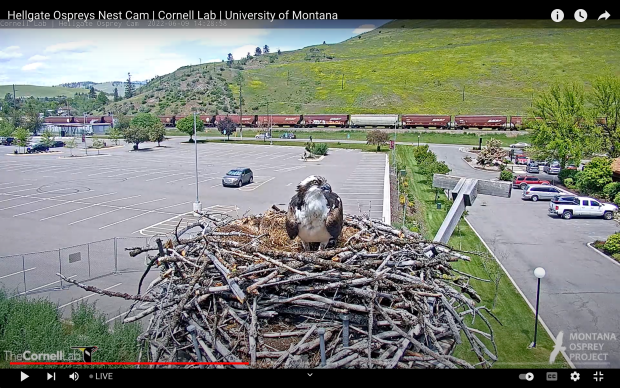
The end for the second hatch at Cowlitz PUD came Friday afternoon. The poor thing had suffered from lack of food all its life. I have to admit that this is not a nest that I enjoy watching – never have. I even phoned the Cowlitz PUD and spoke to them about fish availability one year. I was told there were a lot of eagles in the area. We learned this later when an eagle took three healthy chicks off the nest, one after another. The company put up an ingenious mechanism made out of fish grates to keep the eagles away from the nest. I do not know why those that have osprey nests with known GHO or Eagle strikes do not get in touch for the plans. According to the receptionist, they are easy – just weld fish grates to the sides of the nest opposite at an angle. Ospreys can come and go but eagles and owls cannot get the correct angle to fly in, grab the chick, and get out! Look at the nest and how these grills are attached on the live feed.

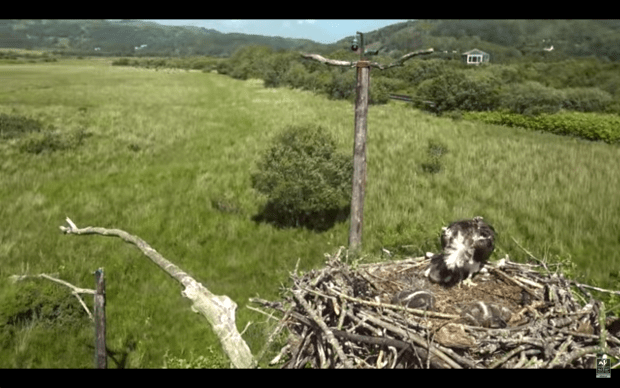
The only surviving chick at Loch of the Lowes was ringed and deemed to be a male.

Two chicks died at the Clinton, CT osprey nest, leaving one. Storms in the CT area contributed to additional deaths due to a lack of fish deliveries. These two died of starvation.

More news from Kielder Forest:

In the vast arguments over Menhaden, some have said that Bald Eagles take all the fish that the osprey need. Some people didn’t have a count on what fish and how many were being delivered. Heidi has been meticulous in the fish counts for the nests she is monitoring (and others!). She has learned to identify species so fast my head spins. What a great asset she is to all of us.

Loch Arkaig has put out Louis’s breaking record fish count and compared it to other years. An Osprey taking 36-44 fish per week for a family of four will not break The Bay! Do not let the arguments confuse you. The problem is industrial overfishing! The second problem is weather.

This fish count comes from Mary Cheadle and the Friends of Loch Arkaig FB group:

Following on from the information I shared yesterday re the fish counts, Steve reported today on the Woodland Trust chat that Louis smashed his week 12 record 🏆😊

Here Steve gives a more comprehensive season update.

Thanks Steve 👍😊

Nest 2 fish summary to week 12 (where does one start!)

Firstly a huge thank you to all the fish counting team and our ever faithful forum contributors, you miss nothing, citizen science at its absolute best👏👏

Nature never ceases to amaze, just a few months ago this old osprey of ours had us all convinced he had been taken by the osprey gods, now in this week 12 he has rewritten the records for weekly fish deliveries, not to mention raising yet another 2 healthy young that will hopefully fledge.

Friday (10/7/26) brought week 12 to a close since the first fish was delivered by Louis.

Louis delivered a record 44 fish to the nest taking his total to 262 (excl 2 from Dorcha).

This gives a 2026 YTD weekly average of 22 fish (c28 post hatch)

Previous week 12 totals (average to 2025 is 30 fish):

2020 – 36

2022 – 34

2023 – 26

2024 – 30

2025 – 25

2026 – 44

As we go into week 13 the average is 28 fish.

Previous YTD week 12 totals (average to 2025 is 238 fish):

2020 (2 male, 1 female) – 256

2022 (2 female) – 261

2023 (1 male) – 218

2024 (1 male) – 231

2025 (2 male) – 226

2026 (2 female) – 262

The range of daily deliveries was 4 to 8 fish per day

The most popular delivery hour is:

5 to 5.59 am – 25 Fish

Louis has had such a successful week I am not going to dwell on this seasons records, but that of all time records:

Most deliveries in a week solo – 44 Fish, Louis previous best was 39 fish in week 13 of 2020! The highest ever joint weekly total was 41 (6 by Aila) fish in week 18 of 2020. He surpasses that total also, solo.

Fastest time between same day fish deliveries (2026 season), 9 mins 21 secs on 10/7/26 between fish 2 and 3, on the same day he brought 4 fish in 44 minutes, not a stat I measure, but worthy of a mention.

As this season is looking good for 2 fledglings, it allows us to compare to 2022 and 2025 when there was also 2 fledglings.

From this data we are seeing accurate data showing the difference between males and females, we know most female raptors are are around 20% larger than males, so they need more food to get to fledging (as an average).

2022 (2 female) – 261

2025 (2 male) – 226

2026 (2 female) – 262

Quite an extraordinary week, last weeks report stated week 12 was as on average the highest yielding week across our 5 previous fish counting seasons, but this I did not expect.

Remarkable consistency that the week 12 totals for 2022 and 2026 are now just 1 fish apart, these 2 years having 2 females, it will be interesting to see how these totals compare come season end.

We know fish weight is more important than quantity, but I believe the weight roughly balances out over the season.

Just amazing to watch this master of the skies and water continue to provide for his family.

Well done Louis🐟

Jill was at the Achieva nest looking for any sign of her babies! She and Jack continue to bring in fish once in a while, but no one is showing up. Congratulations on a great year, Jill. Wishing Big and Little long lives and big crops.

At the Ferguson Museum Mum is bringing in the fish and today the only remaining osplet had a nice meal.

There are three, seemingly healthy osplets – fully feathered – at the Blackwater Osprey platform in Maryland. These are a few relevant dates.

June 20, 2026: The 3 chicks are still visible in the nest, so glad to report all 3 are doing well.

June 1, 2026: We see three little chick heads bobbing in the nest cup. You can see a video clip on our YouTube channel.

May 27, 2026: The female has been feeding at least one chick in the nest.

April 17, 2026: The female is sitting down in the nest and appears to be incubating at least one egg. We hope to see hatching around the week of May 20.

The heat that we are having is going to hit all of the osprey nests in the region of the Prairies of Canada and the upper Mid-West of the US (I hope I said that correctly). I am thinking of the family at the Minnesota Landscape Arboretum where likely they will have 45 C with the humidex as well.

There was an early fish and wingers and a beautiful apple bough that Mum brought to the nest.

Loon hatch in progress:

Geemeff’s Woodland Trust daily summary for Loch Arkaig Friday 10th July 2026

Both fish and name suggestions flooded in today –  Louis brought seven fish for his family, delivering the first four in under forty five minutes! The Nest Two total now stands at two hundred and sixty four. Since George WTS opened the Name Game yesterday, dozens if not hundreds of names have been proposed and there’s still plenty of time for more suggestions before it closes at noon on Monday. Submit your suggestions via Woodland Trust social media Facebook and Bluesky, or here in the comments section, and remember to use the hashtag #2026NAME if you want your names to be included for the judging panel’s review. The chicks are looking very strong, vocalising loudly, rearranging the nest furnishings, and exercising their suddenly big full-size wings – we will be on fledge-watch soon. Garry LV0 brought one fish to Aurora 536, taking the on-cam nest tally to one hundred and fifty.nine which figure holds little meaning as many fish will have been delivered during the daily cam downtime, and the pair are spending more and more time away from the nest. In fact, neither of the pair returned to the nest after Garry delivered that fish around 6pm, and at the time of filing this report, half past midnight, the nest is still empty and it appears Aurora might be spending her first night away from the nest since laying her single, and unviable, egg on 30th April. The weather was settled and dry, the forecasted drizzle and light rain didn’t materialise, and tonight’s forecast for Inver Mallie is light rain, light winds and a low of 15°C overnight, changing to light rain showers with sunny spells and a high of 21°C tomorrow.

Today’s videos:

https://youtu.be/AWdoR7BTsho N2 The family are ready when Louis brings an early breakfast 04.21.05https://youtu.be/zvksU4rGUNI N2 second breakfast is very colourful 04.40.06https://youtu.be/0o_36MDlbSY N2 Lively fish three flaps unnoticed as Dorcha’s busy with fish two 04.49.27https://youtu.be/De89VBV39OI N2 No one wants fish four so Louis drops and goes 05.05.20https://youtu.be/6B7ZeWp3UEg N2 Despite four earlier fish, the family tuck in to fish five  07.22.56https://youtu.be/qbdk_5taqyc N2 Fish six is a fine looking fish but Dorcha keeps yelling at Louis 15.49.05https://youtu.be/4RTfcc6lMfU N1 Garry gives a fish to Aurora then both depart 17.50.04https://youtu.be/mG4c0fxd7o4 N2 Louis leaves after bringing fish seven, encouraged by Dorcha 21.43.40
Bonus – list of Scottish Gaelic names if you’re stuck for suggestions:https://en.wikipedia.org/wiki/List_of_Scottish_Gaelic_given_names

Come and join the lively community at Woodland Trust’s Osprey forum, it’s friendly, free and everyone’s welcome:

https://www.woodlandtrust.org.uk/trees-woods-and-wildlife/osprey-cam

Osoyoos: Both parents at nest. Chick has crop and looks alert.

Cowlitz PUD: So hungry they are eating some of the body of the chick that just died. Electra is going to have to go fishing.

Coeur d’ Alene, Idaho: No rewind but the three osplets look great.

There have been some good feedings. This screen capture provided by Carol.

If you missed it, ringing at Seilli Island and a big celebration. First chicks hatched on this platform in ten years!

RINGING 9 July
Seili: male, red KJA, Wing 329mm, Weight 1,500g
Nauvo: female, yellow R5S, Wing 326mm, Weight 1,690g
Utu: female, red KHX, Wing 283 mm, Weight 1,660g

Hildur arrived on 14 April and Stefu (TFS) on 15 April
Eggs were laid on 25 April, 28 April and 1 May
Chicks hatched 1 June, 3 June and 5 June

Beautiful feathered golden eaglet at Estonia 2. Parents have brought in prey, and it is set-feeding, but it needed some help when they came in with a Raccoon Dog. A raccoon dog (or tanuki) is not a raccoon; it is a wild canid native to East Asia, most closely related to true foxes. Named for its mask-like facial markings, it is an opportunistic omnivore and is the only dog-like animal known to hibernate

Loki and Caitir have been seen at the White-tail eagle nest in the Outer Hebrides restoring their bond after the loss of their second hatch, Loki.

Blackbush: Little 4 is still alive and up at the beak for what will be a very good feeding. As each day passes I become more hopeful that this little one will survive if we can keep the fish coming.

Dewey Beach: There is sure a lot of wing flapping going on.

Do Ospreys in Nova Scotia eat Menhaden? Yes, they do. They also find some trout in the small lakes. Did Ethel and Oscar not breed this year at Russell Lake? Was it because Ethel was very late? Or is there another reason? Osprey deaths in Connecticut (where there have been storm- and weather-related deaths due to adults being unable to fish) are prompting questions in other areas where there appears to be no impact from industrial fishing in the Bay in the US. Those chasing the big ships out of Reedsville will say they are taking all of the menhaden, including the small babies that could fuel the future (and then they get dumped, dead) and moving up along the coast. The Menhaden in Maine are said to be going out to deep water. Thoughts?

Charlo: Charlie, Chloe, and C22 doing well.

Golden Gate: Wendy and Richmond together at the nest on 8 July. https://youtu.be/VNn6oTZA3f0?

It is raining in Estonia. Will this provide the much needed little frogs and fish that this Black Stork nest requires? Is there a fish basket for them as well from Urmas?

From Looduskalendar: This beautiful black stork nest is located in Jõgeva County in Estonia.
It is a neighbouring nest to the former Jan & Janika Black Stork nest.
The nest was found in 2024 by Renno Nellis and he installed a trail camera.

Feeding by the male today:

Later the male brings food:

The ps from the storklets are small indicating much more food and hydration is needed.

It seems that wildlife is suffering everywhere, whether it is from storms that cause the rivers to rush and flood, becoming muddy so they cannot be fished, or drought, or human-caused overfishing by industry. Habitat loss – toxic spills…they have seen it all this year!

It appears that the egg on the nest of Bety and Bukacek at Mlade Buky is not going to hatch.

Calico’s Tip for the Day: What might be simple fun for humans can be deadly for birds and other wildlife. Let’s clean up after ourselves and please put away sports equipment.

Death trap: what to do about the everyday items catching and killing Australian wildlife

https://www.theguardian.com/australia-news/2026/jul/11/everyday-items-catching-killing-native-animals-how-to-help-tangled-wildlife?CMP=share_btn_url

Thank you so much for being with us today. Please take care if you are in an area of special heat concern, like we are. Keep hydrated and stay inside. Close the blinds to conserve energy. Do not be a hero! But please provide water sources for the animals outside and food if you can. Thank you.

Thank you to everyone who I have quoted in my blog today – to Geeemeff for their daily summary for Loch Arkaig, to all who posted on FB, to the owners of the streaming cams, to Lookduskalender and their great team who keep up with the Eastern European wildlife.

Hatches and deaths…Late Monday in Bird World

14 June 2026

Hello Everyone,

Oh, what a day. We are chilly and it has rained heavily with hail! There was even thunder and Toby got to wear his thunder jacket. He did not react to the weather events – not once. He was calm and sleeping. So, thunder or anxiety jackets work for him.

I took videos. WP won’t let me attach them. Says they are private. Really? Missey was scared and her eyes got really big. The hail was not large but it continued to cover the deck and garden.

A fluffy cat sitting on a black table with a window in the background showing a rainy view.
A wooden patio table and chairs covered with hailstones on a rainy day, with a deck and greenery in the background.

Of course, no one believes me when I say this might be the new normal. Geez.

Sadly, the only remaining eaglet out of two has died at the White-tailed eagle nest in Scotland. Its body is being retrieved, and the camera will be down. They want to determine the COD. This is so sad. Each adult and chick is precious. They are being reintroduced to Scotland.

The White-tailed Eagle (also known as the sea eagle) was driven to extinction in the UK by 1918 due to human persecution and habitat loss. Thanks to landmark, multi-phase reintroduction programs that began in 1975, this apex predator has made a remarkable recovery and is now an established breeding species in Scotland.

The successful return of the White-tailed Eagle to Scotland occurred in three distinct phases involving the translocation of young eagles from Norway: 

  • Phase 1 (1975–1985): A partnership between the RSPB and Nature Conservancy Council began translocating Norwegian eaglets to the Isle of Rùm in the Inner Hebrides. This resulted in the first successful wild breeding pair on the Isle of Mull in 1983. 
  • Phase 2 (1993–1998): A second phase of releases took place in Wester Ross to expand the eagle’s geographic distribution across the west coast.
  • Phase 3 (2007–2012): A final set of birds was released on the east coast of Scotland in Fife, successfully establishing a population there. 

Current Status and Ecology

  • Population: There are currently around 150 to 300 breeding pairs established in Scotland. 
  • Habitat: They primarily inhabit coastal areas, sea lochs, and large inland bodies of water, which provide ample fish, waterbirds, and nesting cliffs/tall trees. 
  • Source for England: The Scottish population has been so successful that conservationists have utilized Scottish chicks to help repopulate the species in England (such as on the Isle of Wight).

Ongoing Challenges and Conflicts

While celebrated as a major conservation success, the reintroduction has caused friction with local communities. 

  • Livestock Predation: Farmers and crofters, particularly in Argyll and the West Highlands, have reported significant losses of vulnerable lambs to the eagles.
  • Management Plans: NatureScot has implemented Sea Eagle Management Schemes to help mitigate these impacts, including financial support and scaring tactics for farmers in designated areas. 

The Roy Dennis Wildlife Foundation became actively involved in the reintroduction of the White-tail eagle. The following is taken from the RDWF Website:

PROJECT START: 2019
EAGLES RELEASED: 45
PAIRS BREEDING IN ENGLAND: 2
CHICKS FLEDGED FROM BREEDING PAIRS IN ENGLAND IN 2025: 3

White-tailed Eagles were once widespread along the whole of the South Coast of England, from Cornwall to Kent, before being driven to extinction by relentless persecution that began in the Middle Ages. The last pair bred on Culver Cliff on the Isle of Wight in 1780. Many parts of southern England remain highly suitable for the species, and following the reintroduction of White-tailed Eagles to Scotland – where there are now approximately 180 breeding pairs – we were granted licences by Natural England and Nature Scot to begin an English reintroduction in partnership with Forestry England, based on the Isle of Wight. A feasibility report was submitted to both Natural England and Nature Scot as part of the licence applications. The initial licence permitted the release of up to 60 young eagles on the Isle of Wight over a five year period, beginning in 2019. It is hoped that a small population of 6-8 breeding pairs will become established within 60km of the Isle of Wight, with birds spreading east and west along the South Coast. In 2026, Natural England issued a further license to release up to 20 White-tailed Eagles over 3 years from Exmoor National Park, to support the expanding population in Southern England.”

Every chick is precious. I hope to have news of the necroscopy for you when it is released. This could take weeks.

More great images from Seattle by Ping Shen of Harry, Sally, and their ‘Only Bob’. Thanks so much, Ping, for sharing these with us. Ping notes, “from the looks of things, an only child. Quite adorable, peeking at mom, and then sleeping at the foot of dad’s talon…”

An osprey perched on a nest made of sticks, looking down at a chick in the nest while surrounded by greenery.
Two ospreys sitting on their nest, with one looking directly at the camera while the other is feeding on a fish.

A beautiful sunset with Clark, Iris, and what might be another ‘Only Bob’. We are on pip/hatch watch for that second egg. We will see if Only has a sibling. I sure hope it is strong as Big Bob is a smart survivor – it has sure been beaten around by fish and nest materials.

Two ospreys are perched on a nest made of twigs and branches, with one parent bird standing close to a chick in the nest. The background shows a parking lot with trees and streetlights.

Make sure to check out the summary – what was it that frightened Louis?

Geemeff Woodland Trust daily summary for Loch Arkaig Sunday 14th June 2026

Daily summary Sunday 14th June 2026

Today was mainly about fish – there were many deliveries and both females rejected a fish at the first time of offering then accepted gladly when the male returned with it a bit later. Garry LV0 brought two fish on cam for Aurora 536 and his tally now stands at one hundred and seventeen, while Louis excelled with five deliveries, including his first flatfish this season, taking the Nest Two tally to one hundred and thirty nine. The chicks did a bit of fighting but nothing serious, and both decided mum was taking too long dishing up so tried a nibble at the fish she was holding – they’re healthy and developing as expected. There were some intruder alerts, no intruders seen on nest cam apart from a pair of Wood Pigeons who perched on Nest Two for a few moments, but local resident LizB saw two Golden Eagles flying near an Osprey around the time Dorcha was on high alert and shortly before Louis arrived with the flatfish. Later Garry and Aurora were also on alert, perhaps the pair of eagles were still in the area. Only one Eagle has ever been seen on a nest – a juvenile Golden Eagle who touched down for a nano second on Nest Two in April 2023 – but distant eagles have been caught on nest cam on a couple of occasions and Dorcha returned once with a blood injury from an eagle encounter. Both White-tailed Eagles and Golden Eagles share the forest with the Ospreys so perhaps it’s fortunate we haven’t seen them close up too often. The weather was much more settled today and the promised sunshine did materialise. It should continue dry overnight and partly cloudy with a low of 9°C, continuing with a high of 20°C tomorrow and no rain before midnight.

Today’s videos:

https://youtu.be/w7zZRXu3pZ0 N2 Louis’ first fish is small and doesn’t last long 05.29.41

https://youtu.be/XYllXMRX7vA N2 A pair of Wood Pigeons pay a visit in Dorcha’s absence 08.27.59

https://youtu.be/BecPV01-e_E N2 Both chicks don’t wait for Dorcha and have a nibble at fish two 11.22.47 

https://youtu.be/MoOhTnm6YZo N2 Louis’ third fish is his first flatfish 14.39.15

https://youtu.be/grrb8lfBmMs N1 Aurora takes fish one from Garry and they both leave 14.14.51

https://youtu.be/Gmec-mfvgPI N2 Chick2 gets impatient and tries to take bits of fish four from C1’s beak 16.05.00

https://youtu.be/IK7rPRrh6-w N1 Aurora takes fish two the second time Garry brings it 19.13.05

https://youtu.be/VpjzqTKFTYc N2 Dorcha takes fish five the second time Louis brings it 20.36.58

Bonus guide to rapid growth of young Osprey chicks – our two are 13 and 11 days old today (thanks Dyfi)

https://www.dyfiospreyproject.com/blog/emyr-mwt/rapid-growth-phase-young-osprey-chicks


Everyone’s invited to join the lively community at Woodland Trust’s Osprey forum, it’s friendly, free and everyone’s welcome:

https://www.woodlandtrust.org.uk/trees-woods-and-wildlife/osprey-cam

Buddy’s Mum catches D4 at Decorah fledging. https://youtu.be/pFLwncKkHH0?

‘L’ sent me the link to remind us that the Port Lincoln Osprey barge is now back online for the season !!!!!!!!!! https://www.youtube.com/live/47K1i7qCzaI?

‘L’ also sent me another link. A video of Wisdom’s grand chick getting banded. Oh, have a look!!!!!!!!! Isn’t it adorable?!!!!!! https://youtu.be/ZW8gHzCVBwU?

A young bird standing on sandy ground, surrounded by sparse vegetation and dried branches.
Close-up of a grand-chick with a red identification band on its leg, standing on sandy ground with some grass and strands of dried vegetation around.

I learned something. Maybe you will, too. ‘R’ sent an article on Aquaculture and shorelines. https://sercblog.si.edu/imani-black-sustainable-aquaculture-and-misconceptions/#more-13282

How big a fish can Ospreys bring in? And why can females catch bigger fish?

An osprey perched on a branch holds a mullet fish in its talons, with a lush green landscape in the background.

Is there an Osprey fishing contest going on right now? Louis brought in a whopper to Dorcha and the two surviving chicks.

A mature bird of prey stands over its nest, where several chicks are visible. The adult is holding a fish, preparing to feed the chicks in a natural setting surrounded by greenery.

Two osprey chicks have been observed at Loch Inish.

We wait to see how many chicks Aran fathered this year with his new mate. At least one! Next year, Friends of the Osprey will put a streaming camera on Aran’s nest. This is fabulous news.

It looks like donations to SaveMoonCamp, the land near Jackie and Shadow’s nest, have reached the 1/3 mark. They will need lots more funding by the deadline of 31 July 2026. It is unclear to me the precise amount of funds the group needs to get a loan to continue their fundraising. If you intend to help, please do it now! Go to SaveMoonCamp.org

The baby at Poole Harbour is just starting to get its feathers while the others are really being camouflaged now. CJ7 and Blue 022 making raising four osplets look effortless — and we know, for certain, that it isn’t.

An adult osprey stands near its nest, which contains three young chicks, surrounded by trees and foliage.
An adult osprey feeding its chicks in a nest made of branches, surrounded by a natural forest environment.

Syfadden and Clogwyn are doing fantastic with their two chicks in the Usk Valley in Wales.

A bird sitting in a nest made of twigs and branches, with a scenic landscape of fields and hills in the background.

Little Bob is trying to get under Elen at the Glaslyn Osprey nest she shares with her mate, Teifi. The two Big Bobs are napping.

An osprey standing over three fluffy chicks in a nest made of sticks, surrounded by a green landscape.

Closeby at the Friends of the Osprey Nest of Aeron Z2 and Blue 014, there are another three. They have been enjoying some trout today!

An osprey chick sitting in a nest made of sticks, overlooking a scenic landscape with hills and trees in the background.
A bird's nest made of twigs with two chicks and an adult bird on a hillside, overlooking a landscape with mountains and greenery in the background.

The single surviving osplet at Loch of the Lowes seems to be doing alright.

An osprey sitting on a nest made of twigs and branches, with greenery in the background.

This is incredibly compassionate. One of the major killers of chicks/storklets/hawklets/osplets etc in the nest is damp. These two good samaritans are blow drying the storklets so that they will hopefully survive the storms that have come to Europe.

Two people care for four stork chicks in a large nest on a rooftop, using a hairdryer to warm them.

Much better!

A stork stands on a large nest made of sticks and hay, with several baby storks resting inside. The background features a residential area with rooftops and solar panels.

What I wouldn’t give to see this at our osprey nests in North America. The kindness to stork families across Europe warms my heart every year and brings tears to my eyes.

No hatch as yet at Mlade Buky White Stork nest.

A stork standing in its nest, surrounded by sticks and grass, with a scenic view of houses and hills in the background.
Two storks nesting in a large bird's nest on a rooftop, overlooking a residential area with green hills in the background.

UK Parliament has recognized the persecution of raptors – should I add the word ‘finally’.

Second hatch at The Lesser Spotted Eagle nest in Estonia. While this might be cause for celebration, Lesser Spotted Eagles practice obligate siblicide whereby the eldest chick always kills the second. There are rare exceptions.

The following comes from Animal Diversity Web:

A majestic eagle perched on a tree branch, showcasing its brown feathers and sharp beak against a clear blue sky.

Lesser spotted eagles live primarily in patchy woodland areas, meadows, fields, and natural grasslands, often in moist environments. Although forests are not used as primary habitat, they often build nests near forest edges. Lesser spotted eagles have been found in African dry mountain and grassland savanna habitats during their winter migration. Within these dry mountain habitats, their range typically extends to a maximum elevation of 2,200 meters.

Lesser spotted eagles generally hunt by walking along the ground. However, they typically nest and perch in the branches of forest trees. When nesting and perching, lesser spotted eagles often use branches closer to the ground rather than higher in the trees.

Adult lesser spotted eagles also are distinguished by their yellow eyes, whereas adult steppe eagles and greater spotted eagles have brown eyes. Juveniles of all three species have brown eyes. The head and wings of lesser spotted eagles are a lighter shade of brown compared to the rest of its body; in steppe eagles and greater spotted eagles, the entire body is a dark shade of brown. Lesser spotted eagles also have a small head and beak for an eagle. Like other eagles in the genus Aquila , lesser spotted eagles have a white V mark on their rump. Finally, differences in the shape of the wings cause lesser spotted eagles to appear to have a longer tail (96.6 to 123.75 cm) than other closely related species. Lesser spotted eagles have narrower wingspans (145 to 165 cm), whereas greater spotted eagles have broader wingspans.

Lesser spotted eagles are considered monogamous birds. Currently there is no clear evidence of partner fidelity, however most birds return to the same nest every year.

Lesser spotted eagles breed once per year. The pair builds a platform nest, generally in a tall tree. Egg laying begins after the nest is complete in late April to early May. It is believed that males are responsible for defending the immediate vicinity around the nest. Lesser spotted eagles lay one to two eggs, but typically only one survives. The older or stronger sibling usually attacks the weaker one. Eggs are laid in the second half of April and between May 23 and 27. The egg incubation period ranges from 36 to 41 days. Fledglings have been observed in the middle of July, with a fledging period up to eight weeks. Juvenile lesser spotted eagles do not reach reproductive age until they are 3 to 4 years old.

The new babies. In rare cases, when prey is very plentiful, both have survived, but if you are watching this nest, please be advised that when I say rare, I do mean rare. Adults will often withhold prey to get the stronger eaglet to attack the other weaker one. When the kill is done, the prey returns.

A golden eagle parent standing over two fluffy chicks in a nest, surrounded by greenery and tree branches.

Two beauties at nest #5 in Finland.

A pair of ospreys tending to their nest, which contains several fluffy chicks. The nest is built from twigs and branches, with a natural landscape in the background.

At the NCTC nest, Susie fledged this afternoon. Congratulations to Bella and Scout.

I hope that Little Dewey’s crop continues to be filled.

Some fish came to the Santiam Canyon Osprey nest for Mum and the trio. They don’t get much fish. It was nice to see their crops filling.

An osprey stands next to its chicks in a nest made of twigs and moss, with a backdrop of trees and a road.
A mother bird feeding her chicks in a nest made of twigs and moss, with a residential area visible in the background.

Thank you so much for being with us today. Please take care and wish for fish at all nests!

Thank you to ‘R’ for that article on aquaculture. Thank you to ‘L’ for the links to Wisdom’s grandchick and a shout-out to Ping Shen for those great images of Harry and Sally and their baby. To Geemeff, we are always grateful for your daily summaries of all news at Loch Arkaig and your videos. To everyone who posted information on FB and images, to Raptor Persecution UK for telling it the way it is, and to the Roy Dennis Wildlife Foundation and the owners of the streaming cams – we are always thankful to you.

Monday in Bird World

24 February 2024

Greetings Everyone,

We hope that you have had a lovely weekend and got to spend some time with friends or outdoors in nature OR both. Sunshine, the sound of the birds, or the laughter of others can elevate a slow sad day to one full of light. Try it, please.

The days are growing longer on the Canadian Prairie, with daylight stretching until at least 6:00 PM! This is a thrilling reminder that spring is just 27 days away. Ospreys will soon be returning to the UK, and by now, many nests in the US will already have eggs. We are all wishing for their safe return.

The Girls have really been enjoying the warmer weather and longer daylight hours, too. I have noticed that they will only sleep on the back and arms of the sofa if there is a wee blanket.

This year, I am particularly invested in a few remarkable birds—after all, we all have our favourites. I am eagerly anticipating the return of Louis to Dorcha at Loch Arkaig, and I hope he arrives healthy and revitalized. Maya faced challenges in 2024, and I am determined to see her once again partner with Blue 33 to raise a family. Even though Laddie is sadly no longer with us, there is hope that Blue NC0 will find a new mate and create a family at Loch of the Lowes.

I am also excited to see CJ7 reunite with Blue 022. Their incredible bond has allowed them to raise four extraordinary osplets in 2024. Additionally, let’s not forget about Iris and Finnegan! Together, let’s energize the flyways between the southern coast of Texas and Montana to ensure Iris’s safe return, with Finnegan there to protect her and support her in raising another brood of chicks. Join me in sending our heartfelt good wishes! Join me in sending our heartfelt good wishes!

As we turn our attention to the present, the anticipation of this year’s hatchlings fills me with hope—true little miracles waiting to unfold. You may have your own favourites, but for me, the joy of seeing Jak and Audacity finally welcome an eaglet after so many years along with Jackie and Shadow, would make this season unforgettable just like it was with Iris and Finnegan last year or even Beau and Gabby this year. I can already envision myself sitting there, overwhelmed with tears of pure happiness and soggy popcorn.

It is going to be a great year. Can you feel it?

Last week, I shared an article from The Guardian that a reader sent me. The article highlighted the polar bear fur trade and mentioned that the World Wildlife Fund (WWF) was actively involved in or supporting it. The reader, who had donated decided to reach out to the WWF to inquire about their position on polar bear fur and the claims made in The Guardian article. I am pleased to share the response from the WWF that they received.

Thank you for reaching out and sharing your concerns regarding a recent article in The Guardian about WWF’s position on polar bear conservation. We believe the story mispresents our position and we are actively raising inaccuracies with the publication directly. To be clear, WWF does not support or promote the polar bear fur trade, as you can see in our response to the article (https://wwf.panda.org/wwf_news/?13500441/Guardian-response-polar-bears).
 
WWF remains steadfast in our mission to conserve polar bears and their habitat, while respecting the rights of Indigenous communities. Our funds are directed toward scientific monitoring of polar bear subpopulations, developing non-intrusive tracking methods such as eDNA, supporting research on the impacts of climate change on polar bears, and advocating for the protection of vital polar bear habitats. This work is essential to the long-term survival of the species. 
 
We appreciate your passion for wildlife and for the opportunity to reaffirm our commitment to the conservation of polar bears and their habitat. 
 
Regards,
 
Nirilis
World Wildlife Fund

Donating is a very personal choice, and it can be disappointing when the values we care about conflict with the organizations we support. I’m glad to hear that our reader received a response to their inquiry clearing up the misinformation.

On another note, one of our readers has always dreamed of seeing polar bears in their natural habitat, and they are coming to Manitoba this November for that experience! That is so exciting.

Time to check on our nests. There is a lot happening! In fact, I will apologise for the long ‘list’ and I didn’t even begin to cover all of what is happening! Eggs are being laid everywhere. Just as soon as some of these eagle eggs begin to hatch, ospreys will be returning hoping to find their mates and get on with their breeding season.

I cannot find the live stream for Big Red and Arthur. Normally in the late fall they begin to check on their nest on the Fernow Light Stand. Is it the construction that is causing this? I must find out.

Cornell Red Tail Hawks: Ferris Akel caught Big Red on the scaffolding of the clock tower, one of her favourite spots on the Cornell Campus. It was 39 degrees F. Big Red will be 22 years old this year. She hatched 7 miles from the Cornell Campus in 2003 and was ringed that October. She has been raising chicks on the Cornell Campus for a long, long time. She was on streaming cam in 2012, but that is not to say that she did not start having chicks much earlier than that!

Ferris also found Arthur so all is well. Gosh, it is so good to see them.

Achieva Credit Union: Jack’s fancy nest attracted a new mate and their egg was laid Friday the 21st of February at 22:14. Congratulations!

Frenchman’s Creek: We have an egg! Now, it’s Sunday and we have two. Mum hit by a GHO over night. Can we send the owls on holiday this year?

Pine Island Ospreys: Egg 1 broke. Egg 2 is 40 days old. Looks like it is non-viable. With that audacious owl, I would be just as happy that those eggs simply break or turn into dried Dudleys.

Lake Murray: Resident pair have returned! Gosh, let us hope those strobe lights and mannequins do their job this year and are set up right when those eggs are laid to send a message to those owls.

Hilton Head Nature Conservancy: The two eaglets are doing very well.

Golden Gate Audubon: Richmond is looking for Rosie. She traditionally arrives between February 18 and March 9. Pray for her safe return.

Little Miami Conservancy: Betty laid her first egg with Baker coming to see on the 19th. Expecting egg 2 on Saturday. https://youtu.be/SuT8i49kEmo?

Sauces: The very first egg that Jak and Audacity is incubating is still holding. That egg was laid on our anniversary, the 2nd of the 2nd month. That means that today, that egg is 22 days old. We need another fortnight til pip watch. Oh, please make this their year!

NE Florida: 31 continues to be just the cutest little eaglet! https://youtu.be/6b25MPQhsus?

31 continues to melt my heart. As far as I am concerned, 31 was a miracle eaglet. Let’s see if we can have a couple more at Sauces and Big Bear. Wouldn’t that make this a fantastic year?!

Standing on those feet!!!!!!!!!

Beau turned out just to be the best Daddy 31 could ever have wished to have….

Leucistic Red-tail Hawk: Angel has visited the nest in Tennessee.

Fay Slough Eagle Nest: Has collapsed with all the rain. Dr Sharpe recently installed a camera there. No eggs. Eagles were working on the nest.

Captiva Eagle Nest: Dasher and Dancer are growing, self feeding and doing very well. https://www.youtube.com/live/ba3BD27eKRs?

John Bunker Sands Wetlands: Gosh, look at these two. They grew before our eyes. It has been a good year at this nest. https://www.youtube.com/live/ba3BD27eKRs?

Dataw Island Bald Eagle Nest: Skylar is doing well. Has been seen on camera really flapping its wings!

West End: Thunder and Makai have their second egg. It was laid on 20 February. A Raven took the first.

Durbe County nest of Milda: Milda, the White-tailed Eagle has been coming to the nest preparing for the next breeding season. Eggs should come in the next few weeks. Fantastic. https://youtu.be/YCxGI8aTJWA?

Gleeson’s South Australia Osprey Platform: Marie found herself inland and quite away any possible fish meals. The relief that spread through the Port Lincoln community when Marie turned and flew south to the coast could be felt in Canada. Even the fish fairies were ready with meals for Marie as she would have been super dehydrated.

Latvian Golden Eagles Spilve and Gristles: They are getting ready for an exciting breeding season. https://youtu.be/Faj0YrCBeOg?

University of Florida-Gainesville Osprey Platform: Stella has returned with a new mate. Talon disappeared with three osplets on the nest. Stella managed to keep one of them alive and Talon Jr fledged! Hoping for a better year for this new couple.

Big Bear Valley Eagle Cam: Already people from around the world are getting excited over the prospect of Jackie and Shadow having a wee eaglet this year. There are three eggs. https://youtu.be/u6LnJNYfmHc?

Jan 22, 25, and 28. Pip watch: 27/28th of February!!!!!!!! So what will you be doing on Thursday?????????????????????

Fraser Point: There are three eggs for Andor and Cruz, too! Eggs: 14, 17, and 20 on the Santa Cruz Island nest.

Bluff City ETSU: Franklin and Frances have two eggs being incubated. They were laid on the 26 and 29 of January. So let’s count. Egg 1 is 29 days old today. We should be expecting pip watch in a week – on 3 March. Mark your calendars.

Johnson City ETSU: Boone and Jolene’s first egg is three days older than that of Bluff City which means that we should be looking for a pip watch on the 28th of February or 1 March.

Port Tobacco: Chandler and Hope are another couple with a three egg clutch – 3, 5, and 9 of March! So many three egg clutches this year.

US Steel: Stella and Irvine again with three eggs. This is a first for this nest!!!!!!!!! February 13, 16, and 19.

PA County Farm: Oliver returned to the nest looking good. What a relief with growing concerns over HPAI.

Centreport Eagles: First egg on the 19th. Looking for the second on Saturday before posting this blog.

Notre Dame Eagles: Gigi and her new mate now have two eggs!

Duke Farms: Goodness me. Another three egg clutch. Is this an unusual year? Eggs laid on 17, 20, and 23 of January. Pip watch for the first egg is right now- Friday evening as I write this. Maybe by the time of posting we will have eaglets in New Jersey!

Decorah North: Mr North and Mrs DNF on the 11th and 14th of February.

Redding Eagles: Liberty and Guardian have no eggs yet in the new nest and many are concerned that the time envelope is running out due to the extreme heat of the spring.

Fort St Vrain, Colorado: No eggs yet.

Eagle Country: No eggs yet for Skye or Blaze.

San Jose Falcon Scrape: Monty and Hartley are pair bonding! https://youtu.be/KQhgeUzeU04?

EVERYTHING YOU WANTED TO KNOW ABOUT EAGLE EGGS AND MORE.

The first article comes from ‘EJ’ which fit perfectly with the ones I had gathered for us today. How long does it take to lay that egg?

Bald Eagle Clutch Size:

This is a summary:

The average clutch size for bald eagles is two eggs, though they can lay up to four. 

Clutch size details 

  • The eggs are usually dull white and unmarked.
  • The incubation period is about 34–36 days.
  • The nestling period is about 56–98 days.
  • The eggs weigh about 110–130 grams.
  • The female incubates the eggs by sitting on the nest to keep them warm.
  • It usually takes her 3–6 days to complete her clutch.

Clutch success 

  • Three-egg nests produce a higher percentage of fledges than either 2-egg nests or 1-egg nests.
  • The number of eggs lost far exceeds the average in some years, while in other years few eggs remain unhatched.

Elfruler wrote an interesting article on breeding success. Note the words they use.

It seems that there are a larger than average number of nests with three egg clutches for the Bald Eagle nests on streaming cams in 2025. What is it that determines clutch size?

Factors that affect clutch size

  • Age: The age of the female bald eagle is related to the size of her clutch. 
  • Season: Cold weather and the time of season can affect clutch size.For example, clutches laid later in the breeding season may have fewer eggs. 
  • Resources: The availability of resources, such as prey, can affect clutch size. 
  • Contaminants: Legacy contaminants like DDT can suppress clutch size. 

Clutch size of bald eagles

  • The average clutch size of bald eagles is just under two eggs. 
  • Successful pairs of bald eagles usually raise one, two, or occasionally three young per nesting attempt. 
  • Bald eagles may lay a second clutch if the first set is lost. 

Other information about bald eagle clutches 

  • The complete breeding cycle from the time of arrival at a nest to the period of fledgling dependency is about six months.
  • Bald eagles may move south in the fall in response to changes in weather conditions and prey availability.

The Peregrine Falcons are starting to pay attention to their scrapes and mates. At Wilmington, Stewart is impressing Bridgette with a nice dressed pigeon!

At Orange, Xavier and Diamond have both been to the scrape. Diamond hid a grebe and well, guess who found it? Cutie pie Xavier!

Where are our Cal Falcons?

At least one falcon seen at Great Spirit Bluff.

We need hope right now and Knepp Farm is giving us a good dose of it!

My bucket list includes seeing Pink-footed geese in Norfolk. Might 2025 be the year?

“Pink foot geese” by grievemere is licensed under CC BY-NC-SA 2.0.

https://www.theguardian.com/environment/2025/feb/22/young-country-diary-a-sky-full-of-geese-is-an-awe-inspiring-sight?CMP=share_btn_url

Bird says of these lovely geese: “Relatively small and short-necked goose with contrasting dark brown head and neck, small black bill with pink band near tip, and pink legs. In flight shows extensively pale silvery upperwings. Breeds in Greenland, Iceland, and Spitsbergen; winters mainly in coastal lowlands with farmland and marshy grassland. In main areas, occurs in flocks of hundreds or even thousands; elsewhere, singles or family groups can be found among flocks of other geese. Rare but increasing winter visitor to northeastern North America, almost always with flocks of Canada Geese.”

Pink-footed geese breed in remote areas of Greenland, Iceland, and Svalbard during the Arctic summer. They nest on cliffs, rocky outcrops, and tundra hummocks.

Breeding grounds 

  • Greenland: Remote areas of eastern Greenland
  • Iceland: Remote areas of Iceland
  • Svalbard: Remote areas of Svalbard
  • Novaya Zemlya: The Arctic Russian archipelago of Novaya Zemlya

One huge issue for these geese is the thawing tundra. Will this mean that they will spend all year in Iceland, Greenland, and areas of the Russian archipelago?

There are also threats to beloved parrots. What are they? Birdlife International says:

From the humid rainforests of South America to the deserts of Australia, parrots are found on nearly every continent – adding colour and life to ecosystems globally.  

But, did you know that parrots are among the most threatened group of birds in the world?  

Human activities pose the biggest threats to these colourful birds:  

  • Agriculture is impacting 78 species like the near threatened Jonquil Parrot. 
  • Exploitation by the pet trade is affecting 75 species like the critically endangered near threatened Palm Cockatoo. 
  • Logging is affecting 62 species like the critically endangered Swift Parrot.
  • Climate change is affecting 32 species like the endangered Black-billed Amazon.

The count down clock to the arrival of the UK ospreys:

‘EJ’ sends a nice read: https://www.komu.com/news/midmissourinews/not-something-you-see-every-day-mu-raptor-rehabilitation-project-treats-rare-hawk/article_62d91008–f088–11ef–b40d–1f409f656370.html

Calico is checking shipping rates for her cards and will have her fundraising page up by Tuesday or Wednesday. She is looking for good shipping deals for those who have written to request cards from Europe and Asia! It is incredible how complicated sending items to others can be. Some couriers are keen competitors, and we hope to have this ready to launch by Wednesday. Thank you for being so patient. Calico is very grateful to all those who have sent notes wishing to support her fundraising.

Thank you so much for being with us today. Take care of yourself. Try to get outside. Read an uplifting book. Watch a silly romance-comedy. Whatever it takes. We look forward to having you with us again on Thursday.

Thank you to the following for their notes, posts, comments, images, letters, articles, and streaming cams that helped me to write my post today: ‘EJ, Geemeff, H, J, SP’, WWF, Ferris Akel Tours, Achieva Credit Union, Frenchman’s Creek, Pine Island Ospreys, Lake Murray Ospreys, Golden Gate Audubon, Little Miami Conservancy, IWS/Explore, NEFL-AEF, Window to Wildlife, Fay Slough Eagle Cam, John Bunker Sands Wetlands, Dataw Island, LDF, Fran Solly, University of Florida-Gainsville Osprey Cam, FOBBV, Bluff City-ETSU, Johnson City-ETSU, Port Tobacco Eagle Cam, PIX Cams, PA County Farms, Centreport Eagles, ND-LEEF, Duke Farms, Raptor Resource Project/Explore, FORE, SK Hideaways, Elfruler, Wilmington Falcons, Falcon Cam (Orange), Cal Falcons, Knepp Farm, Openverse, UK Osprey Information, komu news, HDonTap

Too many deaths…Monday in Bird World

8 July 2024

Good Morning!

Oh, Sunday was a joyful and a tearful day. My superb neighbours have moved. To their little daughter, I was the ‘Tomato Fairie’. She loved the little grape tomatoes and paper baskets of them appearing regularly on her front porch. I shall miss them terribly. Friends visited, and later, we took the grandson, who works too hard and who we don’t see so often, for dinner and then picked up his sister to go for ice cream. We found a new little ice cream shop – they are popping up everywhere. It was delicious. Then we went for a walk to check out the river, which has flooded the walks and bike paths down to The Forks. We spotted a family of ducks who seemed fine.

It was a good day to be outside and to be with friends and family. The killing of the second Golden Eaglet by the first, followed by the little Dunrovin chick falling off the nest to its death, and the discovery that all three Redding osplets were dead in the nest —–well, it was a difficult day. These deaths should always remind us to hold those alive close and to celebrate those who survived this year. So many didn’t. As one of my friends told me today, please don’t wait for the politicians and policymakers to do anything to improve the lives of our wildlife and environment. If we each do something good positive, however small, our planet will be a better place.

My posting may meander a little today. Several people are monitoring nests, especially for fish drops in this heat so there might be some later inclusions.

Was it true or is it just a rumour? I am still trying to figure this out. It was reported that the second hatch, Raider, at the Patchogue nest on Long Island fledged at 0511 with a successful return to the nest. Patches was flapping and Raider joined in hopping and flapping and away it went!

Not true.

Raider fludged later. See post below by Heidi.

Check out the look on Raidier’s face as he slides down the perch. Patches is paying no mind. That fish is good!

Also from Patchogue, ‘MP’ says “Chickie takes dad’s toe almost off thinking it’s a fish. Fish under green line.”

We have been worried about Blue at the Hancock Boundary Bay Nest. Deb Stecyk gives us an uplifting video showing Blue’s crop and a good ps. Relief.

At the Snow Lane nest in Newfoundland, Beaumont often brings fish to the nest and then flies to the camera pole to have a wee bit of a dinner for his efforts and returns the fish to the nest for Hope to feed their two chicks. She is doing much better than in previous years. Feeling hopeful.

Plenty of food continues to arrive on the Golden Eagle nest #2 after the eldest killed the youngest on the 7th of July. At one time, I hoped there was a shortage of prey. I even rationalised this to myself but, then, when the prey came on the nest, item after item, after the eldest had killed the youngest, it just confirmed that it was a strategy to get the one to kill the other. That second hatch survived the first attempt at killing it. Why not feed them both so close to fledge and see which one survives in the wild? Well, we will never know.

Great Bay nest is doing well. Osplets are really perfecting their self-feeding. I cannot confirm how much fish came on this nest on Sunday.

The males in areas where the extreme is going to be a factor appear to be going out fishing early and later in the day with success. Today’s high at Charlo, Montana will be 97 with 4 mph winds. It is forecast to be 99 on Wednesday. Let’s hope that the fishing continues to be good despite the heat.

This is Charlo Montana very early Sunday morning.

Finnegan also brought in an early fish at 0556.

In past summers, Iris would be in the shade catching her own fish. She is now trying to keep her two chicks cool while they wait for Finnegan to bring in another fish.

If Finnegan thought he was going to have some fish, Iris might have had another thought for him. She stuffed those two osplets to their little tiny talons and then back to the top of their heads. She knows it is hot. She knows they need hydration. Finnegan is making sure his family does not go without.

Just look at that crop!!!!!

The little one raises its neck and stands up and looks at the older sibling. It was hilarious.

Date Night on the Perch with Iris and Finnegan! (Thanks PB for alerting me to where they were!)

I did not see an early fish on the nest at Dunrovin but I might have missed it. The pair are enjoying a late breakfast or early lunch around 1130 on Sunday. This nest might miss much of the heat that other areas are getting. And then…the most horrific sadness hits the nest. The young one fell off the nest over the railing. Such a loss. A beautiful healthy osplet on a nest with food. Soar high, little one.

Note to self: I love how some nests are annual inspected and repaired by the owners of the property and the streaming cam. Glaslyn (if I remember correctly) checks the woven railing and rewires it if required when they do their annual renovations. Many nests could use nesting material, too. Thinking of MN LA. What if we helped the Ospreys this way? Could save a life or two.

Melbourne police rescue an osprey! Thanks, Geemeff. We need a good news story.

Steelscape is one of the nests in the high heat area.

‘PB’ watches Cowlitz PUD and despite the heat it was a good day.

There is no end to sad news and I thought June was the worst month. The Osprey family whose chicks survived the fireworks in Redding have died.

Fireworks are not the only stressors. Humans around nests trying to take photographs, dogs, motorised vehicles, etc. have been known to cause great stress. I am sure there is a list as long as my arm.

Geemeff’s Daily Summary for Loch Arkaig and The Woodland Trust:

Daily summary Sunday 7th July 2024
There was an intruder but no fish today – Louis teased Dorcha again by appearing several times without fish and staying nearby within sight so she kept calling to no avail. The nest was overflown by an intruder who returned and landed on the nest next to Louis and was seen to be a dark female with striking markings, possibly the same one who intruded in 2021, see bonus video. Dorcha arrived and chased her off, all the way past Nest One where Dorcha dropped in briefly for her first ever visit to that nest. Weather was settled today, tonight’s forecast is partly cloudy and light winds, but rain is due again tomorrow.
Night cam switches on (day cam): Nest One 23.51.05 (03.18.25); Nest Two 23.54.50 (03.27.43)Today’s videos:
https://youtu.be/FrXbbUeLP1k N2 Louis arrives without fish – Dorcha yells at him 13.01.45
https://youtu.be/2OI2t67rNhU N2 Intruder overflies Dorcha on the nest 13.35.35
https://youtu.be/rzFuxemIvPE N2 Unringed intruder female lands next to Louis 13.55.40
https://youtu.be/LwP5OtDRWKY N1 Dorcha’s first ever visit to Nest One! 15.06.42
https://youtu.be/AX4rxHJaSWoN2 Louis arrives and coy mantles but no fish for Dorcha 15:21:08

Bonus video – compare and contrast today’s dark intruder with the very dark one seen once only on 27 May 2021, is it the same bird?:


Watch the Loch Arkaig Osprey livestream 24/7 and join in the conversation here:

https://www.woodlandtrust.org.uk/trees-woods-and-wildlife/osprey-cam

Tuffy landed on the nest with a nice-sized fish he had caught. What a joy to see him. The camera will be turned off today. It could be already by the time you read this. At one point, we did not think Tuffy would survive Ruffie. Well, he did. Please notice the distinctive head marking. You will always know that it is Tuffy. There is a dark patch at the back of the head, too. Their heads and underwing markings never change in an osprey. So even without rings on their legs, if you know these, you can tell which osprey is which.

Tuffy is one of the good survival stories of the 2024 breeding season and we will always remember him (or her). What a great nest. Camera will be turned back on when Sally and Harry return to the nest.

See Heidi’s report below.

For the Decorah North eagle family, there is no place like home even if it is a dead tree without a nest. They are all fine. What a joy it is to see them, too.

Fish are coming in at Boulder. It is 46 F and 1 mph winds. The high this week will be 80 at the nest.

It is a lot hotter at the Seaside nest of Bruce and Naha. Bruce flew in with a really big Red-tail for Naha and the kids at 1649. This will keep them nicely. Temperature is expected to be 90 degrees F with 14 mph winds on Monday.

‘PB’ reports that a nice late fish came into Steelscape. They are in the hot zone, too.

Cowlitz has fish, too. The Dads on that Columbia River are really working hard to get fish to their nests in this heat.

‘H’ reports:

7/7 Osoyoos osprey nest:  It was a sunny day, and the temperature reached 100 F/38 C yesterday afternoon.  Olsen brought eight fish to the nest, but most of them were quite small.  When the ‘kids’ were little, that would have been ample, but now it may be only half (or less) of what they need.  Five of the fish were delivered before 0900, while the sixth fish was delivered at 1657.  Meal duration times were: 5, 7, 4, 3, 18, 5, 8, 5 minutes.  Our views of the feedings were partially blocked at times, making it difficult to determine how much Little was eating.  There was no aggression at the first three meals, and Little seemed to eat some fish at each of those meals.  Big beaked Little at the third meal, which consisted of a tiny fish, and Little ate one bite of fish.  The fifth fish, at 0849, was the largest.  Little was beaked, but managed to start receiving some bites on the other side of Soo at 0855 for a couple of minutes.  I could not tell how much Little was able to eat.  When we say the osplets are ‘at the table’ or ‘at the chow line’, we are referring to them being in a position to receive bites of fish offered by the parent.  When the ‘kids’ were little, the ‘table’ was small.  They could all fit side-by-side compactly in a small area, easily within reach of Soo’s beak.  But, at the current size of the chicks, the ‘table’ is wide.  There was no aggression at the sixth feeding, at 1657.  Little was skittish, and waited a couple of minutes before approaching.  When Little was ‘at the table’, s/he was positioned closer to Soo’s tail.  It was only a 5-minute feeding, and I did not see Soo reach back and offer a bite to Little.  There was an 8-minute feeding at 2058, and once again, Little hesitated to approach.  But when s/he did get to the table at 2103, he ate two bites, then was beaked.  The last meal of the day was at 2122, and lasted five minutes.  Little was beaked, and was not able to eat.  Little’s crop was noticeably hollow.   Unfortunately, Little did not eat much today, which is all the more serious due to the extreme heat which can hasten dehydration.  Little’s last good meal was around 11:00 on 7/6.  Middle was not prevented from eating today.  It’s going to be another hot sunny day on 7/8, with the high temperature predicted to hit at least 102F/39C.  Winds will be 14-22 mph.  Wouldn’t it be nice if Olsen could find a big whopper of a fish?  Surely, Little would then get a good meal.  Good luck out there Olsen…we know that you are doing your best.

7/7 Patuxent River Park:  The osplets are 57, 60, and 61 days old.  A few days ago, Big and Middle were making some progress with wingersizing and managing some brief hovers.  But, over the last couple of days, their activity has been reduced, possibly due to the extreme heat and calm winds.  The temperatures have been in the upper 90’s.

7/7 Captiva osprey nest:  Ding is 75 days old, and fledged 15 days ago.  On 7/6, Ding caught her first fish, and it was a needlefish.  This morning, on just her third fishing attempt of the day, Ding caught another needlefish!  After she finished her breakfast, she resumed diving for fish.  On her sixth fishing attempt of the day, Ding caught another needlefish, just 32 minutes after her last successful catch.  You go girl!  Ding may be known by some viewers as the ‘Needlefish Kid’.  Ding made numerous attempts at fishing over the next six hours.  Edie was not seen on 7/7.  Ding is expending a lot of energy with her fishing.  It would be wonderful if Edie would drop off a fish for Ding in the morning.

7/7 Moorings Park osprey nest:  Monday morning at 0900 the camera will be turned off for the season.  Tuffy treated viewers to some extended appearances today.  At 11:29 we witnessed Tuffy dive into the water to try to catch a fish.  He didn’t appear to come away with a fish on that attempt.  About an hour later, Tuffy flew to the nest carrying a tilapia.  Tuffy was wet, and shaking off water.  He took a long time to eat that tilapia.  How wonderful that we got to witness those events on the last day of the live stream.  We have been blessed to witness your life thus far, Tuffy… through all your struggles and your victories.  You are a survivor.  We wish you a long and prosperous life.

Studies identifying the extent of the bycatch problem and our beloved birds like those cute little Royal Cam chicks. We do not want them, their parents, or any of the colony ending up like the ones below. Those trawlers gather the fish to provide feed for salmon and chickens. Want to save our seabirds? Stop eating farmed fish and industrially grown chickens.

New study shows the real scale of seabird bycatch in European waters.-https://www.birdlife.org/news/2024/07/03/bycatch-tragedy-we-are-losing-200000-seabirds-annually/

Thank you so much for being with us today. Please take care. See you soon!

Thank you to the following for their notes, posts, images, videos, articles, and streaming cams that helped me to write my post today: ‘Geemeff, H, MP, PB, TU’, PSEG, Heidi McGrue, Deb Stecyk, Newfoundland Power, Eagle Club of Estonia, Great Bay Ospreys, Charlo Montana Osprey Cam, Montana Osprey Project, Dunrovin Ranch, Space Coast Daily, Pam Breci, FORE, Geemeff and the Woodland Trust, Moorings Park, Raptor Resource Project/Explore.org, Boulder County, Seaside Ospreys, Steelscape, Cowlitz PUD, Birdlife International, Osoyoos, Patuxent River Park, and Window to Wildlife.

Early Monday in Bird World

12 September 2022

A bird sitting on a tree is never afraid of the branch breaking, because its trust is not on the branch but on its own wings.

I had a lovely time at an industrial park in the city again Sunday. There was the Great Egrets, the Great Blue Heron, the fast little shorebirds, some ducks, some gulls, and a lot of Canada Geese. As the Egret was flying away, a couple stopped on their bicycles and chatted with me for a long time. After they made me feel rather good by saying they watched and noticed that I did not get near the birds but rather used that long lens on my camera so as not to frighten them. (I was 250 ft away). I was very humbled. I have seen people find out there is an owl and take their children running and practically land on the raptor or people using fishing poles with line and a mouse to try and get that perfect ‘shot’ of the owl flying directly at the camera person. To me, those are not ‘birders’ they are a special irritating ilk of photographer. At any rate the couple told me about another lake not that far from where we were standing and we talked about how the city planners required the area to keep 30% of the land for nature. It is certainly a beautiful green area in the middle of gravel pits!!!!!!! Yes, I am serious. I also got a tip about a cemetery with a Cooper’s Hawk family. That was so nice.

Decades ago I looked at the world through the eyes of a ‘human’. Oh, I can hear you laughing, I haven’t turned into a hawk yet!!!!!!! Or have I? At that time I considered golf courses and cemeteries as wastes of precious land — and that was a time when I was researching British cemeteries on the Indian subcontinent! Today, the view from my eyes is very different. As humans eat up all the land they can with bigger houses and ever expanding amounts of land, the golf courses and the cemeteries are places of refuge for the birds and the raptors. The geese fill the newer cemeteries that only allow flat markers while the Crows and hawks make their homes in the older ones with the mausoleums and large head stones. If I could increase the number of golf courses and cemeteries I would! And that is a 180 degree change in thinking. (Of course the golf courses should not be using rodenticide!)

From the Mailbox:

‘L’ writes: I don’t see the male at Melbourne bringing prey to the female. Do you know what is happening?”

What a really good question because we often see Xavier bring prey directly into the scrape box at Orange for Diamond. It seems, at Melbourne, that the male has hidey-holes on the other ledges and behind some of the architectural features of the building. He will have a stash of food there for the Mum and for her to feed the eyases. You might have seen Xavier put prey in the corner of the scrape at Orange. Rest assured, she is eating and the amount of time she spends incubating, she is not catching it but the little male is doing the hunting. He is also a very good hunter from previous years – if prey stocks remain good.

Just a note about Melbourne. ‘A’ wrote and asked what was on the nest fluttering around and then answered her question. A white plastic bag had made its way up to that scrape! That is so worrisome. The Mum got it off by tearing it but oh, we humans need to pick up after ourselves.

Making the News:

There is a webinar today on migration. I just saw this posting on the Cornell Chatters FB page. Apologies for not knowing about it earlier. I hope that they will post the webinar on YouTube after. Fingers crossed.

Six more Golden Eagles were released in the UK as part of a reintroduction programme.

The bird photographers of the year have been announced….It is so sad to see that some of the images of the urban birds are around human garbage but that is their reality. Indeed, many of the European storks – and those Adjutant Storks in India – spend their time in the landfills trying to find food. I was chatting with my granddaughter this afternoon about the need for dead but not diseased animals to be taken to a specific spot for all the birds that eat carrion. It would be a tremendous help. Instead of running big incinerators using energy and pouring ash into the air, the animals like Bald Eagles, Crows, and Vultures would have food.

A detail of Kerry Wu’s award winning image of a Barred Owl.

The winners are shown in this article of The Guardian:

https://www.theguardian.com/environment/gallery/2022/sep/09/bird-photographer-of-the-year-2022-winning-pictures

This beautiful Golden Eagle gets a second chance at life because of the Audubon Centre and now she has a new home!

Nest News:

Thanks to ‘J’ I was able to go and see the Magpies attacking the two little sea eaglets on the streaming cam. Thank you ‘J’.

A number of years ago I was mortified when I saw the Magpies and Currawongs swooping at the little sea eaglets. My heart sank to my feet and my palms got sweaty. It is a difficult thing to watch for the very first time… maybe even the second. Far more enjoyable are the visits of the Rainbow Lorikeets! I did not see Lady or Dad to the rescue today…another learning experience for these two eaglets who are now in their 8th week. Soon they will have to contend with these aggressive little birds alone – even without a sibling – so best they get used to them and honk those wonderful horns of theirs.

The Sea Eaglets will be the top dogs wherever they take up residence like Lady and Dad are in the Sydney Olympic Forest. For the remainder of their lives, the smaller birds will be annoying – sometimes even downright dangerous – because they have nests with babies, too and they don’t want the big Apex Predators around them. We see it with the Mockingbirds attacking Big Red all the time. The older the eaglets get the more they will ignore the smaller birds but, for now, this is good training. I caught it on video for you.

The Sea Eaglets were fed early. You sure miss those hourly feedings when Lady was giving those wee ones little bites. Now it is so long between meals.

The adults were in the nest tree looking about for pesky intruders around mid-day.

Cornell has been busy posting images of L4 since her release from care as well as other members of the family including L2. It is so good to see the four of them – Big Red, Arthur, L2 and L4 out in the wild doing what hawks do. Cornell has said that it is working to improve the areas where the hawks might get injured – let us hope they get to it fast!

The two posts below are from Cornell’s Twitter feed.

They were not together long-Idris and Padarn. The moment reminded me of Iris and Louis on the Hellgate Canyon Osprey platform in Missoula, Montana a week plus ago. There was Idris with his daughter, Padarn, on the Dyfi nest in Wales. Idris wasn’t looking straight at the camera but Padarn was – and it gave me that same feeling of ‘goodbye’ like that eerie image of Iris and Louis. Stunning image of father and daughter – Padarn looks even more like Mrs G with ‘that look’.

BTW. Some of you will remember a question about which gender migrates first. I had used the Dyfi statistics which were colour-coded. My good source tells me that the first hatch, Pedran (2022), who was identified as a female at the time of ringing, is now deemed to be a male by Dyfi. Is this from mouth swabs? or because Pedran migrated so much earlier than Paith and well…Padarn is still with us, bless her heart. She is one healthy and robust Osprey who is well taken care of by Dad. Just look at those legs – short and stout.

Blue 497 is still at Glaslyn with Aran. It started raining last night and looks a little miserable this morning, too!

Something has caused Xavier and Diamond to leave the eggs and check on their territory at Orange.

There was a lot of alarming and looking at the sky but nothing could be seen on the ledge or tower cams. There is work, however, going on somewhere near the tower. You can hear the machinery in the background.

It was, however a great day for Xavier to have some time with the eggs. He had a two hour incubation!!!!!!!! Couldn’t hardly believe it.

Alden and Annie have been bonding and doing their little kisses in the scrape box today. Oh, isn’t it fantastic to get to see them together outside of breeding season?!

At the Port Lincoln Osprey barge, Mum had had enough of that pesky piece of pine bark and was moving it. While she did, we got a good glimpse at those precious eggs that are due to hatch at the end of the week. Can you believe it? We are finally getting there!!!!!!!

It could be my imagination but things seem to be settling down a bit at the Melbourne Collins Street scrape. The new Mum does not give Dad a lot of incubation time which he has really enjoyed in previous years. So far today, though – and it is only mid-day (1335), the eggs have not been left for long, long periods of time (like hours).

What a gorgeous view!

Migration News:

It appears that Sarafina is on her journey. It is unclear if Louis has left Loch Arkaig. He might well be eating and resting up after feeding his daughter well into September!

Checking on Karl II’s Black Stork family. Waba remains in Ukraine in an area around Manachyn.

He is fishing along the river bank.

Bonus remains in Belarus around the Priyapat River.

There is no transmission signal for Karl II. In the Kherzon region some of the villages are only now getting their cell service restored. No transmission that I can see for Kaia either.

From the Bookshelf:

Jonathan Elphick is no stranger to birds. Just Goggle his name and you will find a long list of titles by this wildlife writer and ornithologist. Birds. A Complete Guide to their Biology and Behaviour is the first title of his on my bookshelf and what a great addition it is. The book begins with a look at birds and their relationship to dinosaurs and moves quickly to bird anatomy. Anything and everything you could possible ever want to know is in this detailed chapter. The chapter on ‘flight’ was one of my favourites with its intricate drawings of the wings with the feathers labelled as to their correct names. How different birds fly, their speed, discussions on wing loading are all there along with hovering and energy saving flight. Further chapters examine food and feeding, birds as a group or society, breeding, where birds live and migration. It is, in effect, an excellent reference book filled to the brim with the most beautiful imagery. I was particularly interested in the discussion on birds and humans and was not disappointed. Elphick starts with the earliest assaults by us on birds and continues to the problems of today including human overpopulation and climate change. There are also surprises – I learned a myriad of things from each page. We listen to the duets by the White-bellied Sea Eagles at Sydney but did you know that there are actually 44 distinct bird families that sing duets? The Eastern Whipbird and the Common Swift are two. There is an excellent index and a good bibliography. Highly recommended if you are looking for a comprehensive book on all aspects of our feathered friends — including some of their quirky behaviours.

From the Archives:

Everyone fell in love with me. I have the loudest voice of any eyas! I kept the researcher fully fit walking up the stairs to keep putting me back in my scrape box. Who am I? Who are my parents? and where is my scrape box?

I have seen no recent updates on Victor or tracking information on Ervie.

Thank you so much for being with me today. Take care! See you soon.

Thank you to the following for their tweets, posts, and streaming cams where I took my screen captures: Cornell Hawk Cam Chatters, The Guardian, Audubon Centre for Birds of Prey, Sea Eagles@Birdlife Australia Discovery Centre Sydney Olympic Park, Cornell Hawks, Dyfi Ospreys, Bywyd Gwyllt Glaslyn, Charles Sturt Falcon Cam, Cal Falcons, Port Lincoln Ospreys, 367 Collins Street by Mirvac, and Looduskalender.


I am Izzi. My parents are Xavier and Diamond and I hatched in 2020. First I fludged – fell over the edge when I was sleeping. Cilla Kinross climbed the 170 stairs to put me back in my scrape. Then I fledged but hit a window and went to rehab and was taken back up the 170 stairs by Cilla Kinross. Finally, I fledged! But Mum and Dad couldn’t get rid of me. Finally as the 2021 season approached, Diamond blocked my way into the scrape which is on the water tower at Charles Sturt University in Orange, Australia. Aren’t I the cutest little falcon you have ever seen?

Update on Victor…and other Saturday news in Bird World

9 July 2020

All attention has been on the Fraser Point Bald Eagle nest of Papa Andor and Mama Cruz on Santa Cruz Island. Victor and Lillibet fledged on 30 June. On the 8th of July, Victor flew onto the nest around 1038 on 8 July exhausted and appearing to be in distress. Since then issues with his left leg have been noticed.

Santa Cruz is part of the Channel Islands and lucky for Victor, falls under the care of Dr Sharpe. If you watched both the West End nest of Thunder and Akecheta or the Two Harbours net of Chase and Cholyn, you will know that Dr Sharpe and his team rescued eaglets that tumbled off the nest and also ringed the eaglets. Victor could not be in better care.

This is the latest announcement by Dr Sharpe:

Margit the Estonian Golden eaglet of Kalju and Helju and fledged today. What an amazing first flight from the nest in the Sooma National Park. She was 75 days old. This is the video of her first flight.

This is the link to the Golden Eagle cam in case you do not have it.

The whole family is home at the Bald Eagle nest on Gabriola Island.

When Louis arrived with a nice live fish on the Loch Arkaig nest, only the two osplets were home. There was already an old fish on the nest – quite a nice one. Louis moves the old fish to the side of the nest. Meanwhile one of the kids amuses itself with the fish breathing and doing little jumps. It attempts self-feeding. Dorcha arrives with a big branch and immediately sees the fresh fish and – everyone had lots of fish for their tea time meal.

The new little peanut on the Chesapeake Conservancy nest is staying warm and dry under Mum Audrey. They are having some rain today. Hopefully it moves along quickly!

It is raining in Finland at the #1 Osprey nest. Mum and wee one are enjoying some nice fish – regardless. This Mum really does like her fish. She fills up Only Bob, he goes into food coma, she moves the fish and has a really nice lunch! Well done.

It was raining – at times pouring- at the western Finnish nest #4 of Ahti and Nuppu today, too. Nuppu keeping the osplet dry and warm. All appears to be fine on this nest.

The Osplets at the Fortis Exshaw nest had a huge meal today. Just look at the size of the crops! Looks like it has swallowed a small baseball – or large golf ball – each.

It was not a good day for fledging at the Mispillion Harbour Osprey nest. Looks like they were getting some rain and wind.

And a swing to California where Annie and Alden were once again pair bonding in the scape! That should put a smile on your face! Thanks Cal Falcons. Annie initiated the bonding calling Alden…

Thanks for being with me today. Send all your best wishes to Victor and hope, beyond hope, that Dr Sharpe can find people to help him rescue Victor should this be required. Take care all. See you soon.

Thank you to the following for their streaming cams and FB pages where I took my screen captures: Explore.org and The Institute for Wildlife Studies, Channel Islands Eagle Lovers, GROWLS, Friends of Lark Arkaig and the Woodland Trust Fortis Exshaw Canmore, Mispillion Harbour Ospreys, Chesapeake Conservancy, and Saaksilvie.

Early Friday in Bird World

10 June 2022

One of the nicest things about living on the Canadian Prairies this time of year are the lilacs and the flowering fruit trees. The scent of the lilacs fills the entire garden. There are two other really good things. The second is that the mosquitoes have yet to arrive. Third is – a new bunny is in the garden. It is ever so tiny and sweet. He would fit in your pocket. He is loving those creepers that are just coming up. Nice and tender! They are just slightly different poses. It is so nice to see a new bunny coming to eat the plants!

At 08:40:03, the first hatch, Kana’kini, of Thunder and Akecheta fledged off the West End nest in the Channel Islands. She landed near the transmitter just like Ahote, her youngest brother did. Congratulations!!!!!!!

There she goes!!!!!!!! Ahote and Sky watch as their big sister takes flight. What a wonderful sight.

There is an update on the Black storklets of Jan and Janika’s. It is nothing short of excellent news and is simply brilliant. Urmas and Dr Leivits at the Veterinary School have set up a Black stork decoy that stays with the storklets all the time – like a Mum. Then a ‘step-father’ called Toru comes in at regular times to feed the storklets. You will notice both of these in the images below. The storklets are eating much larger fish now. They are also preening. Just tears! This is the first time that Black storklets have been removed and raised off the nest. I wish Urmas and Dr Leivits all the best – it is wonderful to see these three little ones getting a chance to survive.

Just look at the size of the crops on those chicks!!!!! Every one of them, including the wee baby is doing so well.

The Golden Eaglet, Margit, is adorable. Nothing sort of a real cutie-pie. Margit is the chick of Kalju and Helju. Margit hatched on the 25th of April and today she is 46 days old. The adults have brought in pine boughs and Margit has been playing with them – life on a nest needs some enrichment and some pest control. The pine offers both!

Notice the ear behind the eye and that beautiful black beak with the yellow cere and legs. Take in that deep rich yellow. This is a very healthy eaglet. The down is gone from the head and the juvenile feathers are coming in around the neck and will by next week, I think, be appearing more on the head. Such a beautiful eaglet.

Kaia has just finished feeding the three Black Storklets at the Karula National Park nest she shares with her mate, Karl II. Look at the little one – such a nice crop. They are all doing well. Once in awhile Kaia rolls the fourth egg but nothing more.

Karl II has brought lunch in and the little one did a cute tog-o-war.

I am so grateful to ‘EJ’ for sending me the video link to Dad Kestrels eyases – the last – fledging. This has been a beautiful success story – a collaboration between a human and a raptor – to make sure that the hatched eyases thrived to fledge. Congratulations to Mr Kes and to Robert Fuller.

There are times when you really do wonder if those crops will not pop! Richmond and Rosie are keeping both of these osplets full and fuller at their nest on that WWII crane in the Richmond Shipping Yards.

Iris was on the nest for a few minutes on Thursday. It is always nice to see her! Always.

Last year I discovered that there are ten osprey nests in Finland. The image of the first nest is known as #3. It is located in the West of Finland and in area known as Satakunta. The nests is man-made. It was rebuilt in 2016. The male is Ahti. Him and his former mate, Helmi, fledged two chicks in 2020. Helmi sadly did not return from migration in 2021. Ahti has a new mate named Nuppu. She is four years old having hatched in 2018. The couple have three eggs in their nest for this season.

This is the link to their Ahti and Nuppu’s streaming cam

The SF Ospreys would like you to vote on the final combinations of names for Richmond and Rosie’s two osplets for 2022. Here is the information. It is free. You can only vote once. Why not join in? You will need to cute and paste the URL if it does not work by just clicking.

Port Lincoln Osprey Project put up a beautiful nesting platform on Turnby Island. Ospreys have been breeding there for a long, long time but they have had to make their nests on the ground. This has meant that there has been predation by foxes that go over from the mainland when the tide is low. This new high rise platform is meant to halt the ability of the foxes to eat the eggs! Here are some more images of that magnificent effort by PLO. And it only took the resident ospreys, Marrum and Partney, who have already made some decorating additions and have mated! Sounds like a huge success!

The platform is lowered into position by the helicopter.

The old nest – as much as was possible – was taken onto the new platform for the Ospreys.

Nest accepted by Marrum and Partney!!!!!!

Middle was waiting on the light stand calling loudly. A beautiful fished arrived at the UFlorida-Gainesville nest at 11:21. Just lovely. Both of the fledglings are returning to be fed by the parents while they get much better at flying and landing.

So far there has been no prey deliveries at the ND-LEEF Bald Eagle nest but sadly, something did happen. ND15 – Little Bit’s friend on the nest – branched early this morning. 15 has since returned to the nest and I caught s/he allopreening Little Bit 17. Wish for fish!!!!!!!

What a beautiful site – all five of the White Storklets on the nest beside their Mum, Betty! Bukacek and Betty are doing a heroic job of keeping these five fed and —— I continue to say – with no brood reduction. The wee one is growing well. Fingers crossed.

The wind is blowing up a storm in Wales this morning. Telyn is keeping all of the chicks on the nest and has managed to give them all a good feed! Well done Idris for fishing in that strong wind!!!

The bad winds were also up in Scotland accompanied by rain. No one thought Laddie would be able to get a fish in but he did. Bless his heart.

These male ospreys really impress me. Aran has been out fishing in the strong Welsh winds and has a meal on the nest for Mrs G and the three.

Hats off to Dylan up at Llyn Clywedog! He has been bringing in the fish for Seren and the three. It is rainy and wet and miserable there, too. Check out the crops on Little Bob!!!!!!! This is so nice to see. It appears that the earlier aggression on this nest has calmed down.

It is really bright at Rutland Water. Maya has fed the three Bobs and – look at how much of the nest they are taking up now. There are those beautiful juvenile feathers coming in. 5 weeks old. Gorgeous.

The three eaglets of Marko and Miina are still scuffling and the oldest and middle Bob go at it once in awhile. The nest is in Southern Estonia and there is a fish farm and a river near by. There have been intruders but the couple seem to keep them at bay.

Little Bob may be anxious but he has learned to wait his turn – and then all is well!

Little Bob’s turn!!!!!!!! Being in the back means you don’t get beaked. Smart.

The second peregrine falcon at the Manchester, NH scrape fledged. Congratulations Colum! The time was 05:49:49. In other news, the first fledge, Clem, was picked up by Maria Colby. Clem is said to have just eaten a quail all to himself. Colby is expecting to put Clem back in the nest box on Monday so he can get a proper fledge when it is time.

There is Colum at the end of the perch.

Flapping his wings!

So much happening this morning! The activity on the nests just seems to be amping it up the last few days.

Thank you so much for joining me this morning. Take care all – and have a wonderful day. See you soon!

Thank you to the following for their streaming cams and their FB pages where I took my screen captures: Eagle Club of Estonia, Looduskalender, Mlade Buky Storks, ND-LEEF, Montana Ospreys, SF Ospreys, Saaksilve 3, Port Lincoln Ospreys, Peregrine Networks, UFlorida-Gainesville, Rutland Water, LRWT, Friends of Loch Arkaig and Woodland Trust, Bywyd Gwyllt Glaslyn, Dyfi Ospreys, CarnyXWild, Robert Fuller Wildlife, and Dr Leivites.

Late Tuesday and early Wednesday in Bird World

31 May – 1 June 2022

Oh, it is absolutely perfect at the Big Valley nest of Jackie and Shadow. Spirit fledged early Tuesday morning and she is back home being fed by Shadow at 16:46 the same day. You could hear Spirit squeeeeeeeeing on the nest cam. Dad flew in with a big fish and ate a bit and in flies Spirit. This is excellent. She will return to the nest – she knows where it is – and the parents will continue to feed her for a period of time until she is catching her own fish. She will perfect her flying and she will be a success.

Shadow arrives on the nest with a nice big fish.

Spirit arrives not long after. Oh, it is so sweet that Spirit wants to be fed ——-and fantastic of Shadow to want to feed his Spirit!

When dinner was over, Dad and his little girl sat and looked out at their world together.

Spirit remains at the nest. I hope she stays all night. It is so wonderful seeing her back on the nest, eating, and in good shape. She knows where ‘home’ is!

Spirit spent the night on the nest branch. This is just fantastic. Hopefully she will fly and get her wings strong and come home to eat and spend the night in the nest tree so we can see she is alright!

Gosh, it is hard waiting for parents to bring in food to a nest that really needs it. The lull at the ND-LEEF nest gave me an opportunity to ‘look at’ Little Bit 17 a little closer.

The Middle sibling ND16 has been the one ‘plucking’ Little Bit’s feathers from his head. When she gets aggressive about the food or lack of food, she goes for the head. It appears to me that she has pulled out more feathers today than on Sunday or Saturday. It looks like a red spot on the back but no big infected areas. To my knowledge, the eldest sibling 15 has not attacked Little Bit 17, only 16. So she is getting agitated when food is not coming on the nest.

Besides the missing head feathers, you will notice that Little Bit’s flight feathers are growing and showing.

This is a horrific viscous attack by an older sibling.

The image below was taken two days ago on the 29th. It offers some comparison with the loss of feathers on the head.

This is May 28 – three days ago. From this image I have to conclude that 16 is getting more and more aggressive towards Little Bit 17.

So is this a big problem? Yes and yes and no. The feathers on the head do not impact Little Bit 17’s ability to fly. That is the good point. Are they going to grow back quickly? No. It looks like the older sibling has pulled out the hair follicle completely. When bird’s molt (typically once a year), the loss of that feather stimulates the growth of the new feather. If Little Bit 17 found itself in a rehab centre they would probably be applying antiseptic ointment to its head. The other issue is that growing feathers is known as being ‘nutritionally intensive’. It takes a lot of calories along with vitamins and minerals to get feather regrowth. Some of you may have birds and know this. You can purchase products from your vet to help with regrowth. Some nervous birds can pluck out their own feathers. Sadly, we cannot get a vet up to the nest with these supplements nor can we fly in fish — and believe me, I wish I could put three big beauties on that nest!

Some people on the chat thought that Little Bit 17 had a bit of a crop.

It looks like it from this image below. Did he go into his stash on the porch and find some food? It is unknown.

At 20:31:21 an adult landed on the nest with a prey item. It was taken immediately by an older sibling.

Little Bit 17 stayed out of the way.

It is unclear what happened on the morning of 1 June on the ND-LEEF nest. I cannot see any prey delivered before a squirrel arrives around noon. 16 got it, then 15 stole it, and 17 is lurking hoping that 15 will leave it something. All are, of course, hungry.

17 is getting closer to 15. I am certain 17 would eat the tail if that was all that was left.

Hard to tell what will happen. 16 has moved over between 17 and 15 and is more concerned about 17 than anything. I really hope he does not pluck any more of 17’s head feathers. That is just crazy.


There is still squirrel left. You can see it when 15 pulls hard. He almost goes backwards out of the nest with that squirrel. Oh, I hope 17 gets a chance and 16 is not going to grab the prey.

16 wants to steal it. 17 is staying out of the way of 16. We need a huge fish to arrive right now. Leave 16 with the squirrel and 15 and 17 get fed by Mum!

Well, the San Francisco nest of Richmond and Rosie could offer to send some of their spare fish to ND! Today Rosie went fishing and brought in a nice whopper for the two osplets. Shortly after Richmond arrives with an equally large fish! And the kids already had big crops. Of course, there seem to be always intruders about wanting to steal the fish Richmond and/or Rosie bring to the nest on the Whirley Crane. Location, location, location! Some nests have great territory and prey and others don’t. Richmond and Rosie have a gold one – along with Arthur and Big Red at Cornell.

What lucky little osplets these two are – hatched at this nest with these two incredibly hard working parents. You will notice that Rosie is fishing, too, and delivering food. Her babies are just entering the Reptilian Phase. Some of the females pull more than their weight to ensure the success of their brood.

No one is going to be hungry today!

It is 0440 Wednesday morning at the Dyfi nest of Telyn and Idris and the three Bobs. They are having a nice breakfast of last night’s Mullet. Super chicks.

Little Bob got a nice piece of fish. Most of the time everything is fine at Dyfi. Big Bob does like to be a bit of a bully but that will pass. There is regular food on this nest.

The Three Bobs had breakfast at Loch of the Lowes, too. Laddie had a great fish and everyone is eating. Bites all around. The trio are growing and starting to get their dark wooly plumage. Reptiles next!

Louis and Dorcha have been feeding their first hatch regularly. Louis has kept the nest nicely supplied — like he always does! They are going to zoom the camera in so that we can see the chicks better. This will be left for about a week. Thank you Woodland Trust!

History was made again today in Poole Harbour when the first osprey chick hatched! Congratulations CJ7 and Blue 022!!!!!!!!!! The nest and camera are positioned so that we can only see CJ7 bring up the egg shell, removing it from the nest cup. How thrilling. There will be parties in the south of England and in the homes of all who were a part of this great relocation project. It is a success.

There are three at the Glaslyn nest of Aran and Mrs G now. All their hatching is now finished. Lots of fish – and some of it is flounder. Mrs G doesn’t like it but hey ——we know a lot of eagles and ospreys that wouldn’t care what species of fish it was! The third chick hatched on 30 May.

I continue to watch and forget to report on the Golden Eagles in Estonia. The parents are Kalju (Dad) and Helju (Mum) and their chick Margit. So cute. There nest is in the Sooma National Park in the southwestern part of Estonia.

Golden Eagles often hunt as a couple. They are known to dive down to their prey (called quarry) at speeds of 150 mph. They have great maneuverability and they can see clearly and in colour for a very long distance. One eagle might dive and drive the prey out for the other. They also hunt alone catching rabbits, squirrels, Pine Martens, foxes, and even deer. They will also eat carrion if fresh prey is low. Unlike the Black Stork, Golden Eagles are fairly common in Estonia.

Margit is a little cutie.

Here is the link to their camera:

Karl II and Kaia’s three Black Storklets in the Karula National Forest in Estonia are also doing very well. There is one egg remaining in the nest which was laid on 1 May. If it is to hatch it will be soon.

Karl II has the transmitter on his leg and he is on the nest now. Both parents are active in fishing and bringing food to the nest for the chicks who have incredible appetites.

The five storklets of Jan and Janika, also in Estonia, are doing really well. The parents have not done any sorting out of the smaller ones. This is incredible. There must be lots of food for everyone this year.

While we wait for the official names of the two chicks, Alden continues to bring in prey items for the eyases who are growing and getting interested in the world outside the scrape. What a quick hand over! Off for more!!!!!!!

Alden is also doing a fantastic job of feeding the two eyases.

The Great Spirit Bluff eyases continue to grow and are changing their plumage just like the chicks at Cal Falcon’s scrape.

There was bad weather in South Australia on the 29th of May. That is the last log in and report on Ervie. Port Lincoln says he managed to stay out of the wind and rain by staying close to the silos. Here is his map of that day. Sure miss seeing him at the barge!

And to put a smile on everyone’s face, a Dove has decided to make her nest on a palm frond at my son’s house in the West Indies. The couple will incubate their eggs for 12-14 days. The chicks will be born with their eyes closed and will be covered with a soft grey down. They will remain in the nest being fed by their parents for about 11 days before fledging.

It looks like a Common Ground Dove. They are very common across the Eastern Caribbean and can grow to 15-18 cm or 6 to 7 inches or about the same size as a large House Sparrow. They lay 1-3 eggs. They eat seeds and insects.

It is sunny today and no rain. I am heading out to enjoy this beautiful day and hopefully see some American White Pelicans and some ducks. Hopefully a few other Waterfowl surprises. Take care everyone. Thank you for being here with me in Bird World. Wish for fish to land on the ND-LEEF nest! Nasty 16 is busy eating the rest of the squirrel so hopefully 17 can have some lunch if something comes in! See you soon.

Thank you to the following for their streaming cams where I took my screen captures: fOBBV, ND-LEEF, SF Ospreys and Golden Gate Audubon, Dyfi Osprey Project, Friends of Loch of the Lowes and the Wildlife Trust, Brywd Gwyllt Glaslyn, Poole Harbour Ospreys, Friends of Loch Arkaig, the Woodland Trust and the People’s Post Code Lottery, Eagle Club of Estonia, Cal Falcons, Port Lincoln Osprey Project FB page, and Explore.org

Another great day in Bird World

22 May 2022

It is all good news.

Warrior has been sitting up in the nest tree since he flew up there yesterday. At 0530, Warrior flew/fell out of the top of the nest. DHEC cut it on camera and posted a video.

A fish was left on the nest by the parents and then an adult came with another fish this morning at 10:04. They are trying to see if the fledglings will return to the nest to eat. Hopefully they can lure them back to the nest to eat! Or will they feed them elsewhere? Lots to learn before they are ready to be their own independent selves.

Things continue to go well for Middle at the UFlorida-Gainesville nest. Dad made a delivery at 08:56. ‘R’ sent me a note about the intruder on the nest at the same time. I had missed it and the fact that there were a few swipes between Big and Middle over the fish. Thanks so much, ‘R’. (I really do hate the rewind on this camera).

Notice the adult on the far left – this appears to be an intruder who wants that fish!

Middle wanted that fish, too. In the end, Big got it but not without the two locking talons. Middle continues to ‘sniff around’ knowing that Big should get tired of working on that fish but will she? Middle wants some fish and he is getting much more confident despite Big’s little pecks!

At 0859 Middle is looking and wanting that fish intently.

Have you noticed how loud Middle’s fish calling is? She is really screaming at Big wanting that fish and staring.

At 0902, Middle gets the fish. Big is finished. It is a nice sized piece of fish with that beautiful tail. Middle will make quick work of this!

Middle cleans his beak at 1042. The fish is all gone. He joins Big Sis on the side of the nest.

Will the luck hold for little ND17 today? So tiny this one. At the ND-LEEF nest Big hatched on 31 March, Middle on 1 April eighteen hours after Big, and Little 17 hatched on the 5 April — a full six days younger than Big. As it turns out, the older siblings are hungry but they are also more interested in flapping their wings.

A parent is on the nest opening up one of the turtles at 0719. One of the big siblings has a fish. I could not see Little Bit 17.

By 0740 Little Bit 17 has that big hunk of fish. The older siblings cannot be bothered doing the work to eat it. This is going to be the lucky break we have been looking for at this nest. The older ones are peaking in terms of growth and Middle, being hungry, has the drive to get in there and find the food. The tail extends out 17’s right side so it is a nice piece of fish.

At 0757 Little Bit 17 has the fish on the other side of the nest. The two older siblings are watching but doing nothing. They are ‘not bothered’ with 17 eating. Isn’t that wonderful?

At 0812, Little Bit 17 has eaten that entire piece of fish and has another enormous crop!!!!!!!!! So happy. Three days in a row now 17 has had food. I hope there is another fish or two later but, for now, all is well.

Alden is continuing to surprise people with the variety of prey he provides to Annie and the chicks. This morning it was a Tern for breakfast. We have Common Terns here during breeding season. They do not scavenge for its meals like gulls do but, rather, catches fish.

The chicks are so cute….

The osplets are starting to hatch in the UK. We already have the three at Manton Bay’s platform of Blue 33 and Maya (much older now) and the two hatches at Loch of the Lowes with Laddie and Blue NC0.

Laddie and NC0’s two Bobs. 22 May 2022

There are now two at the Foulshaw Moss nest of White YW and Blue 35. Today, Dylan and Seren at the Llyn Clywedog nest welcomed their first hatch at 0612. Ten hours later they welcomed their second hatch!!!!!!!!!! Congratulations.

Beautiful Seren looking a little damp. I sure how this spring warms up for all of the birds and isn’t wet and cold like last year.

Wee one had a bit of a feed!

Seren feeding her first hatch of 2022.

We will be looking for hatch watches for the following nests on – Dfyi nest of Idris and Telyn on 23 May (tomorrow), Glaslyn nest of Aran and Mrs G on the 26th of May, and Louis and Dorcha at Loch Arkaig on 31 April.

Yesterday marked the anniversary of Aran’s injury in the Glaslyn Valley. He returned to the nest without a fish for the first time. Here is Aran a year later – healthy and strong – taking good care of Mrs G and himself. This would not have been possible without the intervention of the people of Brywd Gwyllt Glaslyn Wildlife. Do you know the story?

Handsone Aran. 21 May 2022

It was one of the worst springs – wet, cold, and windy. There had been big storms. Aran got into a ‘battle of sorts’ with another bird. Many of us believe that it was Aeron Z2 as they were later seen fighting over the river. Aran had a wing injury that did not allow him to fish for his family. The chicks hatched during the storm. No food. Meanwhile the people of Glaslyn are working hard to find a way to construct a fish table for the family so that they will survive. People are catching fish for them. It took a couple of days – too late for the wee babes but it saved Aran and Mrs G. A year later we are still thanking those lovely people for saving these two amazing Ospreys. What did we learn? Fish tables work. The Ospreys will eat recently dead fish. (They will not eat frozen fish). Bravo to everyone! This is the positive type of intervention that needs to happen at other platforms and nests. We may – with warming waters and higher temperatures – need to construct fish tanks for the fish eating raptors. We may need to stock ponds for them. After all, we took their habitat, heated the planet — shouldn’t we help?

Urmas and Gunnar have ringed the Golden Eagle chick in the Estonian nest. The chick weighed 2.3 kg and was 17 cm tall. They found the younger chick’s body in the moss in the underside of the nest. Golden Eagle nests are notorious for having only one chick survive. Urmas said that this eaglet is nice and fat. There is no food waste in the nest – everything is eaten (but not the younger chick – it was buried in the nest). They are hopeful this lovely little one will fledge!

It is the first day in some time that I have seen a blue sky and trees with green leaves on them. We were told the flood waters are receding but, in fact, they are now. We are now being told parts of our City could flood despite having a flood way. I am not worried where I live but it continues to be worrisome for the wildlife. A few goslings are being seen but there will not be many this year with nests full of eggs being flooded. The Baltimore Orioles are out and I am hoping to go for a long walk today to see if I can catch a few migrants passing through.

A reminder today to please cut any plastic drinks rings – and the small plastic tabs that seal bread. Birds can get in terrible trouble because of these things – and our masks – that seem to be just tossed anywhere. Gosh, the planet is not a garbage can! This incident comes from our most western province but it is an issue everywhere!!!!!!!!!!!!!

The nests are doing well. I haven’t seen any postings of footage from the banding at Two Harbours yet.

Take care everyone. Thank you so much for being with me. See you soon!

Thank you to the following for their streaming cams and/or FB pages where I took my screen captures: DHEC, ND-LEEF, UFlorida-Gainesville Ospreys, Eagle Club of Estonia, Cal Falcons, CarnyX Wild, Brywd Gwyllt Glaslyn, Wildlife Rescue Association of BC, Loch of the Lowes and the Scottish Wildlife Trust.

Uplifting stories in Bird World

A lady in Manitoba is trying to figure out if anyone has ever seen what is happening at her house. Keely calls it a ‘strange domestic situation’. The nest has 3 robin chicks. The couple taking are of them are a Robin and a Sparrow. Both of the birds sit on the nest, feed the chicks, clean up the nestlings pop sacs, as well as standing guard. The couple often sit next to one another on the telephone line. Keely finds it fascinating. Have you ever seen such an adoption?

The little sparrow’s head almost fits into the mouth of the Robin nestling when he comes to feed it.

The proud couple!

In Montana, there has been a second life given to an Osprey chick. Ospreys are known to be very good foster parents. The researchers at the Montana Osprey Project have been busy. They are trying something very complicated called cross-fostering.

Yesterday they found a second chick that was found tangled in baling twine at the Steinbrenner’s House. It was an only chick. If they removed it to care the parents might leave for their migration. At the same time, the original chick that was taken to care for baling twine entanglement was ready to go back to its nest. That chick’s name was Kona. But its older sibling had fledged and the parents weren’t at the nest much.

So Kona was put in the nest at the Steinbrenner’s house. The plan is to keep the parent’s busy taking care of Kona until their chick is out of rehab in a week or so. Then they will have two chicks to look after.

So how did it work? Kona was placed in the Steinbrenner nest and she begin flapping and wingersizing. At the same time, the person with the Montana Osprey Project put two trout in the nest with her.

Kona with her two gift trout in the Steinbrenner House nest. @ Montana Osprey FB Page

The female landed on the nest and there was no aggression spotted. The female took one of the trout and flew to eat it. Kona began eating the other trout. Meanwhile, the male arrived with a fish which, when seeing everyone eating, he took off to eat himself. The female went back to the nest and both her and Kona are eating on the fish. Another great intervention to help the birds. Smile. It is fantastic! The latest news is that all is well.

Those stories just make you feel really good!

Other Nest News. If you are needing to see some Bald Eagles, Harriet and M15 are back hanging out at the SWFlorida Bald Eagle Nest on the Pritchett Property in Fort Myers. Samson was seen on the NE Florida Bald Eagle nest and that streaming cam is up and running after its annual maintenance. The Collins Marsh Osprey is looking good.


The Achieva Osprey nest has had an adult visitor today. Rumours have it that it could be Jack, the female, just checking on his territory. Blue 463 otherwise known as Tiny Little Tot on the Foulshaw Moss Nest has become the dominant bird on the nest – wow. A mighty third hatch. She was there today waiting for a fish delivery and looking good.

Zenit continues to grow and stay close to the nest for prey deliveries. This Golden Eagle juvenile has really grown! The Asociata Wild Bucovina that sponsors this nest have received enough donations to have two cameras operating next season. Congratulations to them.

It has been a really uplifting day in Bird World. Thank you so much for joining me. Take care.

Thank you to the following for their streaming cams where I took my screen shots: Asociata Wild Bucovina, Cumbria Wildlife Trust and Foulshaw Moss Osprey Cam, and the Collins Marsh Osprey Nest Cam. Thanks also to Keely on the Manitoba Birding & Photography FB Group for allowing us to share her story and to the Montana Osprey Project FB Page.